What Acquisitions have OpenAI, Claude Code & Cursor made?
In total they have made 21 acquisitions and I list every one in detail, I reckon you can learn new startup ideas from reading this list

Michael Mc Nelis. This boy has just recovered from his second attack of pneumonia. Was found selling papers in a big rain storm today. Philadelphia, Pa, June 1910. Photographer: Hine, Lewis. Original public domain image from Flickr
What Acquisitions Have OpenAI, Claude Code & Cursor Made?
I had a random thought to just investigate every acquisition that OpenAI, Cursor and Claude Code have made and it was more interesting than I thought.
It gives you clues as to what they are doing and also might give you new startup ideas.
Not a Medium member? Keep reading by clicking **here**.
Total Number of Acquisitions:
- OpenAI 14
- Cursor 3
- Anthropic 4
OpenAI
Global Illumination
- Date announced: 16 August 2023
- Price: Undisclosed.
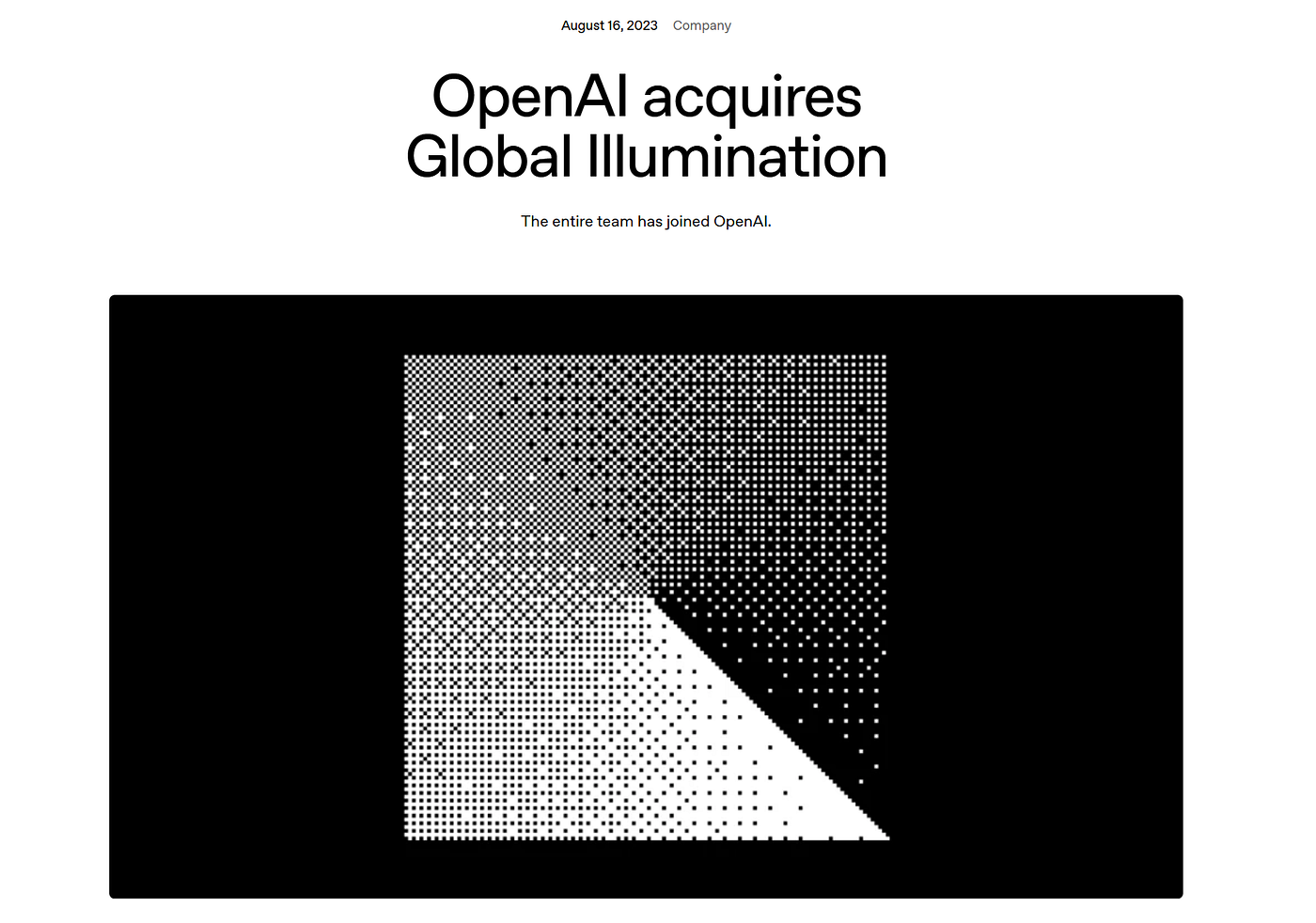
What the company did: Global Illumination built creative tools, infrastructure, and digital experiences. Its team had worked on products at Instagram, Facebook, YouTube, Google, Pixar, Riot Games, and other companies.
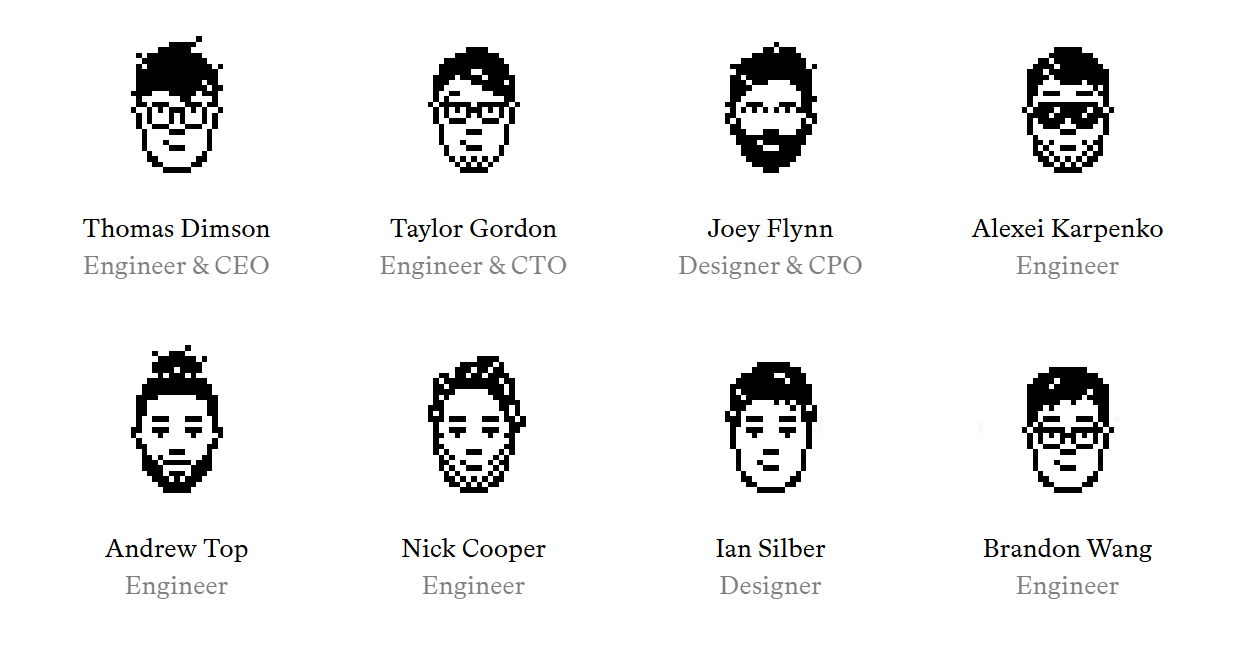
I thought that there website is really awesome.
Why OpenAI bought it: OpenAI said, “The entire team has joined OpenAI to work on our core products including ChatGPT.”
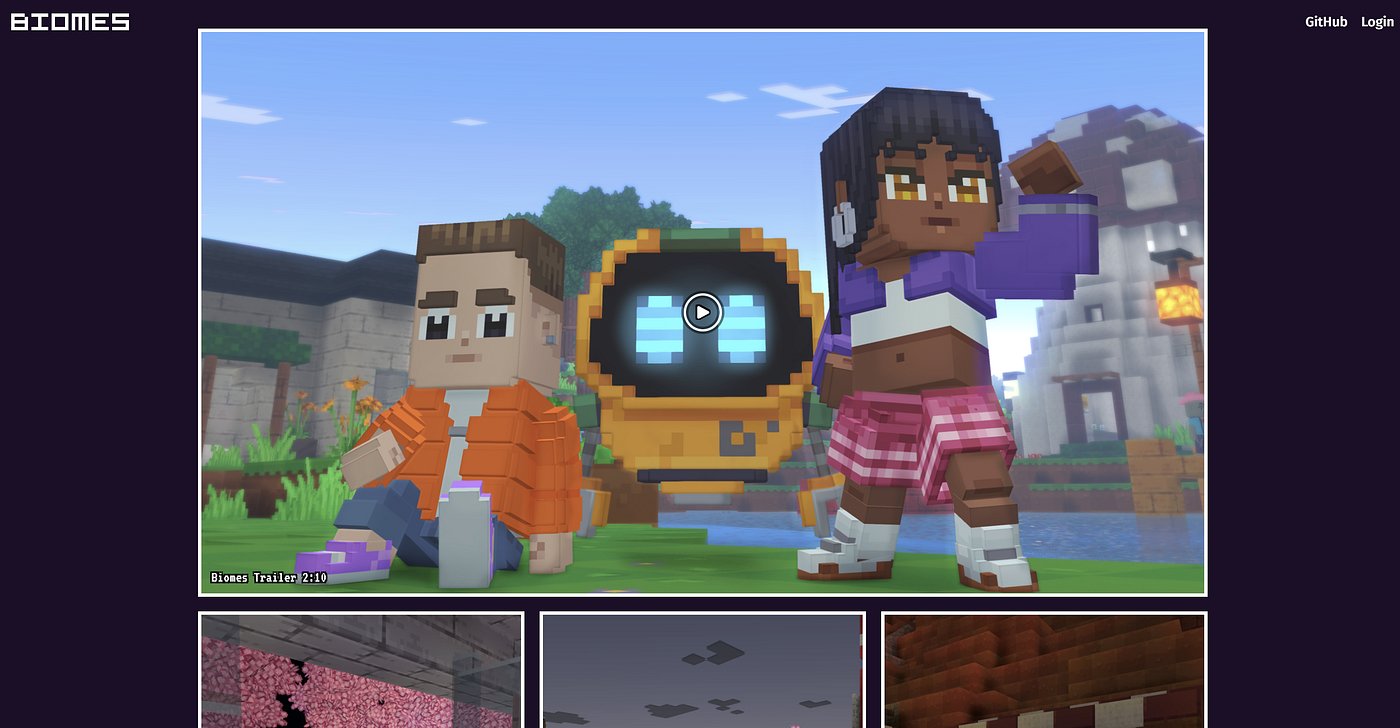
They make games that look kind of like Minecraft Source here.
Rockset
- Date announced: 21 June 2024
- Price: Undisclosed. Reuters reported it as a nine-figure stock deal.
What the company did: Rockset was a real-time analytics database with indexing and querying capabilities for enterprise data.
Here is a video that explains their architecture.
[embed]
Why OpenAI bought it: OpenAI said, “We will integrate Rockset’s technology to power our retrieval infrastructure across products.”
Multi, formerly Remotion
- Date announced: 24 June 2024
- Price: Undisclosed.
- Team Size: 5
What the company did: Multi was a video-first remote collaboration and screensharing app for teams.
Why OpenAI bought it:
Multi said this in their press release, “What if desktop computers were inherently multiplayer? What if the operating system placed people on equal footing to apps? Those were the questions we explored in building Multi, and before that, Remotion.
Recently, we’ve been increasingly asking ourselves how we should work with computers. Not on or using computers, but truly with computers. With AI. We believe it’s one of the most important product questions of our time.”
My guess
My guess for that is that they were looking at making canvases like figma or even makig multi agent multiplayer and allowing multiple people to work together on the same thing, plus sharing chats at the same time.
io Products
- Date announced: 21 May 2025
- Price: About $6.5 billion, reported as an all-equity/stock deal.
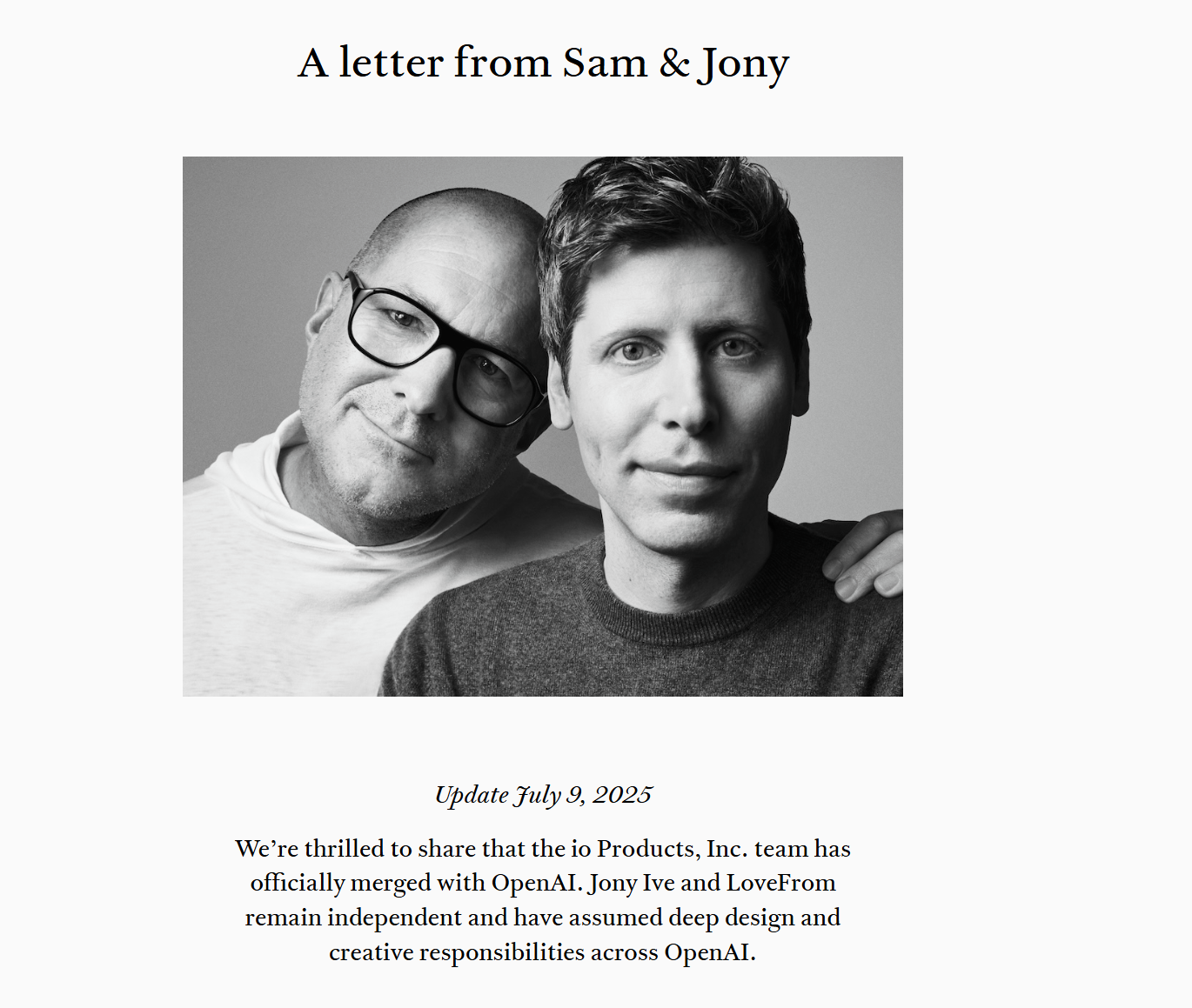
What the company did: io Products was an AI hardware/product startup founded by Jony Ive, Scott Cannon, Evans Hankey, and Tang Tan.
Why OpenAI bought it: In the Sam and Jony announcement, OpenAI described the io team as “focused on developing products that inspire, empower and enable” and said the team would merge with OpenAI.
This is codeword for they are building a phone with AI so they don’t have to pay apple 30% tax on everything is my guess.
Crossing Minds team
Date announced: 27 June 2025.
Price: Undisclosed.
What the company did: Crossing Minds worked on AI recommendation systems for e-commerce.
Why OpenAI bought it: OpenAI didn’t say but Crossing Minds posts is quite interesting, they say this.
“We started this company with a simple belief: truly understanding people’s intents is the foundation of outstanding AI assistants. Not merely predicting next actions, but learning long-term preferences, and what makes each of us unique.
That conviction carried us through years of exploration, growth, and creation, guiding us through challenges that at times felt insurmountable and moments that made it all worthwhile.”
The key part that stands out to me
Learning long-term preferences is the key part. Maybe this is the team that helped to bring out this feature this month.
Statsig
Date announced: 2 September 2025.
Price: $1.1 billion all-stock deal, reported by Bloomberg and TechCrunch.
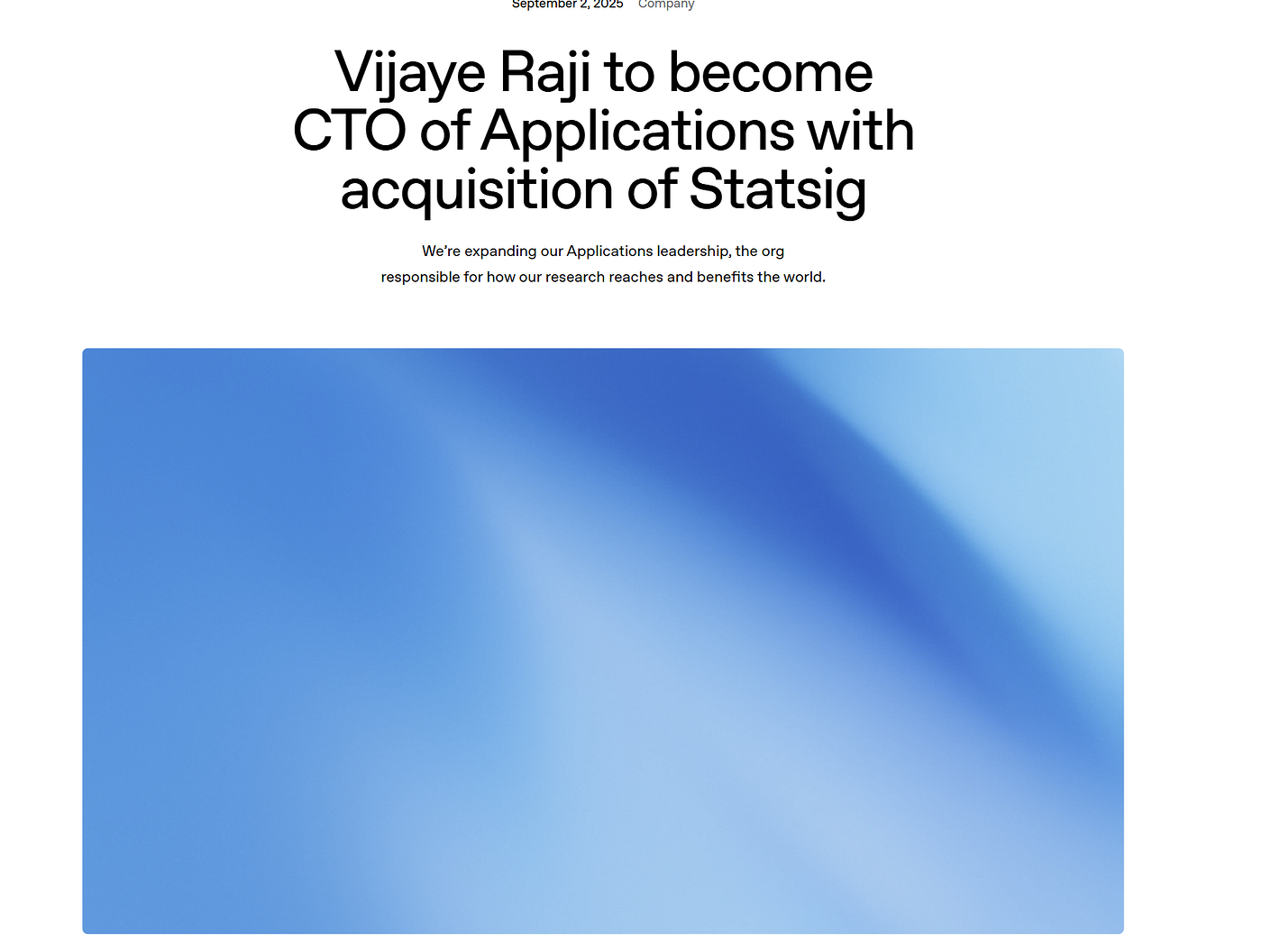
This is my least favourite gradient in all the acquisitions lol.
What the company did: Statsig built experimentation, A/B testing, feature flag, and real-time decisioning software.
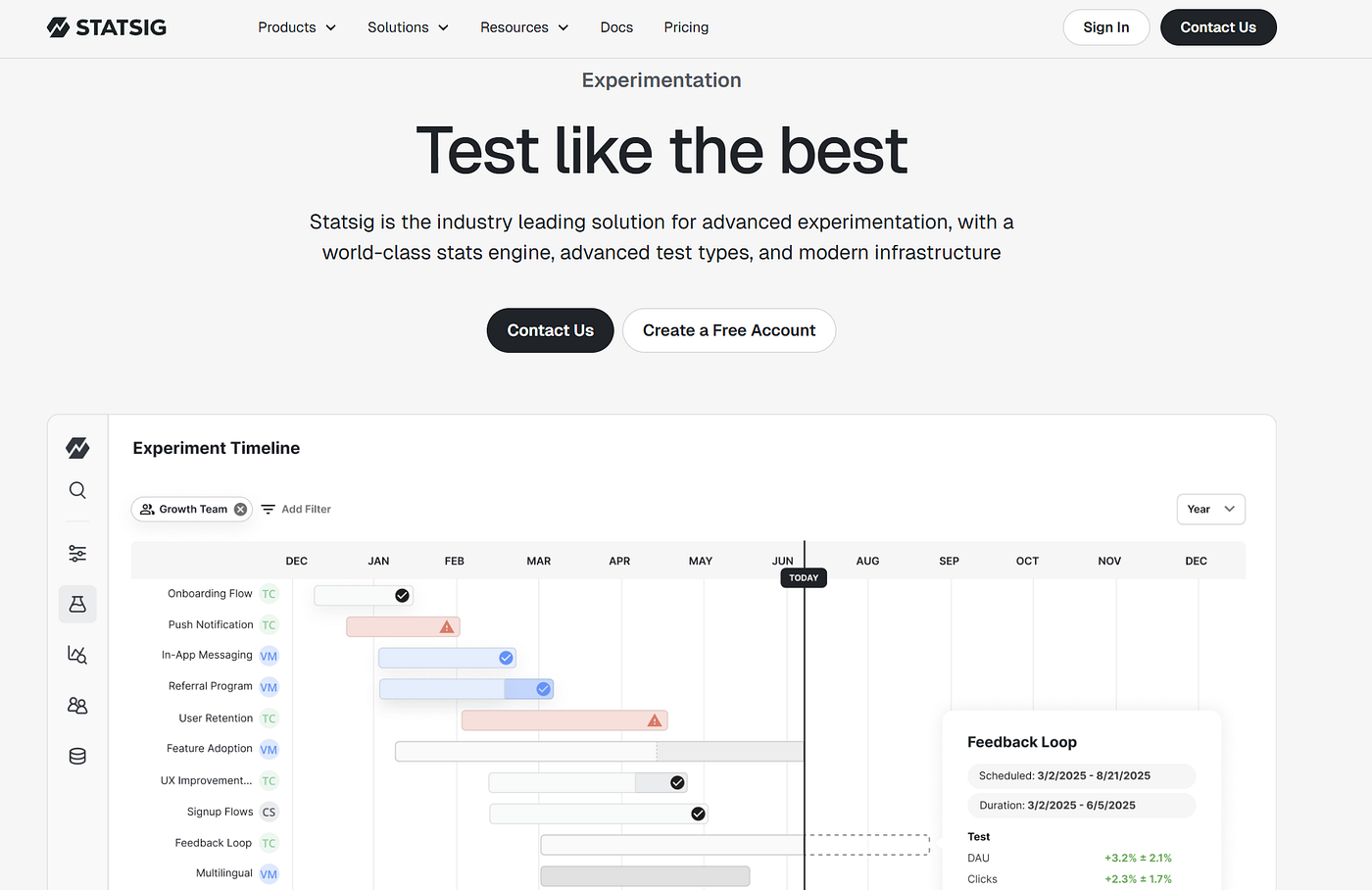
Why OpenAI bought it: OpenAI said bringing Statsig in-house would “accelerate experimentation across our Applications org.”
They also said this:
“Vijaye Raji will step into a new role as CTO of Applications, reporting to Fidji Simo, following the acquisition of Statsig. As a hands-on builder and trusted leader, Vijaye will head product engineering for ChatGPT and Codex, with responsibilities that span core systems and product lines including infrastructure and Integrity.”
Roi
Date announced: 3 October 2025.
Price: Undisclosed.
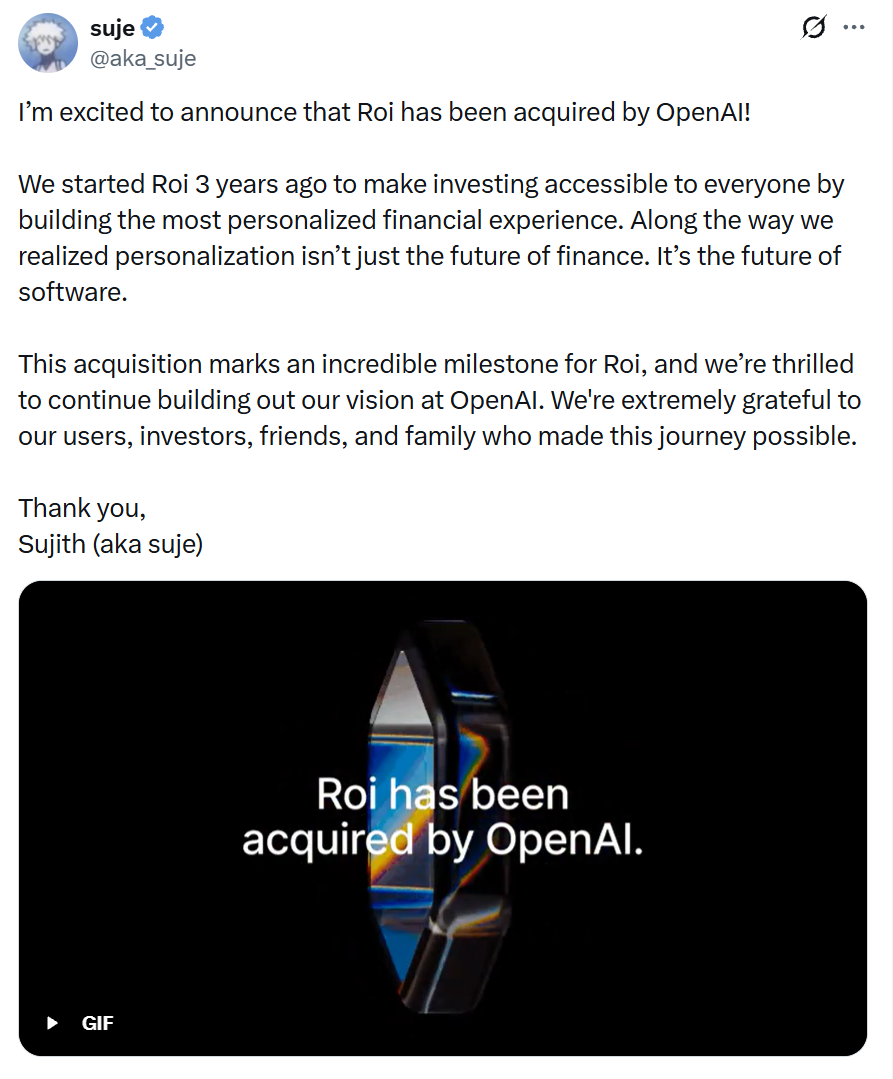
What the company did: Roi was an AI-powered personal finance app.
Why OpenAI bought it: TechCrunch described the deal as an acqui-hire to support personalized consumer AI. Roi wound down its service.
I found this LinkedIn post pretty interesting about why they did this acquisition.
Software Applications Incorporated, maker of Sky
Date announced: 23 October 2025.
Price: Undisclosed.
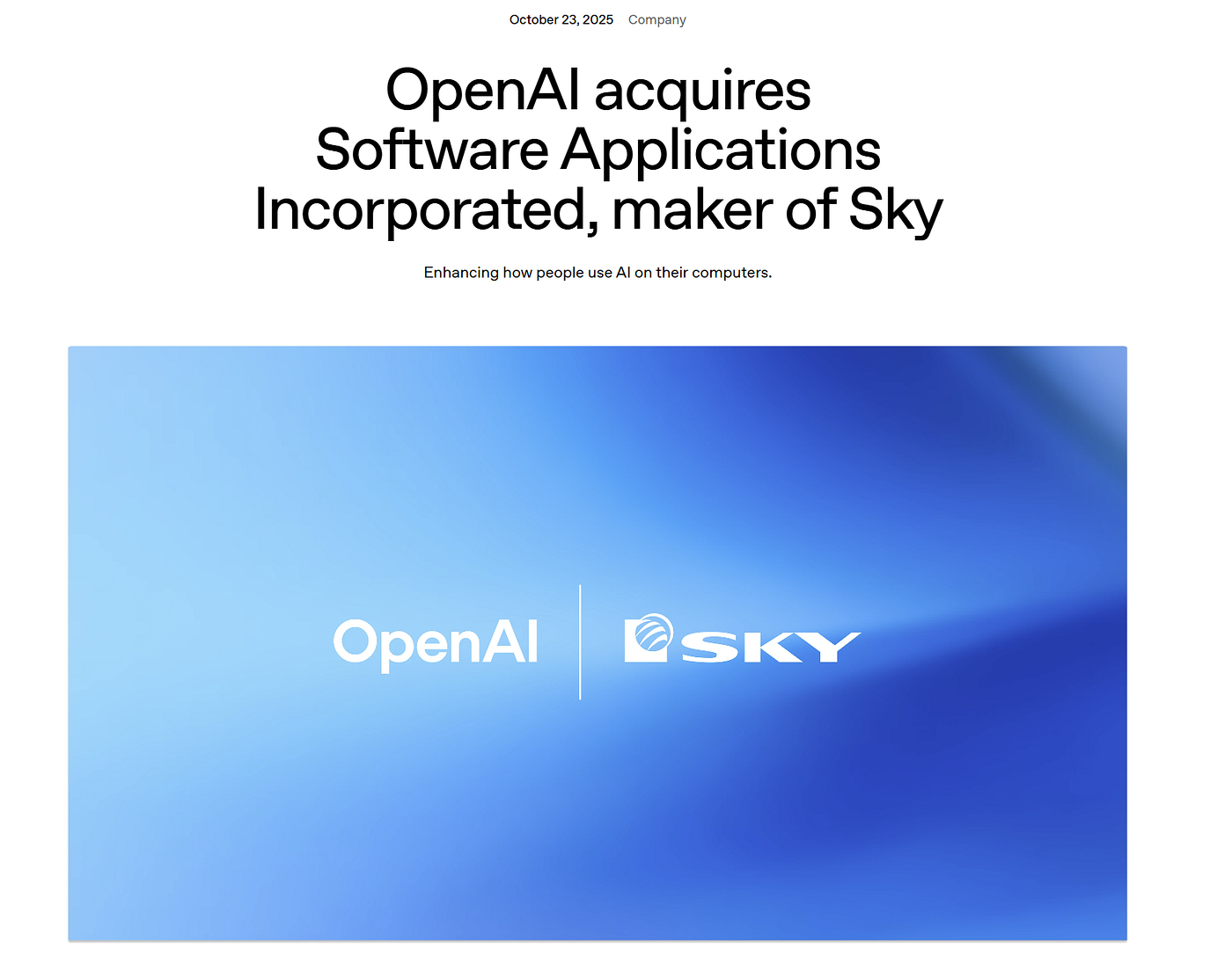
They are really loving this blue gradient
What the company did: Software Applications Incorporated made Sky, a macOS natural-language interface that understands screen context and can act across apps.
Why OpenAI bought it: OpenAI said this:
“Sky is a powerful natural language interface for the Mac. With Sky, AI works alongside you, whether you’re writing, planning, coding, or managing your day. Sky understands what’s on your screen and can take action using your apps.
We will bring Sky’s deep macOS integration and product craft into ChatGPT, and all members of the team will join OpenAI.”
neptune.ai
Date announced: 3 December 2025.
Price: Undisclosed.
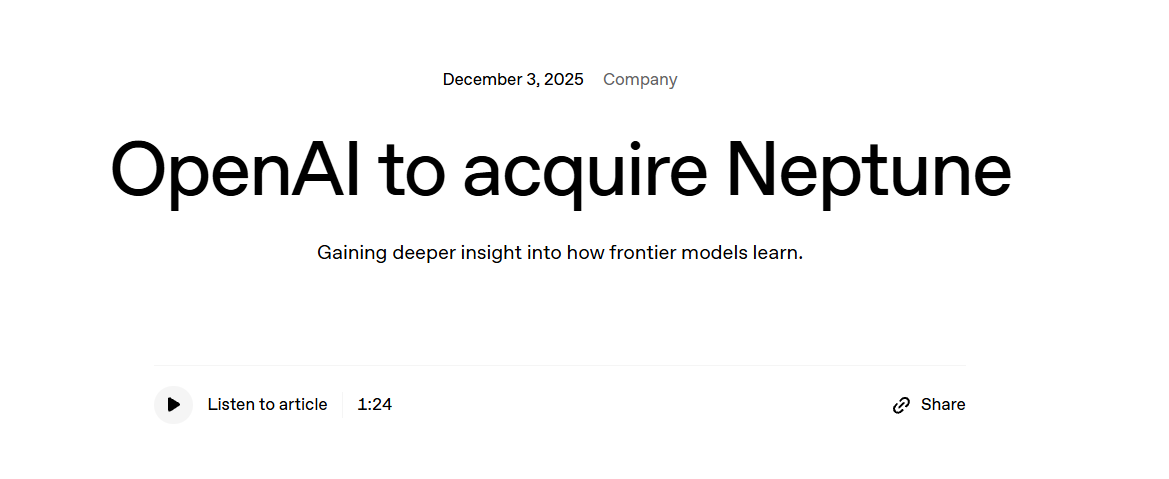
Sad they didn’t even get a gradient — what are these mind games OpenAI?
What the company did: neptune.ai built AI experiment tracking and model-training observability tools.
Why OpenAI bought it: OpenAI said this:
“Training advanced AI models is a creative, exploratory process that depends on seeing how a model evolves in real time. Neptune gives researchers a clear and dependable way to track experiments, monitor training, and understand complex model behavior as it happens.
From its beginning, the Neptune team focused on supporting the hands-on, iterative work of model development. More recently, Neptune has worked closely with OpenAI to develop tools that enable researchers to compare thousands of runs, analyze metrics across layers, and surface issues. Neptune’s depth in this area will help us move faster, learn more from each experiment, and make better decisions throughout the training process.”
Torch
- Date announced: 12 January 2026.
- Price: Reported at $60 million
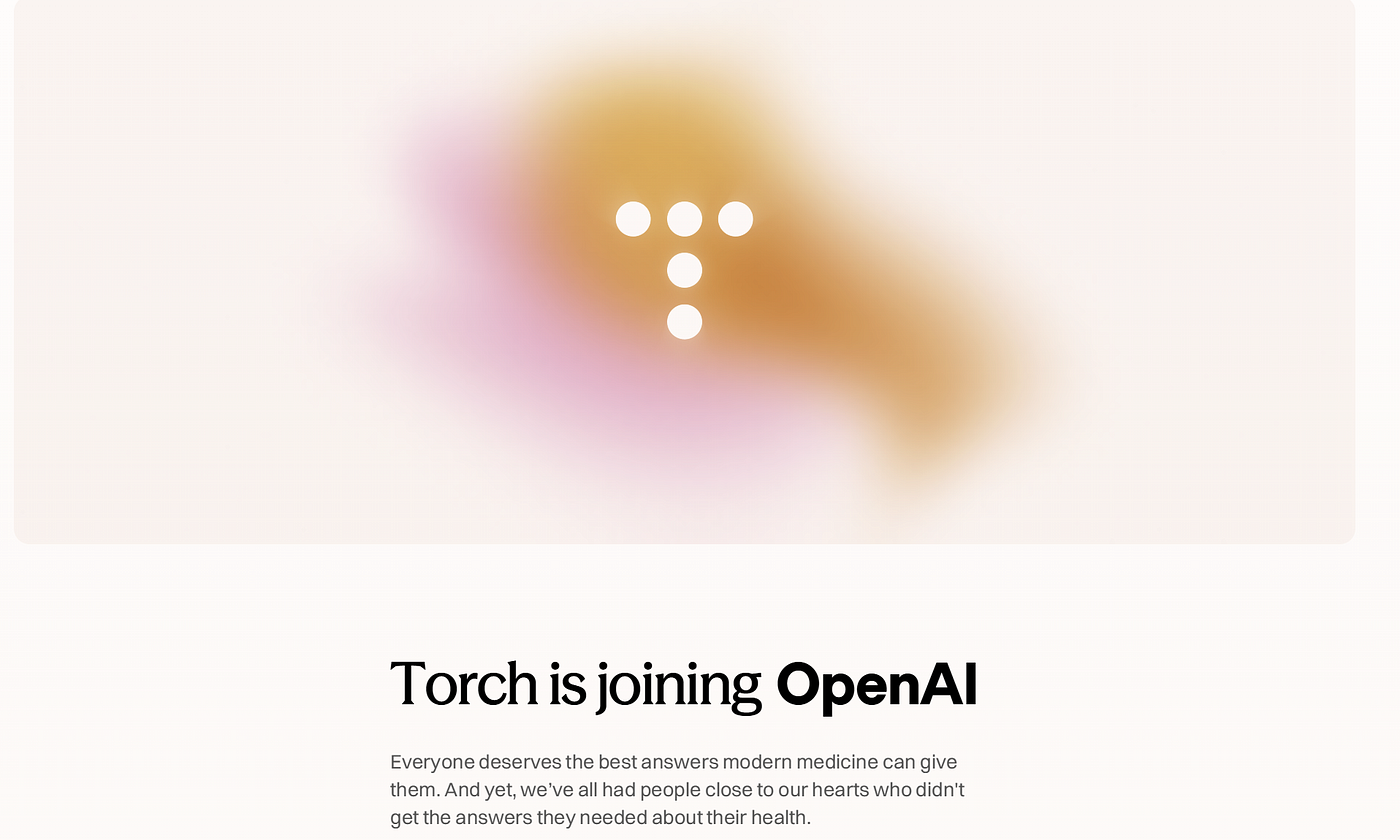
What the company did: Torch was a healthcare data unification startup for lab results, medications, and visit recordings.
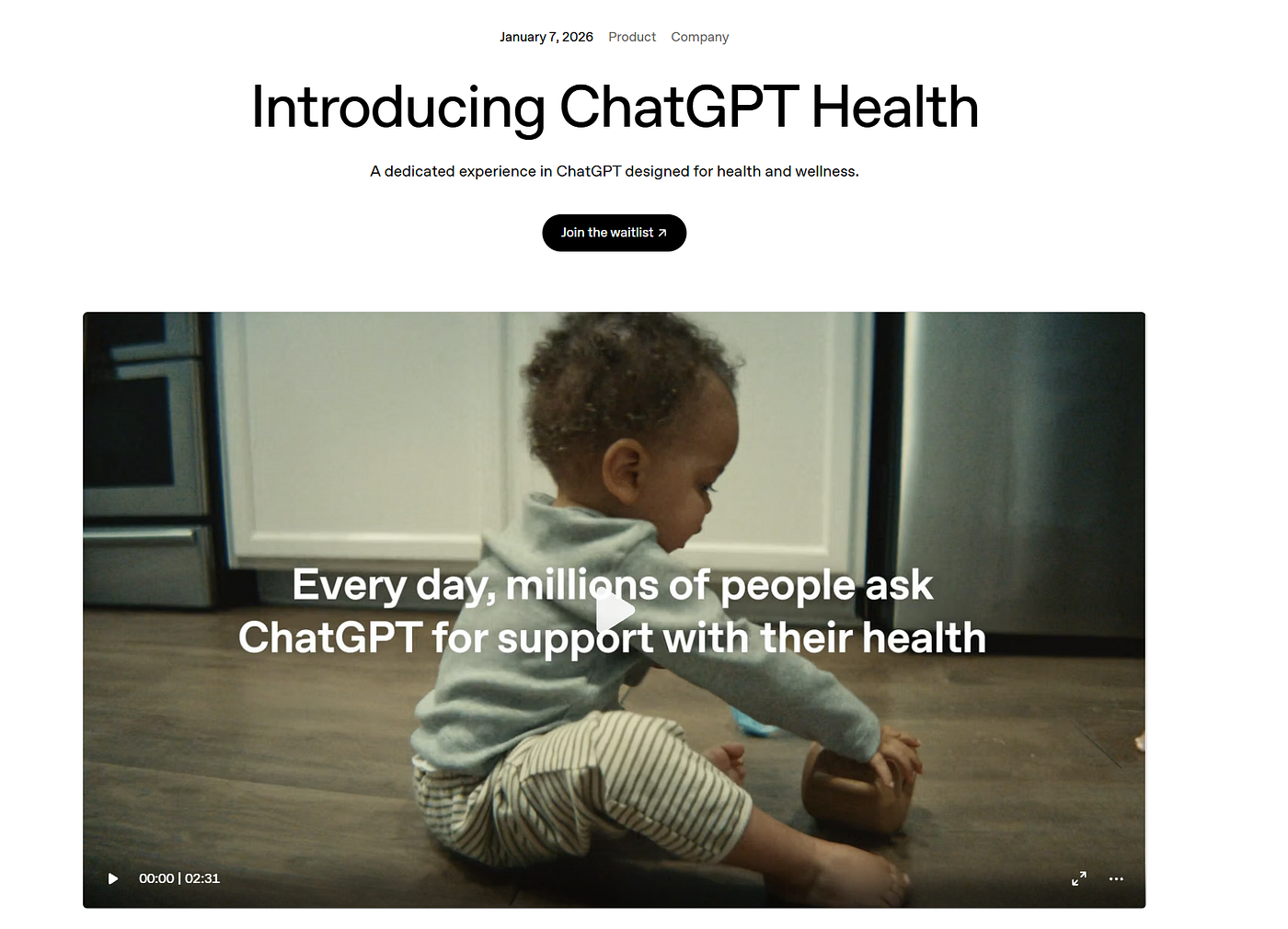
Why OpenAI bought it: OpenAI posted that bringing Torch together with ChatGPT Health “opens up a new way to understand and manage your health.”
I didn’t atually know that there was ChatGPT Health but there you go.
Promptfoo
- Date announced: 9 March 2026.
- Price: Undisclosed.
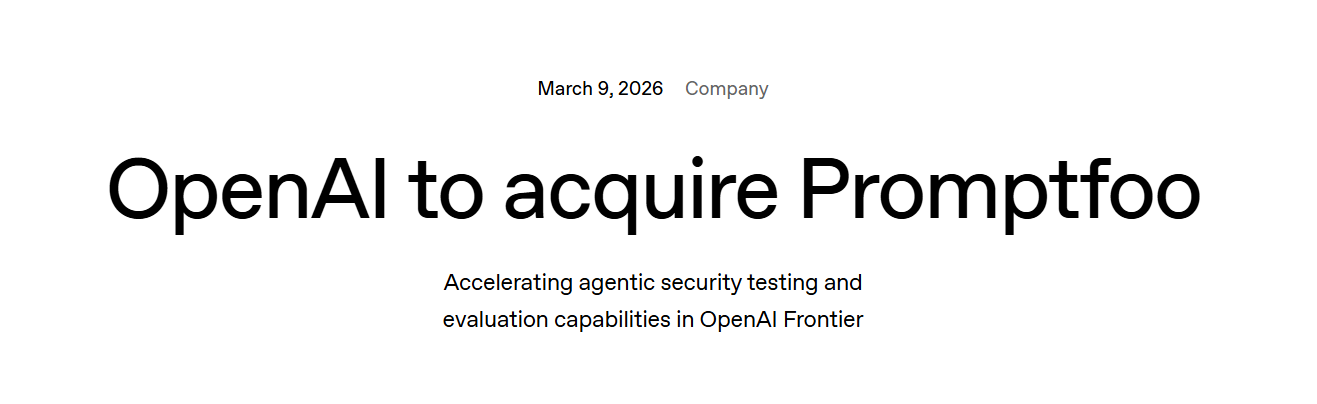
What the company did: Promptfoo built AI security testing, red-teaming, and evaluation software.
Why OpenAI bought it: OpenAI said this:
“We’re acquiring Promptfoo, an AI security platform that helps enterprises identify and remediate vulnerabilities in AI systems during development. Once the acquisition is finalized we will integrate Promptfoo’s technology directly into **OpenAI Frontier,** our platform for building and operating AI coworkers.”
Astral
Date announced: 19 March 2026.
Price: Undisclosed.
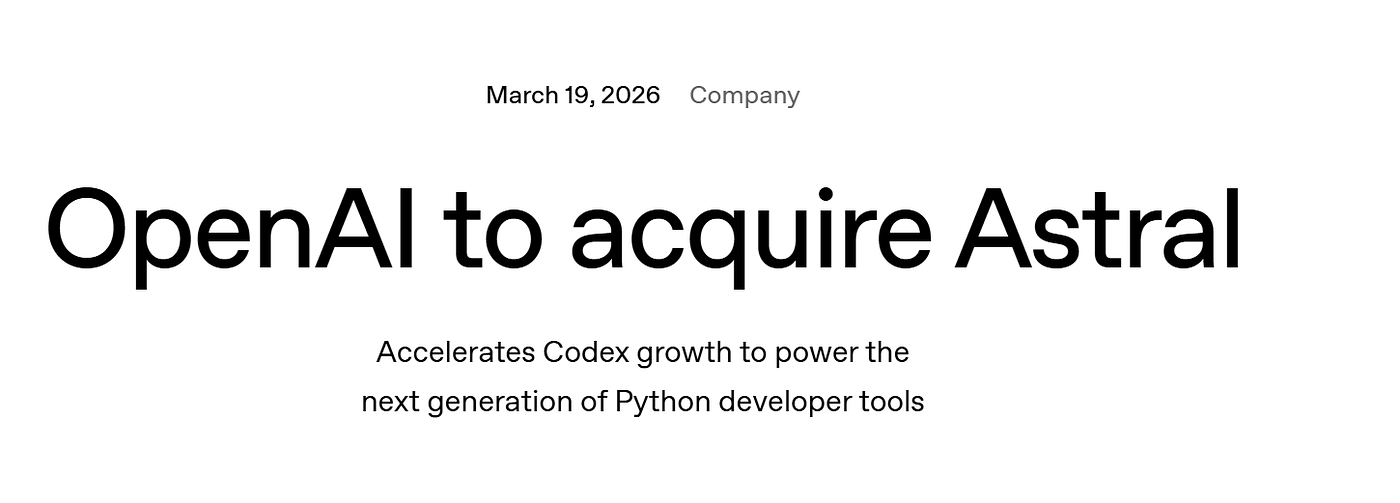
What the company did: Astral built open-source Python developer tools including uv, Ruff, and ty.
Why OpenAI bought it: OpenAI said:
“As part of our developer-first philosophy, after closing OpenAI plans to support Astral’s open source products. By bringing Astral’s tooling and engineering expertise to OpenAI, we will accelerate our work on Codex and expand what AI can do across the software development lifecycle.”
So that is interesting, they aim to make Codex do more than it does currently with coding.
TBPN
- Date announced: 2 April 2026.
- Price: Sources say between $100m and $200m
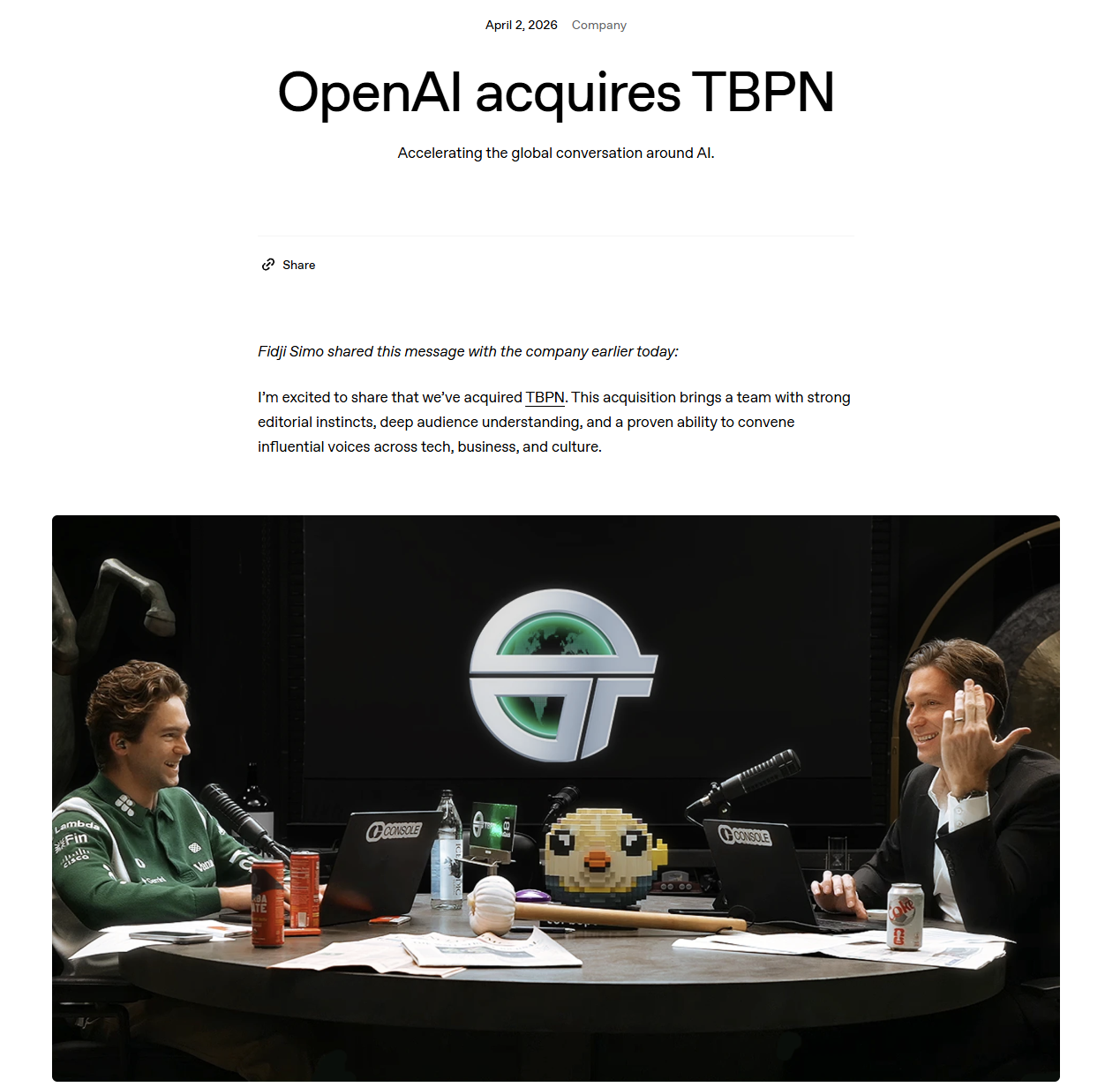
What the company did: TBPN is a daily live technology and business media network and podcast.
Why OpenAI bought it: OpenAI said this:
“As I’ve been thinking about the future of how we communicate at OpenAI, one thing that’s become clear is that the standard communications playbook just doesn’t apply to us. We’re not a typical company. We’re driving a really big technological shift. And with our mission to ensure artificial general intelligence benefits all of humanity comes a responsibility to help create a space for a real, constructive conversation about the changes AI creates — with builders and people using the technology at the center.
That’s exactly what TBPN has built. So rather than trying to recreate that ourselves, it made a lot of sense to bring them in, support what they’re doing, and help them scale — while keeping what makes them special. A core part of this is editorial independence. TBPN will continue to run their programming, choose their guests, and make their own editorial decisions. That’s foundational to their credibility, and it’s something we’re explicitly protecting as part of this agreement.”
My take on this
This is similar to how HubSpot bought the Hustle and Dharmesh has talked about this before, how its better to own the audience than to rent it. So rather than paying money to Google Ads, you own a channel that you can distribute content to. It’s interesting and we will see how this plays out, it’s certaintly one of the more interesting acquisitions.
Ona
Date announced: 11 June 2026.
Price: Undisclosed.
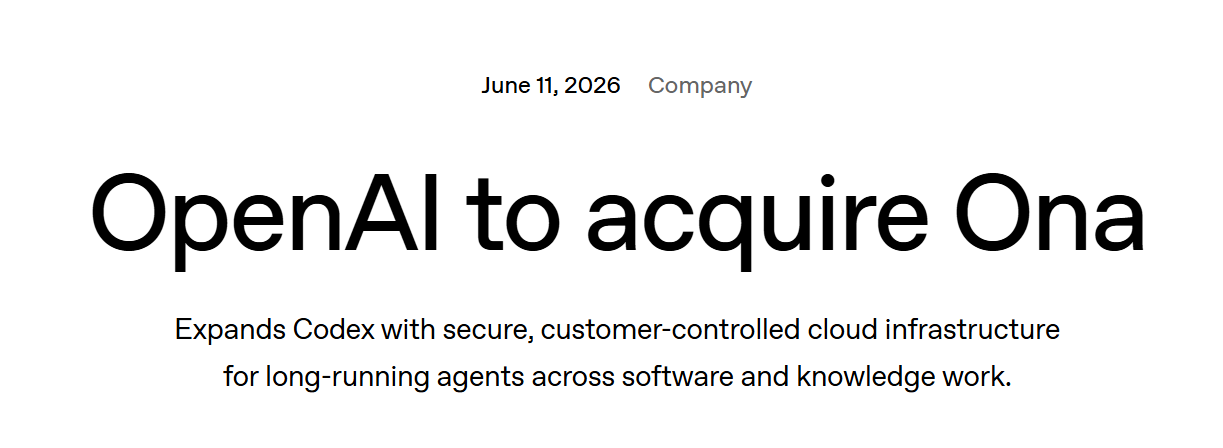
What the company did: Ona built secure cloud execution and orchestration environments for agents.
Why OpenAI bought it: OpenAI said this:
“As Codex becomes more capable, its most valuable work is unfolding over hours or days, rather than minutes. We believe people should be able to delegate more ambitious work without remaining tied to the machine where it began. The work should continue beyond the initial session, with Codex making it possible to stay connected and check progress, provide direction, make decisions, and review results from anywhere.”
So clearly it’s an acquisition to help Codex run for ages.
Cursor Acquisitions
Supermaven
- Date announced: 12 November 2024.
- Price: Undisclosed.
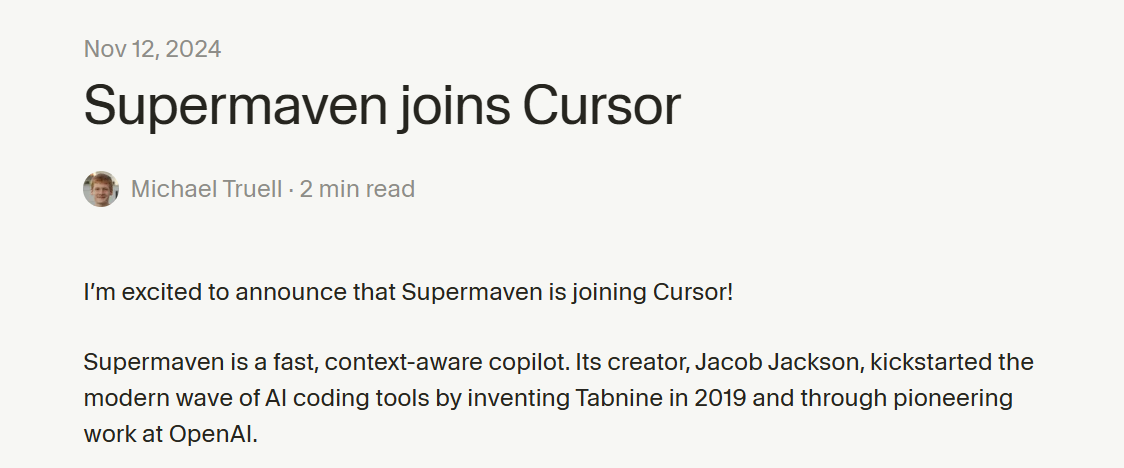
What the company did: Supermaven was a fast, context-aware AI coding copilot. Founder Jacob Jackson previously created Tabnine.
Why Cursor bought it: Cursor said, “we can build a more useful product, faster, together.” Cursor expected Supermaven to help with a faster, context-aware Tab model.
Koala
- Date announced: 18 July 2025.
- Price: Undisclosed.
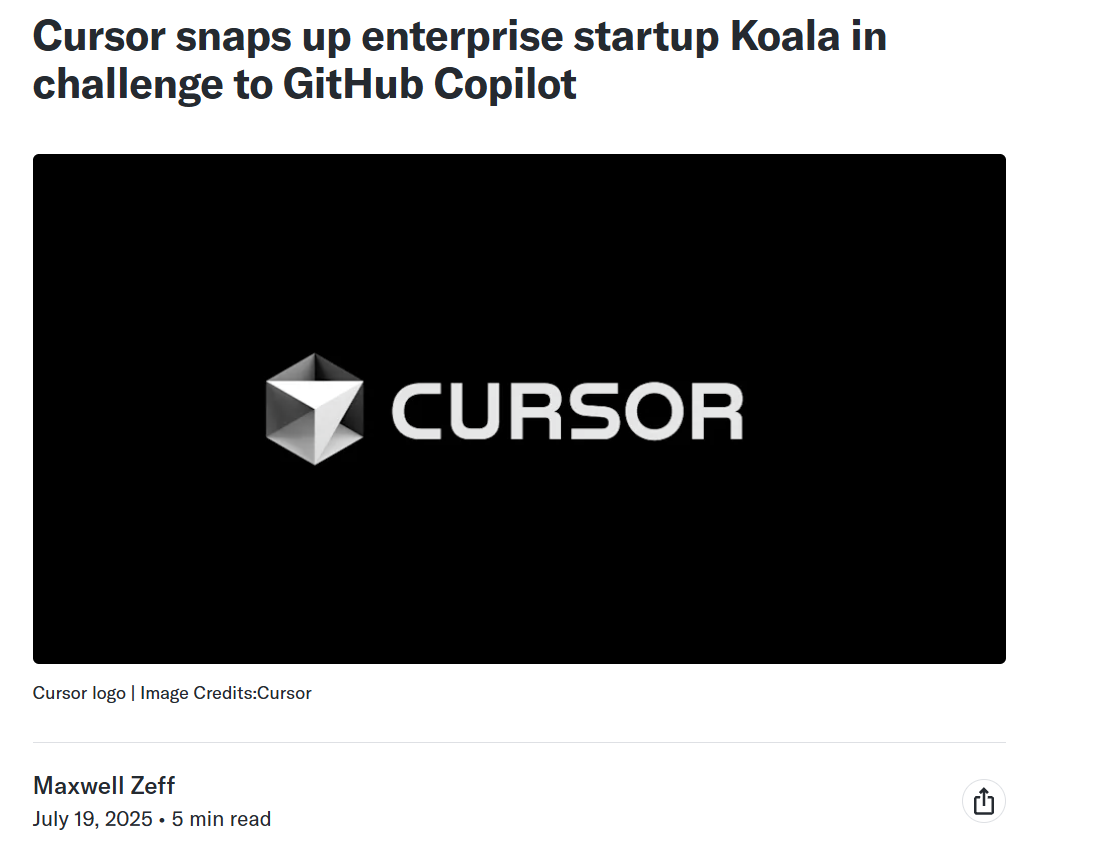
What the company did: Koala was an AI-powered customer relationship management and go-to-market tooling startup.
Why Cursor bought it: TechCrunch reported that Cursor would bring on Koala engineers to build “a dedicated enterprise-readiness team.” Koala’s core CRM product was not expected to be integrated.
Graphite
- Date announced: 19 December 2025.
- Price: Undisclosed.
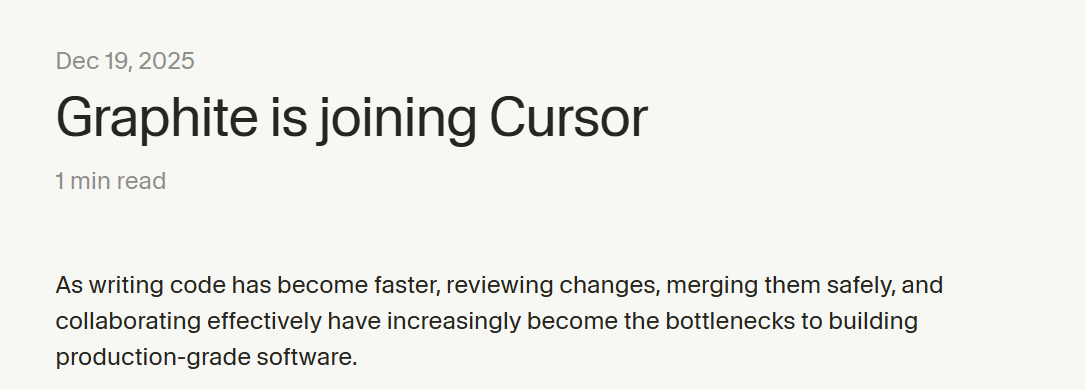
What the company did: Graphite built a code review platform and stacked pull request workflow used by engineering teams.
Why Cursor bought it: Cursor said “reviewing changes, merging them safely, and collaborating effectively” had become a bottleneck. Cursor planned tighter local-development and pull-request integrations.
Anthropic Acquisitions
Bun
- Date announced: 3 December 2025.
- Price: Undisclosed.
What the company did: Bun is a high-performance JavaScript runtime and all-in-one toolkit combining runtime, package manager, bundler, and test runner.
Why Anthropic bought it: Anthropic said it was acquiring Bun “to further accelerate Claude Code.” It also said that for Claude Code users the acquisition means “faster performance, improved stability, and new capabilities.”
Interestingly they were going to keep Bun as open-sourced.
Vercept
- Date announced: 25 February 2026.
- Price: Undisclosed.
What the company did: Vercept built AI systems for computer use: perception and interaction capabilities that let agents see and act inside software the way a person would.
Why Anthropic bought it: Anthropic said:
“Vercept was built around a clear thesis: making AI genuinely useful for completing complex tasks requires solving hard perception and interaction problems.
The Vercept team — including co-founders Kiana Ehsani, Luca Weihs, and Ross Girshick — have spent years thinking carefully about how AI systems can see and act within the same software humans use every day. That expertise maps directly onto some of the hardest problems we’re working on at Anthropic. Vercept will wind down its external product in the coming weeks and join Anthropic in pushing the frontiers of computer use.”
Coefficient Bio
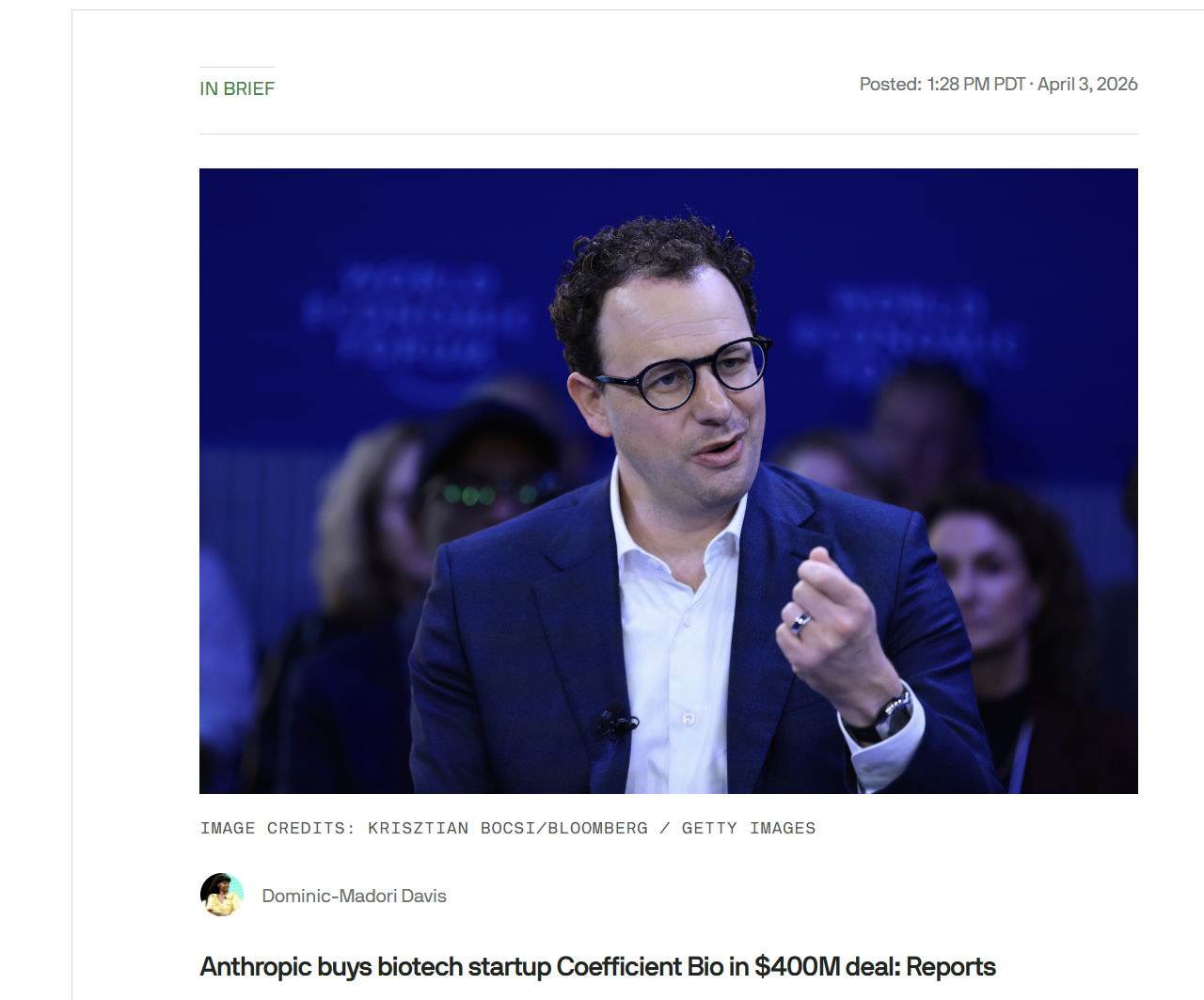
As reported by TechCrunch
- Date reported: 3 April 2026.
- Price: Reported around $400 million in stock.
What the company did: Coefficient Bio was a stealth AI biotech / drug-discovery startup. Reports described it as a small team, largely former Genentech computational biology researchers, joining Anthropic’s healthcare and life sciences work.
Why Anthropic bought it: Reporting tied the deal to Anthropic’s expansion in healthcare and life sciences, especially Claude-assisted biotech workflows and drug discovery.
Stainless
- Date announced: 18 May 2026.
- Price: ~300 million
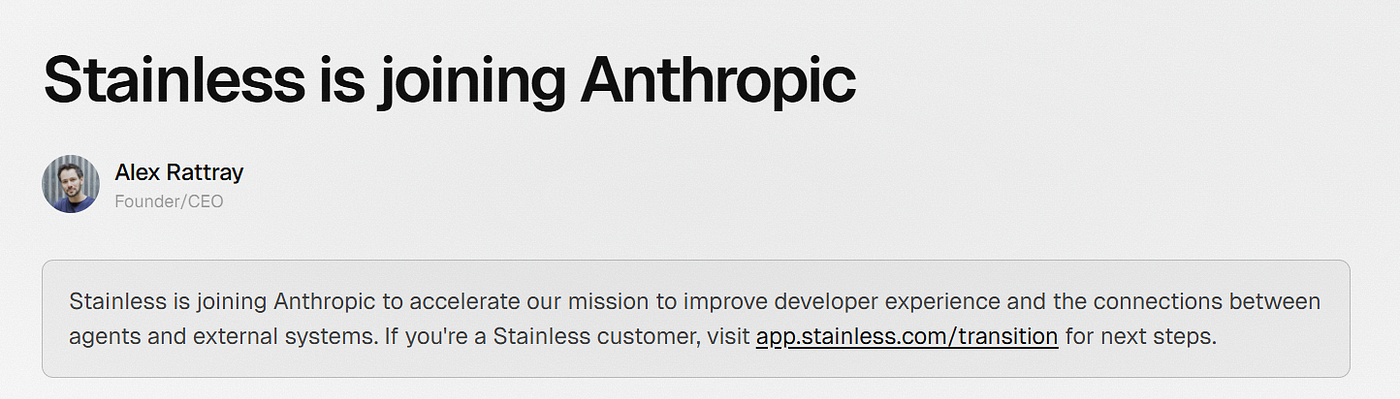
What the company did: Stainless generates SDKs, CLIs, and MCP servers from API specifications across languages including TypeScript, Python, Go, and Java. Anthropic said Stainless had powered every official Anthropic SDK since the earliest days of its API.
Why Anthropic bought it: Anthropic said, “agents are only as capable as the systems they can reach.” Katelyn Lesse also said, “Agents are only as useful as what they can connect to.” The acquisition brings Stainless into Anthropic’s developer tooling and agent-connectivity stack.
So what should we build to get acquired?
I asked Claude and ChatGPT what we should all build to get acquired.
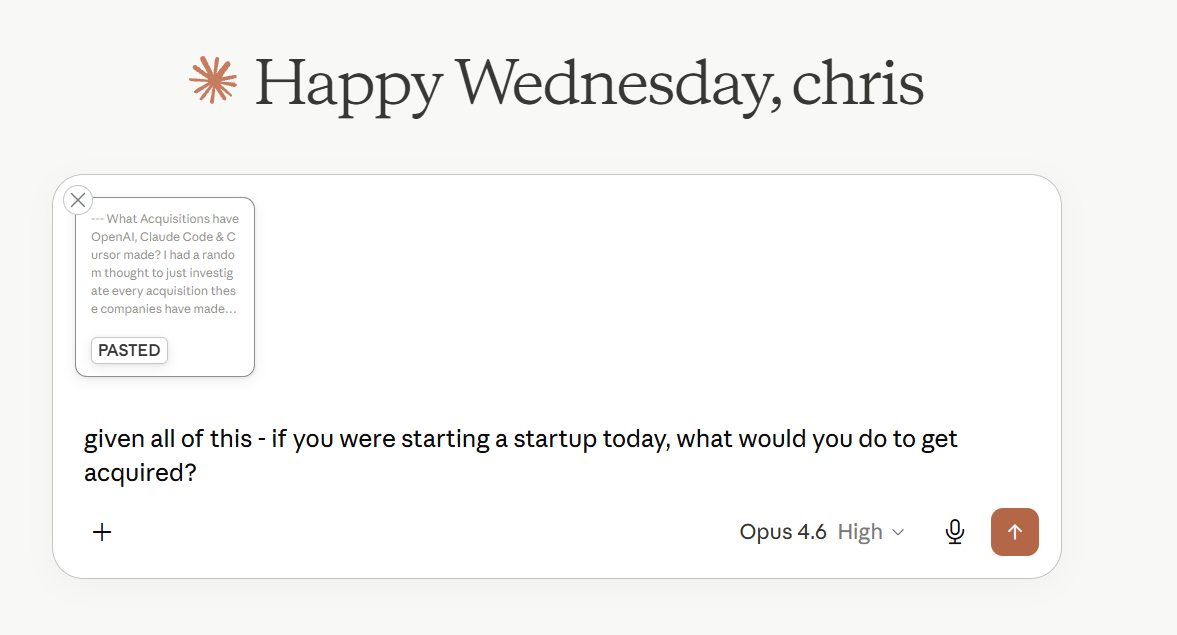
Claude says this in response:
Five Acquisition Patterns & What to Build
1. Build developer tooling that becomes a dependency
- Astral, Bun, Stainless, Graphite, Supermaven — all tools developers had already woven into daily workflows
- The acquirer wanted the adoption, not just the tech
- Stainless powered every Anthropic SDK from day one. Astral’s uv was becoming the default Python package manager
- When your tool is already in someone’s CI pipeline, the conversation becomes “we should probably own this”
- Playbook: Find the gnarliest unsolved DX problem adjacent to AI workflows, open-source it, become the obvious default. The exit is the business model
2. Solve agent infrastructure problems about to become acute
- Rockset (retrieval), Ona (long-running execution), Vercept (computer use), Sky (desktop interaction)
- They keep hitting the same walls: agents need to see screens, run persistently, retrieve context, authenticate as users
- Still wide open:
- Agent identity and auth
- Agent observability (Datadog for agent runs)
- Agent billing and metering
- Reliable state management across sessions
- Whoever builds the “watch what your agent did and why” dashboard is getting a call
3. Become the internal tool they’re already paying for
- Statsig, neptune.ai, Promptfoo — OpenAI was already a customer, realised the tool was critical, decided to acquire rather than keep renting
- Playbook: Sell directly to AI labs. Get embedded in their training pipelines, eval workflows, deployment infra
- If three different teams at the company rely on you, you shift from vendor to acquisition target
- Risk is concentration, but Statsig at $1.1B shows leverage can still be substantial
4. Pick a vertical and go deep on domain-specific AI
- Torch (healthcare), Coefficient Bio (drug discovery), Crossing Minds (recommendations), Roi (personal finance)
- OpenAI and Anthropic want to expand into healthcare, finance, biotech, legal — but lack domain expertise, regulatory knowledge, and data relationships
- Coefficient Bio at ~$400M for a small stealth team of former Genentech researchers — that’s paying almost entirely for expertise
- Playbook: Small team of former industry specialists building AI tooling for their domain
5. The acqui-hire path is real
- Multi, Koala, Roi, Global Illumination — essentially talent acquisitions where the product was secondary
- The product served as a credibility signal that the team could ship
- Playbook: 3–8 exceptional people, something impressive shipped in a relevant domain, enough traction to prove competence, visible to the right people
- Realistic range: $20–60M without needing product-market fit
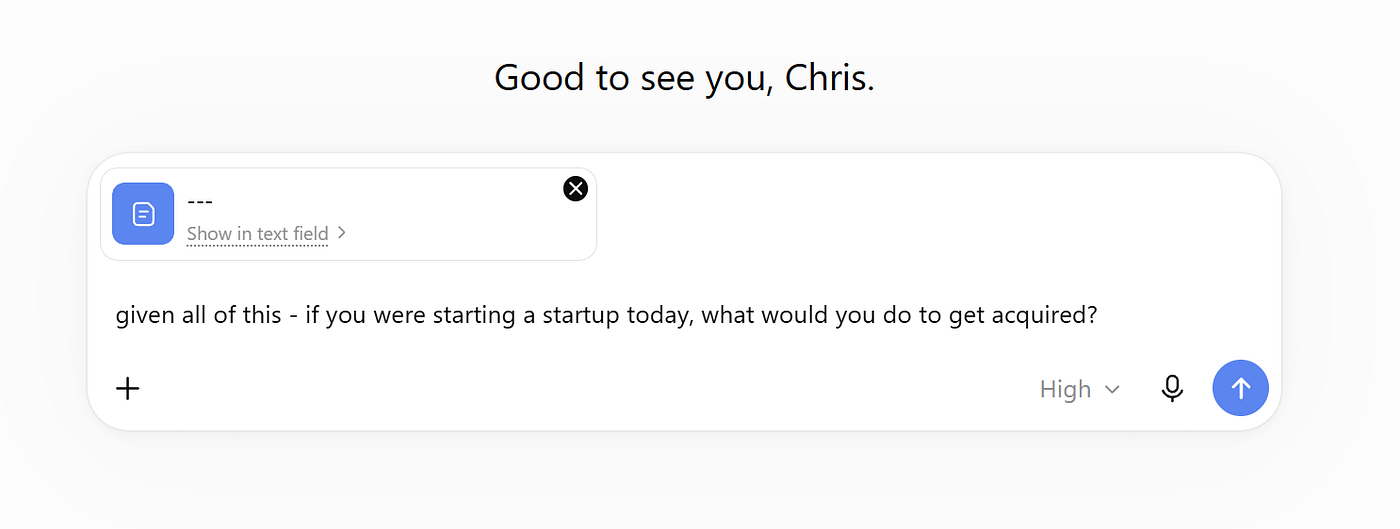
ChatGPT says this, interestingly it was much shorter of a response.
If I were starting today with acquisition as the goal, I would not build “an AI app”.
I would build the control plane for AI work inside real businesses.
More specifically:
I’d build: “Agent QA / Workflow Memory for professional services”
A product that watches how a company uses AI to do work, captures the evidence, checks the output, learns from human edits, and improves the workflow over time.
Before you go
Subscribe to my free Substack newsletter because you get the following:
- A brand-new article for executives on Sunday that’s only posted on Substack.
- Links to every Medium post I’ve written in the past week
- Book recommendations every week for you to spend your Audible credits on
Let me know if you enjoyed this overview of the acquisition space and if it triggered any good startup ideas for you?
메타데이터
- post_id
- 559867dc3dd8
- slug
- what-acquisitions-have-openai-claude-code-cursor-made-559867dc3dd8
- url
- https://medium.com/realworld-ai-use-cases/what-acquisitions-have-openai-claude-code-cursor-made-559867dc3dd8
- canonical_url
- https://medium.com/realworld-ai-use-cases/what-acquisitions-have-openai-claude-code-cursor-made-559867dc3dd8
- author_url
- https://medium.com/@chrisdunlop_37984
- status
- ok
- fetched_at
- 2026-06-24 11:06:28