User Flows in Product Discovery That Reduce Rework
Most product teams skip user flows during discovery because they feel like extra work. Then they spend three times as long fixing problems…
User Flows in Product Discovery That Reduce Rework

Most product teams skip user flows during discovery because they feel like extra work. Then they spend three times as long fixing problems in development that a simple flow diagram would have caught in an afternoon. That pattern is expensive, predictable, and entirely avoidable.
User flows are not a design deliverable. They are a thinking tool — one that forces your team to agree on what the product actually does before anyone writes a line of code or builds a single screen. If you are building a new product or restructuring an existing one, getting flows right during discovery is the single highest-leverage thing you can do before development starts.
Why Skipping Flows Costs You More Than You Think
When teams move into design or development without mapped user flows, they are essentially building on assumptions. Those assumptions diverge across designers, developers, and stakeholders — and the divergence only becomes visible once something is already built. That is when the rework starts.
Vague product discovery user journeys lead directly to costly rework, team misalignment, and inconsistencies that compound over time. A feature that made sense to the product lead looks completely different to the developer who built it and the user who has to navigate it. Without a shared flow, everyone is working from a different mental model of the same product.
The fix is not more meetings. It is a simple, shared map of how users move through your product — what they do, what decisions they face, and what happens when something goes wrong. That map becomes the contract between your teams before any detailed work begins.
The Four-Step Process That Actually Works
Creating useful user flows during product discovery does not require specialist tools or weeks of research. It requires discipline around four steps, executed in order.
Step one is user research. This means interviews, surveys, or reviewing existing behavioural data — not internal assumptions. The most common and costly product discovery mistake is skipping this step entirely, projecting what your team thinks users want instead of what users actually do. Flows built on internal guesses validate nothing.
Step two is defining a single-task objective for each flow. One flow, one job. Signup. Booking. Checkout. Onboarding. Trying to map everything at once produces flows that are too broad to test and too vague to act on. Narrow scope produces clarity.
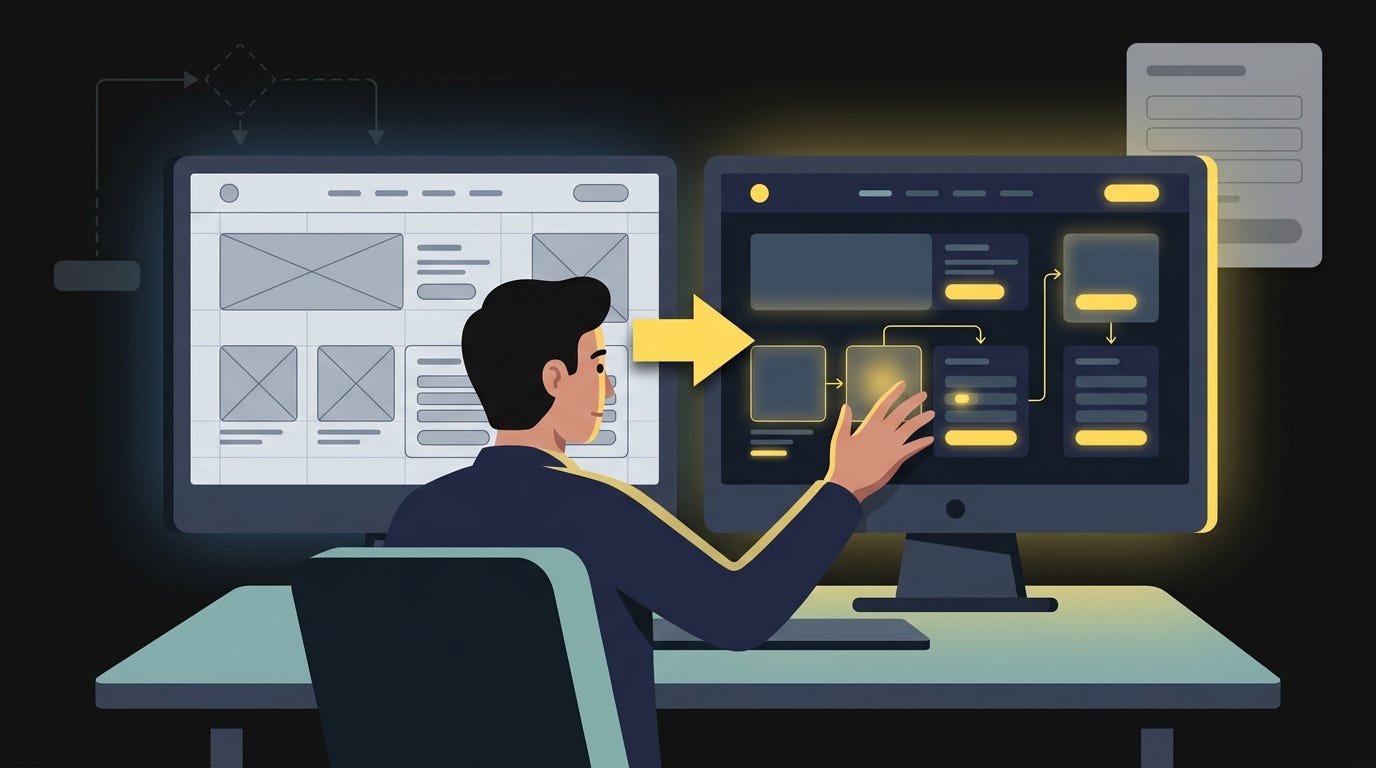
Step three is mapping the flow itself — entry points, actions, decision branches, and error states. Keep it simple. Overloading flows with technical or graphical detail during discovery hides structural flaws rather than exposing them. The goal at this stage is logic, not aesthetics. A whiteboard sketch that your whole team can read is more valuable than a polished diagram only one person understands.
Step four is testing and iterating. Walk stakeholders through the flow. Put it in front of real users if possible. The gaps and contradictions that surface in a thirty-minute walkthrough are the same ones that would have cost weeks to fix post-launch. Testing flows early is how you streamline product validation and lower rework expenses before they compound.
What Good Flows Actually Deliver for Your Business
When flows are built correctly during discovery, the downstream effects are measurable. Teams align faster because there is a shared reference point. Developers build less ambiguity into their work. Designers make fewer structural revisions. And the product that ships is closer to what users actually need.
From a revenue standpoint, well-mapped flows improve conversion rates by eliminating navigation friction and minimising user drop-offs — including high-cost drop-off points like cart abandonment. When you can see exactly where users are expected to make decisions, you can identify where those decisions are likely to fail and fix them before launch rather than after.
The KPIs to track once your product is live — conversion rates, bounce rates, drop-off points, goal completion rates — are all direct reflections of how well your flows were designed in discovery. Heatmaps and analytics will confirm what your flows predicted, or reveal where the logic broke down.
SaaS teams that have used MVP-stage flows to gather early feedback and iterate before scaling have consistently improved feature quality and user satisfaction before committing to full builds. The investment in discovery pays for itself by cutting the cost of mistakes that would otherwise surface in production.
Summary
User flows during product discovery are not optional if you care about shipping something that works. The process is straightforward: research real users, define single-task objectives, map logic simply, and test before building. The cost of skipping this step is always higher than the cost of doing it. Common mistakes — broad untested flows, skipped research, over-detailed diagrams — each carry a price tag that shows up in rework, misalignment, and missed conversion. Measure success with concrete KPIs once live, but validate the logic long before you get there.
The products that feel effortless to use are never the ones that skipped the structure phase.
메타데이터
- post_id
- 55b07cda660d
- slug
- user-flows-in-product-discovery-that-reduce-rework-55b07cda660d
- url
- https://medium.com/@wewireframe/user-flows-in-product-discovery-that-reduce-rework-55b07cda660d
- canonical_url
- https://medium.com/@wewireframe/user-flows-in-product-discovery-that-reduce-rework-55b07cda660d
- author_url
- https://medium.com/@wewireframe
- status
- ok
- fetched_at
- 2026-06-09 15:37:30