150 Favorite Movies: #20 — Fantastic Mr. Fox
“They say all foxes are slightly allergic to linoleum, but it’s cool to the paw.”
150 Favorite Movies: #20 — Fantastic Mr. Fox
Image from Golden Age Cinema
“They say all foxes are slightly allergic to linoleum, but it’s cool to the paw.”
Among the most acclaimed and beloved books in the Roald Dahl oeuvre of eccentric, slightly scary children’s literature is Fantastic Mr. Fox. Originally published in 1970, the classic beginner’s novel was a staple of elementary libraries the world over before it finally met its desired auteur, Wes Anderson, to adapt it for the big screen. Like the book, 2009’s Fantastic Mr. Fox is as much for adults — with all of its hedonistic commentaries — as it is for kids, making the childlike whimsy of a Wes Anderson film the perfect marriage for the source material. (Anderson has since delivered a deluge of Dahl adaptations to Netflix.) For his entire career to this point, Anderson worked in live-action filmmaking, but the world of Mr. Fox (George Clooney) demanded to be told in stop-motion animation format, yet another medium excelled at by the writer-director (Noah Baumbach is also credited on the screenplay). This light-yet-heady adaptation of the classic text features a neighborhood of folksy animals around Mr. Fox, including his family [wife Mrs. Felicity Fox (Meryl Streep), son Ash (Jason Schwartzman), and nephew Kristofferson (Eric Chase Anderson)] and compatriots [Badger (Bill Murray) and Kylie (Wallace Wolodarsky)], all voiced by Anderson regulars. The story is simple, however. Mr. Fox attempts to balance his responsibility to his family and his humdrum lifestyle with a burgeoning midlife crisis that calls him back to a life of petty crimes — namely the robberies of the nearby farmers, Boggis (Robin Hurlstone), Bunce (Hugo Guinness), and Bean (Michael Gambon).
[embed]
Try listening to this while you read to set the mood. Spoilers ahead!
Whenever I watch Fantastic Mr. Fox, I’m convinced there is no better opening to any film than Mr. Fox asking Mrs. Fox, “What did the doctor say?” while standing atop an autumnal hill, as The Wellingtons’ “The Ballad of Davy Crockett” bathes the film in relaxed energy (to contrast with Mr. Fox’s manic enthusiasm). Does it get better than this? Even though we know the Roald Dahl book already, the movie commences with this hook into a moment before the lives of the Foxes develop for themselves, demonstrating to the audience how they lived before the core thrust of the film’s story. From it, we learn there’s something medical transpiring. We also learn that he is a cooler, freer (just like Crockett and his awed frontier) character than most children’s protagonists, but we also learn that they care about each other. Mr. and Mrs. Fox live in a beautiful land where they can eat apples freely and steal birds for dinner together from neighboring farms. Yet, that little twinge of curiosity toward the in media res appointment Mrs. Fox arrives from suggests that there is a path leading to “the straight and narrow,” should a family complicate their free-wheeling criminal lifestyle. Or so we think.
This opening line is probably my favorite quote from the entirety of Fantastic Mr. Fox, for its overall relation to the film. However, the movie is brimming with classic pieces of dialogue that are not immediately quotable, but made memorable by the performances anchoring them. Clooney, especially, is phenomenal in his most prominent voice acting role to date. When Mr. Fox says to Mrs. Fox after navigating the traps set out for them on the farm, “Move out of the way, honey. That’s right where it’s going to land,” and when he remarks to her about an exchange regarding Ash not wanting to go to school, “I love the way you handled that,” I am mesmerized. The cadence with which Mr. Fox speaks is so distinct and Clooney’s performance is so originally informed. No other character has ever been like this or spoken like this. With his signature whistle and tongue clicking, Mr. Fox is slick like a fox, cunning like a heist leader (the Clooney specialty), and never afraid of being vulpine.
Mr. Fox is an impressively realized character and one who is more complicated than the typical animated archetypes (he is much closer to Albert Brooks’ thoroughly lived-in take on Finding Nemo’s Marlin than he is to Steve Carell’s cipher-y Gru). Mr. Fox always knows exactly what he wants out of life and never trusts others to know what would be for them. To him, he is of a higher mind. When he suggests taking the scenic route back home, it is hardly a suggestion; it is the only way. On top of that, the scenic route is prettier but also slightly quicker. Mr. Fox is always maximizing his life and his time. Wouldn’t a higher intellect need to do exactly that while looking down on others in true Zuckerbergian fashion?
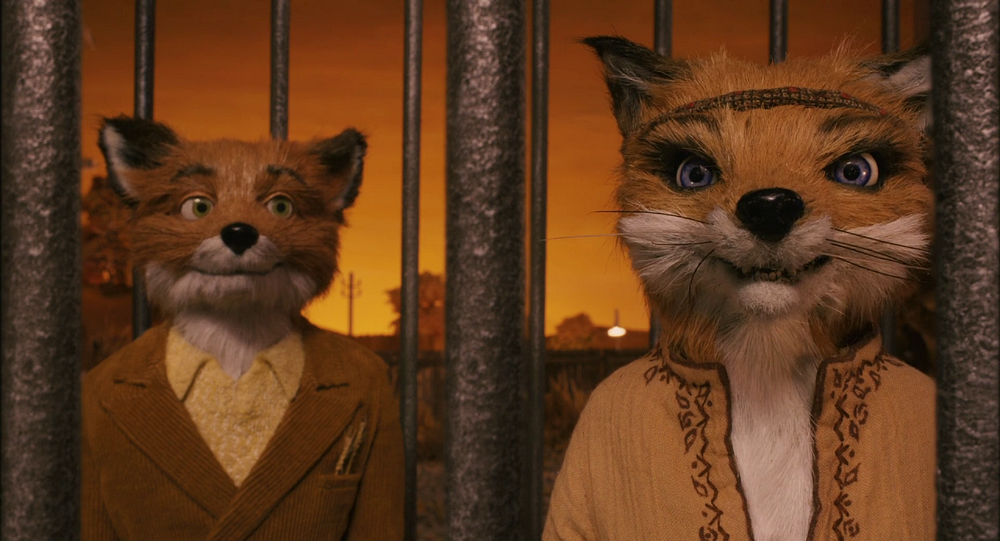
Image from Criterion
Consistently, we see that Mr. Fox rebukes the typical expectations of foxes to move into dangerous circumstances on purpose. Existing simultaneously as both predator and prey, Mr. Fox happily leans into both. He strokes the ego that requires him to hunt and steal and slip around in shadows, but he also lives for the vicarious thrills that sleeping underneath the enemy provides. In Fantastic Mr. Fox, the title character does struggle with a midlife crisis that fuels this unruly need for risk, but he is also striving to make the most of himself at the age of seven fox years (his father died at seven and a half fox years, after all). “Do you still feel poor?” Mrs. Fox asks him when he is surrounded by the joys of a domestic life. However, when his son possesses the apparent opposite of his derring-do spirit and his career as a newspaper columnist is mundane and left on read, Mr. Fox can’t help but lean away from struggle and into the risk — even when his life is populated by the sensibly risk-averse.
“I’m trying to tell you the truth about myself,” he pleads with his wife. He sees himself as a wild animal at heart and a doting husband and father in logic only. However, the latter is what his called responsibility is, and no amount of inner identity can usurp it (the parallels run strongly with stand-up comedians and fathers at Disney World who seem content to brag about how much they hate their families, but Mr. Fox is more articulate and considered than any of them). “I don’t care about the truth about yourself,” Mrs. Fox retorts firmly. “This story is too predictable.” To this, Mr. Fox asks, “What happens in the end?” She clearly posits her ultimatum in response as, “In the end, we all die. Unless you change.” Mr. Fox’s midlife crisis is valid, but it’s also harming others, and the story will end in tragedy unless he learns to accept his place in the world.
That’s the idea of Fantastic Mr. Fox’s inciting incident. It’s not about Mr. Fox reclaiming his youth; it’s about reclaiming his life and the subsequent understanding that life changes. His desire to steal from (LeBron James voice) not one, not two, but three farmers in a “triple header” with Kylie is his way of getting “back in the game” and pushing luck as far as the acreage of Boggis, Bunce, and Bean’s farms extend. Yes, it’s also an act that puts his entire family and community for which he’s supposed to be responsible at risk, but Mr. Fox is so thoroughly convinced that his talent is exceptional and indefatigable that he genuinely does not believe the people he loves are at risk. It’s a deeply masculine naivete, but it’s sincere. And for a moment, as he enters into the heist process via the security monitors of the farms, we’re as duped by the fantastical nature of Mr. Fox, too. Just like when another stop-motion showman, Rocky from *Chicken Run*, entered into a coop of birds, Mr. Fox feels profoundly talented beyond all reason and beyond any capabilities the farmers have to stop him. However, it’s all fun and thrills until it’s not. Until the gravity of maturation comes knocking at the doors of every animal who is displaced by Mr. Fox’s hubris.
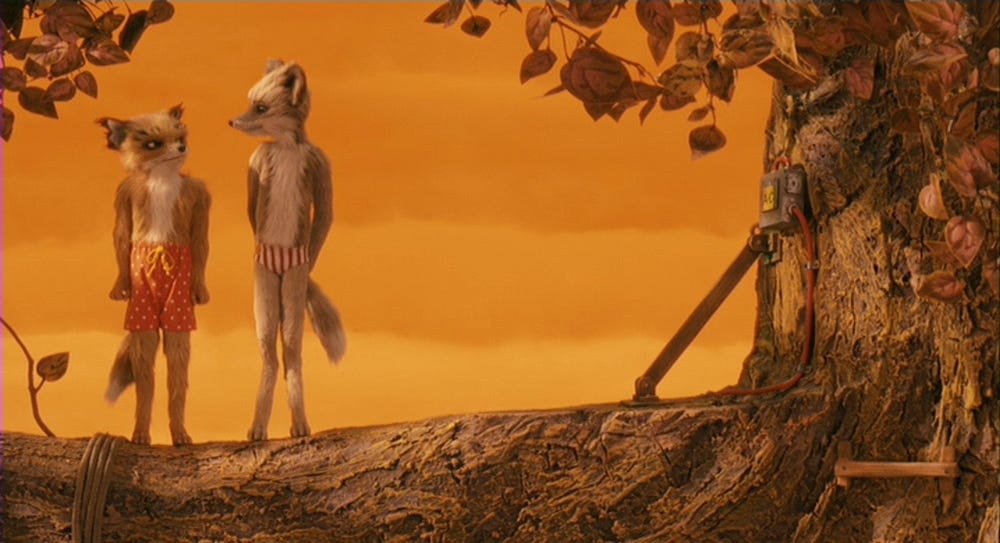
Image from IMDb
Most of Mr. Fox’s behavior is distinctly juxtaposed against the honorific Wes Anderson ascribes to him. What he does is deceitful, selfish, and damaging, especially since it was not an impulsive act to rob these three farmers and set their focus on destroying the entire wild animal population in their immediate vicinity. It was an act that was warned against by many, including his own family.
When Mrs. Fox eventually comforts Ash, who has progressively felt more and more inadequate in the eyes of his father, who seems to prioritize Kristofferson and other animals who take after him, she states, “I know what it’s like to feel different.” Ash, downtrodden and unable to envision a truth that does not emanate from Mr. Fox, asks, “I’m not different, am I?” However, Mrs. Fox counters with one of the film’s central tenets. “We all are. Him especially,” she says, gesturing towards her husband. “But there’s something a little fantastic about that, isn’t there?” The differences among us are what make us special as long as we’re utilizing them to be good to others and transform the world into a better place — even if only by a fraction of a degree. The farmers are never aiming to make the world a better place. Mr. Fox, for a bit, is not either. But over time, it is Mr. Fox who learns the right way of being and the path that deposits him closer to altruism.
Stealing as many things as he possibly can is not a great plan; it’s hardly even a plan at all. However, it is the behavior Mr. Fox thinks people expect of him. It’s that notion that to be the “Fantastic” Mr. Fox, he must continue performing the high-wire acts that earned him the same reverence and mythmaking as those who looked to the West in the old frontier days. That it’s what is needed from him. However, any heist he plans is merely a Band-Aid fix. Anytime Mr. Fox believes the farmers have been vanquished, they regroup to hit him back. Anytime Mr. Fox narrowly escapes with his life (but not his tail), Kristofferson is forced to act as the voice of reason beyond his station by cautioning against unnecessary risk. Likewise, Mr. Fox preaches awareness of self as the solution for the human-induced problems they’re facing, but he is completely unaware of what he has pushed Ash toward when his son decides to enter the den of the enemy to retrieve his father’s tail in an act of unnecessary merit-proving. After all, if his father never learned a lesson, why should Ash?
Image from Letterboxd
Yet, Mr. Fox is still able to reclaim his status as the Fantastic Mr. Fox because of these perspectives that gradually wake him up to the life built directly in front of him. His differences are not irredeemable, but they are him. And if it’s differences that make us fantastic, then there can be no denying that he is the Fantastic Mr. Fox — even when he falters. And she is the Fantastic Mrs. Fox, and their child is the Fantastic Ash. For our protagonist to become this way, though, his self-reclamation project must start with Ash.
With Ash, Mr. Fox falters a lot. He often dismisses Ash as “too little” or completely uncoordinated. During his selfish midlife crisis, Mr. Fox completely eschews his father-son relationship in favor of a fascination with Kristofferson, whom he allows to accompany him on the heists because Mr. Fox is only interested in those who can provide skill to his quest, rather than ensuring the safety of others or protecting the ones he is responsible for. “You think I’m no good at anything!” Ash storms in a huff, feeling frustrated with his father for his persistent indifference; he feels worthless in the eyes of the fox who only shows affection to talent.
However, as Mr. Fox gradually recognizes how his erring has led to communal dissolution and familial strife, it is exactly the responsibility he ignored that he reclaims. With the village in danger from the wrath of Boggis, Bunce, and Bean, Mr. Fox protests Ash claiming that the conflict and its tumultuous trajectory was his fault by taking the more mature accountability all his own. “It’s not your fault. It’s mine,” he claims before first making amends towards the personal relationship.
Image from The Hollywood Reporter
“Did I ever tell you about the time I learned we were gonna have a cub?” he asks Ash, somewhat rhetorically. Then, we flash back (through only Anderson’s words, Clooney’s vocal performance, and the stop-motion animation style) to their escape from the fox trap in the beginning of the film. “The whole time I put paw over paw, scooping dirt and pebbles with your mother digging like crazy beside me, I kept wondering: Who is this little boy gonna be?” he recalls. “Or girl,” Ash counters, grounding his differences from his father further, eventually culminating in his taste for grape juice as opposed to the collective lust for apple juice and a parable for accepting children for their intrinsic identities, rather than ascribed plans. “Or girl, right,” Mr. Fox agrees. “Because at that point we didn’t know. Ash, I’m so glad he was you.”
Here, Mr. Fox is not pretending that Ash is as gifted as he ever was and is capable of Olympic-level talents. Rather, he dignifies Ash and loves him for his differences, rather than in spite of them. Making amends is the fantastic thing to do. It’s also the selfless thing to do. A wild animal wouldn’t do that, but a sophisticated one would. And while Mr. Fox’s cool, sleek heists and inclination toward danger were sophisticated in a Clooney sense, this sophistication is one of family. It’s not fantastic to be death-defying and risk-prone. What makes Mr. Fox fantastic is his ultimate decision to be a good person and to embrace his nature, rather than the nature of the lineage of foxes that inspire him.
The concept of “wild” is one that percolates in the forefront of Mr. Fox’s mind throughout the movie. In one of his inspirational speeches, he espouses the concept and regards his companions and loved ones as such. “I... see a room full of wild animals,” he asserts after regaling the community with all the noble accomplishments and occupations they possess. “Wild animals with true natures and pure talents. Wild animals with scientific-sounding Latin names that mean something about our DNA,” he emphasizes. “Wild animals each with his own strengths and weaknesses due to his or her species.” The nature v. nurture debate would be a fascinating one to Mr. Fox, who is as in touch with the scientific fact that he is a fox as Matt Damon is with the fact that he is from Boston. It’s as much a sense of pride as anything else. He loves that his name comes from Latin, and he loves belonging to that vulpes vulpes species so much that he cannot fathom how others wouldn’t think as much about it. For Mr. Fox, giving a name to his core identity that exists whether he is fantastic or not is what gives him and others dignity. The mere fact of this vulpine identity (especially as it extends to his predilection for cunning and planning) is enough to excite him so severely that Stan Weasel (Anderson, in a line delivery so perfect he must have cast himself to read it) snaps, “Stop yelling!”
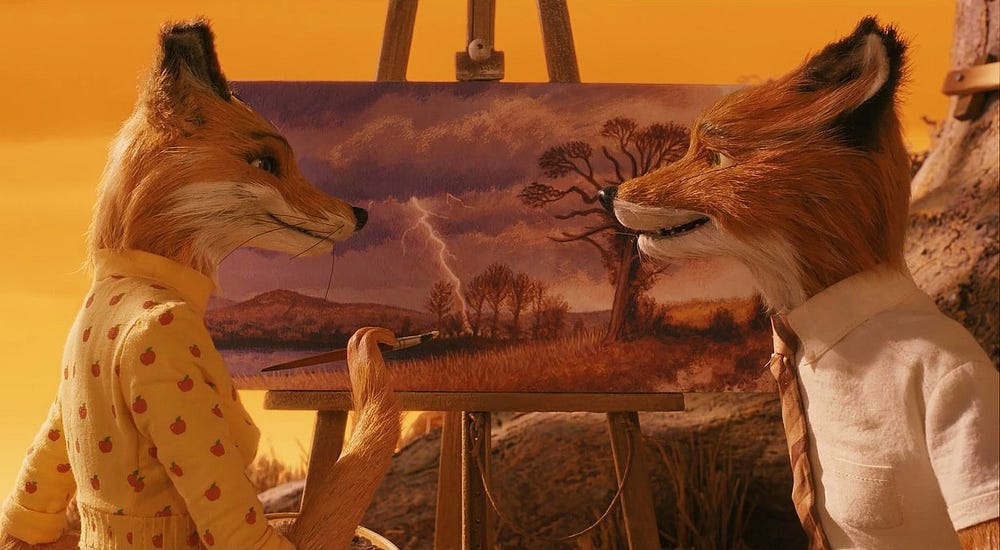
Image from Regal
In the great divide between striving to be the “Fantastic” Mr. Fox and striving to honor the legacy of wild animals the world over, the film’s protagonist is left trying to be more than he is. Yet, he already is. As he explains to Felicity in a gorgeously framed realization of selflessness (Mr. Fox preparing to sacrifice himself to the farmers) against pouring water in the background, Mr. Fox confesses,
“I have this thing where I need everybody to think I’m the greatest — the quote-unquote fantastic Mr. Fox. And if they aren’t completely knocked-out and dazzled and kind of intimidated by me, then I don’t feel good about myself.”
Unlike Felicity, Mr. Fox cannot marry the sophistication of his responsible life with the undeniable nature of his wild one. His ambition for himself is not comparable to the family and life he has already built for himself with Felicity and with Ash; that is what is fantastic. Yet, he is still a wild animal and reckoning with how it can possibly be okay to embrace his nature, even when the entire world is trying to tell him he’s wrong about what that is.
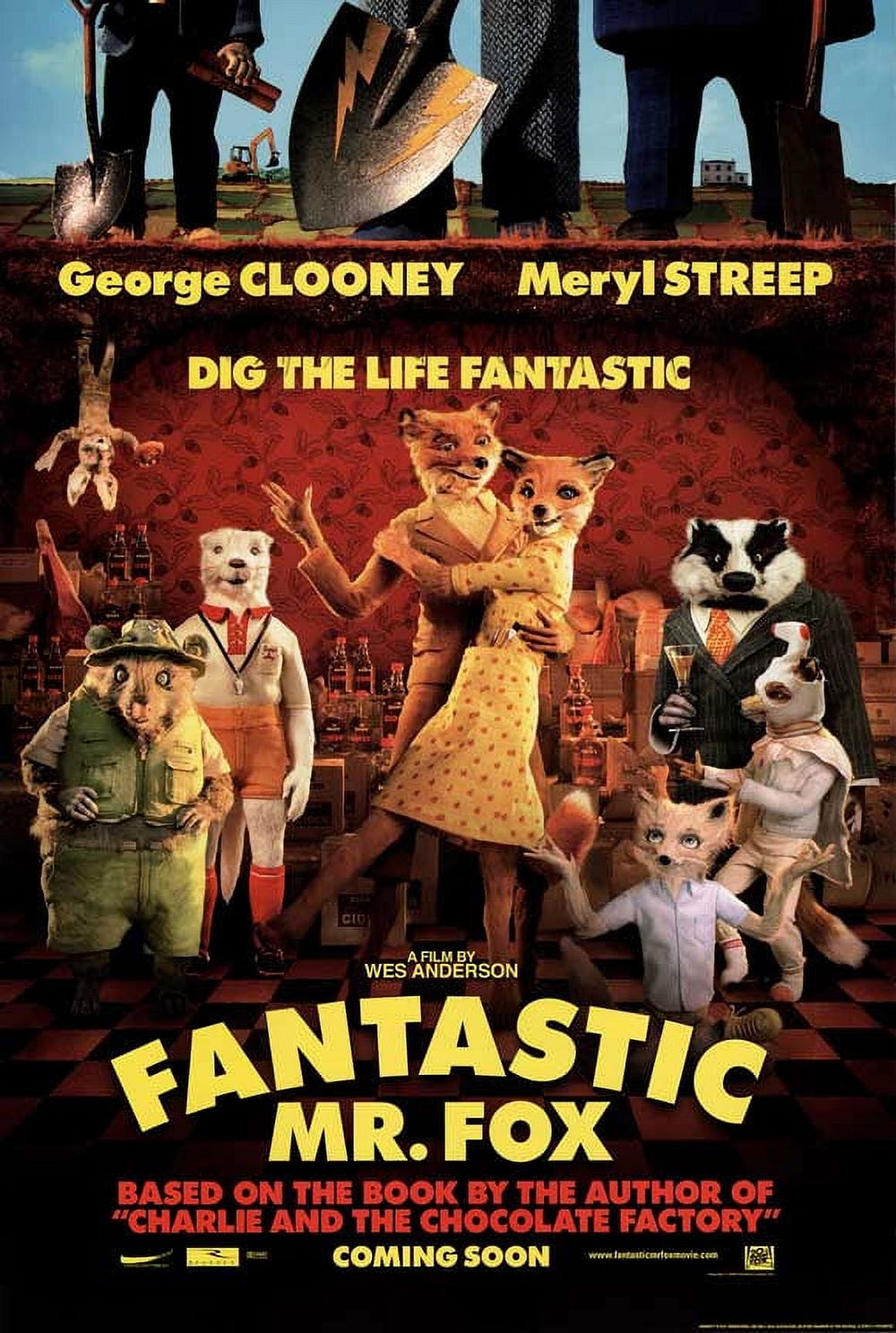
Image from Walmart
Is he a fantastic fox? Is he a wild animal? Is he a family man? A journalist? A thief? A vulpes vulpes? “Redemption, sure. But in the end, he’s just another dead rat in the garbage pail behind a Chinese restaurant,” he says when eulogizing Rat (Willem Dafoe), the vagabond-turned-bodyguard of the Boggis, Bunce, and Bean crop supply. How can Mr. Fox not see himself as fated for the same result if he doesn’t muster the excitement an outside surveyor would deem as worthy of life, in the same way he deems Rat as unworthy. “What were you looking for, Rat?” he asks, as his foe lays dying in the sewer. What he sees in the rattus is the unknowable motivation that he realizes others see in him, too. As such, Rat’s ultimate demise is the fate Mr. Fox wants to avoid himself. Yet, what Mr. Fox has done and forged in his life did matter to the people he knew. The movie is a journey of recognizing that this can be enough in life — to matter to the people who matter to you, even if you don’t necessarily “matter” to the world at large. Yes, being forgotten can be a terrifying thing, but it can also be so freeing. If we’re not going to be remembered for what we did, then why are we trying so hard to be who we’re not? To decline our truest selves?
In addition to centering a profound philosophy in Fantastic Mr. Fox, Rat is also a harbinger of the film’s genre sensibilities. With Rat, Fantastic Mr. Fox diverges into a western for a spell. Simultaneously psychotic and flirtatious, the luchadorian Rat embodies the archetype of an outlaw who grew weary of a life of crime and turned to the role of the guard for the people he once stole from. While this may seem like a dishonorable tactic, to the enlightened criminal, it is actually the most honorable way to be because Rat is the most honest about his true motivations: himself. When Mr. Fox eventually bests him in combat, Rat does reveal the location of Ash’s imprisonment (“They wanna trade the son for his papa,” “Would you have told me if I didn’t kill you first?”) because he is a rat of honor. He’s representative of that droll, referentially archetypal sense of humor that Anderson frequently brings to his non-cliche films (Benedict Cumberbatch’s performance in Anderson’s short film, Poison, is seemingly modeled after Rat, to me).
As Rat, Willem Dafoe spreads his line deliveries out with a lithe sneer. “You’re gettin’ a little long in the tooth yourself, partner,” he remarks with a quip and a click of his fingers. The snaps and the soft, controlled trail-offs with each staccato utterance (“Pretty as a mink stole”) are reminiscent of the elusive criminal in western films — the characters who are thin and nimble and move with a gangly, off-putting physicality, as if the blades they hold could cut to the bone at any moment. Just as the foxes wear bandit masks even though their faces matter not to the human farmers, the tropes of classic American cinema are played into with every characterization, especially Rat’s. After all, the way he looks out for himself is to have a guaranteed pipeline to apple juice. “Like melted gold,” he says upon his final taste of the nectar, and one can almost imagine Ricky Nelson’s Colorado Ryan or Alfonso Bedoya’s Gold Hat uttering the same thing.
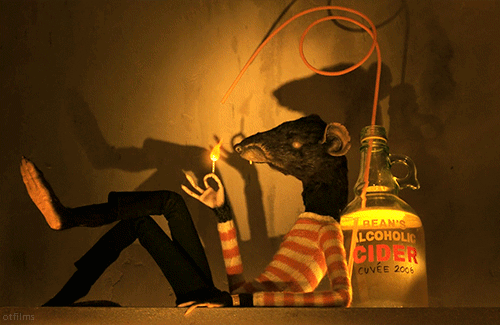
Image from Tumblr
And the thing is, we can actually empathize with Rat in his final moments. As the audience, we feel that melted gold, too. The mise-en-scène and production design of Wes Anderson films is always among the most superlative of the medium, but stop-motion animated films lend themselves to that superlative even more because every millimeter of every frame is controlled by the auteur. (A plane with a banner advertising Boggis, Bunce, & Bean International Supermarkets passes overhead, for example.) Wes expertly depicts that apple juice as true treasure. There is no other description for it aside from “pure, melted gold” when we see the gorgeous glow of the shelves of cider that Anderson and his team clearly spent a significant amount of time on to light as brilliantly as they did.
Every detail of Fantastic Mr. Fox is treated with this level of care and precision, which is why the film coalesces into the concentrated burst of artistry that it is. Alexandre Desplat’s score is so lively and charming, adding a stroke of whimsy to every scene, whether it’s focused on a meaningful conversation or a daring escapade. Obviously, the score is elevated by its presence in the film in which it marries deft source material. However, even just hearing it in Tasha Jones’ TikTok rankings of music scores is enough to make me nostalgic and emotional from just the sheer evocative sound of it.
Throughout Fantastic Mr. Fox, it’s clear that Wes Anderson is having some of the most fun he’s ever had with the form of cinema (score, lighting, or otherwise, as evidenced by Mrs. Fox glowing like a vintage Christmas lawn ornament when pregnant the second time; Mr. Fox glows, too, because he’s ready now). Stop-motion animation is just a perfect vessel for the Wes aesthetic. It allows him to meticulously craft every single scene, every single face (not everyone can look like Jason Schwartzman), every single stitch of a costume. This autumnal, Dahl aesthetic (the dinner table later is not unlike the Thanksgiving spread laid out by Snoopy and Woodstock) suits Anderson so well because the characters are too cerebral to relax in a summery way and too lively to depress in a wintry manner. Instead, they exist in Wes’ world where everyone is too clever by half and presenting as if they are devoid of emotion when they are actually rife with it.
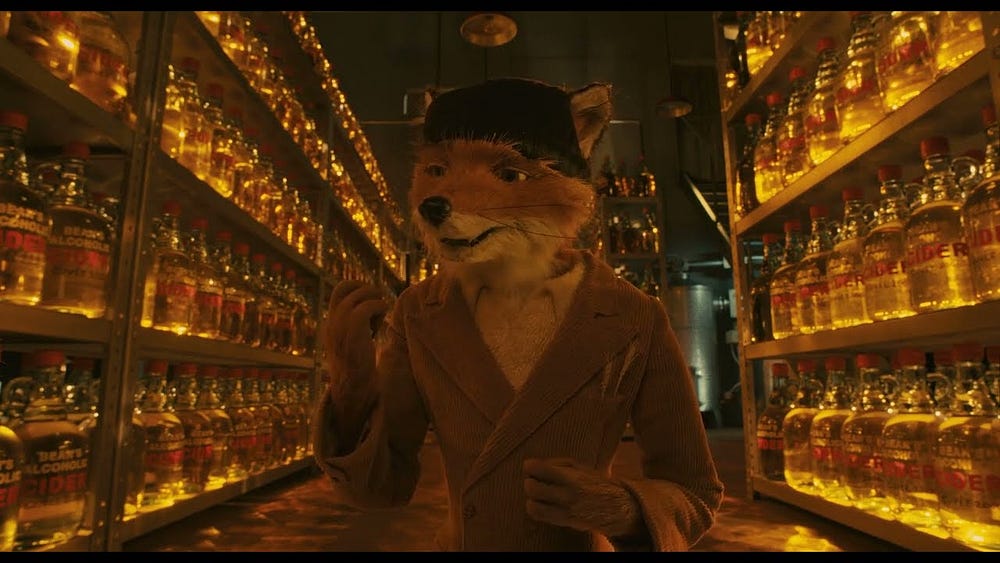
Image from YouTube
In Wes Anderson films, people are recognizably human, but not of our world; they do not fully act in the way we know human beings to act. In an animated film with anthropomorphic characters, Anderson is able to enhance this essence of his work. Yes, it includes gorgeous moments of the film’s art direction, like Mrs. Fox painting thunderstorms while Mr. Fox eats apples and Ash and Kristofferson dive off of trees into pools (complete with tiny splashes) with a golden sky behind them. Yes, it includes the fact that this is the first children’s movie since ones spearheaded by the Sherman Brothers or Rankin Bass to include Burl Ives on the soundtrack (as well as The Beach Boys and Bobby Fuller). But it also includes the eccentricities that turn Fantastic Mr. Fox off-kilter in a way Bambi never could be. Mr. Fox fights Rat in a freeze frame pattern that electrifies the skeletons of the creatures. Characters snarl as they devour food, pulverizing it into crumbs as real foxes would. Chaos is depicted with hypnotic spirals in characters’ eyes, and no one would ever dare say “fuck,” but they’re constantly muttering “cuss.” The world of Fantastic Mr. Fox is aware of so many archetypal worlds, but it is entirely jolting to our reality.
In Badger’s expository description of the three farmers (“Walt Boggis… eats three chickens every day for breakfast, lunch, supper, and dessert. That’s twelve in total, per diem”), Anderson’s patented aesthetic symmetry reemerges as the character specificity details and colors each of the antagonists. Boggis prepares an even chicken for nearly every waking hour on average. Bunce is unable to keep his head above water in a swimming pool. Bean churns his apples into an alcoholic cider. Throughout each of these snippets, the symmetry of the men and of their vices is as palpable to the thrust of the Badger-led scene as Mr. Fox’s eventual heist plan visualization is. The blueberry laced with sleeping powder, the scalpel, the glue. All of the objects are placed straightly and neatly on the desk in front of Mr. Fox to contrast with the wild hopping and thrashing about when Mr. Fox tries to spur a new strategy on in the eventual escape from the farmers. When the characters dig, Anderson zooms out and they are depicted in a tunneling, burrowing, ant farm-esque elegance. Always, the hyperbolic childlike narrative manifests for Wes.
Wes Anderson makes movies that could almost exist as comic strips, too. The symmetry and production are so precise that they can almost be envisioned as distinct panels with dialogue meant to clearly establish punchlines that punctuate the respective scenes.
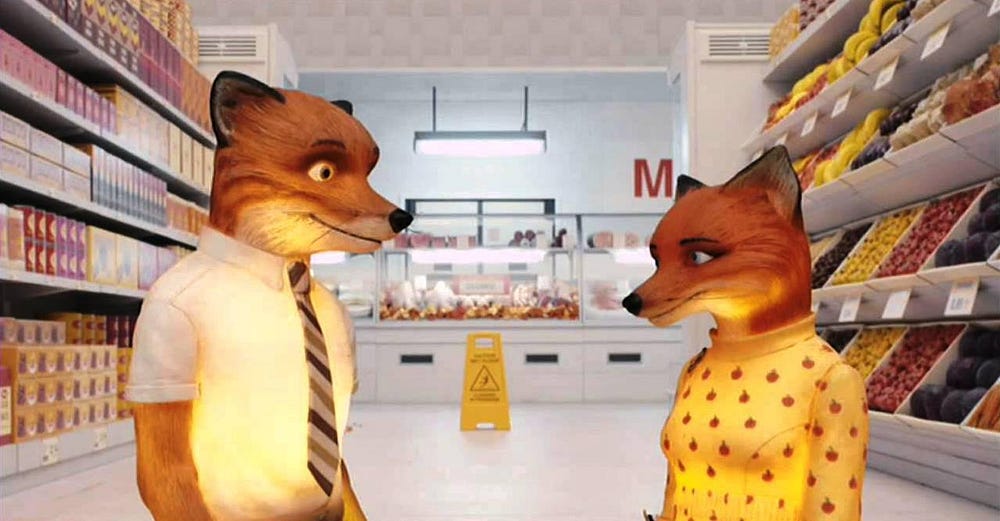
Image from Reddit
There is the scene in which Kylie asks Mr. Fox, “What’s the master escape plan?” The solution, then, is to jump up the electric fence and shock themselves into Daniel Sternian skeletons before Boggis is able to eat the blueberry and unwittingly knock himself unconscious.
There is the symmetrical dialogue of Mr. Fox dealing with the regretful fallout of his own decision-making by rhetorically asking himself,
“Why the cuss didn’t I listen to my lawyer? At this point, we’ll be lucky if we can flip this tree for half of what we’ve already sunk into it. I won’t be able to sleep on my back for six weeks and on my stomach I feel congested. Why the cuss didn’t I listen to my lawyer?”
And, of course, there is the scene in which Ash, desperate to be talented at anything asks his stylish whack-bat instructor, Coach Skip (Owen Wilson), if he reminds him of when Mr. Fox used to play whack-bat. To this, Coach Skip exasperatedly replies, “You’re improving. Let’s put it like that.” One can imagine Charlie Brown being told the same thing. Ash is distinctly Schulzian: always earnest, never exceptional.
[embed]
Likewise, in Anderson’s purview, every scene of Fantastic Mr. Fox is clinical, efficient, and impeccably constructed. The story never wastes a second of time, even when we have graceful moments like the acorn bouncing and rattling around a teacup, which exists to create a mood amidst Wes’ technical wizardry. Even when Mr. Fox finally gets his tail blown off by the farmers, we don’t see his confession of how he lost it to Felicity, who has spent most of the movie to that point warning him. The movie instead returns to the action by observing Fox stating simply that his tail will not grow back again. Fantastic Mr. Fox is abreast with plenty of elements that are not spelled out for children, despite the movie being ostensibly a “children’s” film. Likewise, it also has a penchant for the scary [it is rife with gunfire and flooding; Bean uses Fox’s tail as a necktie; Felicity expresses regret for her marriage. Even the lives of the children, are threatened (“They’ll kill the children!” “Over my dead body, they will.” “That’s what I’m saying! You’d be dead, too, in that scenario.”)!]. The best in children’s art can attain the moments that are unsettling and stay with you long after you’ve come of age.
Of course, none of these moments would mean as much without the dexterity of the vocal performances. Clooney and Streep, two of the biggest stars of their generations, fit in well as the leads here with Anderson’s character actor troupe of performers serving as the supporters this time. Schwartzman, Murray, Dafoe, Wilson, Adrien Brody. All Andersonian staples who have led their own films in his oeuvre. But here, they round out the cast expertly with great vocal turns that are not mere stunt casting (like when Samuel L. Jackson is somehow a draw for a Garfield movie). Gambon is also a welcome addition with a voice that draws the audience in before they even realize why. Yet, in spite of Streep’s Felicity Fox possessing something of a thankless Skyler White-esque role in the first half of the film she still gets the line of the movie: “If what I think is happening is happening, it better not be.” The mark of a quality voice acting performance, for me, is being able to vividly hear dialogue like that — even when transcribed — because any other reading would be unimaginable.
Fantastic Mr. Fox, as a whole, has a ton of fun with the malleable majesty of words. They become a glorious marriage with the Andersonian aesthetic of the movie’s stop-motion style. That is, one enhances the other. For example, it’s cool that Anderson repurposes Dahl’s classic line about Boggis, Bunce, and Bean (“one fat, one short, one mean”) into the fight anthem of the movie. It brings a Johnny Tremain-esque sense of folktale adventure to the movie. However, because the book also has fable qualities (the themes can be boiled down to rudimentary lessons like “don’t be greedy”), the movie is able to springboard into a deeper character study than a simple admonishment of avarice. Anderson blends form and pen to recognize that the journey of self-actualization is about returning to our truest selves, rather than discovering a manufactured version of who we think we want to be.
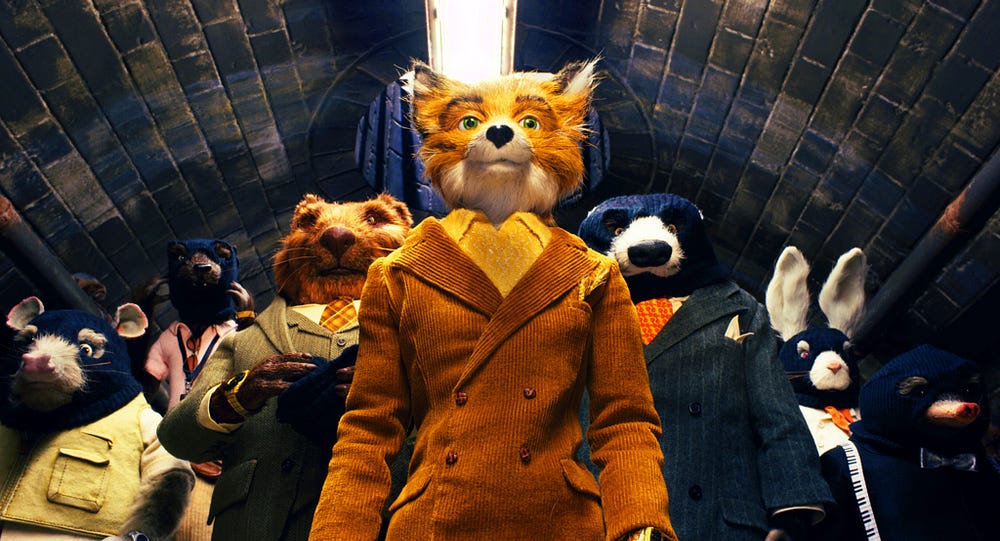
Image from IMDb
Furthermore, the Ash-Kristofferson dynamic is rife with this dichotomy from Anderson. Yes, Jason Schwartzman delivers a splendid line delivery with, “There’s a lot of attitudes going on around here… Don’t let me get one” as Ash turns over in bed. But it is enhanced by the build-up of tension between him and Kristofferson, as in their diving contest that sees Kristofferson fluidly rotating like an out-of-body Greg Louganis. (The surreal nature of the moment is reminiscent of another splash of Anderson style in The French Dispatch, when a cartoon strongman hyperbolically flips from a crashing vehicle.) Meanwhile, Ash flails wildly and maintains no poise whatsoever. Short lines of dialogue like his chastizing of Kristofferson are the feeble attempts for characters like him to regain some sort of power when they feel theirs has evaporated.
Kristofferson, too, maintains much of the movie’s point-of-view when he’s on screen, as well. In a world of more nakedly emotional characters, Kristofferson exists as the outsider who tries to find his way in a system that is routine and comfortable enough for the other characters to be fallible. When he enters, he must be infallible. During a science experiment gone wrong, he calmly states, “We better extinguish this magnesium.” It’s a moment that is emblematic of his nature, which matter-of-factly states clarity and intent in the face of less rigorous and prim characters, who instead slide into more oafish territory. His words are the equivalent of the smoothness and sharpness that is present in the martial arts fighting he espouses when cleanly cutting down the bullies at his new learning facility.
Quickly — more quickly than Ash ever could have comprehended — Kristofferson carves out a role for himself at his new school. During the physical education class, Kristofferson proves himself to be a natural at the fictional sport of whack-bat. I’ve used this sequence to teach style because no one but Wes Anderson could have constructed this immaculate sequence. After all, no one would have such a unique perspective on sport as Anderson does. It’s explained to Kristofferson that in whack-bat,
“Basically, there’s three grabbers, three taggers, five twig-runners, and the player at whack-bat. The center-tagger lights the pine cone and chucks it over the basket, and the whack-batter tries to hit the cedar-stick off the cross-rock. Then, the twig-runners dash back and forth until the pine cone burns out, and the umpire calls, ‘Hot Box.’ Finally, at the end you count up however many score-downs it adds up to and divide that by nine.”
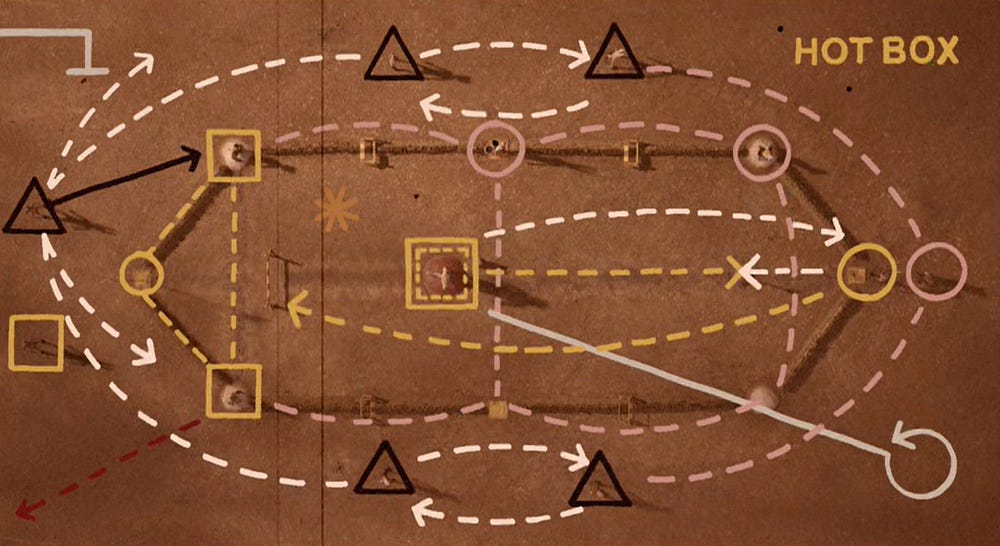
Image from WordPress
It’s explained too quickly to make any sense of it (in a fun, intentional way, as opposed to Asteroid City, which was astounding but really should have come with closed captioning), but that is necessary for the humor of the scene. When the game unfolds and every player on the pitch instinctively does exactly what they’re supposed to while we watch with frazzled confusion from afar (in that sense, it’s closer to a European’s view of American football than baseball) before a random, “Hot Box!” is called, followed by Kristofferson — deft at the sport, of course — politely exclaiming, “Divide that by nine, please!”
One can imagine that, even though the movie takes place during autumn, Ash has spent the majority of the nascent school year advocating for himself as a potential whack-bat prodigy. Maybe, for a moment, he was even able to convince himself that he was. But when he sees Kristofferson’s innate gift for the game, the illusions of his grandeur, his potential to be the “Fantastic Ash Fox,” crumble around him.
At this time, these feelings breed resentment and jealousy within Ash towards Kristofferson. Over time, though, the more Ash allows himself to connect with others over the strengths he does have (emotional authenticity, for example), the more he begins to accept himself for who he is and recognize that there is plenty of good to go with the flaws — even if the flaw is as minute and transient as a bout of grumpiness. “I’ve got mixed feelings about that,” Kristofferson states honestly when Ash eventually reveals that he is there to save him, after the former attempted to save the latter earlier. But the mere fact that Kristofferson is willing to admit that is why Ash is eventually able to bond with him. By now, Ash has accepted his nature, instead of continuing to attempt reaching beyond his station. It’s because he is little that he is able to fit through a grate. It’s because he is little that he is able to save Kristofferson. And it’s because he was honest and vulnerable that he and Kristofferson are able to recognize the need for whack-bat skills when they’re engaged with the final battle with the farmers (like when Happy Gilmore remembers the mini golf course to sink his final putt against a collapsed radio tower). The skills we do have can be applied to contexts we never thought possible for ourselves, as long as we allow ourselves to grow.
Image from Fandom
In this sense, Ash does kind of become the “Fantastic Ash Fox” because he is able to accept himself before even his father can. It is this recognition that becomes the impetus for Mr. Fox to do exactly that. Ash shows it’s possible to be who you are and be happy with that, rather than continuing to recklessly stretch beyond one’s means.
Mr. Fox’s final moment of growth comes when, while riding a motorcycle away from disaster with Ash, Kristofferson, and Kylie, he comes in contact with his greatest phobia: a wolf. Yet, this scene (the crux of the film) contains only the opposite of fear: understanding.
For most of Fantastic Mr. Fox, we are under the impression that our titular hero would leap and scurry at the opportunity to run away with the wolf he found in the hills. “Where did you come from?” he asks. “What are you doing here?” Part of Mr. Fox wants to know, so he may come from there, too. There is a yearning within him to accompany the wolf and live as wild animals embarking on wild escapades through the natural world. “Canis lupus!” Mr. Fox exclaims, gesturing towards the wolf. Toward himself, he remarks, “Vulpes vulpes!” before clarifying, “I don’t think he speaks English or Latin.” (“Pensez-vous que l’hiver sera rude?” he adds, Frenchly, asking if the wolf is prepared for a harsh winter, but the animal doesn’t seem to know.) Eventually, Mr. Fox’s immovable but flickering-with-emotion eyes encapsulate the entire sociological journey he has embarked upon throughout the film. His face is awash with recognition about what his son has endured, what his ancestors lived for, and what wild creatures journey on independently. In that moment, he simply admires the wolf and raises his fist to the sky. In return, the wolf raises his paw. “Wish him luck, boys,” Mr. Fox says, not averting his gaze from the wolf for even a moment. “Good luck out there,” they reply. The fists raised to the sky indicate that they respect what the animals engage with in their lives. The life of a wild animal is not the life for Mr. Fox. But it is for the wolf. And he is free, now.
[embed]
With artifice and discontent behind him, Mr. Fox grows into his own moniker and role of being fantastic. He firmly accepts how he must be to earn it. This progression is reflected in his final speech during the film’s coda. Now displaced within proximity to a grocery store, the community of civilized animals has rebuilt and reconnected with one another. To come to a state of peace with this new lifestyle, Mr. Fox nearly steps out of a Norman Rockwell painting and demonstrates why he deserves to be their leader now, even if he didn’t before.
“They say all foxes are slightly allergic to linoleum, but it’s cool to the paw. Try it. They say my tail needs to be dry cleaned twice a month, but now it’s fully detachable. See? They say our tree may never grow back, but one day, something will. Yes, these crackles are made of synthetic goose, and these giblets come from artificial squab, and even these apples look fake — but at least they’ve got stars on them. I guess my point is, we’ll eat tonight, and we’ll eat together. And even in this — not particularly flattering — light, you are without a doubt the five and a half most wonderful wild animals I’ve ever met in my life.”
Before The Bobby Fuller Four’s “Let Her Dance” kicks in for the requisite children’s movie dance party ending scene and after this speech, we see that Fantastic Mr. Fox is a title that only refers to the ending of the film. All this time, he has simply been Mr. Fox. But as he toasts to survival and a new way of life and a change that keeps the community together, even while remaking it in the image of those who opposed Boggis, Bunce, and Bean, he arrives at his true honorific. There is no life for Mr. Fox on the foothills of a community, darting between overgrown thickets and predators. Not a fantastic one anyway. Instead, there is a life where he is known, and he is loved, and he is right for the people who count on him. They never needed Mr. Fox to be unhinged to be fantastic. To be the king of the wild frontier.
메타데이터
- post_id
- 55c92f37852d
- slug
- 150-favorite-movies-20-fantastic-mr-fox-55c92f37852d
- url
- https://medium.com/the-film-project-150-favorite-movies/150-favorite-movies-20-fantastic-mr-fox-55c92f37852d
- canonical_url
- https://medium.com/the-film-project-150-favorite-movies/150-favorite-movies-20-fantastic-mr-fox-55c92f37852d
- author_url
- https://medium.com/@davewheelroute
- status
- ok
- fetched_at
- 2026-07-18 18:54:24