Britain's fiscal crisis is a story of low growth, not just high spending
Productivity has grown just 0.4% a year since 2007, leaving the state's expansive welfare commitments on an unsustainable footing.
Britain's fiscal crisis is a story of low growth, not just high spending

Productivity has grown just 0.4% a year since 2007, leaving the state's expansive welfare commitments on an unsustainable footing.
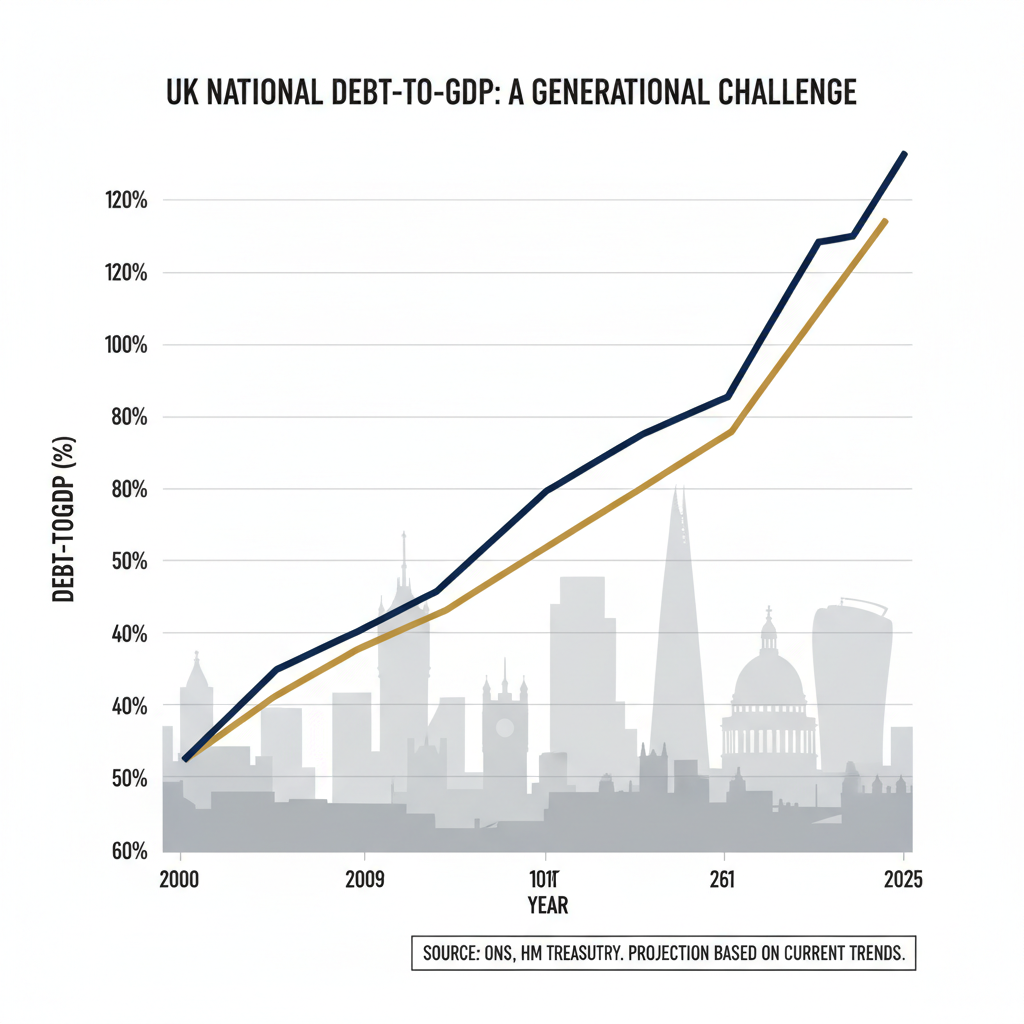
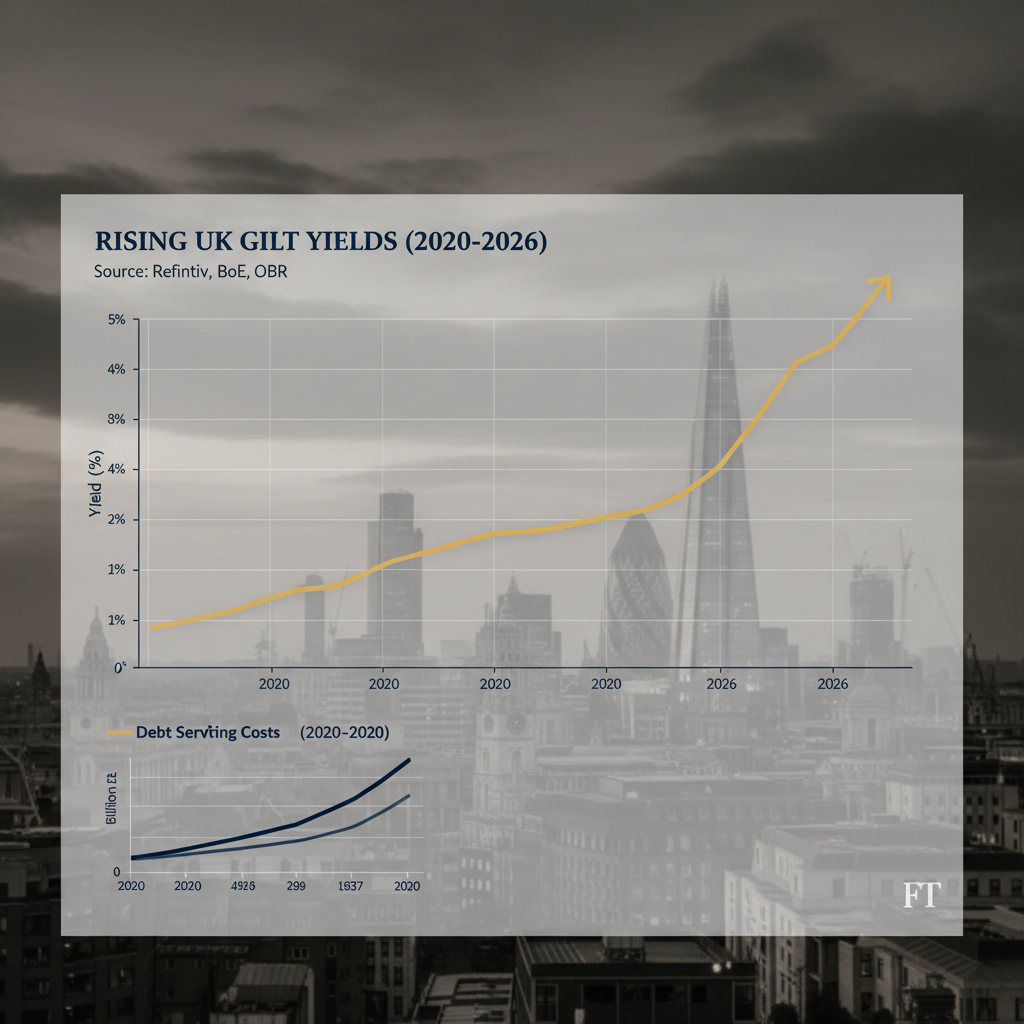
The Office for Budget Responsibility’s latest long-term fiscal projections landed last week with a familiar, grim thud. They show public debt, already above 100% of GDP, continuing its upward march towards 140% within fifty years. The primary driver isn’t some new spending spree. It’s the existing welfare state—particularly pensions and health—running headlong into the brick wall of Britain’s chronically low economic growth. The numbers are stark. Age-related spending is set to rise by 4.6% of GDP by 2070. To stabilise debt, the OBR calculates, would require tax rises or spending cuts worth £57 billion in today’s terms. The political conversation, however, remains fixated on the symptom—the size of the state—rather than the disease: an economy that simply doesn’t generate enough income to support the society Britons say they want.
The Growth Deficit
Britain’s fundamental problem is a growth deficit decades in the making. Since the financial crisis, productivity growth—the engine of rising living standards—has averaged a pitiful 0.4% per year. Compare that to the 2.3% annual rate enjoyed in the three decades before 2007. Business investment as a share of GDP has consistently lagged behind other major advanced economies; it’s about 10% of GDP, compared to 14% in France and 18% in the United States. This isn’t about any single government’s policy. It’s a structural failure that has spanned Conservative and Labour administrations, leaving real median wages barely higher today than they were in 2007. When your economy is stagnant, any level of public spending becomes harder to fund. The Institute for Fiscal Studies notes that even returning to the pre-2008 productivity trend would add over £300 billion to annual national income. Without that, the fiscal arithmetic will never close.
The Welfare State Bind
Into this low-growth reality steps an ageing population with firm expectations. The state pension triple lock, which increases payments by the highest of earnings growth, price inflation, or 2.5%, is a political sacred cow. The NHS, consuming over 8% of GDP, faces inexorable demand pressures from an older, sicker population. These are not frivolous commitments. They are the core of the post-war social contract. But their cost is exploding precisely because the tax base needed to support them is growing so slowly. The Resolution Foundation points out that the UK now spends more on working-age benefits than it did before the 2010 austerity drive, largely due to rising disability and ill-health claims—another symptom of a fraying social and economic fabric. The state isn’t just generous; it’s being asked to compensate for a sickly, low-wage economy.
The Political Paralysis
Confronted with this, politics has become a theatre of distraction. The current Labour government, like the Conservatives before it, tinkers at the edges—announcing reviews, modest planning reforms, and sectoral deals. It’s afraid to touch the triple lock or propose a serious overhaul of business taxation to spur investment. The opposition, meanwhile, flirts with radical rhetoric about slashing the state, à la Argentina’s Javier Milei, but offers no plausible plan for the transition or for boosting the growth that would make such a smaller state tolerable. The debate is polarised between those who want to protect the welfare state but ignore its funding crisis, and those who want to dismantle it but ignore the societal upheaval that would cause. Peter Mandelson’s recent vetting troubles over his Epstein links, which dominated headlines for days, are a perfect metaphor: the political class is absorbed by process scandals while the structural crisis deepens.
A Path Beyond Stagnation?
There’s no magic bullet, but there is a necessary direction. First, Britain must fix its investment problem. That means a coherent, long-term industrial strategy, not just tax breaks. It requires fixing the planning system that blocks infrastructure and housing, and stabilising the policy environment that has seen 15 major changes to business taxation since 2010. Second, it must address the health of its workforce. With 2.8 million people economically inactive due to long-term sickness, reforming both the NHS and the welfare system to get people back into work is an economic imperative, not just a social one. Finally, it requires honesty. Politicians must stop pretending that slightly higher growth will solve the fiscal gap, or that painless efficiency savings exist. They must level with the public: either accept higher taxes to fund the current welfare model, or accept a fundamental redesign of that model. The OBR’s £57 billion figure is the price of delay. Britain’s low-growth economy has run out of road, and the bill is now due.
메타데이터
- post_id
- 56100b6b7e46
- slug
- britains-fiscal-crisis-is-a-story-of-low-growth-not-just-high-spending-56100b6b7e46
- url
- https://medium.com/@bean_flickr69/britains-fiscal-crisis-is-a-story-of-low-growth-not-just-high-spending-56100b6b7e46
- canonical_url
- https://medium.com/@bean_flickr69/britains-fiscal-crisis-is-a-story-of-low-growth-not-just-high-spending-56100b6b7e46
- author_url
- https://medium.com/@bean_flickr69
- status
- ok
- fetched_at
- 2026-06-09 15:37:30