The Rhizomatic Society
1. Guiding Principles
The Rhizomatic Society

1. Guiding Principles
- Decentralization and Rhizomatic Structure: Society should be organized into interconnected, autonomous nodes (communities, cities, regions) that are self-sufficient but also contribute to a global network. This structure allows for flexibility, resilience, and the capacity to adapt to local conditions while maintaining a global cooperative framework.
- Sustainability: Every action and decision should prioritize environmental stewardship, aiming for a circular economy that minimizes waste, reduces carbon emissions, and protects biodiversity.
- Equity and Justice: Ensure that all individuals have access to the basic necessities — food, water, shelter, education, healthcare — and that human rights are upheld universally. Special attention should be given to historically marginalized communities.
- Human Flourishing: Beyond meeting basic needs, society should be organized to maximize opportunities for creative expression, intellectual growth, community building, and personal fulfillment.

2. Governance
- Polycentric Governance: Implement a system of polycentric governance where decision-making power is distributed across multiple levels — local, regional, global — depending on the issue at hand. Each level is accountable to the others, and power is distributed horizontally rather than hierarchically.
- Direct Democracy & Consensus Building: Local communities operate on principles of direct democracy, allowing citizens to participate actively in decision-making. For larger-scale issues, a consensus-building process ensures that decisions reflect the will of the people while balancing the needs of the collective.
- Global Cooperation Council: Establish a Global Cooperation Council, composed of representatives from each region, to address issues that transcend local and national boundaries (e.g., climate change, pandemics, global trade).

3. Economy
- Circular Economy: Transition to a circular economy where resources are reused, recycled, and regenerated. This minimizes waste, reduces environmental impact, and ensures that natural systems can sustain future generations.
- Universal Basic Services: Provide universal access to basic services such as healthcare, education, housing, and food. This ensures that everyone’s fundamental needs are met, reducing inequality and promoting social stability.
- Localized Economies: Encourage localized production and consumption to reduce dependence on global supply chains, minimize environmental impact, and strengthen community resilience. This includes local food production, renewable energy generation, and craft industries.
- Resource-Based Economy: Shift away from profit-driven capitalism toward a resource-based economy where resources are allocated based on need, sustainability, and long-term ecological impact rather than market demand and financial gain.

4. Education and Knowledge
- Lifelong Learning: Promote lifelong learning as a core societal value, ensuring that everyone has access to education throughout their lives. Education should be holistic, integrating practical skills, critical thinking, creativity, and emotional intelligence.
- Open Knowledge Networks: Establish open, decentralized knowledge networks where information and research are freely shared across the globe. This fosters innovation, cross-cultural understanding, and collective problem-solving.
- Cultural Exchange: Encourage cultural exchange programs and collaborative projects across regions to promote mutual understanding, respect, and the sharing of ideas and practices.

5. Technology
- Ethical Tech Development: Prioritize the development and deployment of technology that enhances human well-being, social equity, and environmental sustainability. Technologies should be evaluated not just for their economic impact but for their social and ethical implications.
- Decentralized Internet: Ensure that the internet remains a decentralized, open platform that enables free communication, access to information, and the protection of privacy and human rights.
- Appropriate Technology: Promote the use of appropriate technology — tools and systems that are suitable to the local context, environmentally sound, and socially inclusive. This could include renewable energy systems, local water purification technologies, and sustainable agriculture practices.

6. Environment
- Ecological Stewardship: Implement policies that prioritize the protection and restoration of ecosystems. This includes reforestation, habitat preservation, and the protection of endangered species.
- Renewable Energy Transition: Rapidly transition to a global energy system based on renewable resources such as solar, wind, and geothermal. Decentralize energy production to increase resilience and reduce environmental impact.
- Urban and Rural Balance: Redesign urban areas to be more sustainable, with green spaces, efficient public transport, and sustainable buildings. Support rural areas in maintaining their ecological balance and productive capacities.

7. Health and Well-being
- Preventative Healthcare: Focus on preventative healthcare, emphasizing healthy lifestyles, mental health, and community-based care. Access to healthcare should be universal and free at the point of use.
- Universal Wellness Programs: Implement programs that promote physical, mental, and emotional well-being. This includes access to nature, opportunities for physical activity, mental health resources, and social support networks.
- Pandemic Preparedness: Establish a global system for pandemic preparedness and response, with rapid information sharing, coordinated research, and equitable distribution of medical resources.
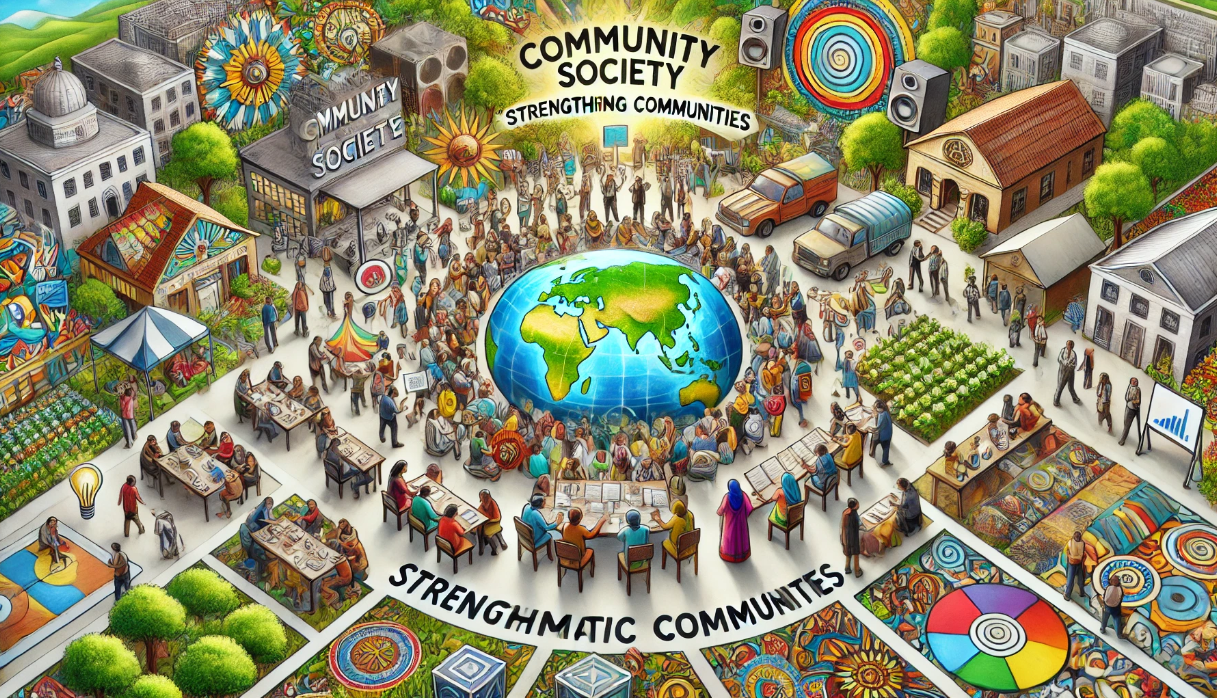
8. Community and Culture
- Strengthening Communities: Foster strong, supportive communities by encouraging local participation, mutual aid networks, and community-led initiatives. Communities should be empowered to make decisions that directly affect their lives.
- Cultural Preservation and Innovation: Support the preservation of cultural heritage while also encouraging cultural innovation and creativity. Diverse cultural expressions should be celebrated and shared across communities.
- Art and Expression: Ensure that art and creative expression are integral parts of society, accessible to all. Public spaces should be used to showcase diverse artistic practices and cultural narratives.

9. Global Solidarity
- Global Justice and Peace: Promote global peace and justice by addressing the root causes of conflict, such as inequality, resource scarcity, and political oppression. Encourage diplomatic solutions, conflict resolution, and restorative justice practices.
- Refugee and Migration Rights: Protect the rights of refugees and migrants, ensuring that they have access to basic services, legal protections, and opportunities for integration into new communities.
- Shared Global Resources: Establish systems for the fair and equitable sharing of global resources, such as water, air, and biodiversity, recognizing that these are common goods that belong to all humanity.

10. Implementation and Transition
- Gradual Transition: Implement changes gradually but decisively, with a clear roadmap that allows for adaptation and feedback from all sectors of society. Start with pilot projects in willing communities and scale successful models globally.
- Inclusive Participation: Ensure that all voices, especially those from marginalized groups, are included in the transition process. Use participatory methods to gather input and build consensus.
- Resilience Building: Focus on building resilience at all levels — individual, community, and global — so that society can adapt to challenges such as climate change, economic shifts, and social upheavals.
By implementing this vision, human society can evolve into a more equitable, sustainable, and flourishing world, where individuals and communities thrive within a healthy, resilient planet.

Or else
메타데이터
- post_id
- 56150e6a2d2f
- slug
- the-rhizomatic-society-56150e6a2d2f
- url
- https://medium.com/@desirable_puff_goat_279/the-rhizomatic-society-56150e6a2d2f
- canonical_url
- https://medium.com/@desirable_puff_goat_279/the-rhizomatic-society-56150e6a2d2f
- author_url
- https://medium.com/@desirable_puff_goat_279
- status
- ok
- fetched_at
- 2026-08-18 13:12:31

