George Lucas Synchronicity
Lessons in high magic
George Lucas Synchronicity
Lessons in high magic
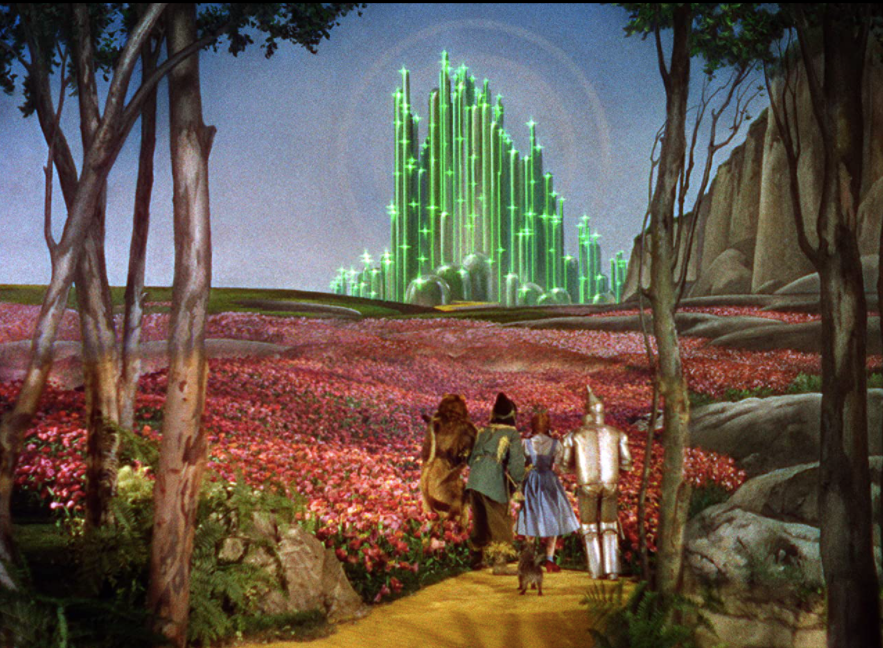
“The Wizard of Oz”, Dir. Victor Fleming © 1939 Warner Home Video. All rights reserved.
In the history of cinema, there are a few moments that were life altering for the audience in ways it’s hard for us to imagine today. One was in 1939, in The Wizard of Oz — when the start of the movie was “normal” in black and white… and then she crashes in Oz, and walks into a world that’s in color. It would have been transformative.
Another was in 1977, in the opening scene of Star Wars: a little space ship is running away from a terrifying monster of an imperial destroyer, and the usually-crappy theater speakers are updated, and emitting ultra low frequency sounds, the kind that are created during earthquakes, that rattle your bones and make the hairs stand up on your neck.
At almost 14 years old, I was there for that one. I was already primed after reading about the upcoming movie in Time magazine earlier in the summer. But from the moment the film began, I was a fan.
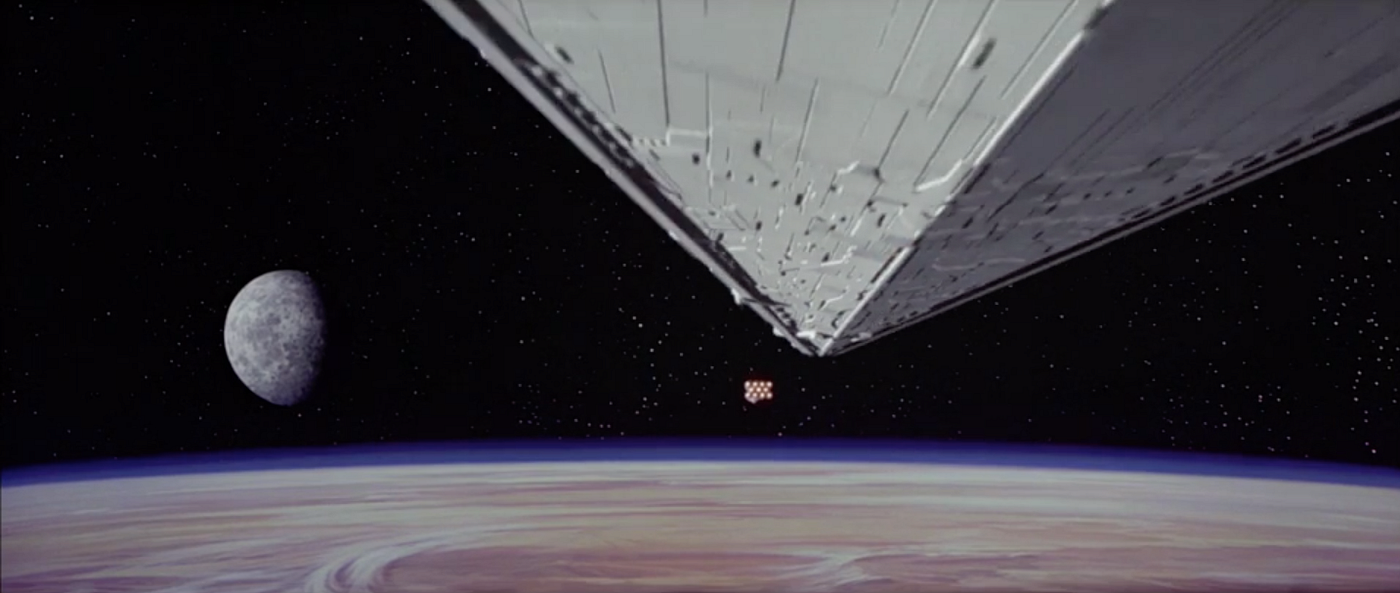
Rebel cruiser running from the Imperial Star Destroyer, from the opening of “Star Wars, Ep 4”. Dir. George Lucas. © 1977 Lucasfilm Ltd.
It’s also hard to imagine today in a world of binging TV shows on Netflix, but waiting three years to see the next episode… the anticipation was palpable. The only way you could mollify the longing was to keep watching the first episode again and again. Which everyone did. And then finally Empire released in 1980, and Jedi in 1983. Shuffle these with Lucasfilm producing Raiders of the Lost Ark in 1981, and Indy 2 in 1984… the run of magic from this one company was unprecedented, and traversed my adolescence.
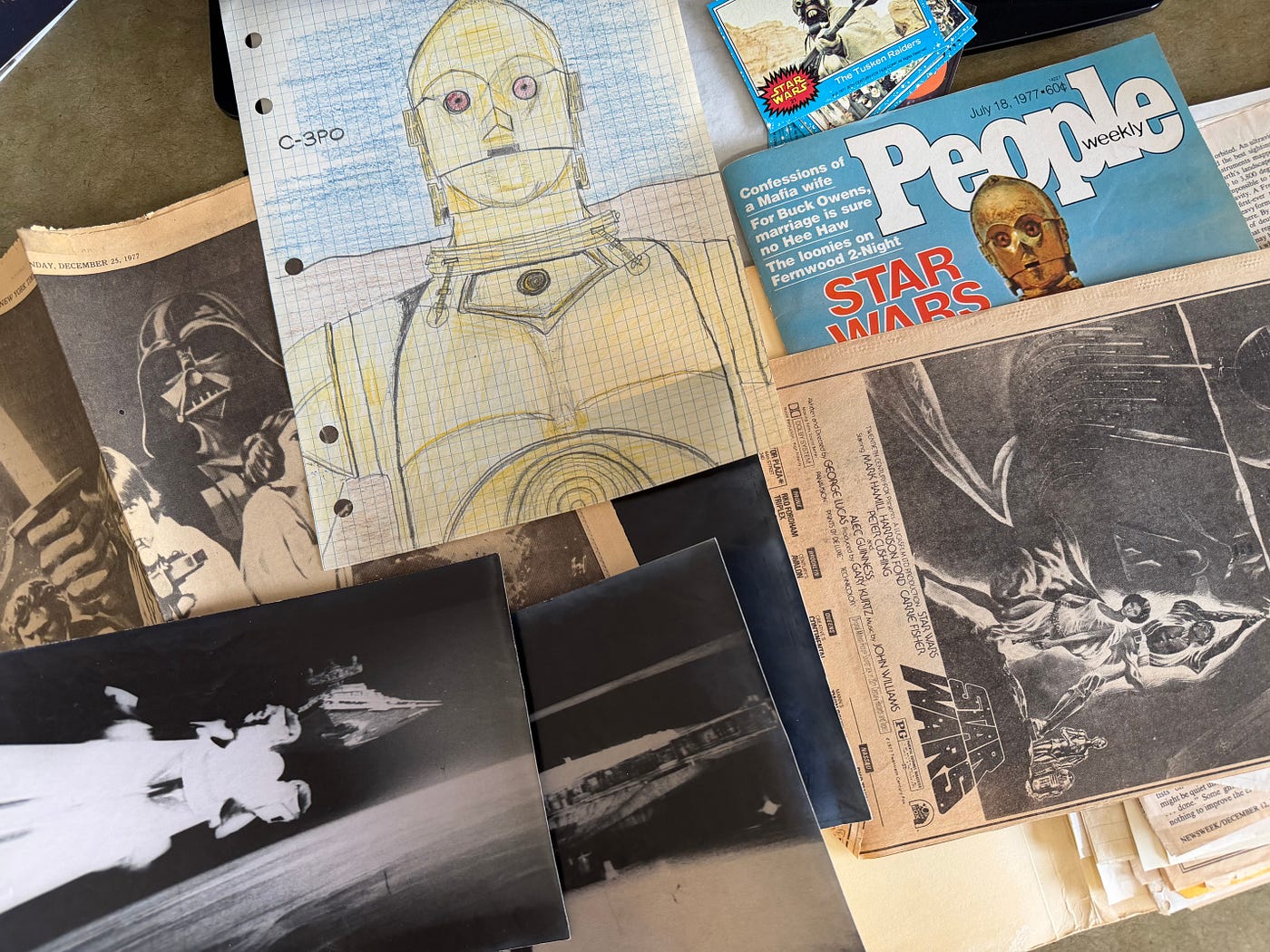
1977 kid fan stuff — my clippings, articles, photos taken in theaters (I traded for them), a little C3PO-fan-art…
When I was in college in 1983, our dorm had as “Come As You Will Be in 10 Years Party.” People were a mixture of yuppies, hookers, and doctors. I went as George Lucas. (Who most people presumed was Steven Spielberg. The average person couldn’t differentiate between these young bearded movie hitmakers.)
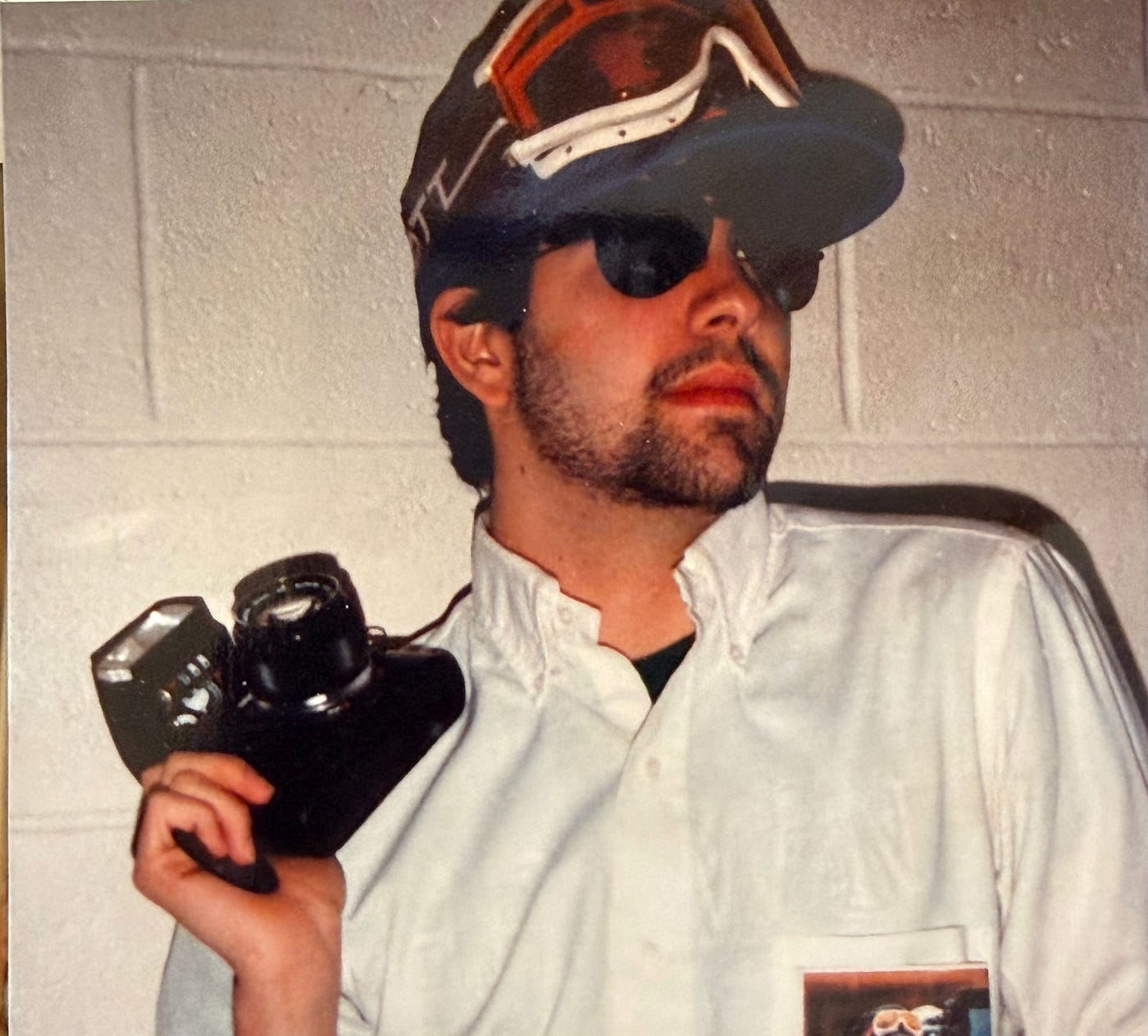
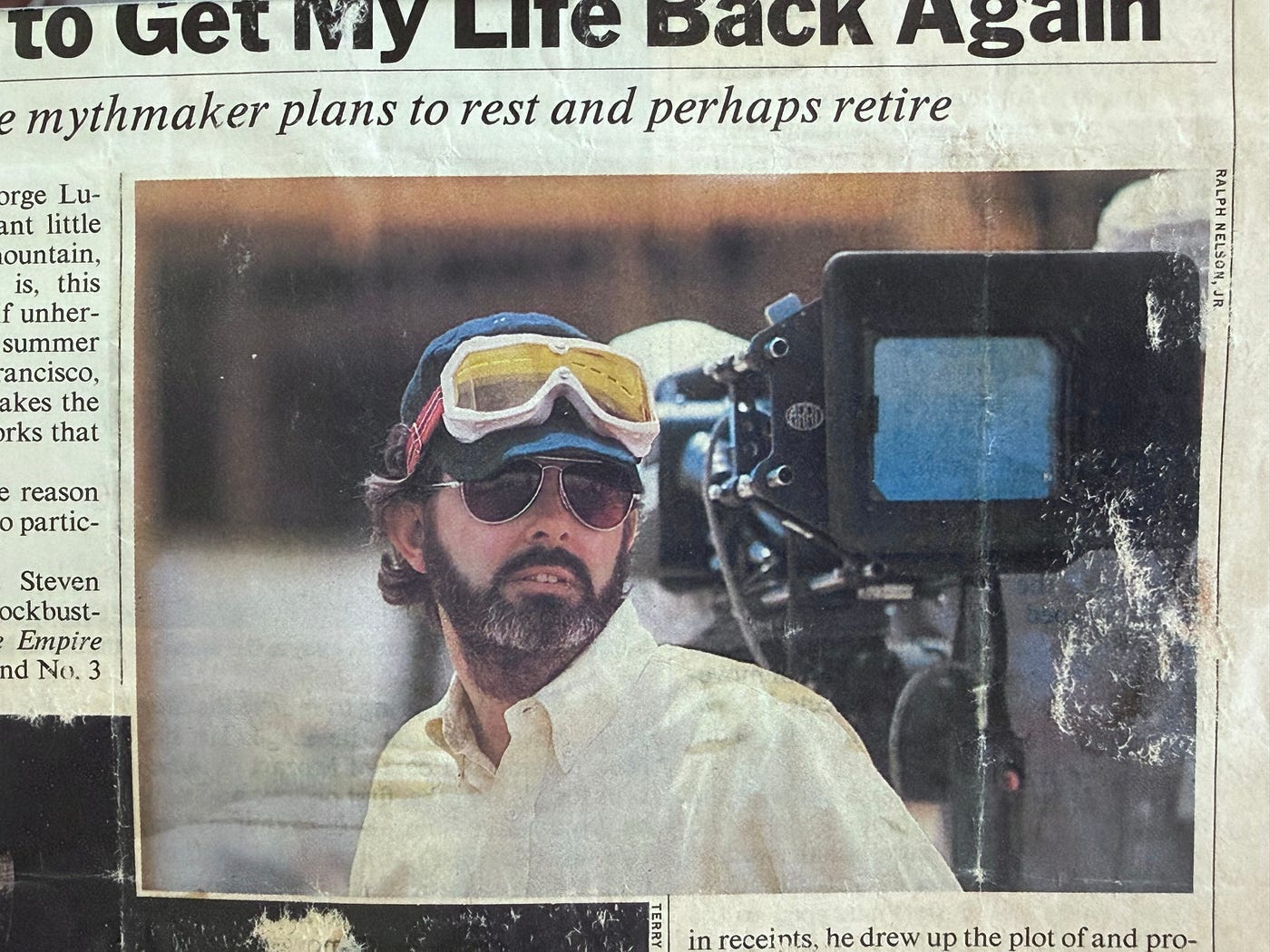
“Come As You Will Be in 10 Years” Party 1983 — recent news was that Lucas was going to “rest and perhaps retire.”
So it was a shock to discover a year later that an older friend, Steve, had recently joined Lucasfilm. He described a place that wasn’t just movie magic, but a hotbed of technology and creativity. Just the possibility I might be able to work at that place eclipsed all interest in any other career or company. I spent years trying to talk my way in.
When I arrived to Lucasfilm in 1985, I did my best to hide that I was a fan-boy. I was there to join Lucas’ exploration into new computer technologies that could possibly make that 3-year movie-making hell go faster and smoother. (Spoiler alert: It can. And did.)
The company had mixed attitudes about fans — of course fans were the essence of the company business, and there was a “Star Wars Fan Club” that was an important section of the organization, which also gave employees posters and buttons; but behaving like a fan was bad — no autographs or photos with the various VIPs who’d frequently be there working. After Empire, as the company grew, Lucas was increasingly uncomfortable among his ranks; he would pop in and out as was necessary, but more and more the faces he ran into were unfamiliar.
He also had just gone through a difficult divorce, which ended in 1983 — giving his wife most of their cash and primarily giving him the assets of the company and films. These new pressures, combined with the firehose of merchandising revenues drying up after the release of Jedi — the end of the first (and plausibly only) trilogy — contributed to the decision to better monetize the various divisions of the company.
The Droid Works, my division, was one of those attempts at monetization. It was being spun out as a start-up, the first part of the Computer Division to do so (Pixar was next). I shared a corner office with Dorothy, a pretty Hawaiian marketing admin who had been with the company since the early days, and seemed to be close friends with Lucas. On her desk she had a framed picture of her kids, but next to it stood a photo of Lucas and his young daughter Amanda, and it had a sweet note from him written across it. She loved this picture, and she spoke of Lucas often. I was her captive, but willing, audience.
While she never said anything, it was my sense that Dorothy and George dated after his divorce, and while he had moved on (he was at that time seeing Linda Rondstat) he was probably a hard dude to quit. But they were friends and would connect from time to time, and I’d hear about it the next day at work. There was one afternoon that lingers for me:
We were in our office when George called — he wondered if she wanted to watch a screening of a new movie in the Sprockets theater — the company’s acoustically perfect theater and mixing studio across the street. She covered the mouthpiece and whispered to me, “George is inviting me to a movie!”
“What movie?” I asked.
“What movie?” she asked.
“Ran,” she said to me. Ran was Akira Kurosawa’s latest film, and I knew that Lucasfilm was doing the post production audio mix over at Sprockets, so this made sense. I was dying to see it.
“Can I come?” I asked, half jokingly.
“Can I bring a friend?” she said into the phone. I froze.
She smiled and nodded to me.
“Okay, we’ll be right over.”
I’m not sure why we were so able to leave our desks and just disappear for the rest of the afternoon, but we did. We crossed over to Kerner and into the Sprockets theater. It was cool and dim and entirely empty, and George greeted us at the door. He wasn’t alone. He was standing with Akira Kurosawa.
We all said hellos and drifted into the seats in the center of the auditorium, the “good seats,” and sat down in order: Kurosawa, Lucas, Dorothy, and me. And then with little fanfare the film started. I had trouble focusing with these guys sitting there. It seemed like Kurosawa wasn’t really watching anyway — he was practically blind, and when I would sneak a glimpse of him, he was usually looking down, listening intently, perhaps. But I made it through, a little giddy, and then we stood around briefly before Dorothy and I scurried back to our office.
When I got back to Z building I stopped into my old friend Steve’s office on the first floor. Steve had created Lucasfilm’s Game Division (which eventually became “Lucasarts Entertainment”). Unlike most divisions of the company, the Games Group were all around my age, so Steve was mentoring kids as much as running his division. Steve had keen insights; his door was always open to stop in and chat.
I slumped down into a soft chair and told him about the day. It was certainly exciting to participate in that, but also made me feel inconsequential. This was my typical whining to Steve. I wanted to collaborate with Lucas, you know, personally, not just run into him in hallways. I wanted to do something together. Steve’s advice? “It will happen,” he said. “It’s just not now. But it will happen. Your paths will cross and entwine in another way. Trust it.”
That’s what Steve was like. He’d say mystical things like that and you’d feel better.
A few years later, as my division was closing and I was about to be unemployed, Lucas’ long-time executive assistant mentioned to me, in passing, that George wished he had had a camera the other night, to capture the moon over the Main House at Skywalker Ranch. I volunteered to see what I could do — and with her blessing, I spent months drifting in and out of the Ranch, neither as an employee nor a freelancer, just taking photographs of the grounds each month around the full moon. It was an enjoyable spring and summer in 1987; I set up the darkroom in the lower floor of the Main House, by the redwood and amber library, and hung out there as often as I could. (The full story of this.)
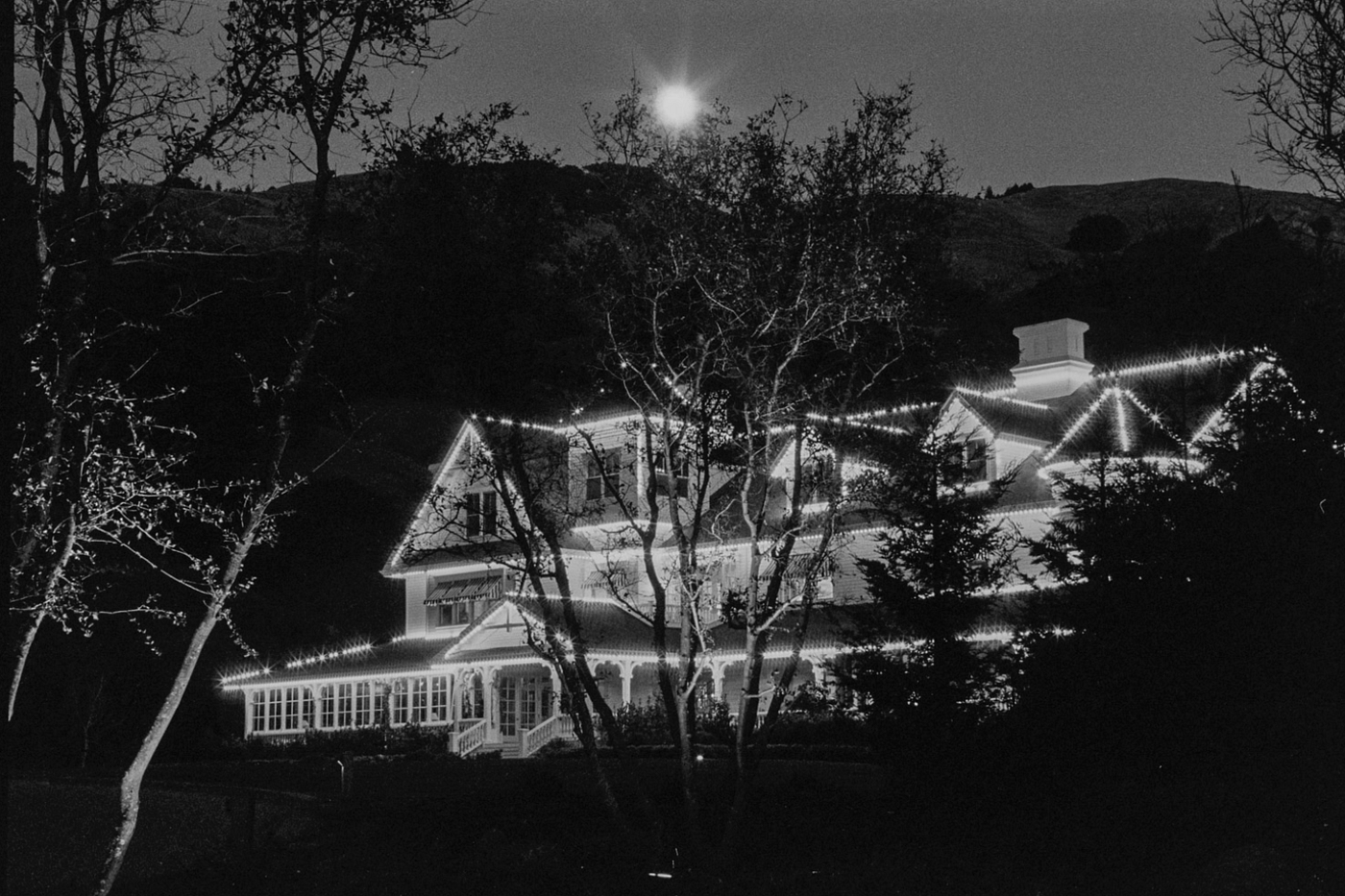
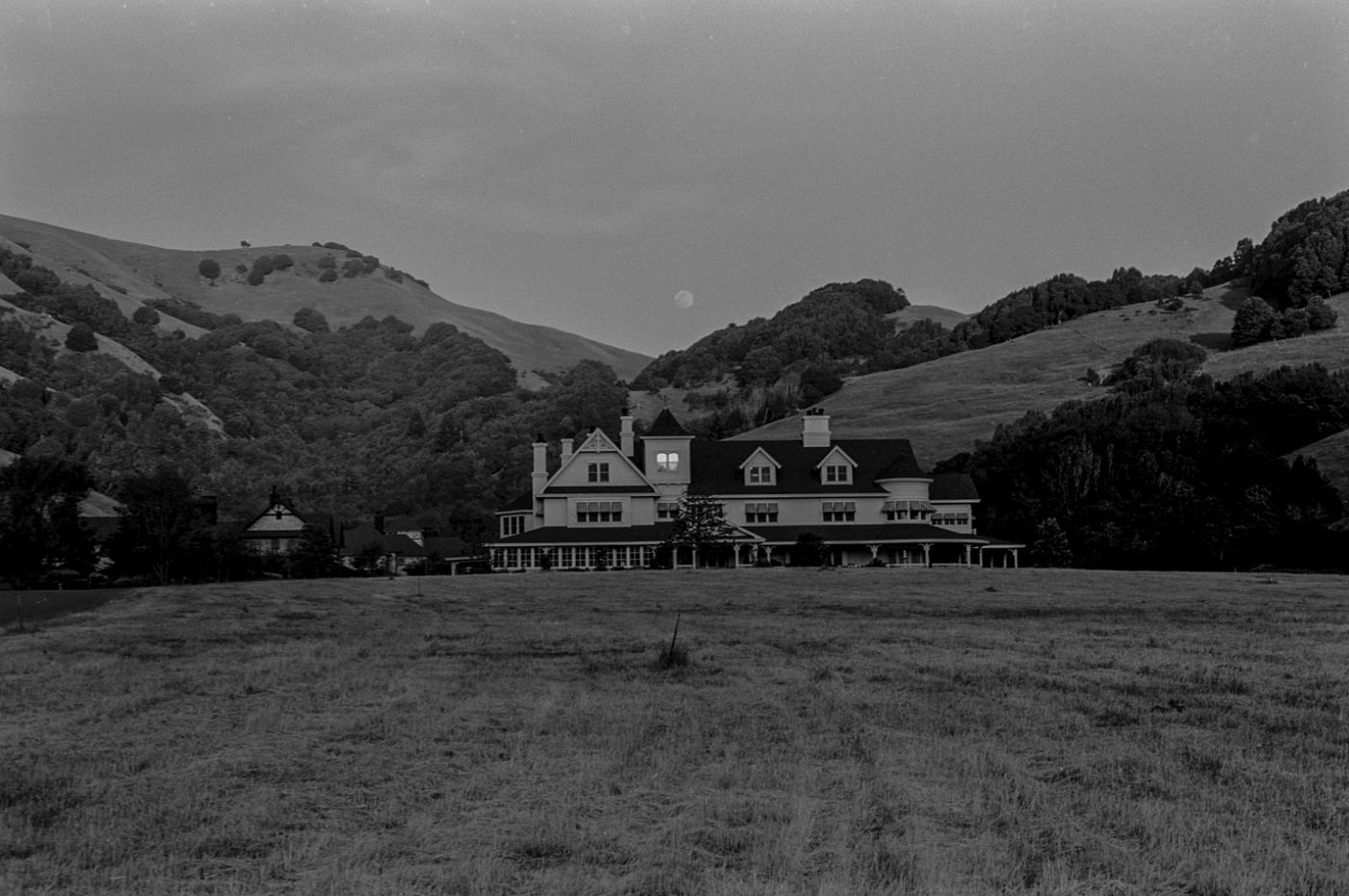
© 1987 MH Rubin, Main House Moonrise — Feb, April 1987
I gave him one photograph, and moved on in my career.
A decade later, when my little ceramics start-up finally started to get traction, my wife and I were interviewed for Forbes magazine. It was a particularly exciting moment for our small business. I waited for months for the article to come out, and when it finally did… I could not explain how it was that Lucas was featured on the cover.
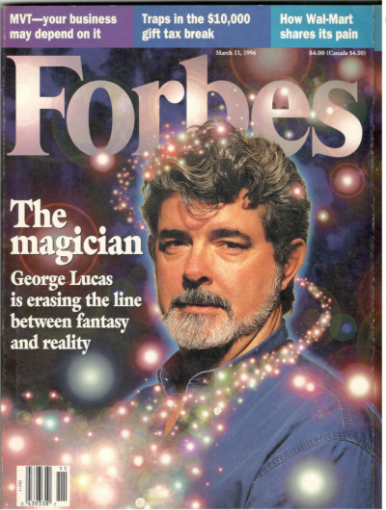
Forbes, March 1996. GWL on the cover and me inside…
Over the years I always imagined someone who was a real journalist would write about the Lucasfilm Computer Division, and the amazing things that happened there, sort of the way folks talk about Xerox PARC. But they hadn’t, and when I realized the second trilogy was going to be made, I figured I would probably have to do it myself. In 2005, I released a book about Lucasfilm and our work there, and as Steve had predicted, it brought me back to the company for awhile, pouring through Lucas’ files and old photos, reconnecting with a great group of people, and interacting with George too. Our paths momentarily intersected.
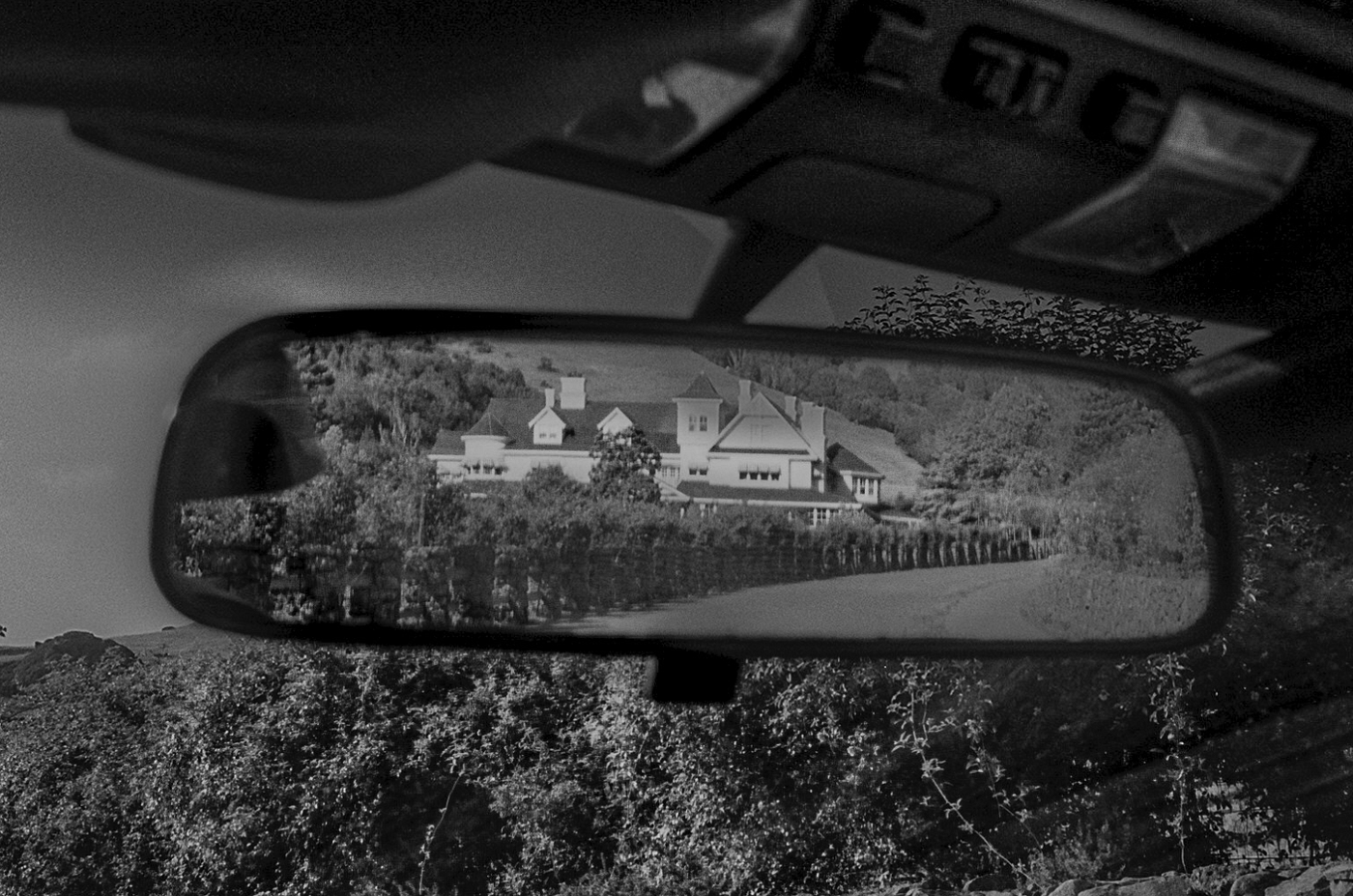
Leaving Skywalker © 2004 MH Rubin
The title of the book, “Droidmaker,” was a term I created for Lucas. He was the maker of droids, of these futuristic technologies that would serve creative humans. (He once quipped that if he hadn’t become a filmmaker, he might have become a toy maker.) And I was writing a book about him and Lucasfilm. I got the “droidmaker” domain to promote the book, I got the handle across social media. But over subsequent years, people started calling me droidmaker. And like magic, in some small way, the connection was complete.
For more tales of Lucasfilm and magic, you might enjoy:
[embed]Demos to the Stars My Adventures at Lucasfilmmedium.com
[embed]Elvis Presley’s Illegitimate Bear-Child/Man-Child More adventure than humanly possiblemedium.com
My photographic portfolio is at www.byRubin.com or on Instagram. Thanks!
메타데이터
- post_id
- 5637e478e599
- slug
- george-lucas-synchronicity-5637e478e599
- url
- https://medium.com/cinemania/george-lucas-synchronicity-5637e478e599
- canonical_url
- https://medium.com/cinemania/george-lucas-synchronicity-5637e478e599
- author_url
- https://medium.com/@neomodern
- status
- ok
- fetched_at
- 2026-06-25 07:00:49