Why You Feel Bloated After Eating
Bloating is one of the most common digestive problems people experience today. Many people feel uncomfortable, swollen, heavy, or tight in…
Why You Feel Bloated After Eating
Bloating is one of the most common digestive problems people experience today. Many people feel uncomfortable, swollen, heavy, or tight in their stomach after meals, even when they haven’t eaten a large amount of food.
In the United States, digestive discomfort and gut health issues are becoming more common because of modern lifestyles, processed foods, stress, and unhealthy eating habits.
Although occasional bloating is usually not serious, frequent bloating can affect your comfort, energy levels, mood, and overall wellness.
Understanding why bloating happens may help you improve digestion naturally and support better gut health over time.
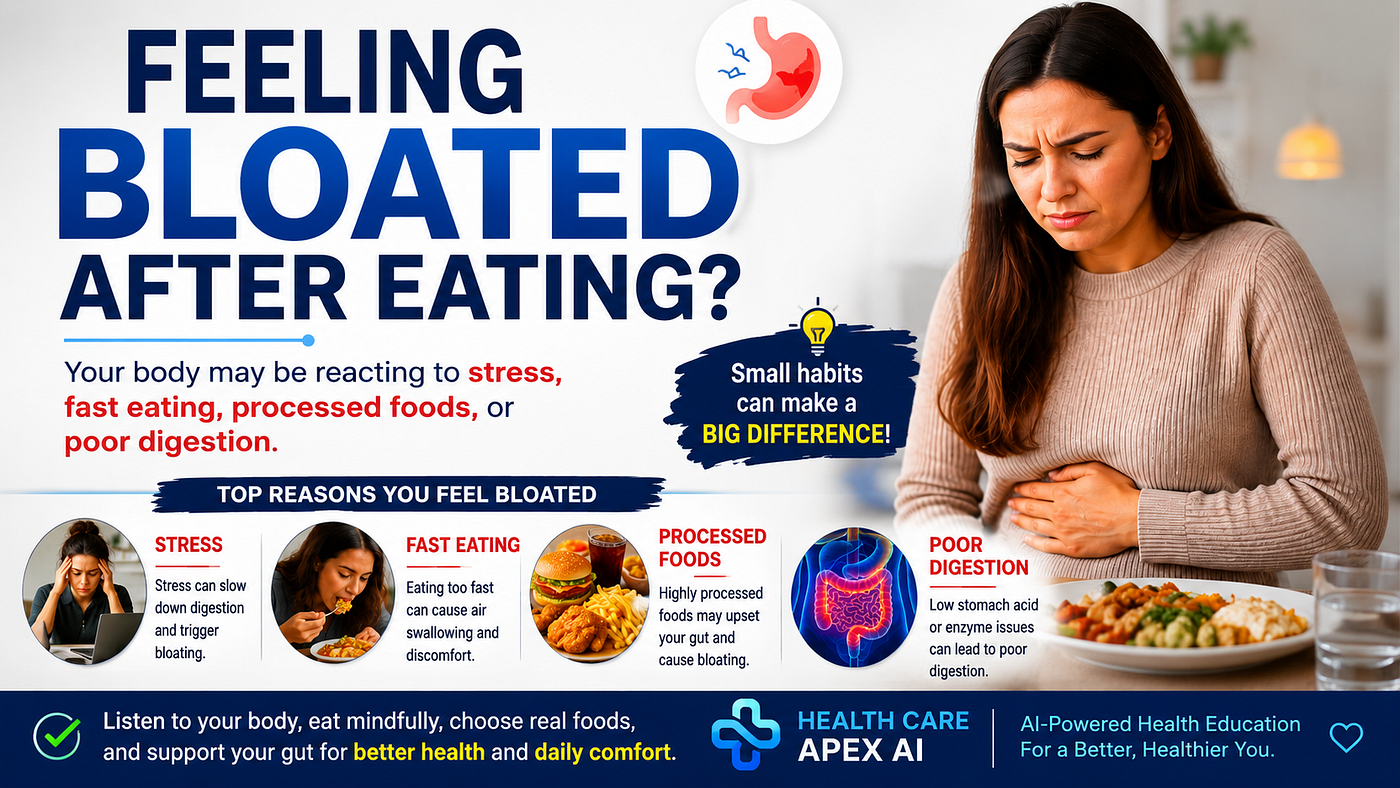
Common Reasons You Feel Bloated After Eating
1. Eating Too Fast
One of the biggest causes of bloating is eating too quickly.
When people eat fast, they often swallow extra air along with their food. This trapped air can increase pressure in the stomach and lead to bloating.
Fast eating may also prevent proper digestion because the body does not have enough time to break food down efficiently.
Healthy Tip:
Try eating slowly and chewing food properly before swallowing.
2. Processed Foods and Junk Food
Highly processed foods are common in modern diets and may contribute to digestive discomfort.
Fast food, chips, sugary snacks, frozen meals, and sodas are often high in:
- Sodium
- Sugar
- Artificial ingredients
- Unhealthy fats
These foods may increase inflammation, water retention, and gas production.
Sugary and carbonated drinks may also increase stomach pressure and bloating.
Healthy Tip:
Try eating more whole foods such as fruits, vegetables, lean proteins, and healthy fats.
3. Poor Digestion
Sometimes the digestive system struggles to break down certain foods properly.
This may cause food to ferment inside the gut, leading to:
- Excess gas
- Stomach discomfort
- Swelling
- Digestive pressure
Poor digestion can sometimes be connected to stress, unhealthy eating habits, dehydration, or lack of physical activity.
4. Stress and Anxiety
Many people do not realize how strongly stress affects digestion.
The gut and brain are closely connected. High stress levels may slow digestion and increase stomach discomfort.
Stress can also affect:
- Gut bacteria balance
- Digestion speed
- Appetite
- Bowel habits
Modern lifestyles filled with work pressure, screen time, and poor sleep may increase digestive problems.
Healthy Tip:
Walking, meditation, better sleep, and stress management may help improve gut health naturally.
5. Overeating
Eating large meals may place extra pressure on the digestive system.
When the stomach becomes overly full, digestion slows down and may increase feelings of heaviness and bloating.
Healthy Tip:
Smaller balanced meals may feel easier on the digestive system.
6. Food Sensitivities
Some people may feel bloated because their body reacts poorly to certain foods.
Common trigger foods may include:
- Dairy products
- Gluten
- Beans
- Artificial sweeteners
- Fried foods
Food sensitivities vary from person to person.

Signs Your Gut Health May Need Support
Frequent bloating may sometimes be a sign that your digestive system needs more support.
Common signs include:
- Frequent gas
- Stomach discomfort after meals
- Brain fog
- Low energy
- Irregular digestion
- Feeling heavy after eating
- Poor appetite control
Simple Habits That May Help Reduce Bloating
Drink More Water
Proper hydration supports digestion and healthy bowel movements.
Many people drink coffee, soda, or energy drinks throughout the day but not enough water.
Eat Slowly
Mindful eating may reduce swallowed air and help your digestive system process food more efficiently.
Reduce Ultra-Processed Foods
Whole foods may support healthier digestion and better gut balance.
Stay Active
Light movement after meals, such as walking, may help support digestion naturally.
Improve Sleep
Poor sleep may affect stress hormones and digestion.
Better sleep habits may support overall gut health.
The Connection Between Gut Health and Overall Wellness
Your digestive system affects much more than just your stomach.
Gut health is closely connected to:
- Energy levels
- Mental focus
- Mood
- Immune function
- Daily productivity
- Overall wellness
Many people notice improved energy and better daily comfort when they begin supporting digestion through healthier habits.
Final Thoughts
Feeling bloated after eating is extremely common, especially in modern lifestyles filled with processed foods, stress, poor sleep, and fast eating habits.
The good news is that small healthy changes may help improve digestion naturally.
Eating slowly, staying hydrated, reducing processed foods, managing stress, and supporting gut health may help your body feel better after meals.
Small healthy habits can create powerful long-term improvements for your digestion, energy, and overall wellness.
Follow Health Care Apex AI for more AI-powered health education, wellness tips, and simple healthy habits for everyday life.
메타데이터
- post_id
- 5648e54cd3ac
- slug
- why-you-feel-bloated-after-eating-5648e54cd3ac
- url
- https://medium.com/@healthcareapexai/why-you-feel-bloated-after-eating-5648e54cd3ac
- canonical_url
- https://medium.com/@healthcareapexai/why-you-feel-bloated-after-eating-5648e54cd3ac
- author_url
- https://medium.com/@healthcareapexai
- status
- ok
- fetched_at
- 2026-06-27 23:56:40