America’s National Game: 1933
MLB’s first all-star games, and its antecedents
America’s National Game: 1933
MLB’s first all-star games, and its antecedents

Happy Birthday, US (or us!)
Do you remember how we chose up sides for baseball games as kids? One captain would toss a bat to the other, whose grip would mark the starting point in a hand-over-hand matchup until just the knob showed. Then the one with a hold on the knob would have to twirl the bat over his head without dropping it … in order to get first choice of the assembled players.
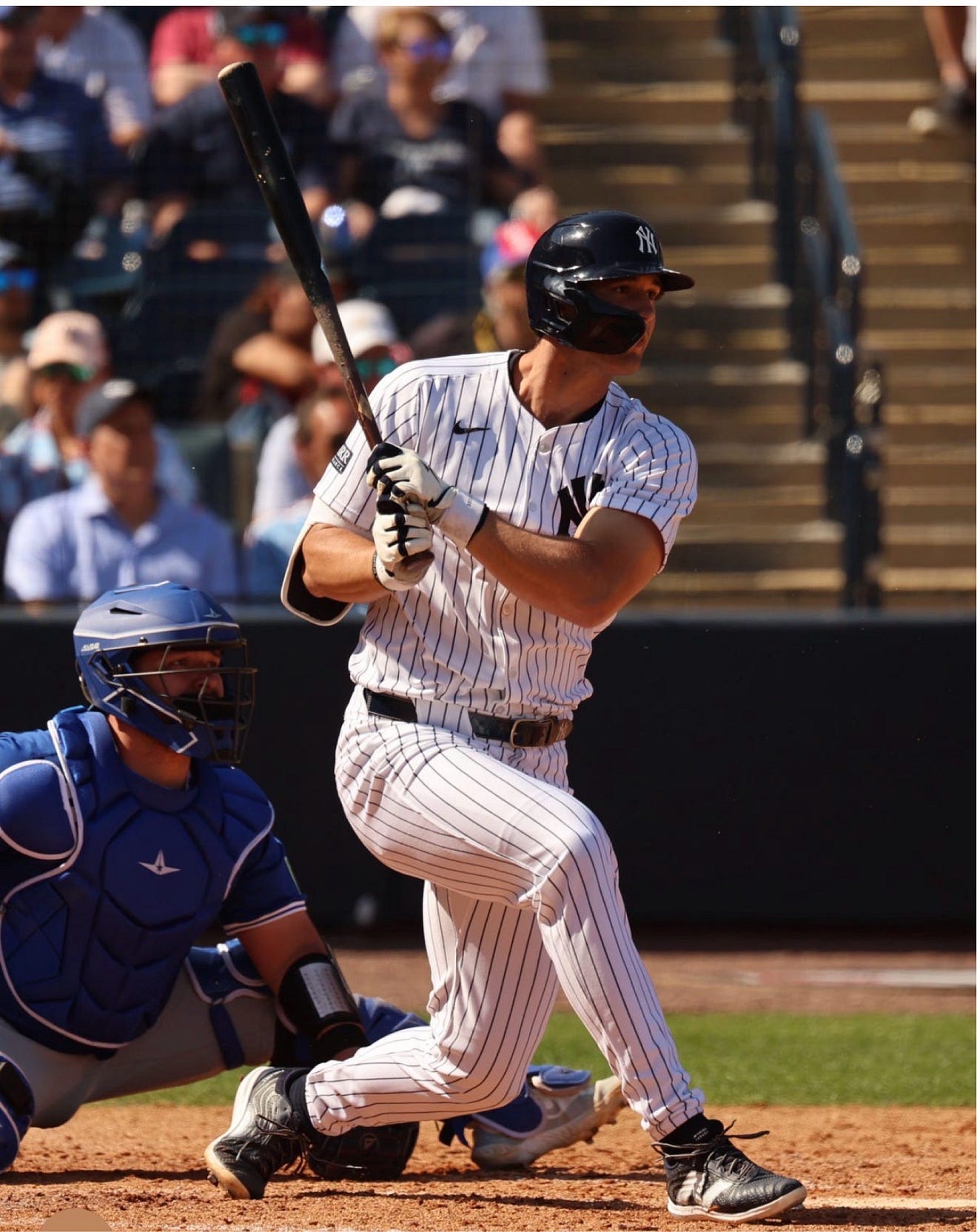
On July 4, serendipitously, on July 4, the National and American Leagues reenacted that sandlot ritual, selecting the starters, pitchers, and reserves for the 96th edition of the All-Star Game. Ten days later, Major League Baseball will conduct its annual midseason classic in the nation’s birthplace, as its contribution to marking the nation’s semiquincentennial (that’s 250 years to you, bub).

The victorious American Leaguers, All-Star Game, Chicago’s Comiskey Park, 1933
Let’s look back to MLB’s first All-Star Games in 1933 — the one that took place on July 6 as well as the East-West Game of September 10. Because this essay is part of a historical series, we’ll also examine the variant ideas before then … from the “picked nines” before the Civil War to the baseball public’s continued interest in seeing the best against the best.
1933:
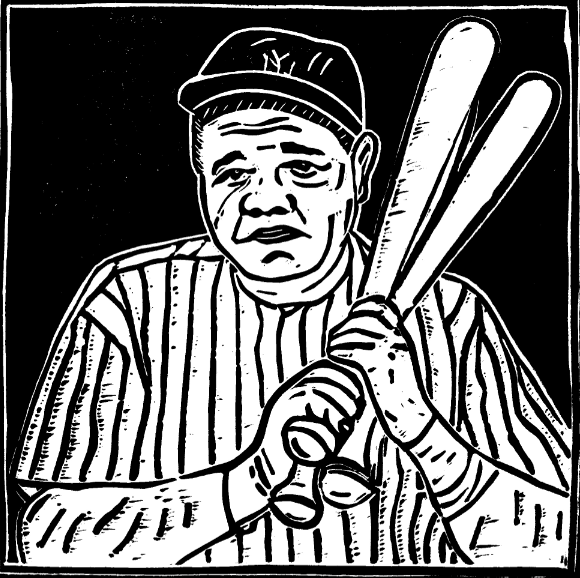
The 1933 All-Star game was Major League Baseball’s first, bookended by September’s East-West All-Star Game for the Negro Leagues. Baseball’s two grand old men — Connie Mack and John McGraw — were chosen to lead the American and National League squads. Lefty Gomez of the Yankees was the winning pitcher and the first player to drive in an All-Star run. But it was another grand old man — Babe Ruth who, at age 38, lined a two-run homer in the third inning to make the score 3–0.
This game reflected a brainstorm by Arch Ward of the Chicago Tribune. He had hit upon the idea of having a baseball game between stars from both leagues, as a sporting way to tie into that year’s “Century of Progress” exposition in the city. He saw that July 6 was an open date for all major-league clubs. Surely, Ward was connecting baseball people to the 1911 all-star benefit game on behalf of the family of Cleveland’s Addie Joss (see below), but maybe to a proposal by F.C. Lane in 1915, barely reported.

Max Carey’s 1933 NL uniform, ASG, Comiskey Park, 1933
Two months later, on September 10, the Negro Leagues played their first East-West All-Star Game, also at Chicago’s Comiskey Park. It would go on to become, for Black baseball, a bigger draw and a more important event than the annual World Series. Larry Lester has described it as “the spirit and life of Negro League baseball, serving to entertain, educate, and ultimately provide a forum to integrate our national pastime many years later.”

East-West Game, Detroit Tribune, August 5, 1933
Black fans could vote for their favorite players through newspapers including the Chicago Defender, Pittsburgh Courier, Kansas City Call, and Baltimore Afro-American. The significance was monumental, as Negro League legend Buck O’Neil remembered. “While the big leaguers left the choice of players up to the sportswriters, Gus [Greenlee] left it up to the fans. After reading about great players in the Defender and Courier for so many years, they could cut out that ballot in the black papers, send it in, and have a say.”

East-West Game final balloting, Washington Tribune, Sept 7, 1933
With just over a million votes cast, Oscar Charleston of the Pittsburgh Crawfords (East) received the most votes, 43,793, while pitcher Willie Foster of the Chicago American Giants (West) was runner-up with 40,637. Each was joined by six teammates; you can calculate the future Hall of Famers. (Satchel Paige remained in Bismarck, North Dakota, pitching for his integrated semipro team.) White newspapers largely ignored the game, including its outcome: a victory for the West by a score of 11–7 as Foster went all the way; Mule Suttles hit a home run. The East-West game at Comiskey Park reportedly outdrew the Cubs’ twin bill across town.
1911, 1915:
Although Ward’s idea and Greenlee’s, since followed, was to have two squads compete, there was an earlier notion: an all-star aggregation playing against a hometown squad. This model had characterized Organized Baseball’s first all-star game: the “All Leaguers” of the Class-D Hudson River circuit against first-place Poughkeepsie on August 17, 1903.
This practice echoed the “picked nine” practice launched in September 1860, when the touring Brooklyn Excelsiors played a group assembled from Philadelphia clubs. It also characterized the benefit game on behalf of the family of Cleveland pitcher Addie Joss, who had died earlier that season. Played on July 24, 1911, it raised $12‚914, more than twice his annual salary, for his widow and their two children.

Ty Cobb’s Detroit uniform did not arrive in time
More than 15,000 fans filled Cleveland’s League Park to see the astral squad play against the Naps. Each star wore the uniform of his home club except for Ty Cobb, who had to borrow a road jersey from a Cleveland player. The stars won by a score of 5–3 behind Smoky Joe Wood, Walter Johnson, and Russ Ford. Cy Young started for the locals and was the losing pitcher.
Of the players on the field, nine would be enshrined in the Baseball Hall of Fame. But Joss would, until his induction in 1978, find his own path blocked by the ten-year eligibility rule. He had been too sick to pitch even a single game in 1911, which might have secured his plaque.

Addie Joss (left), Ed Walsh
For nine seasons Joss had been one of the best pitchers in the new American League, posting four 20-win seasons and tossing two no-hitters (one of them a perfect game) and seven one-hitters. In his classic perfecto during the heat of the 1908 pennant race, he topped Chicago’s Ed Walsh, who fanned 15.
Four years later, in December 1915, F.C. Lane pitched an idea to American and National League owners, in separate discussions. John Tener, NL president, addressed his crowd:
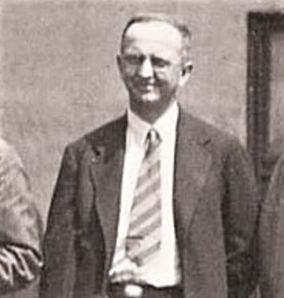
Ferdinand Cole Lane (1896–1984)
Gentlemen, this is Mr. Lane of the Baseball Magazine, who has on one or more occasions spoken to me about a matter which is in his mind, which he believes would be not only to the interest of the game but perhaps of interest to all of you in the increase of your receipts. His thought is that at or about the middle of the season you would stop the schedule or suspend the schedule for seven days while a picked team from the American and the National League would play in certain cities of the circuit.
Lane then took the podium:
I feel it would be of immense importance to the game outside of any advantage from the event itself, to have a big spectacular event in the middle of the season like this, simply because it would stimulate interest in the game…. The place of meeting was immaterial. This is not a local event. It is purely a league event. It is unlike the World’s Series. It is unlike anything else. It is a meeting of the two leagues, a meeting of the star players of the two leagues, a purely national event.
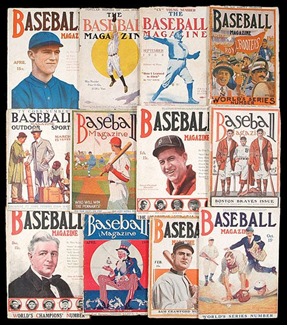
Lane was the editor of Baseball Magazine from 1912 to 1937
This is, of course, the Midsummer Classic we know today. One NL owner suggested that if the leagues suspended play during All-Star week, the regular season could be extended into October. This presented the problem of having to pay the players for another month beyond their contracts. A deflated F.C. Lane was thanked for his most interesting idea and escorted from the room.
1858:
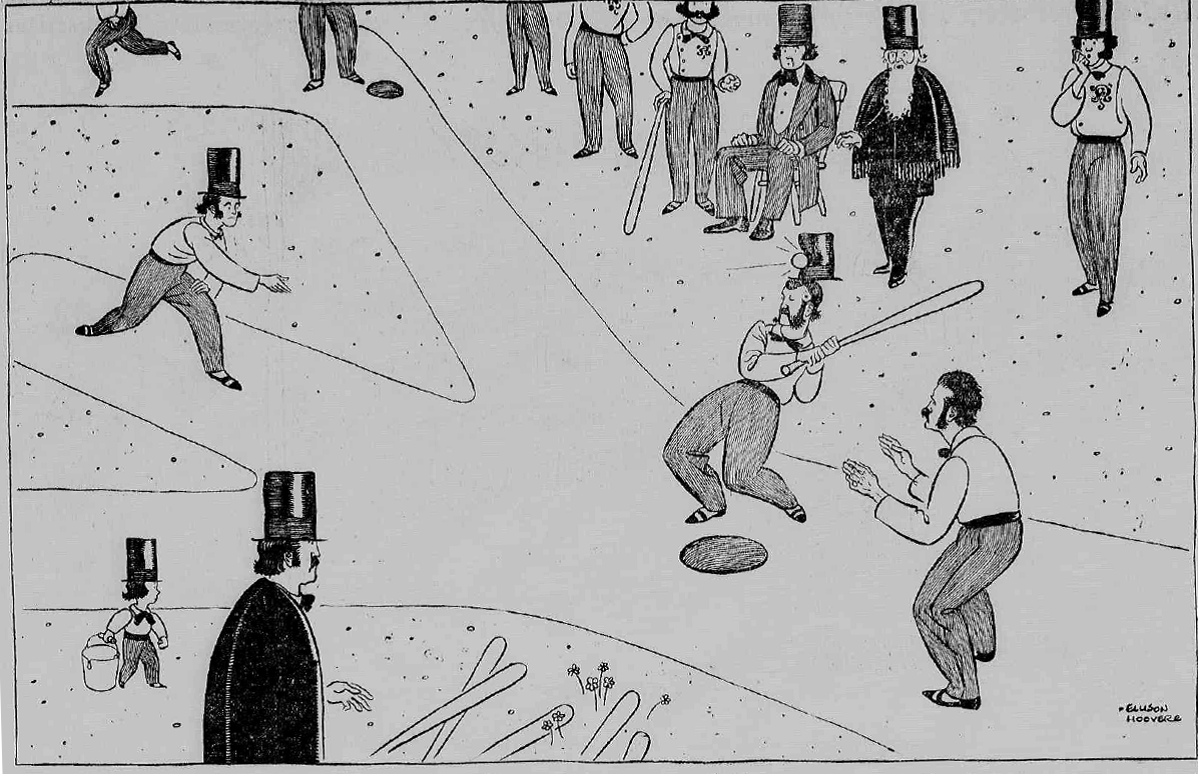
So, to conclude, what was baseball’s first midseason all-star game? Some smarty-pants might point past 1933 to 1911, or even to 1903. But let’s go back to the prior century for a best-of-three match that began on July 20, 1858. A selection from the top clubs of New York played against those chosen from that rival city across the East River, Brooklyn. New York won, two games to one and, in a way, ushered in the age of covert professionalism. All three games were played in a stadium named for a racehorse, the Fashion Course.

The first “Great Base Ball Match,” from New York Clipper, July 24, 1858
In 2013, Citi Field hosted the All-Star Game, the first time the home of the Mets had held this honor since 1964, when the site had been a brand-new Shea Stadium. Yet 75 years before 1933, toward which we point to the first all-star game, there had been another, already forgotten. Its location, within walking distance of Citi Field (see map below), is today unknown to all but a handful of baseball experts.

The distance from the Fashion Course entrance to Citi Field: 1.5 miles
Next week in this space we’ll offer a companion All-Star Game piece, “Base Ball: The Philadelphia Story,” going back to the 1830s,on up the Athletics and Phillies.
메타데이터
- post_id
- 56b625734cb7
- slug
- americas-national-game-1933-56b625734cb7
- url
- https://ourgame.mlblogs.com/americas-national-game-1933-56b625734cb7
- canonical_url
- https://ourgame.mlblogs.com/americas-national-game-1933-56b625734cb7
- author_url
- https://medium.com/@thorn_john_87223
- status
- ok
- fetched_at
- 2026-07-08 20:12:56