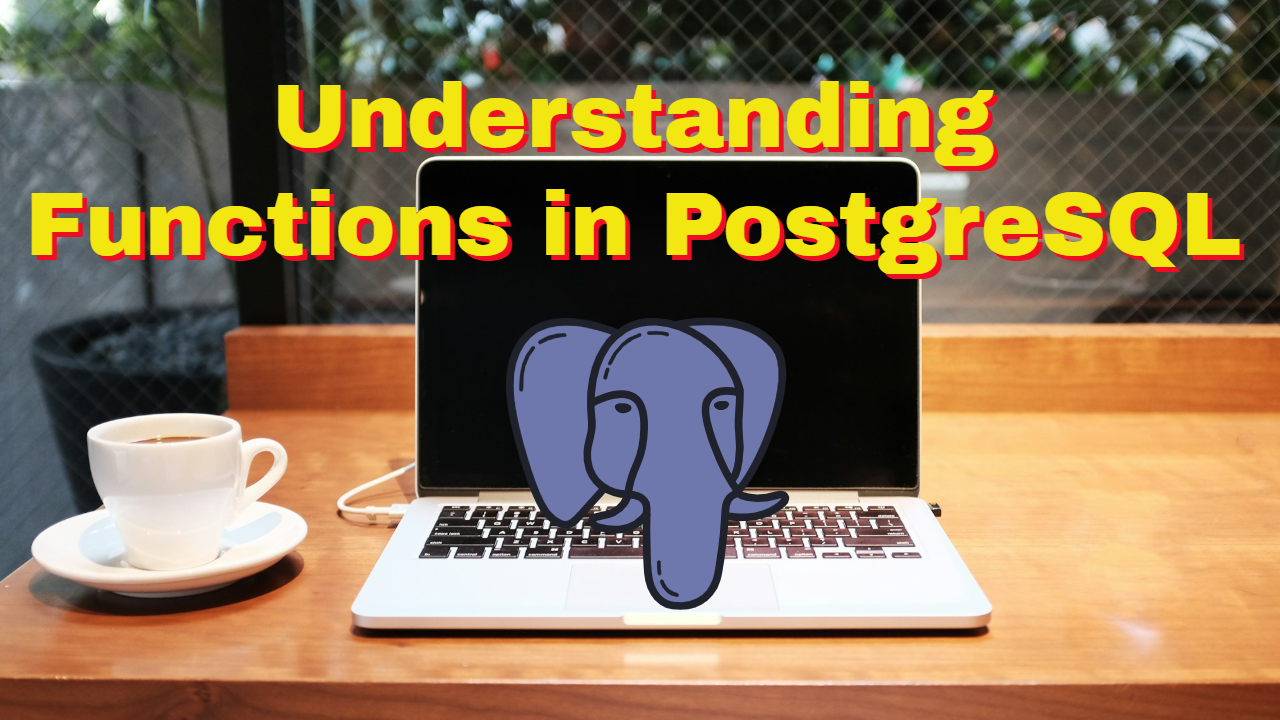
Understanding Functions in PostgreSQL
In PostgreSQL, functions play a crucial role in database programming by allowing developers to create reusable logic that performs…
Understanding Functions in PostgreSQL
In PostgreSQL, functions play a crucial role in database programming by allowing developers to create reusable logic that performs computations and returns values. Functions are similar to stored procedures but have key differences in terms of functionality and usage.
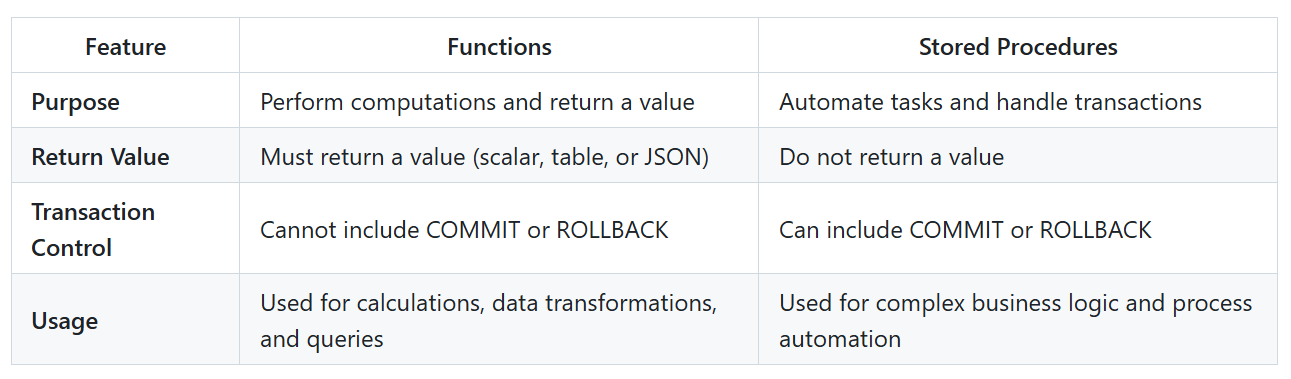
1. Difference Between Functions and Stored Procedures
When to Use Functions?
- When a computation needs to return a single value or a result set.
- When a reusable logic needs to be embedded in queries.
- When transactions are not required within the logic.
[embed]
2. Syntax of Functions in PostgreSQL
Basic Syntax
CREATE FUNCTION function_name(param1 DATA_TYPE, param2 DATA_TYPE, ...)
RETURNS RETURN_TYPE
LANGUAGE plpgsql
AS $$
BEGIN
    -- Function logic
    RETURN some_value;
END;
$$;
Example 1: Creating a Simple Function
Let’s create a function to calculate an employee’s annual salary based on their monthly salary.
CREATE FUNCTION calculate_annual_salary(monthly_salary NUMERIC)
RETURNS NUMERIC
LANGUAGE plpgsql
AS $$
BEGIN
    RETURN monthly_salary * 12;
END;
$$;
Calling the Function
We can call this function using the SELECT statement:
SELECT calculate_annual_salary(5000);Output
600003. Functions with Multiple Parameters
A function can take multiple parameters for more complex calculations.
Example 2: Function with Two Parameters (Calculating Bonus)
CREATE FUNCTION calculate_bonus(salary NUMERIC, bonus_percentage NUMERIC)
RETURNS NUMERIC
LANGUAGE plpgsql
AS $$
BEGIN
    RETURN salary * (bonus_percentage / 100);
END;
$$;
Calling the Function
SELECT calculate_bonus(5000, 10);Output
5004. Functions Returning Tables
Functions in PostgreSQL can return entire tables instead of just a single value.
Example 3: Returning a Table of High Salary Employees
CREATE FUNCTION get_high_salary_employees(threshold NUMERIC)
RETURNS TABLE(emp_id INT, first_name TEXT, last_name TEXT, salary NUMERIC)
LANGUAGE plpgsql
AS $$
BEGIN
    RETURN QUERY
    SELECT emp_id, first_name::text, last_name::text, salary
    FROM employees
    WHERE salary > threshold;
END;
$$;
Calling the Function
SELECT * FROM get_high_salary_employees(50000);Output
emp_id | first_name | last_name | salary
-------+------------+-----------+--------
1      | Nakul       | Mitra       | 70000
2      | Prince       | Chauhan     | 60000
5. Managing Functions
Modifying a Function
To modify a function, we must drop the existing one and recreate it.
DROP FUNCTION calculate_annual_salary(NUMERIC);

CREATE FUNCTION calculate_annual_salary(monthly_salary NUMERIC)
RETURNS NUMERIC
LANGUAGE plpgsql
AS $$
BEGIN
    RETURN monthly_salary * 12;
END;
$$;
Second option is to use CREATE AND REPLACE
CREATE OR REPLACE FUNCTION calculate_annual_salary(monthly_salary NUMERIC)
RETURNS NUMERIC
LANGUAGE plpgsql
AS $$
BEGIN
    -- Updated logic
END;
$$;
Dropping a Function
To delete a function permanently:
DROP FUNCTION calculate_annual_salary(NUMERIC);6. Use Cases of Functions in PostgreSQL
Data ValidationFunctions can validate inputs before inserting them into a database.Custom CalculationsE.g., Calculating tax, bonuses, or commissions in payroll systems.Data TransformationTransforming raw data into meaningful results, such as aggregations.Reusable Business LogicEncapsulating business rules inside functions ensures consistency.
7. Summary
- Functions in PostgreSQL allow us to define reusable logic that returns values.
- They differ from stored procedures as they always return values and cannot manage transactions.
- Functions can return single values, multiple values, or even entire tables.
- They are useful for custom calculations, data validation, and reusable business logic.
메타데이터
- post_id
- 56ccd9ceec7d
- slug
- understanding-functions-in-postgresql-56ccd9ceec7d
- url
- https://towardsdev.com/understanding-functions-in-postgresql-56ccd9ceec7d
- canonical_url
- https://towardsdev.com/understanding-functions-in-postgresql-56ccd9ceec7d
- author_url
- https://medium.com/@nakulmitra2114
- status
- ok
- fetched_at
- 2026-07-14 12:33:16