Could wastelands become our next national parks?
We can heal the scarred landscape of coal country and build new places for conservation and recreation at the same time.
Could wastelands become our next national parks?
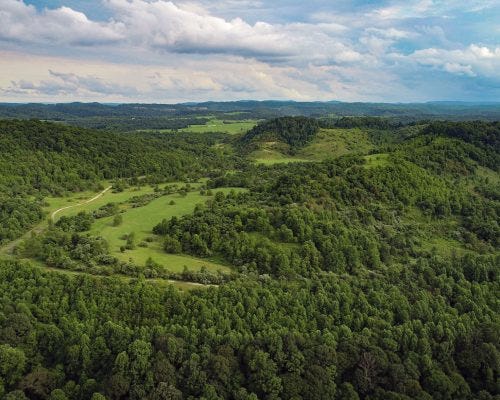
Mammoth Preserve, West Virginia, a private conservation area being developed on a reclaimed strip mine. (Picture by West Virginia Land Trust.)
One of the reasons I and others have advocated for the creation of new national parks is to handle the ever-growing crowds flocking to our public lands. As I’ve written before, there’s plenty of nature for all of us, if we’re willing to forgo the perfect Instagrammable view of the Grand Canyon or Yosemite Valley and spread out. But part of the problem is also that most of our parks (and park acreage) is in the western US, away from the population centers of the East Coast and Midwest.[1]
As it happens, there’s an organization that’s sort of doing that in West Virginia, where the West Virginia Land Trust is reclaiming a degraded surface mine to create the Mammoth Preserve. It’s 4,800 acres of restored, reforested land, with trails for hiking, equestrian activities, and biking, and education and camping facilities as well. It will be considerably smaller than almost all national parks, but it will have amenities pretty close to that of one.
There are many such mine-scarred areas across Appalachia, many of which have essentially no value after you factor in the cost of remediation. Imagine a federal authority (or an environmentally-minded philanthropist) taking these lands off of a dying mining corporation and slowly reclaiming them over the course of decades.
Despite my headline, I suspect the non-pristine nature of the land probably precludes them from being designated national parks. But they might be national preserves or national recreation areas, or even some kind of new designation like “national restoration area.”
And a national park isn’t the only management model possible. Consider that horses are being abandoned on mine lands in West Virginia, and local groups are trying to care for them. (The modern horse is domesticated, and doesn’t necessarily do so well fending for itself in the wild.) . It so happens that the Bureau of Land Management and the Fish and Wildlife Service already manage feral horses on federal lands. Imagine building out a national wildlife refuge on reclaimed land focused on horses but also accommodating other native animals. People love horses; a remdiated strip mine functioning as a preserve with an education center plus some sightseeing and auto touring could be a big tourist draw.

Feral horses on abandoned land in Appalachia. (Picture by Kristian Thacker for The Sunday Long Read.)
There’s some precedent for this. Shenandoah National Park was pieced together from private holdings — a controversial process, since it forced out many poor farmers. And the lands of Acadia National Park were assembled by George Dorr and other wealthy supporters over the course of decades and then gifted to the public. Of course, in both of these cases the underlying land was considered an asset, not be a liability, so acquiring control of these Appalachian lands might be quicker and easier.
Put a couple of these reclaimed mine areas together and you get a complex of outdoor recreation and conservation lands. It wouldn’t be cheap (managing feral horses and remediating mining lands both cost a lot), but the bulk of that money would be injected into the local economies, helping communities transition from extractive industries to conservation and recreation. And, importantly, residents of the eastern US would get new places to recreate in, conveniently located a day’s drive or less from a dozen major cities.
Now, who wants to write some checks?
[1] This is partially a function of what land was available to the federal government when the national park system and national forests were first created. As a general rule, national forests west of the Mississippi were created from land owned by the US Government, but national forests east of the Mississippi were created by buying private land. In particular, there was a New Deal-era push to use reforestation to simultaneously free farmers from unproductive, debt-burdened land and enhance soil conservation.
메타데이터
- post_id
- 56de75d2de65
- slug
- could-wastelands-become-our-next-national-parks-56de75d2de65
- url
- https://medium.com/@brecchie/could-wastelands-become-our-next-national-parks-56de75d2de65
- canonical_url
- https://medium.com/@brecchie/could-wastelands-become-our-next-national-parks-56de75d2de65
- author_url
- https://medium.com/@brecchie
- status
- ok
- fetched_at
- 2026-06-27 07:40:21