Flying in the Buttermilk
A Brief Look at Four Pioneers in Homogenous Reality TV
Flying in the Buttermilk
Candid Camera (1948) is credited with being the first televised reality show. But GenX’s unscripted adventure began in the late 1980s with Cops (1989) and the early 1990s with MTV’s The Real World (1992).
I didn’t even know The Real World existed until two of my older siblings told me about it. Randy and Kathy didn’t use the word “reality” in their description. They called it a “real-life soap opera” and just started referring to the cast by first names. I was a clueless 14 year old standing in the middle of their conversation until I frustratedly asked, “Who are these people?!” Kathy answered, “They’re on this show called The Real World. It’s a group of strangers living in a loft in New York City with cameras rolling. It’s so good!”
Once I finally watched for myself, that inaugural season put its claws in me and didn’t let go for the next 12 years. I consider the first three seasons to be the best but the intrigue of seeing a new group of strangers meet and cohabitate kept me committed for more than a decade of my life. I clocked out–or aged out–after Paris.
The Real World was inspired by PBS docuseries, An American Family (1973), but its premise was unprecedented. It was the social experiment that spawned all the others that have come and gone over the last 30 years including Big Brother, Survivor, and The Real Housewives.
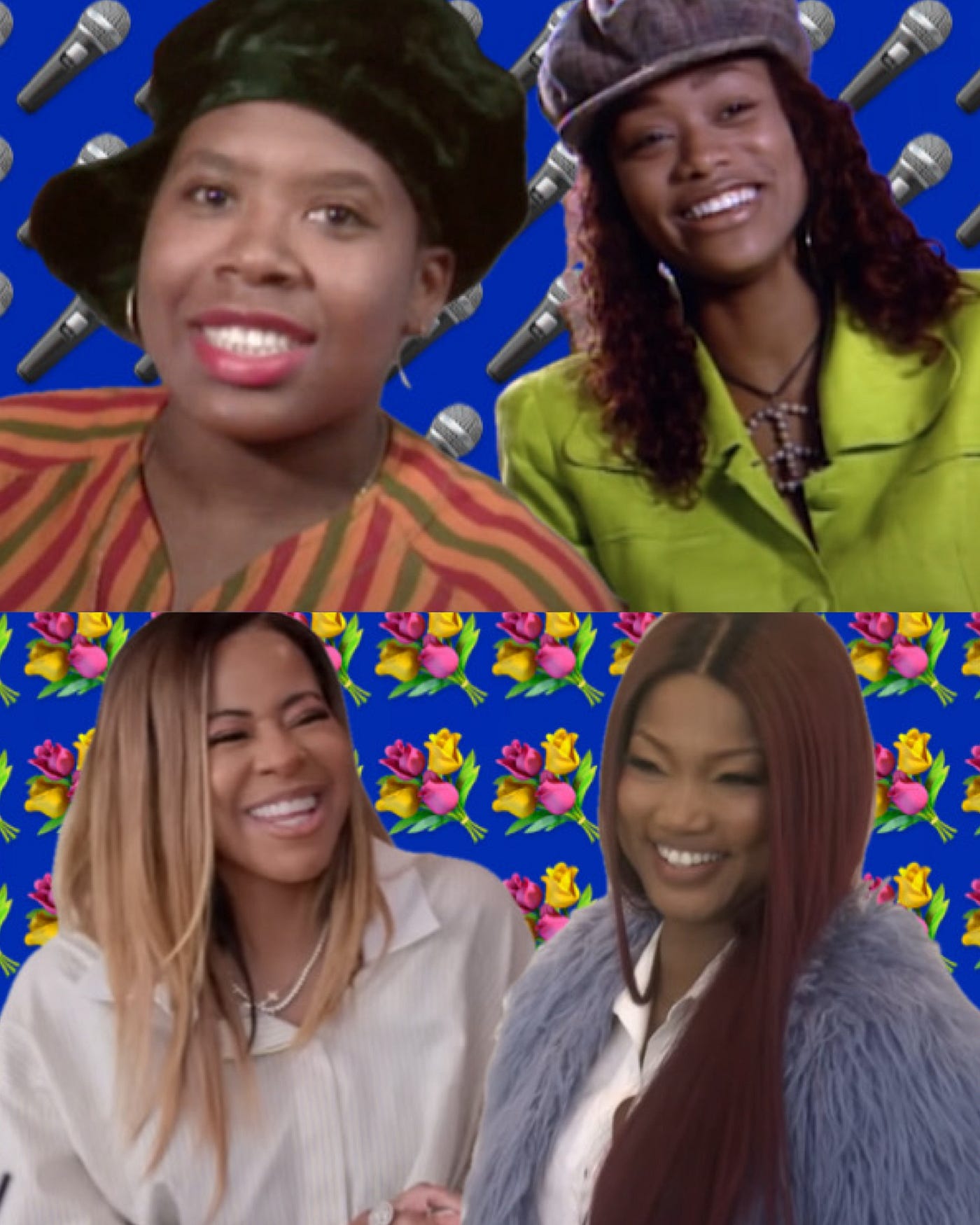
The first two seasons of The Real World were so hip-hop. The New York cast had Heather B. Gardner (aka Heather B) and Los Angeles had Tami Roman Youngblood (née Akbar). Some of us already knew Heather B from Boogie Down Productions. Her “could you get the phone?” was the oft quoted part of The Real World: New York’s show intro. Youngblood was a rapper in an R&B group called–ahem–Reality whose trials in the music business played out on The Real World: Los Angeles. In the decades since their seasons, both women have had long careers in multiple spaces marked by their tireless ability to reinvent themselves.
During Gardner’s Real World, we were privy to her pursuit of a solo career and interactions with her roommates, but little else was revealed. She was especially close to youngest cast member Julie Gentry (née Oliver), a white woman from Alabama whose friendship with Gardner belied the racist tenets to which she was exposed.
Youngblood prototypically lived out the mundane and crucial aspects of her life in front of an entire production crew. In the process, she created a benchmark for content creation. In one season, we watched Youngblood enjoy a robust dating life, get into a heated exchange with a music producer, terminate a pregnancy, struggle with body dysmorphia, and introduce a multigendered and multiracial discussion about sexual violence. She even wore her hair scarf on camera which was once taboo for Black women in mixed company.
Gardner tended to stay out of everyone else’s drama. She was about her music. Her focus paid off and eventually resulted in a solid debut album, Takin’ Mine (1996). We only saw her really lose her cool once during a house party when she got into a heated exchange with a guest of fellow Black loft mate, Kevin Powell. We also didn’t really get an abundance of scenes with just Gardner and Powell whose career as a writer and journalist truly blossomed after their season concluded.
The significance of Youngblood’s presence in the L.A. house is right up there with Pedro Zamora’s in San Francisco. In addition to them both being HIV/AIDS educators, they also controlled their own portrayals so thoroughly that they still came out fully human in the edit bay. Before Youngblood’s trip to the clinic, I’d only ever seen violent and sometimes deadly fictionalized depictions of abortion like the one in Dirty Dancing. Her vulnerability in that moment remains a compelling presentation of unscripted realness — nearly impossible to achieve now.
The infancy and malleability of reality TV worked in Gardner’s and Youngblood’s favor. When we watched their seasons of The Real World, we didn’t know what it was supposed to be yet and both women were early scientists who helped develop the formula. They also had the benefit of being emerging artists who weren’t rich. They were young and curious and their backstory was more important than how much money they had.
Despite sharing “real” in its title, Bravo’s The Real Housewives takes its cue more from the parade of excess, Lifestyles of the Rich and Famous. The latter was a TV series that ran more than a decade, starting in 1984. A precursor to MTV Cribs, Lifestyles featured wealthy, usually famous people and how they spent their money. Housewives focuses on how women in heteronormative relationships spend their money.
Mary Cosby of Salt Lake City is the first Black cast member of a predominantly white Housewives since Stacie Scott Turner of the one-and-done D.C. season. The Real Housewives isn’t an experiment in cohabitation like The Real World, it’s a study of how upper-class women socialize. Some of the women married into money or amassed a level of wealth from their careers. Cosby has never had a boss. She’s always been the boss. She’s even stated, “I was born in money. I didn’t ask for it. It was given to me.” She inherited several successful businesses, pastorship of a church, and a husband from her late grandmother. She also attended private schools during her formative years in Utah. She’s been around rich white girls and women all of her life and how she interacts with the rest of her costars proves she is not studying them.
Cosby’s directness in conversation frequently exposes how flimsy the other women’s friendships are. Those tensions really came to a head during the cast’s volatile trip to Vail, Colorado in season two. In one episode where arguing reached a boiling point, Cosby let out a frustrated one-word exclamation, “Women,” which became a GIF.
She’s whimsical, awkward, and sometimes her comments are perceived as bigoted and indicative of her detachment from people outside her stratum. Like Youngblood, Cosby also wears a hair scarf and cornrows around mixed company. Her closest friendship on RHOSLC is with Meredith Marks, a Jewish jewelry designer who slips into a Norma Desmond cadence when she’s upset. She also befriended former housewife, Monica Garcia who was the trickster of season four.
Since actress Garcelle Beauvais joined The Real Housewives of Beverly Hills in 2020, more non-white cast members have followed suit. Crystal Kung Minkoff arrived a year after Beauvais’ debut, followed by Annemarie Wiley. Both were recently released from RHOBH. Similar to Gardner, Beauvais’ closest friendship with a cast mate is with a southerner–Sutton Stracke, a business owner who grew up in Georgia. Also like Gardner, many of us were fans of Beauvais before her foray into reality. We followed her appearances on sitcoms, music videos, and her non-speaking scenes in Coming to America. Her most recognizable role was as Francesa “Fancy” Monroe on The Jamie Foxx Show.
Beauvais’ RHOBH seasons have finally given us parties and other gatherings where more than one non-white woman and certainly more than one Black woman is present. That change happened because she’s deliberate about inviting her friends to cast events.
The idea of addressing issues of racism and classism never cast a shadow on the franchise’s doorstep before Beauvais. The racist and threatening online attacks her teenage son, Jax, faced were a major talking point of the season 12 reunion. That same season, Beauvais confronted housewife Erika Jayne Girardi about cursing at Jax during Beauvais’ birthday party. In doing so, she brought awareness of the adultification of Black children.
Unfortunately, what has remained in the decades since Gardner’s Real World is the expectation of Black women on homogenous reality shows to educate their white costars. Gardner, Youngblood, Cosby, and Beauvais have all done this at varying degrees on their respective shows.
Any lasting change in perspective often runs out of steam once everyone moves out of the house or films a season finale. This was especially evident when Youngblood rejoined her cast for The Real World Homecoming: Los Angeles (2021). The scene where usage of the n-word is debated was quite telling. It was a disappointing reminder that over the course of 30 years, her non-Black roommates seemingly hadn’t had any experiences with Black people that were anchored in a shared humanity.
메타데이터
- post_id
- 571bbfd202d2
- slug
- flying-in-the-buttermilk-571bbfd202d2
- url
- https://medium.com/@devinkparrish/flying-in-the-buttermilk-571bbfd202d2
- canonical_url
- https://medium.com/@devinkparrish/flying-in-the-buttermilk-571bbfd202d2
- author_url
- https://medium.com/@devinkparrish
- status
- ok
- fetched_at
- 2026-07-23 22:19:12