Watching The Sky Fall — The Geminids Meteor Shower
Last week I left the house with a few of my friends. We drove away from the streetlights, buildings and glowing windows. We drove until…
Watching The Sky Fall — The Geminids Meteor Shower
Last week I left the house with a few of my friends. We drove away from the streetlights, buildings and glowing windows. We drove until the sky went quiet, like someone turned the volume down. All this for one thing. The Geminids meteor shower.
At first, nothing happened. Cold fingers. Cold noses. The faint outline of constellations slowly coming into view. Then a quick streak! A tiny scratch of light. Then another! Like the sky blinking. Fast, sharp lines of light that appeared and vanished before our brains could fully register them. It felt random, almost accidental. But it wasn’t.
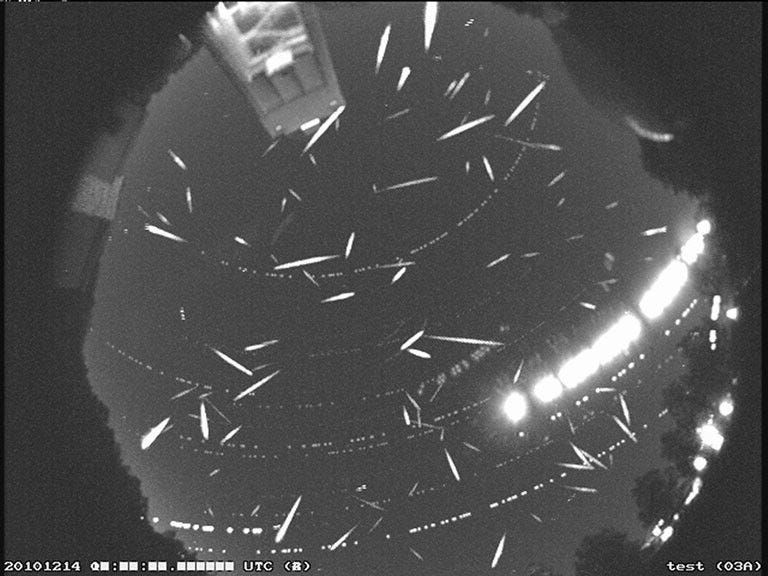
Credit: NASA/MSFC/Danielle Moser, NASA’s Meteoroid Environment Office
It was the first time I ever witnessed a celestial event and it sent me down a rabbit hole. I wanted to understand what I was actually seeing. I’ve come to learn that these showers occur when Earth ploughs through cosmic dust and debris left behind by comets orbiting the Sun. Due to the immense heat, they shed material and leave behind long, dusty trails along their orbits. When Earth’s orbit intersects one of these trails, our atmosphere crashes into that debris at incredible speeds. The result is what we casually call a “shooting star.”
We experience around thirty meteor showers every year. Many have been observed for over a century. Because Earth’s orbit is consistent, these showers tend to occur at roughly the same time every year. That’s why they can be predicted and planned for, but weather decides if we get the cake.
These showers get their names from where they seem to originate. One point in the sky — the Radiant. If you were to trace enough meteors backward, they would seem to converge there. To the naked eye, though, they seem scattered and unpredictable. The Geminids get their name from the constellation Gemini, the Twins. The constellation itself isn’t the source of the meteors, it’s just a reference point, a way to tell which shower we’re witnessing.
What makes the Geminids unusual is their origin.

Credit: Arecibo Observatory/NASA/NSF
The Geminids do not come from a comet. They come from an asteroid. 3200 Phaethon. Sounds like a villain from Star Wars. That alone is strange. Asteroids aren’t known for producing the dusty debris trails that meteor showers need. Scientists are still scratching their heads. Dead comet? Rock comet? Exactly how it produces the debris responsible for the Geminids is still not fully understood.
The Geminids are reliable though. They peak in mid-December every year and are considered one of the most dependable annual meteor showers. Under perfect conditions, you can see over a hundred an hour. Bright, fast and often yellow.
The Moon is the party killer. A bright Moon can wash out fainter meteors. This year, the Moon behaved. That’s part of what made this year special for me. The conditions aligned just enough to make the effort worthwhile.
Standing there in the dark, watching fragments of space burn up above me, I felt very small. And very lucky. Dust, orbits, friction, light and speed. Math and motion. And yet, the experience felt anything but mechanical.
Beauty by accident. Timing by chance. You do not need science to feel it, but knowing the story makes looking up feel richer. Like a great painting. You do not need to know the brush, but it helps.
메타데이터
- post_id
- 574b16ebb06a
- slug
- watching-the-sky-fall-the-geminids-meteor-shower-574b16ebb06a
- url
- https://medium.com/@pranavbharadwajm/watching-the-sky-fall-the-geminids-meteor-shower-574b16ebb06a
- canonical_url
- https://medium.com/@pranavbharadwajm/watching-the-sky-fall-the-geminids-meteor-shower-574b16ebb06a
- author_url
- https://medium.com/@pranavbharadwajm
- status
- ok
- fetched_at
- 2026-07-27 09:50:22




