Hatnefer’s Heart Scarab: A Golden Appeal to the Afterlife
Quick facts
Hatnefer’s Heart Scarab: A Golden Appeal to the Afterlife
Quick facts
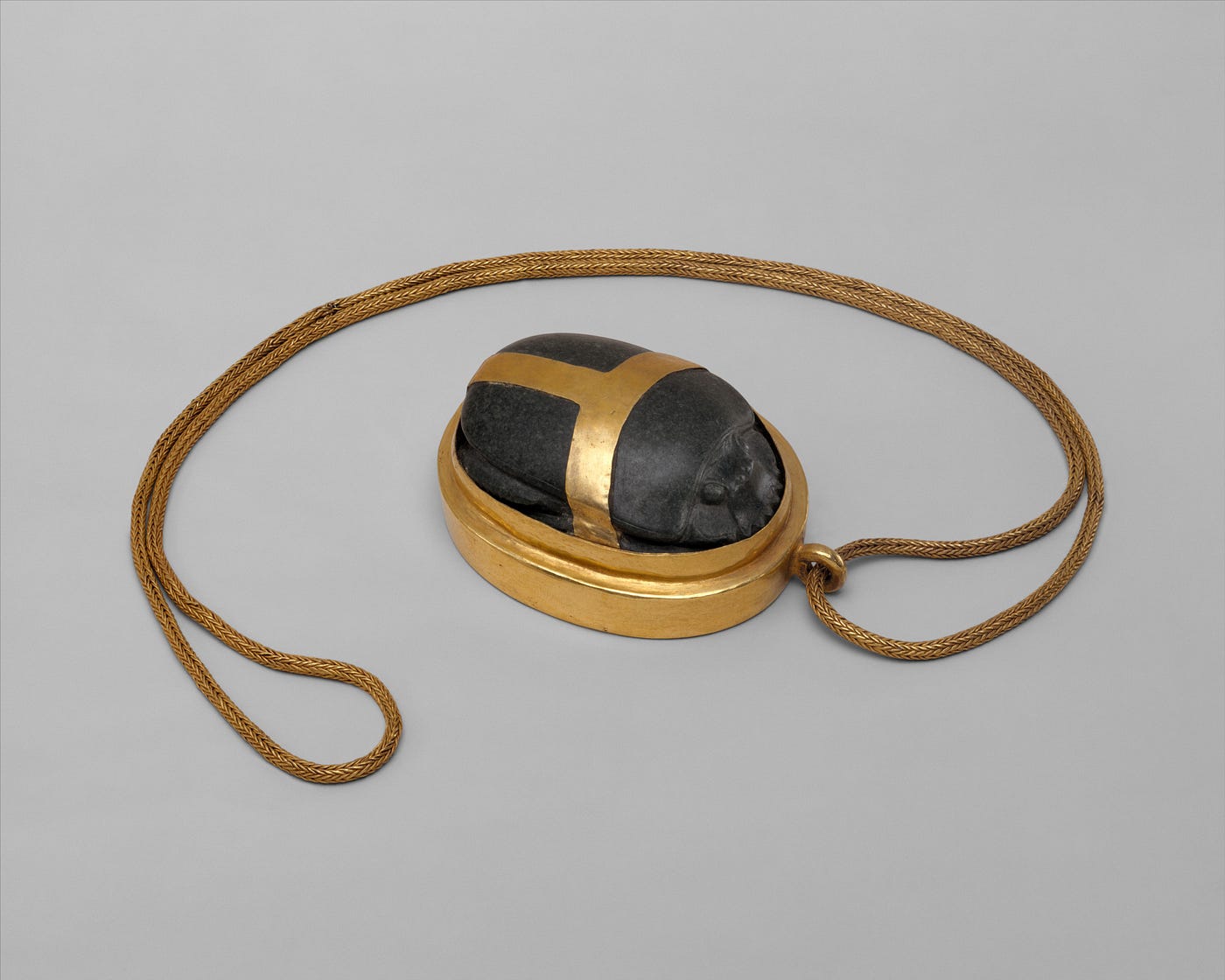
Object: Heart scarab amulet with necklace
Materials: Serpentinite (scarab) set in gold; plaited gold chain
Date: ca. 1473 BCE (early 18th Dynasty)
Provenance: Thebes (modern Luxor), tomb of Hatnefer and Ramose
Dimensions: Scarab ~6.6 cm (2.6 in) long; chain ~77.5 cm (30.5 in)
Current location: The Metropolitan Museum of Art, New York
A jewel from an elite woman’s tomb
Excavated in the 1930s from the Theban tomb of Hatnefer and her husband Ramose, this heart scarab is among the most eloquent survivals of Egyptian funerary belief.
Hatnefer’s burial — replete with bronze and silver mirrors, cosmetics, and fine linen — signals a woman of substantial means and status (“Mistress of the House,” a title denoting an elite married woman). Among these personal effects, the scarab on its long plaited gold chain stands out as both adornment and instrument of salvation.
What is a heart scarab?
In pharaonic thought, the heart (ib) was the seat of intelligence, memory, and conscience — far more important than the brain, which was often discarded during mummification.
The heart was left in the body so it could be “weighed” in the afterlife against the feather of **Ma’at** (truth, justice). A heart scarab — usually placed over the chest — functioned as a protective amulet to ensure the heart did not speak against its owner during the final judgment.
Materials and symbolism
Serpentinite, a greenish stone, evokes regeneration and new life. Green carried powerful associations with growth and rebirth — apt for an amulet meant to secure resurrection.
**Gold**, the “flesh of the gods,” signified imperishability and radiance. Mounting the scarab in gold and suspending it from a 30.5-inch chain visually and ritually linked Hatnefer’s heart to divine protection.
The **scarab beetle** (khepri) itself symbolized becoming and daily rebirth, reflecting the dung beetle’s habit of rolling the sun-like ball and the sun’s renewal each dawn.
The spell beneath: silencing the heart
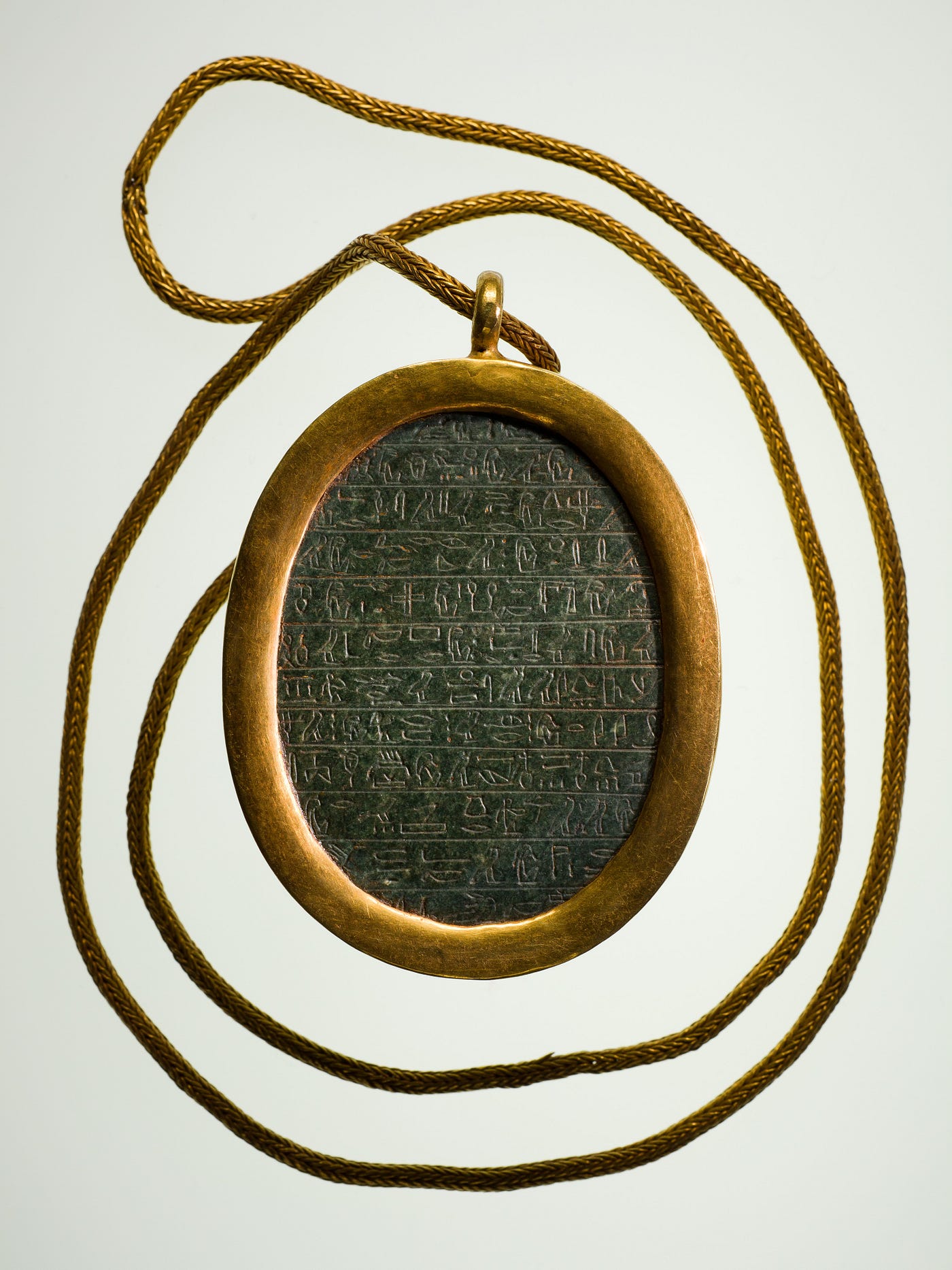
On the underside of the scarab is a text from the Book of the Dead — the so-called Spell 30B, an appeal that the deceased’s heart not rise up and testify against its owner in the Hall of Two Truths.
In essence, the inscription asks the heart to remain loyal, not to contradict or betray its bearer during judgment before Osiris. Paraphrased, Hatnefer calls to her heart — “heart of my being” — begging it not to contend as a witness, not to speak lies before the divine tribunal, and to let “it go well with us” when the scales tip toward righteousness.
This is not poetry for poetry’s sake: Egyptians believed words activated objects. The engraved spell endowed the scarab with agency — to quiet the heart and guard Hatnefer’s moral truth at the decisive moment.
A life, then a second life
Intriguingly, scholars note the piece was not originally made for Hatnefer, suggesting reuse and adaptation — common practices in the 18th Dynasty when precious materials were scarce and funerary equipment could be re-inscribed.
The personalization of the text with Hatnefer’s name tethered a preexisting luxury object to her identity, aligning elite economy with eternal needs.
Craft and courtly context
Dating to around 1473 BCE, the amulet sits in the orbit of the early 18th Dynasty, when Egypt’s power and artistic confidence surged under rulers like Hatshepsut and Thutmose III.
The quality of the goldwork and the unusually long chain point to sophisticated ateliers working for high-status households. As jewelry, the necklace projected rank; as a ritual implement, it was a technology of salvation, engineered as carefully as any stone monument.
Why this object matters
It embodies a core Egyptian doctrine: that moral truth is measurable, and that ritual objects can help align a person with Ma’at.
It illustrates gendered piety and elite female status — Hatnefer’s rich cosmetic kit and textiles mirror the social world her scarab was meant to protect and perpetuate.
It clarifies the practical theology of the Book of the Dead: spells were not abstract texts but operative inscriptions on things, carried into eternity.
Today, displayed at the Met, Hatnefer’s heart scarab still performs its ancient task — quieting the noise of millennia to let a single claim be heard: that a life lived with integrity deserves rebirth.
메타데이터
- post_id
- 5777f47ed90f
- slug
- hatnefers-heart-scarab-a-golden-appeal-to-the-afterlife-5777f47ed90f
- url
- https://medium.com/@adamjones84/hatnefers-heart-scarab-a-golden-appeal-to-the-afterlife-5777f47ed90f
- canonical_url
- https://medium.com/@adamjones84/hatnefers-heart-scarab-a-golden-appeal-to-the-afterlife-5777f47ed90f
- author_url
- https://medium.com/@adamjones84
- status
- ok
- fetched_at
- 2026-07-17 15:39:32