A 2,000-Year-Old Sarcophagus Was Opened in Italy — and the Burial Inside Is Changing What We Know
Archaeologists working in the area of Giugliano, northwest of Naples, have opened a sealed sarcophagus that has been closed for roughly…
A 2,000-Year-Old Sarcophagus Was Opened in Italy — and the Burial Inside Is Changing What We Know
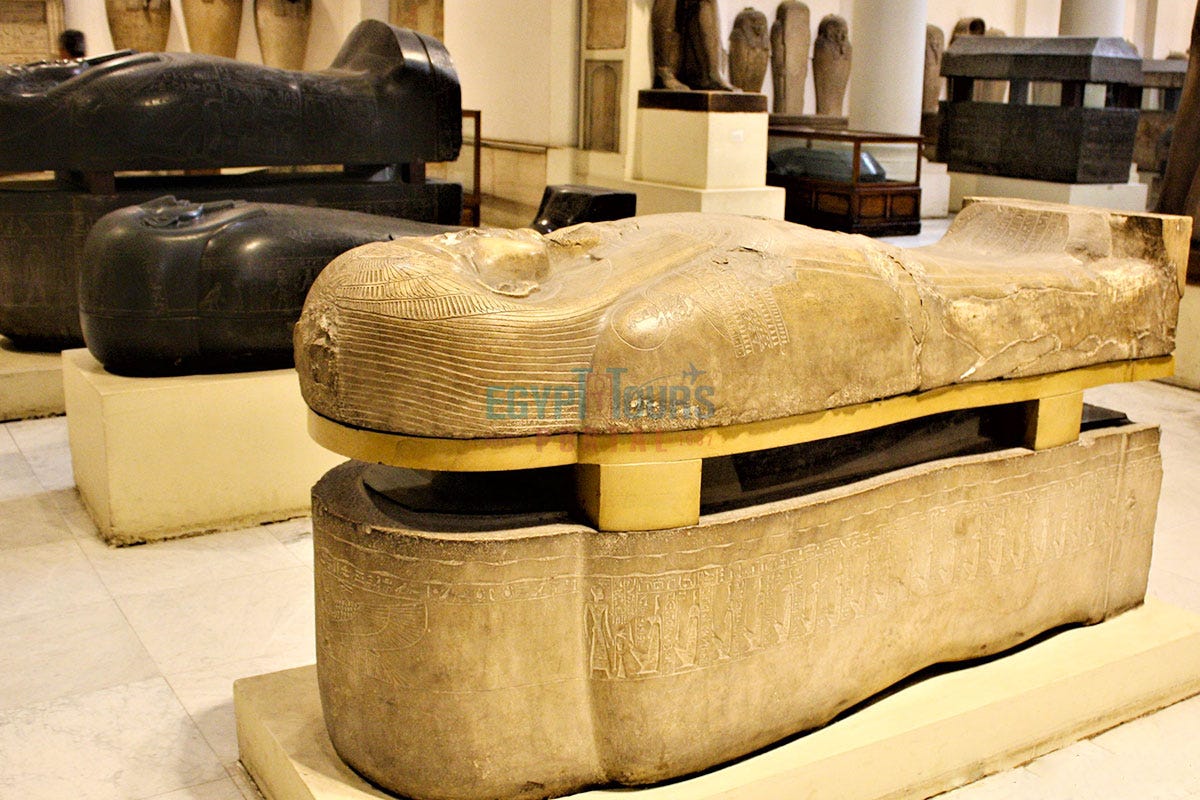
Archaeologists working in the area of Giugliano, northwest of Naples, have opened a sealed sarcophagus that has been closed for roughly two millennia. What they found inside is extraordinary: a body in an excellent state of preservation, still lying face-up, still wrapped, still surrounded by personal and ritual objects.
The discovery, made in what researchers call the Tomb of Cerberus, is more than a striking moment. It’s a scientific gift. It offers a rare, intact snapshot of Roman-era burial practice, body treatment, social status, and even chemistry.
Entering a Tomb No One Had Opened in 2,000 Years
The **sarcophagus** was first approached with extreme caution. Before physically opening it, the archaeological team inserted a micro camera through a tiny gap to get a first look. What they saw was so well preserved that they decided to proceed with a controlled opening.
Inside, the team found an individual lying on their back, covered by a burial shroud. Around the body were carefully arranged funerary objects: jars for ointments and perfumes, and tools used in bathing and body cleaning rituals, including items similar to a Roman strigil used to scrape and purify the skin. These were not random offerings. They were deliberate: symbols of care, status, and identity in death.
The surrounding tomb complex takes its nickname, the “Tomb of Cerberus,” from the painted decoration on its walls. The frescoes include Cerberus, the three-headed guardian of the underworld from Greco-Roman mythology, along with other mythological and ritual imagery. The richness of these painted scenes had already suggested the tomb belonged to a high-status family in the Roman community near ancient Liternum. The newly opened sarcophagus supports that idea. Archaeologists now suspect the person inside may have been the central family figure — possibly the ancestor for whom the entire mausoleum was first constructed.
The Shroud That Turned to Stone
One of the most unusual and important details is the survival of the burial shroud. In most Roman-era burials in Italy, textile is the first thing to vanish. Here, the covering appears to have mineralized — essentially turning into a thin mineral shell instead of decaying. This likely happened because of the controlled environment of the sealed chamber: stable humidity, very limited airflow, and a chemical setting that protected organic material.
Specialists are now studying fibers from this mineralized shroud to figure out how it was made. They want to know: Was it finely woven or coarse? What kind of yarn was used? Was the fabric locally produced or imported? Textiles can reveal class, gender expectations, trade networks, and household wealth. In other words, a burial cloth can double as a social document.
Chemistry of the Body: Plant Balms and Preservation
Lab analysis has already revealed traces of plant-based treatments on the body. Early results suggest that the deceased may have been treated with creams made from plants such as goosefoot and absinthe (wormwood). These preparations were likely intended to slow decay and ritually prepare the body.
This is significant for two reasons. First, it shows that people in Roman Campania practiced a careful, almost clinical approach to preparing the dead — not only washing and perfuming the body but applying botanical mixtures to preserve it. Second, it gives researchers a direct look at the recipes, ingredients, and medical or spiritual beliefs behind those mixtures. The team is also studying the residues left in ointment jars found inside the sarcophagus to better understand what was applied and how.
Pollen samples taken from inside the sarcophagus are being analyzed as well. Pollen can identify which plants were present at the time of burial and can even hint at the season and setting of the funeral rites. Combined with the balm analysis, it helps reconstruct what the burial might have smelled like, which plants were considered protective or purifying, and how mourners staged the final farewell.
Science in Progress: DNA, Fibers, and Family
The work is now moving from excavation to laboratory study. The research team has outlined several major goals:
DNA analysis of the remains to learn biological sex, ancestry, possible health markers, and even family relationships to others in the tomb complex.
Textile analysis of the shroud to determine weave structure, thread quality, and production techniques.
Chemical and botanical analysis of the jars and the burial environment to map out the exact substances used in the funerary treatment.
What makes this possible is context. Because the tomb was sealed, everything inside — from skin treatments to fibers to trapped air — forms a closed system. It’s incredibly rare in Roman Italy to have a sealed context that was never looted, never disturbed, and never re-opened until now.
A Social Portrait Frozen in Time
Archaeologists believe the person in the sarcophagus was not an average citizen. The elaborate frescoes, the carefully sealed sarcophagus, the presence of personal grooming tools and perfumed ointments, and the survival of a formal shroud all suggest someone of social importance. This may have been the founding ancestor of the mausoleum — the person whose burial anchored the family’s claim to status and memory.
That matters because many burials from this period survive only as scattered bones and broken pottery, stripped of meaningful context by grave robbing or later building activity. Here, by contrast, the entire scene is still intact. We are not seeing just a body, but the role of that body in a family’s story: status, wealth, ritual, and legacy, all preserved at once.
Why This Discovery Matters
Local cultural authorities have described this tomb as a breakthrough for how it unites archaeology, chemistry, textile studies, and social history. There are several reasons it stands out:
Preservation: Undisturbed, high-status Roman burials in this condition are exceptionally rare in southern Italy.
Organic survival: We almost never get fabric, balms, and treated skin chemistry in a single, intact package.
Cultural insight: The tomb sits in the orbit of ancient Naples, a vibrant zone in the late Republic and Imperial period. That means what’s learned here goes beyond Rome itself. It reflects how wealthy regional families in Campania approached death, memory, and display.
What Comes Next
The research is still unfolding. Every fiber, every trace of oil, every grain of pollen is being cataloged and compared. The goals moving forward are ambitious: identify who this person was in biological terms; reconstruct what their family believed about the body and the afterlife; map trade connections for the textiles and balms; and place this individual in the wider social world of Roman Naples two thousand years ago.
In simple terms: this isn’t just “a mummy.” It’s a complete funerary event, sealed and preserved. By reading it layer by layer — body, fabric, oils, tools, imagery — archaeologists are beginning to see not just how one person died, but how an entire community understood dignity, care, and memory in death.
메타데이터
- post_id
- 57ab2cbfb574
- slug
- a-2-000-year-old-sarcophagus-was-opened-in-italy-and-the-burial-inside-is-changing-what-we-know-57ab2cbfb574
- url
- https://medium.com/@adamjones84/a-2-000-year-old-sarcophagus-was-opened-in-italy-and-the-burial-inside-is-changing-what-we-know-57ab2cbfb574
- canonical_url
- https://medium.com/@adamjones84/a-2-000-year-old-sarcophagus-was-opened-in-italy-and-the-burial-inside-is-changing-what-we-know-57ab2cbfb574
- author_url
- https://medium.com/@adamjones84
- status
- ok
- fetched_at
- 2026-07-16 14:18:24