Chivalry was Never Free
The cost of Male generosity
Chivalry was Never Free
The cost of Male generosity

Source:📍
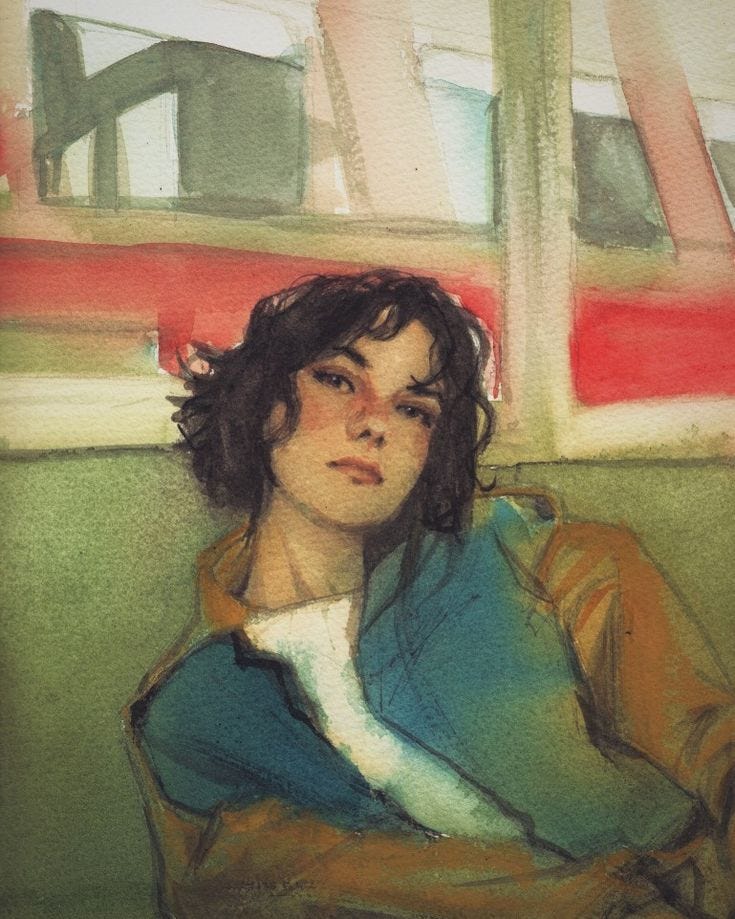
I was waiting for my brother at a bus stop when a man approached me. He didn’t ask for directions or try to start a conversation. Instead, he stood nearby, holding out his phone with his number displayed on the screen. He kept circling from one side of me to the other, as if searching for the right approach. Irritated, I finally asked him if he had a problem.
He started to leave. Then turned back.
He said I wouldn’t have minded taking his number if he were rich.
I didn’t know this man. Didn’t know his name, didn’t know anything about him thirty seconds before this moment. None of that registered to him because in his head, this was already a negotiation I had failed to enter correctly. My refusal wasn’t a refusal — it was a price objection. He had shown up without enough money, and that, to him, was the variable worth examining.
Not whether I wanted to talk to him. Not whether I had the right to stand at a bus stop without being orbited by a stranger. Just his income. That was his takeaway.
Recently, a man went viral for going on a date and spending 370 rupees — roughly the cost of a small meal, and then deciding this entitled him to sexual favours from the woman. Most of the conversation that followed fixated on the number. People laughed at the smallness of it, made jokes, and couldn’t get past the absurdity of a man counting 370 rupees like it was a down payment on a person.
While everyone was busy calculating the cost, they missed the real issue: he harassed her. The ₹370 wasn’t the problem, it was the excuse. He used it as a reason to keep pursuing her after she had shown no interest. The money simply gave his sense of entitlement something tangible to cling to. Had it not been the money, he would have found another justification. Men like this rarely need much of one.
Transactional chivalry is not about giving, it’s about keeping score. The dinner, the drinks, the insistence on covering the bill become less a gesture than an unspoken invoice. She agreed to spend time together. She never agreed to the terms he drafted in his head. Yet when the imagined debt went unpaid, he tried to collect.
The concept of chivalry is routinely romanticized as a golden standard of timeless respect, honor, and protection. We are taught to view the opening of doors, the paying of bills, and the shielding of women from discomfort as peak acts of civility.
When viewed through a critical feminist lens, however, chivalry strips off its noble armor to reveal what it truly is, a well-packaged, highly effective mechanism of “benevolent sexism”. Far from being an act of selfless virtue, traditional chivalry is a foundational pillar of patriarchy designed to maintain gender hierarchies through an unspoken system of transactional expectations.
The Illusion of Protection: A Tool for Control
Historically, the medieval code of chivalry was never about female liberation or equality it was a code of conduct for elite male warriors. When that code evolved into modern social etiquette, its core premise remained unchanged: the assumption that women are inherently weak, fragile, and in need of male protection.
But think about what these gestures actually do. When a man overrides a woman’s offer to split the bill, he is not being polite — he is making a decision for her. He is casting himself as the provider and her as the recipient, a dynamic she didn’t ask for and which immediately makes her position more complicated. She now owes him gratitude at a minimum. In certain male minds, she owes him considerably more.
By casting man as the “protector” and woman as the “protected,” chivalry reinforces a rigid power dynamic.
Interestingly, you’ll notice that many of the most famous misogynistic men on the internet — Andrew Tate being a prime example - also strongly encourage men to pay for dates entirely on their own. Numerous other podcasters with similarly misogynistic views perpetuate the idea that a man should only date if he can fully cover the cost of the date, otherwise, he’s not a “real man.”
Tate teaches men that with enough money, they can have as many women as they want, treating women as commodities rather than human beings.
What’s even more unfortunate is that some women who aren’t even traditional or conservative also reinforce this mindset. They say things like, “If he can’t afford to pay for the date, he’s not a real man, just a boy.” That’s patriarchy in its purest form.
The man who insists on paying for everything and then feels wronged when she doesn’t sleep with him didn’t misunderstand the rules. He understood them perfectly. He followed them. He’s just furious that she didn’t.
Feminism gets accused of ruining romance every time it points this out. Women who split the bill are cold. Women who reject chivalric gestures are ungrateful, difficult, probably lonely. The pressure to receive male generosity and perform appropriate thankfulness for it is its own form of control. A woman who isn’t grateful is a woman who thinks she’s better than him. That reframe is doing a lot of work.
The man at the bus stop had already rewritten the story before I ever responded. My lack of interest, my silence, my refusal to engage — these couldn’t simply stand on their own. They had to be explained. So he explained them through my supposed standards and expectations. The possibility that I simply didn’t want to talk to him was never considered, because in this worldview, rejection isn’t a valid answer. Women don’t refuse; they merely haven’t been persuaded, impressed, or offered enough.
Women are not prizes that get unlocked at a certain spend. Sitting across a dinner table from someone is not a contract. A woman at a bus stop is not an opportunity that failed to materialise.
None of this is complicated. The only reason it needs to be said at all is that chivalry has been doing excellent PR for centuries, dressing up ownership in the language of courtesy so effectively that pointing it out still sounds, to many people, like ingratitude.
A patriarchal society can celebrate a man for pulling out a woman’s chair, while simultaneously denying that same woman reproductive autonomy, equal pay, and systemic protection from gender-based violence. Chivalry allows men to feel like allies on an individual level without ever requiring them to dismantle the systemic privileges they hold.
True respect does not require a medieval code rooted in the ownership and fragility of women.
Acts of kindness should be freely offered between people as equals, not shaped by gender roles, expectations, or implied debts.
A shout-out to my bae, Jyoti♡, who inspired this piece. She writes on a wide range of topics, and every time I read her work, I’m struck by her wit, clarity, and sharp articulation.
Do you have something to say? I am here to listen.
[embed]The Art of Saying Too Much Sunday in the Shadows — 📢 An Invitation You Won’t Ignore👀medium.com
📌 Shadows in the Library — We publish fiction and unsalvageable personal stories. If you write things that are a little sideways, **our stringent guidelines are herel**
메타데이터
- post_id
- 57d3eb9dcc75
- slug
- chivalry-was-never-free-57d3eb9dcc75
- url
- https://medium.com/shadows-in-the-library/chivalry-was-never-free-57d3eb9dcc75
- canonical_url
- https://medium.com/shadows-in-the-library/chivalry-was-never-free-57d3eb9dcc75
- author_url
- https://medium.com/@maniisay
- status
- ok
- fetched_at
- 2026-06-23 03:48:11