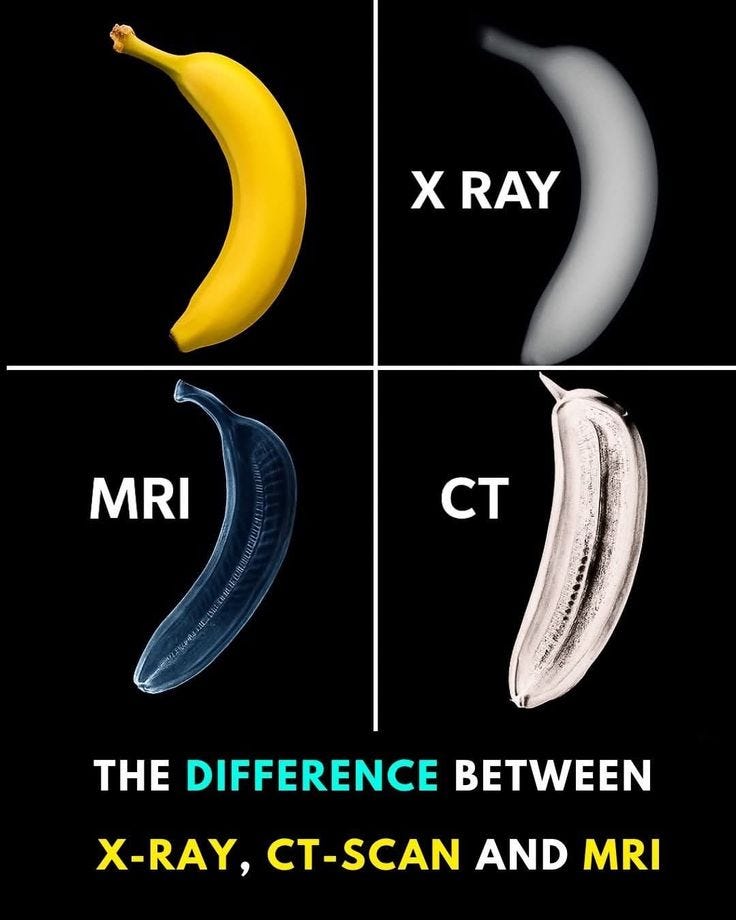
How Physics Helps Medicine
Hrum Imran
How Physics Helps Medicine
Hrum Imran

You ever think about how doctors can look inside your body without cutting you open? Or how they can use beams of energy to fight diseases like cancer? It all comes down to physics! While you might only know physics from the formulas and forces in your science class, it’s actually a huge part of modern medicine.
In this article, I’ll explain how physics helps doctors get a good look inside the human body, treat illnesses, and make sure patients stay safe. It’s some seriously cool and high-tech stuff.
How X-Rays Work: More Than a Simple Picture
Have you ever wondered what’s really happening when a doctor takes an X-ray? It’s all about a form of energy called electromagnetic radiation, which is the same type of energy that makes up visible light, radio waves, and microwaves. The difference is that X-rays have a much higher energy, so they can pass through things we can’t see through.
An X-ray machine shoots tiny packets of this energy, called photons, at your body. As these photons travel through you, they start to lose some of their power, a process known as attenuation. This loss of power depends entirely on what the photons run into.
- Bones, which are dense and full of calcium, are really good at blocking the X-ray photons. When a photon hits a bone, it’s often absorbed, so it never reaches the detector on the other side. This is why bones show up as bright white on the final image.
- Soft tissues, like your muscles and fat, are much less dense. The photons pass through them with little to no resistance. More photons make it through these tissues to the detector, which is why they appear as darker shades of gray.
- Air, being the least dense of all, lets almost every photon pass through, which is why areas like your lungs appear as black on the image.
The final result is a two-dimensional image that’s like a shadow puppet show of your insides, showing doctors where the dense and not-so-dense parts of your body are.
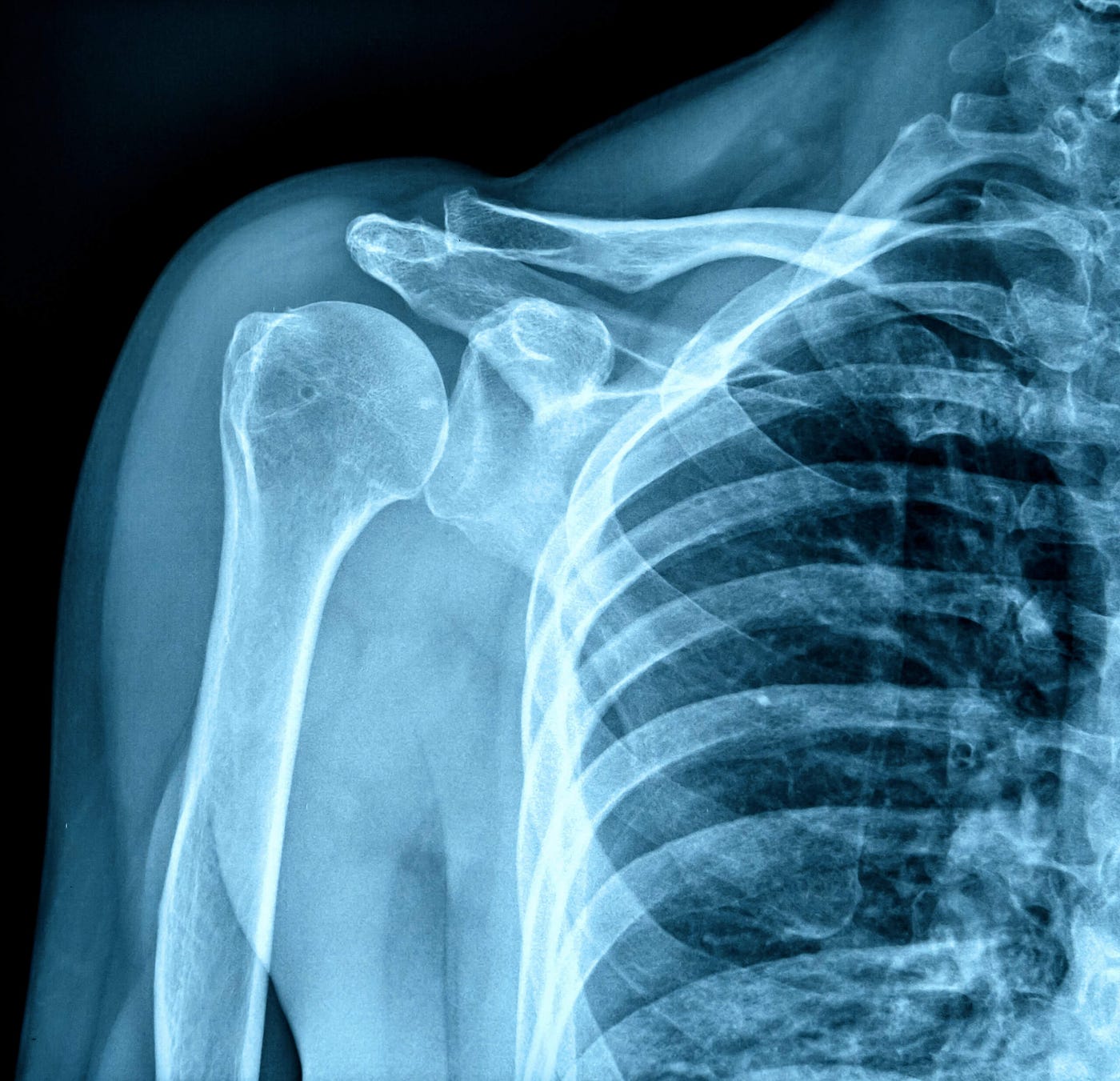
X-ray Image
CT Scans: Building a 3D Map
If an X-ray gives you a flat picture, a CT (Computed Tomography) scan gives you a full, three-dimensional map. Instead of one shot, the CT scanner is a big ring that spins around you, taking thousands of X-ray pictures from every possible angle.
A powerful computer then takes all that information and uses some complex math to create a series of cross-sectional “slices” of your body.
- Dense materials, like bone, get a high number and appear bright white.
- Low-density materials, like air, get a low number and appear black.
- Soft tissues fall somewhere in between, showing up in different shades of gray.
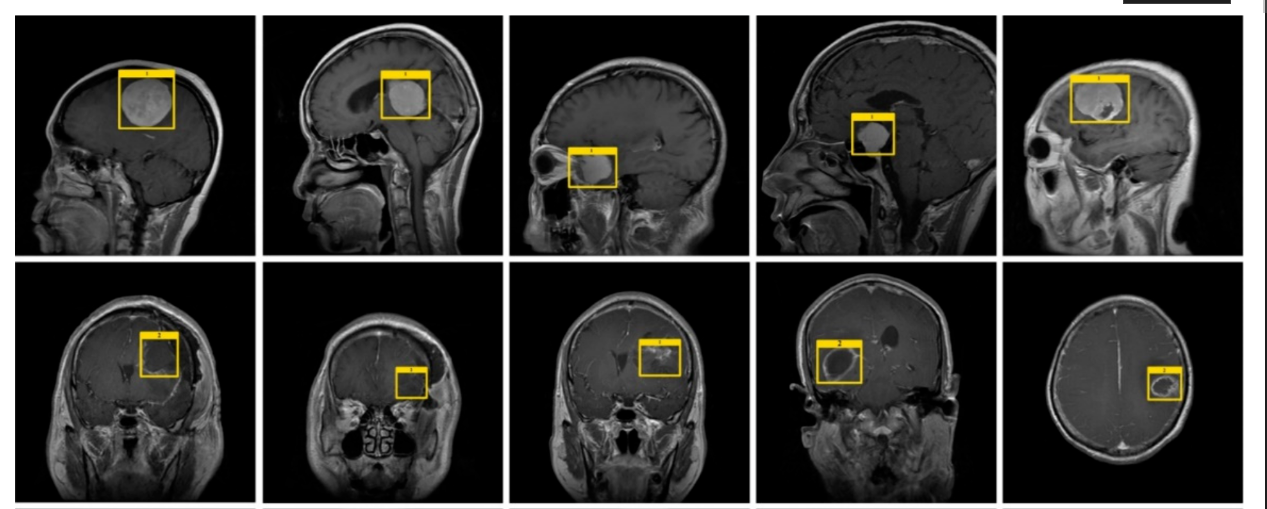
By stacking all these slices together, doctors get a highly detailed, 3D view of your organs, blood vessels, and more. This makes CT scans incredibly useful for finding things a regular X-ray might miss, such as a small tumor or internal bleeding.
CT scanning
메타데이터
- post_id
- 57db2349e056
- slug
- how-physics-helps-medicine-57db2349e056
- url
- https://medium.com/@hrum.imran/how-physics-helps-medicine-57db2349e056
- canonical_url
- https://medium.com/@hrum.imran/how-physics-helps-medicine-57db2349e056
- author_url
- https://medium.com/@hrum.imran
- status
- ok
- fetched_at
- 2026-07-27 01:20:18