What Do We Mean by Decolonising Aid?
“Decolonise aid” has become a rallying call across the humanitarian and development sectors. It appears in strategy documents, conference…
What Do We Mean by Decolonising Aid?
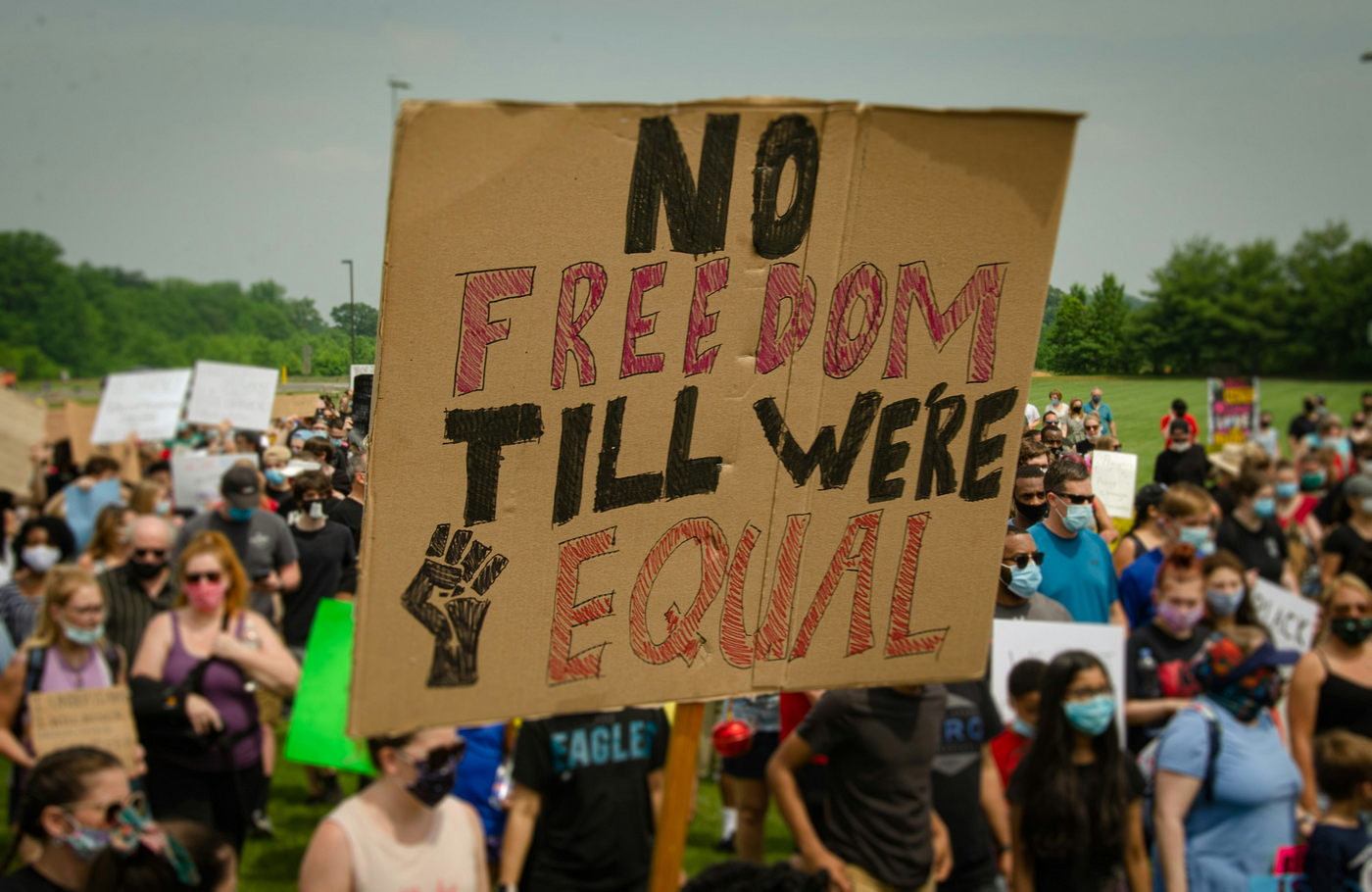
Photo by Jeff Ackley on Unsplash
“Decolonise aid” has become a rallying call across the humanitarian and development sectors. It appears in strategy documents, conference themes, and institutional commitments. But the risk of buzzword fatigue is real. What exactly does it mean to decolonise aid and can a system so deeply rooted in colonial logics truly be transformed?
This post explores the origins of the decolonisation discourse in development, its current articulations, and the tension between reformist and radical approaches. In doing so, it offers a deeper provocation for practitioners navigating the contradictions of working within a system many now acknowledge as flawed, if not fundamentally broken.
From Liberation Struggles to Development Agendas
The term decolonisation originates not in Western academia or policy frameworks, but in revolutionary struggle. For Frantz Fanon, decolonisation was “a program of complete disorder”. A total disruption of colonial power, ownership, and epistemology (Fanon, 1963). Similarly, Amílcar Cabral (1973) emphasised that true decolonisation required reclaiming not just land, but culture and political agency.
Post-independence, however, many nations found themselves caught in a new web of economic and political dependency. Institutions like the World Bank and International Monetary Fund replaced colonial administrators with structural adjustment programs (SAPs), enforcing austerity, deregulation, and the rollback of public services in the name of “development.” As Rodney (1972) argued, underdevelopment was not an accident, but a deliberate product of imperial exploitation and neocolonial control.
The rise of the aid industry, particularly from the 1980s onward, paralleled this shift. Though framed as humanitarian, much of the aid architecture replicated colonial power flows. Resources, expertise, and authority travelling from Global North donors to Global South “recipients,” under conditions rarely determined by the latter (Escobar, 1995).
Decolonisation Re-Enter the Conversation
Calls to decolonise aid have resurged, particularly in the wake of the Black Lives Matter uprisings, the COVID-19 pandemic, and increasing visibility of systemic racism within global institutions. Campaigns such as *Time to Decolonise Aid* by Peace Direct (2021) and The Development Alternative have helped expose how international aid frequently reinforces inequality even as it purports to alleviate it.
Decolonisation in this contemporary usage refers to a set of overlapping critiques:
- The dominance of white, Western institutions in setting aid agendas;
- Epistemic injustice in which Global South knowledge and practices are marginalised;
- Conditionalities and compliance mechanisms that reproduce control rather than enable sovereignty;
- Extractive relationships between INGOs and local partners.
Yet, as Tuck and Yang (2012) caution in their landmark essay *Decolonization is Not a Metaphor*, the term has often been appropriated into institutional discourse without accountability to its original meaning. They argue that decolonisation is not a metaphor for inclusion, diversity, or reform, it is a material process that demands the return of land, life, and power.
Reformist vs. Radical Approaches
Within the aid sector, approaches to decolonisation tend to fall along a spectrum from reformist to radical.
Reformist approaches
Focus on internal transformation of existing institutions, including:
- Staff diversification and leadership change (Kothari, 2005);
- Shifting funds to local partners (“localisation”) (OECD, 2021);
- Embedding anti-racism and equity policies within INGOs;
- Strengthening participatory program design.
These approaches recognise the symptoms of coloniality but often retain the structures that produce them. For example, “localisation” initiatives may transfer implementation duties without changing who controls funding or defines success. Technical reforms without power redistribution can actually entrench inequality.
Radical approaches
Push beyond institutional reform to call for:
- The dismantling of the donor–recipient hierarchy;
- Community-led and autonomous systems of aid and redistribution;
- Recognition and restitution for historical and ongoing extraction;
- Replacing colonial-capitalist logics with relational, reciprocal models rooted in Indigenous and grassroots political thought (Andreotti, 2016; Ndlovu-Gatsheni, 2013).
In this framing, decolonising aid may involve shrinking or even abolishing the formal aid sector in favour of reparative justice, land-based resistance, and solidarity economies.
Can the Aid System Be Decolonised?
This question sits at the heart of the current debate. Can aid, an industry born of imperial intervention, neoliberal economics, and crisis response, be decolonised from within? Or must it be fundamentally replaced?
Some suggest a dual strategy: engage in reforms to alleviate immediate harm while investing in long-term alternatives. Others argue that the system’s extractive political economy cannot be patched. It must be confronted and dismantled.
What is clear is that without a reckoning with the structures that shape aid, such as funding flows, geopolitical interests, technocratic knowledge systems, these efforts to “decolonise” risk becoming performative.
Moving Forward: Reflexivity, Redistribution, and Resistance
For those of us working within the sector, the call to decolonise aid requires more than new language. It requires us to ask difficult, often personal questions:
- Who holds decision-making power in my organisation or program?
- Whose voices and knowledges are validated — and whose are made invisible?
- How do I benefit from the system I claim to critique?
It also demands concrete action: sharing power, transferring resources, opening space for dissent, and embracing epistemic humility. Decolonising aid is not a checklist; it is a lifelong political commitment to disrupting systems of oppression, even when it is uncomfortable or destabilising.
To echo Fanon, decolonisation is a process of rupture. In a sector increasingly interested in “doing no harm,” we must also ask — what structures do we continue to protect by avoiding disruption?
- Andreotti, V. (2016). The educational challenges of imagining the world differently. Canadian Journal of Development Studies, 37(1), 101–112.
- Cabral, A. (1973). Return to the Source: Selected Speeches. Monthly Review Press.
- Escobar, A. (1995). Encountering Development: The Making and Unmaking of the Third World. Princeton University Press.
- Fanon, F. (1963). The Wretched of the Earth. Grove Press.
- Kothari, U. (2005). Authority and expertise: The professionalisation of international development and the ordering of dissent. Antipode, 37(3), 425–446.
- Ndlovu-Gatsheni, S. J. (2013). Coloniality of Power in Postcolonial Africa: Myths of Decolonization. CODESRIA.
- OECD. (2021). Development Co-operation Report: Shaping a Just Digital Transformation. OECD Publishing.
- Peace Direct. (2021). Time to Decolonise Aid. https://www.peacedirect.org/publications/decolonising-aid/
- Rodney, W. (1972). How Europe Underdeveloped Africa. Bogle-L’Ouverture Publications.
- Roepstorff, K. (2020). A call for critical reflection on the localisation agenda in humanitarian action. Third World Quarterly, 41(2), 284–301.
- Tuck, E., & Yang, K. W. (2012). Decolonization is not a metaphor. Decolonization: Indigeneity, Education & Society, 1(1), 1–40.
메타데이터
- post_id
- 5840390d2b90
- slug
- what-do-we-mean-by-decolonising-aid-5840390d2b90
- url
- https://medium.com/@communitypoweredresponses/what-do-we-mean-by-decolonising-aid-5840390d2b90
- canonical_url
- https://medium.com/@communitypoweredresponses/what-do-we-mean-by-decolonising-aid-5840390d2b90
- author_url
- https://medium.com/@communitypoweredresponses
- status
- ok
- fetched_at
- 2026-06-29 01:02:39