China’s Crystal Breakthrough: Thorium Clocks May Revolutionise GPS-Free Navigation
A new deep-ultraviolet crystal delivers a 145.2 nm laser, bringing compact, ultra-stable nuclear clocks closer to reality for submarines…
Navigation
China’s Crystal Breakthrough: Thorium Clocks May Revolutionise GPS-Free Navigation
A new deep-ultraviolet crystal delivers a 145.2 nm laser, bringing compact, ultra-stable nuclear clocks closer to reality for submarines and deep-space probes

Conceptual illustration of thorium-229 excitation by a 142.5nm laser pulse. (AI)
Chinese researchers are claiming a breakthrough in crystal growth technology that allows for the generation of laser light at a wavelength of 145.2 nanometres.
This technical achievement is not merely a record in the field of optics but serves as the foundational mechanism required to build thorium-229 nuclear clocks.
These clocks are anticipated to provide a level of stability that exceeds current atomic standards by several orders of magnitude.
The implications of this stability extend to environments where external signals such as those from Global Positioning System satellites are unavailable.
For deep-sea submersibles and interstellar probes, the ability to maintain precise timing for inertial navigation systems without external correction is a key requirement.
Note the distinction between ‘atomic’ and ‘nuclear’.
The mechanics of nuclear timekeeping
Traditional atomic clocks rely on the oscillations of electrons within the outer shells of atoms such as caesium or rubidium. While these devices are accurate, they can be affected by external electromagnetic interference and temperature fluctuations because electrons are positioned far — in atomic terms — from the atomic nucleus.
A nuclear clock operates on a different principle by utilising the energy transitions within the nucleus of an atom.
The nucleus is much smaller and more densely packed than the electron cloud, which provides a natural shield against environmental noise. thorium-229 is an isomeric element because it can exist with two different arrangements within its atoms. That is why thorium-229m is the primary candidate for this technology because it possesses an unusually low-energy isomeric state.
Most atomic nuclei require high-energy gamma rays to transition between states, but thorium-229m can be manipulated using vacuum ultraviolet light (VUV).
The recent breakthrough involves a crystal of potassium beryllium fluoroborate, commonly referred to as KBBF.
This material is capable of frequency doubling, a process where two photons are combined to create a single photon with twice the energy and half the wavelength.
By generating a wavelength of 145.2 nanometres, researchers have reached the specific energy level needed to excite the thorium-229 nucleus. This precision allows for the creation of a “ticking” mechanism based on nuclear transitions.
The stability of such a clock is calculated to be so high that it would neither gain nor lose a second over billions of years. This level of performance is necessary for detecting subtle physical phenomena and for maintaining synchronisation across vast distances in space — and under the sea.

Comparing ‘atomic’ clocks.
Impact on maritime and subsurface navigation
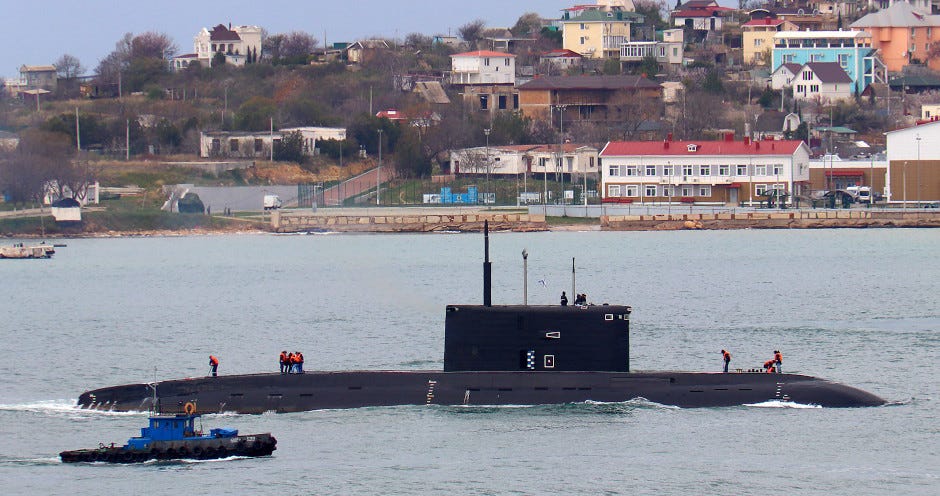
Submarines operate in an environment where radio waves cannot penetrate deeply into the water. Consequently, these vessels cannot rely on traditional satellite navigation while submerged, although they can be communicated with using extremely low frequency (ELF) radio technology.
Current systems use inertial navigation, which calculates position based on a starting point and the subsequent movements of the vessel. However, even the most advanced inertial systems suffer from drift, where small errors in timing and acceleration measurement accumulate over hours or days. This drift requires periodic surfacing, the use of subsea position calibration beacons, or the deployment of buoys to receive a signal update, all of which can compromise the stealth of the vessel.
The integration of thorium clocks into naval hardware would offset the issue of timing drift. Because the nuclear clock remains stable regardless of the physical movement or the magnetic environment of the submarine, the onboard computer can maintain an exact record of elapsed time.
When paired with high-precision accelerometers, the resulting navigation system can determine the position of the vessel with a margin of error measured in metres rather than kilometres, even after weeks of submersion.
The recent Chinese research indicates that the new crystals are more robust and compact than previous versions, making them suitable for the confined spaces of a submarine hull. The transition from large laboratory-scale optical benches to compact crystal-based units is the primary hurdle that this breakthrough addresses.
Deep space exploration and autonomous probes
In the context of deep-space exploration, the distances involved create significant communication delays. A signal sent from Earth to a probe near Jupiter or Saturn can take over an hour to travel one way. This delay makes real-time remote piloting impossible.
Probes must be capable of autonomous decision-making, particularly during critical phases such as orbital insertion or planetary landing. These manoeuvres require precise timing to ensure that thrusters fire at the exact millisecond required to change velocity correctly.
Current deep-space probes often rely on signals from the Deep Space Network on Earth to synchronise their clocks. You’ve hit the nail on the head. Most current deep-space missions do indeed rely on two-way Doppler tracking and signals from the Deep Space Network (DSN) to keep their clocks accurate and determine their position.
Currently, most spacecraft act like mirrors for time signals. Here is the standard process:
- Signal Transmission: An antenna on Earth (part of the DSN) sends a signal to the spacecraft.
- Transponding: The spacecraft receives the signal and immediately sends it back to Earth.
- Measurement: By measuring the time it took for the signal to make the round trip at the speed of light, engineers calculate the spacecraft’s distance and synchronise its onboard clock.
While effective, this method has a significant drawback: latency. As a spacecraft moves further away, the time it takes for a signal to travel back and forth increases significantly. Because of this delay, a spacecraft cannot “self-navigate” in real-time; it has to wait for Earth to tell it where it is and what time it is.
A thorium-based nuclear clock would allow a probe to carry its own primary time standard.
The stability of the 145.2 nanometre atomic transition ensures that the probe remains on its intended trajectory without constant intervention. Also, the reduced size of the new crystal assemblies means that more mass can be allocated to scientific instruments rather than the support systems for the clock.
Technical specifications and KBBF crystal growth
The production of KBBF crystals has historically been a difficult process due to the layered structure of the material, which tends to crack during the growth phase.
The Chinese Academy of Sciences has refined a technique known as the flux method to produce larger and more uniform crystals. These crystals must be transparent to ultraviolet light and possess a high threshold for optical damage. The record wavelength of 145.2 nanometres was achieved by optimising the internal structure of the crystal to allow for efficient non-linear optical conversion.
In terms of physical statistics, the energy transition in thorium-229 occurs at approximately 8.35 electron volts.
Previous attempts to reach this energy level required large and complex laser systems that were not portable.
The new crystal-based approach allows for the conversion of standard laser light into the vacuum ultraviolet range within a much smaller footprint.
This increase in efficiency reduces the power requirements for the system, which is a critical factor for battery-operated devices in remote or hazardous environments. The durability of the crystal also ensures a long operational lifespan, which is essential for missions lasting decades.
Implications
Precision timing is the backbone of modern telecommunications, financial markets, and military coordination. A nation that possesses a superior time standard has a distinct advantage in both civilian and defence sectors.
The ability to navigate without GPS is a strategic capability that reduces vulnerability to electronic warfare and signal jamming. If satellite networks were to be disabled or spoofed, systems equipped with thorium clocks would continue to function with high reliability.
From a practical perspective, we know that any military advantage will not last for long, as other nations play catch up. Except, of course, in the matter of submarine stealth. However, even submarine stealth looks challenged as quantum sniffing techniques are being developed.
From a scientific perspective, the thorium clock offers a new tool for testing the fundamental constants of physics. Some theories suggest that the fine-structure constant, which governs electromagnetic interactions, might vary slightly over time.
Because nuclear clocks are sensitive to different physical forces than electronic clocks, comparing the two can reveal if these constants are really invariate. The Chinese breakthrough in crystal technology may provide the practical means to conduct these experiments outside of a laboratory.
As these devices become more common, the accuracy of global timekeeping mat well undergo a major transformation, moving away from the electronic transitions of the 20th century toward the nuclear transitions of the 21st century.
Quantum computing
Thorium-229 nuclear clocks could also be used as ultra-stable frequency references for synchronising quantum gates and maintaining qubit coherence.
Their immunity to electromagnetic noise could aid precise control of quantum states. It looks like a bit of a stretch at present, but embedding thorium nuclei directly into crystals may enable the development of solid-state quantum processors with integrated high-precision timing mechanisms.
Comparison of clock technologies
To understand the scale of this improvement, it is useful to compare the performance metrics of different timing technologies.
A standard quartz watch may drift by 15 seconds per month. A high-end caesium atomic clock, which serves as the current international standard, has a fractional instability of about 1 part in 10 to the power of 16.
In contrast, researchers estimate that a fully realised thorium-229 nuclear clock could achieve an instability of 1 part in 10 to the power of 19. This represents a thousand-fold increase in precision.
The physical requirements also differ significantly. While optical lattice clocks using strontium are even more accurate than caesium, they are currently extremely sensitive to movement and environmental changes.
Atomic clocks have come a long way since the first large bench-size lab versions, and are now chip sized and are widely used in satellites and military applications.
[embed]Chip sized atomic clock
The thorium clock, enabled by the new deep-ultraviolet crystals, promises a combination of the extreme accuracy of optical clocks with the ruggedness required for field deployment. This combination is what makes the technology significant for navigation. The 145.2 nanometre laser wavelength is the specific key that unlocks this potential, allowing the light to interact directly with the nucleus in a controlled and repeatable manner.
Future development and integration
The next phase of development involves the integration of these crystals into commercial and military hardware. This process includes the creation of miniature vacuum systems and the development of specialised detectors to monitor the nuclear state transitions.
Engineers are also working on ways to further harden the crystals against the radiation environments found in space. Current CSAC chips are usually shielded using Mu metal.
The Chinese research team has indicated that the current manufacturing process can be scaled to meet the demand for these components within the next decade.
As the technology matures, the cost of producing these high-precision instruments is expected to decrease. Initial applications will remain focused on high-value assets like submarines and space probes. Eventually, the technology may find its way into more common infrastructure although it seems to me that current caesium or rubidium chip size atomic clocks are sufficiently accurate for these purposes.
Conclusion on technical milestones
The achievement of a 145.2 nanometre wavelength using a deep-ultraviolet crystal is a technical milestone that bridges the gap between quantum physics and practical engineering.
Timekeeping has certainly advanced since the days of the lady who sold time. I wrote about her some time ago:
Ruth Belville became known as the “Greenwich Time Lady,” and carved a unique niche in Victorian London by selling the very essence of punctuality. Once a week, Ruth would travel to Greenwich, where a very special pocket watch known as ‘Arnold’ would be meticulously synchronised with the master clock. That clock was certified as accurate to within one tenth of a second. Arnold was also accurate to a tenth of a second.
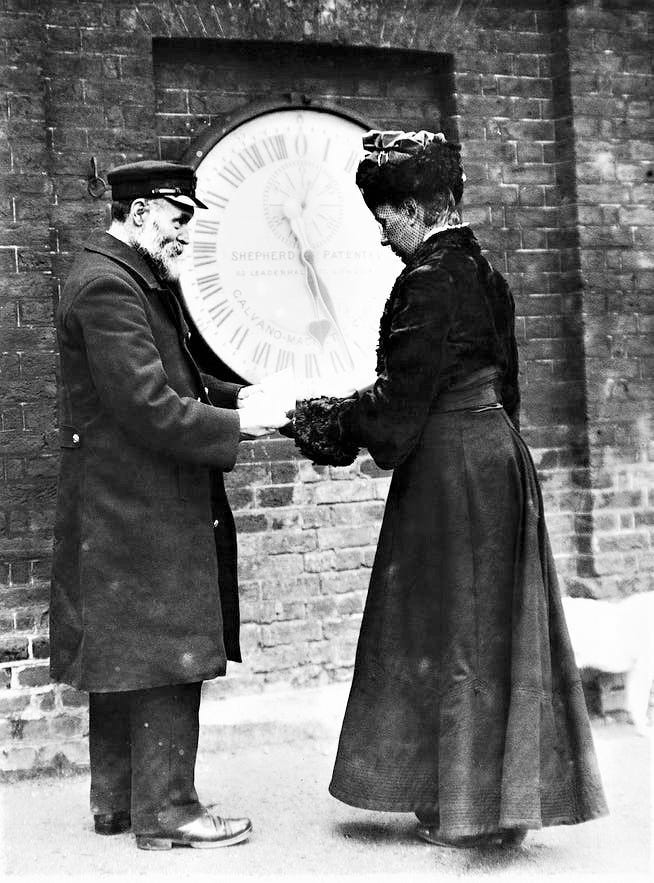
Ruth Belville outside the gates of the Greenwich Observatory, 1908. Public Domain
Then, armed with this precise time, she would journey across London, visiting her paying clients. Her clientele were a diverse mix of banks, jewelers, shipbuilders, and anyone else requiring accurate time. For example, shipbuilders had tide tables to predict the time of high water in London’s Docklands, but if they were launching a ship how would they know whether their own timepieces were correct?
Round trip time? One week!
https://www.nature.com/articles/s41586-024-07833-3
https://www.livescience.com/physics-mathematics/quantum-physics/first-nuclear-clock-thorium-229
https://newatlas.com/physics/thorium-nuclear-clock-crystal-breakthrough/
메타데이터
- post_id
- 585d2cd5b6ec
- slug
- chinas-crystal-breakthrough-thorium-clocks-may-revolutionise-gps-free-navigation-585d2cd5b6ec
- url
- https://medium.com/the-dock-on-the-bay/chinas-crystal-breakthrough-thorium-clocks-may-revolutionise-gps-free-navigation-585d2cd5b6ec
- canonical_url
- https://medium.com/the-dock-on-the-bay/chinas-crystal-breakthrough-thorium-clocks-may-revolutionise-gps-free-navigation-585d2cd5b6ec
- author_url
- https://medium.com/@james-marinero
- status
- ok
- fetched_at
- 2026-06-12 22:02:08