Emotions as a Compass: Why Change Often Begins with Restlessness
Change rarely begins with a dramatic moment. More often, it starts quietly.
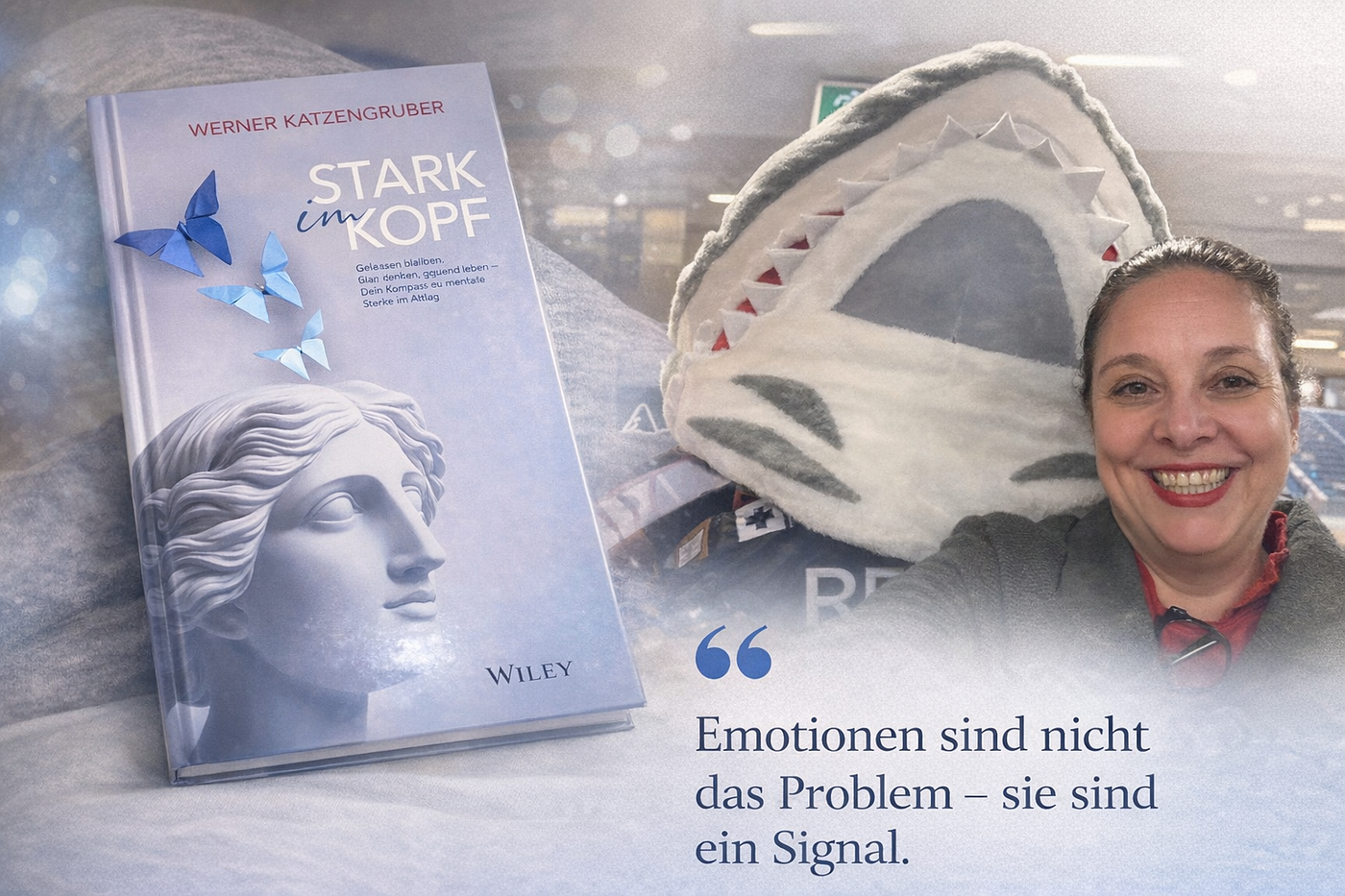
Emotionen sind nicht das Problem — sie sind ein Signal
Emotions as a Compass: Why Change Often Begins with Restlessness
Change rarely begins with a dramatic moment. More often, it starts quietly.
With a subtle feeling that something is no longer quite right. With a sense of restlessness. With questions that refuse to disappear.
Many people experience uncertainty at this point. Emotions such as frustration, doubt, or anxiety are often seen as obstacles. But from a psychological perspective, they can mean something very different: they are signals that change may be necessary.
This idea is also central to the book “Strong in Mind — Staying Calm, Thinking Clearly, Living Healthy” by Werner Katzengruber. The author explores how emotions can help us better understand ourselves and navigate change more consciously.
Emotions Are Signals
Emotions serve an important purpose. They act as an internal navigation system. Feelings such as anger, fear, or sadness often indicate that our needs, values, or boundaries have been touched.
Instead of immediately judging or suppressing emotions, it can be helpful to pause and observe them.
Helpful questions might be:
- What am I feeling right now?
- Where do I feel this emotion in my body?
- What situation triggered this feeling?
Simply becoming aware of these signals can create distance and clarity.
Change Happens in Phases
Psychological models often describe change as a process that unfolds in several stages.
1. The Phase of Realization
It usually begins with a vague sense of dissatisfaction. Perhaps there is a feeling of stagnation or the impression that certain habits, routines, or structures no longer fit.
Emotions such as frustration or doubt often appear during this phase.
2. The Phase of Uncertainty
Once we begin to question familiar patterns, uncertainty emerges. Old routines lose their stability, while new paths are still unclear.
This phase can feel uncomfortable — yet it is an essential part of any meaningful transformation.
3. The Phase of Stabilization
Over time, new perspectives develop. New habits begin to form, and confidence gradually returns. Change becomes integrated into everyday life.
The Power of Attention
A powerful idea in many psychological approaches is this:
Energy flows where attention goes.
What we focus on shapes how we experience our lives.
If our attention is constantly directed toward problems, challenges may feel overwhelming. But if we also notice opportunities, resources, and learning experiences, we gain more room to act.
Self-Care as a Foundation
Another important aspect of dealing with emotions is self-care. It is often misunderstood as something that belongs only to calm or relaxed periods of life. In reality, self-care becomes even more important during times of change.
Self-care can take many forms:
- setting clear boundaries
- creating small moments of reflection during the day
- having honest conversations with trusted people
- building simple rituals that create stability
Self-care is not about perfection. It is about paying attention to what we truly need.
Small Steps Instead of Big Leaps
Many meaningful changes do not begin with radical decisions. They start with small, realistic steps.
A helpful question might be:
What would be one small step in a new direction today?
Sometimes a simple shift in perspective is enough to bring movement into situations that feel stuck.
In the end, emotions are not just reactions to what happens around us. They can also become a compass — guiding us toward growth, clarity, and meaningful change.
About Werner Katzengruber:
Werner Katzengruber has been working as a coach for over 25 years. His clients include executives, politicians, elite athletes, and private individuals. He knows what makes people strong — and what holds them back. In this book, he shares his knowledge, his experience, and many of his proven methods for the first time in such depth.
메타데이터
- post_id
- 58723b97033d
- slug
- emotions-as-a-compass-why-change-often-begins-with-restlessness-58723b97033d
- url
- https://medium.com/@birgithass/emotions-as-a-compass-why-change-often-begins-with-restlessness-58723b97033d
- canonical_url
- https://medium.com/@birgithass/emotions-as-a-compass-why-change-often-begins-with-restlessness-58723b97033d
- author_url
- https://medium.com/@birgithass
- status
- ok
- fetched_at
- 2026-07-21 21:51:53