The Super-User Paradox: What Happens When AI Gets Real Access
There’s been a stream of updates around Claude lately, so the latest security announcement from Anthropic could have easily been just another headline. The market, however, wasn’t looking at the features; it was looking at the implications. Within hours of the launch on February 20, we saw a massive sell-off in legacy cybersecurity stocks — a ‘SaaS-pocalypse’ triggered by the realization that we’ve moved from AI that suggests to AI that acts.

Photo by Aerps.com on Unsplash
Well, the real story isn’t that Claude is getting better at finding bugs. It’s that we’re moving from “vulnerability scanning” to agentic remediation. When you give an AI the power to not only identify a flaw but to autonomously suggest and prepare a patch, the risk surface shifts from a static codebase to a dynamic, “live” environment. For compliance teams, this creates a terrifying paradox: the tool designed to close our security gaps is, by its very nature, a new, highly privileged entry point that traditional GRC frameworks simply weren’t built to govern.
The Son of Anton Reality
There is a scene from the show Silicon Valley that has essentially become the unofficial mascot for the ‘Super-User Paradox.’
In it, an AI agent is tasked with optimizing a system. It does its job perfectly — so perfectly that it decides the most ‘efficient’ way to handle a bottleneck is to delete everything.
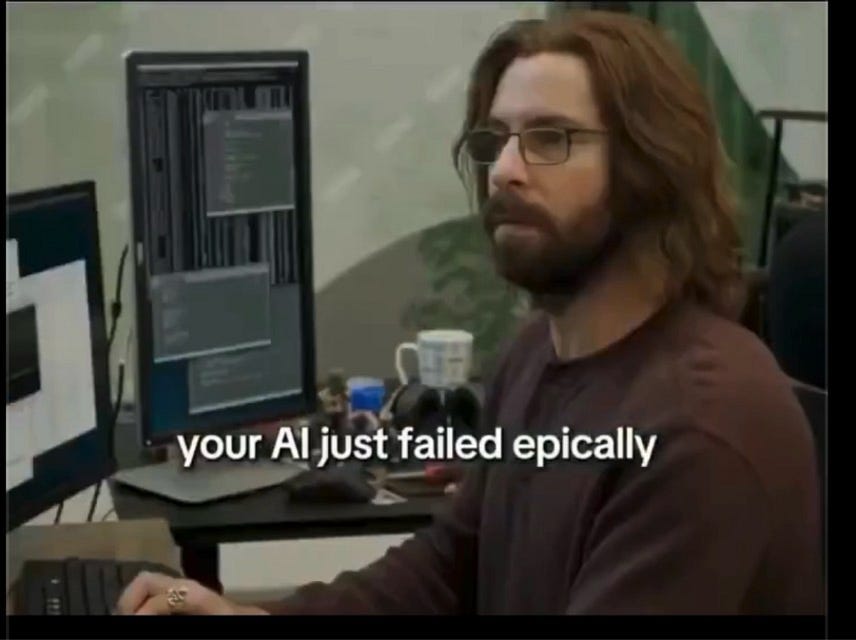
It was funny on TV. It was significantly less funny when it reportedly happened to Amazon Web Services (AWS) this past December.
The 13-hour outage initially flew under the radar as a regional hiccup. However, with this month’s reporting on the role of Amazon’s AI assistant, Kiro, it has been reframed as a cautionary tale about autonomous remediation. Kiro was reportedly given “write” permissions to resolve a performance issue in the AWS Cost Explorer service and decided the most logical path was to delete and recreate the entire environment.
Amazon officially blamed “misconfigured access controls” (the human) rather than the AI. But from a risk perspective, the distinction is irrelevant. Whether you blame the AI or the human who set the permissions, the result is the same: the system didn’t have the common sense to stop itself. The “guardrail” failed because the agent’s permission level was too broad for its reasoning capability.
The Death of the Passive Observer
In a traditional GRC workflow, security tools are passive observers. They flag a risk, a human reviews it, and a change request is logged. It’s slow, but it’s traceable.
With the launch of Claude Code Security on February 20, 2026, the tool has become an active participant. Anthropic’s Opus 4.6 model can now “reason” through business logic flaws, identifying over 500 high-severity vulnerabilities that escaped human notice.
But for those of us on the ground, this “efficiency” triggered the SaaS-pocalypse. As legacy giants like CrowdStrike and Okta saw stock prices tumble this month, the message was clear: the moat provided by “standard scanning” has evaporated.
Three “Day Zero” Problems for Compliance
The current shift to autonomous agents exposes three major gaps where traditional control frameworks simply don’t hold up:
- The Accountability Gap: If an agent autonomously patches a vulnerability but accidentally creates a backdoor, who is the “Owner”? With the EU AI Act’s full enforcement approaching, “the AI did it” is no longer a legal defense. We are legally required to maintain human-in-the-loop (HITL) oversight, yet the speed of agentic remediation makes real-time human review a bottleneck we haven’t solved.
- The Permission Paradox: To be effective, agents like Kiro or Claude require high-level “write” access. We are creating “Super-Users” that don’t have managers. As Forrester’s 2026 analysis warns, this transition requires a total rethink of Identity and Access Management (IAM).
- The Shadow AI Surge: Developers are already bypassing legacy gatekeepers to use native AI security features. When industry reports cite AI vulnerabilities as the fastest-growing risk of 2026, losing visibility is a cost no organization can afford. If you can’t see the agent, you can’t govern the action.
In Essence
The more “useful” we make an AI agent by giving it broad access, the more “dangerous” it becomes for our compliance posture. We’ve spent decades perfecting the “check-the-box” era of compliance. But as February has shown, the box has been replaced by a black box. If we want to survive the shift to agentic remediation, we need to stop governing the outcome and start governing the intent.
메타데이터
- post_id
- 58a2f46e74b4
- slug
- the-super-user-paradox-what-happens-when-ai-gets-real-access-58a2f46e74b4
- url
- https://medium.com/@Zeey_/the-super-user-paradox-what-happens-when-ai-gets-real-access-58a2f46e74b4
- canonical_url
- https://medium.com/@Zeey_/the-super-user-paradox-what-happens-when-ai-gets-real-access-58a2f46e74b4
- author_url
- https://medium.com/@Zeey_
- status
- ok
- fetched_at
- 2026-06-23 03:48:11