Nigerian Cancel Culture Part 3: When Even Legends Aren’t Safe
23-Jan-2026 | @ObisDev
Nigerian Cancel Culture Part 3: When Even Legends Aren’t Safe
23-Jan-2026 | @ObisDev
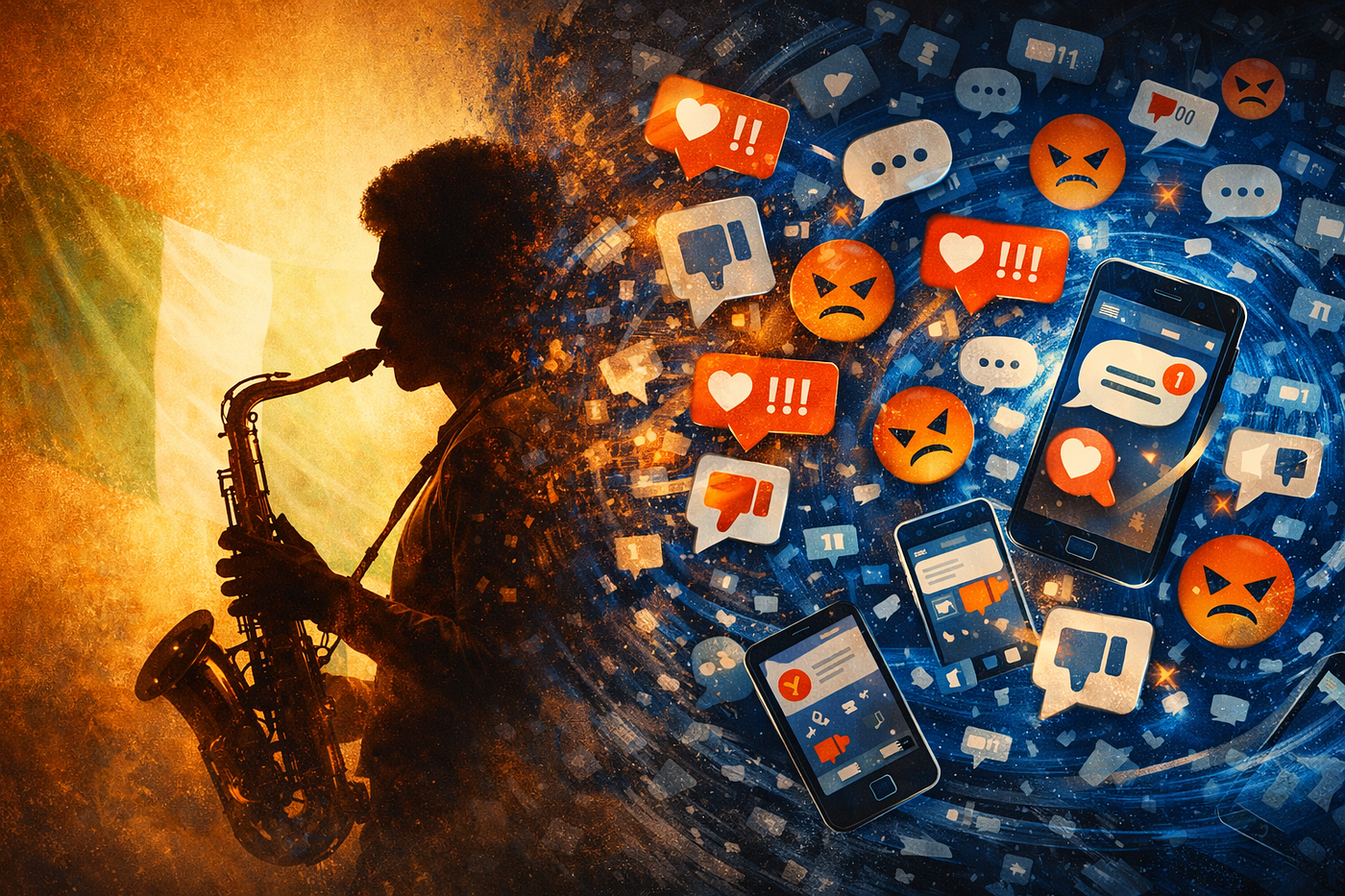
In Parts 1 and 2 of this series, I documented how Nigerian cancel culture has evolved from entertainment-disguised-as-accountability into ethnic warfare that tears at our national fabric. I showed how Victor Osimhen was dragged for a disagreement, how Samuel Chukwueze became a tribal scapegoat for a penalty miss, and how we’ve normalized cruelty under the banner of holding people accountable.
But just when I thought we’d reached peak toxicity, Nigerian online culture proved me wrong. The recent clash between Wizkid, his fanbase (Wizkid FC), and Seun Kuti has revealed something even more disturbing: not even our dead heroes are safe from the mob. Not even legends who fought for our freedom. Not even icons whose legacies should unite us.
And the timing? Just as Fela Anikulapo-Kuti receives his historic Grammy Lifetime Achievement Award — the first African artist ever to earn this honor — we’re too busy dragging his name through the digital mud to celebrate properly.
The Grammy Recognition We Should Be Celebrating

On December 19, 2025, the Recording Academy announced that Fela Kuti would receive a posthumous Grammy Lifetime Achievement Award at the 2026 ceremony. This wasn’t just another accolade. This was history. Fela became the first African musician ever to receive this specific honor, joining legends like The Beatles, Aretha Franklin, and Bob Marley.
The announcement followed Fela’s 2025 induction into the Grammy Hall of Fame for his revolutionary 1976 album “Zombie” — the album that cost him everything. After that release, 1,000 Nigerian military members burned his Lagos compound, destroyed his instruments and master tapes, beat him unconscious, and threw his mother from an upstairs window. She later died from those injuries.
This should have been our moment. A moment when Nigerians united in pride, when we celebrated the global recognition of a man who used music as a weapon against oppression, when we acknowledged that before Afrobeats conquered the world, there was Fela laying the foundation.
Instead, we turned it into another battlefield.
How The Inferno Started
The controversy began when Seun Kuti, Fela’s youngest son, called out Wizkid FC on social media. His complaint? Fans repeatedly comparing Wizkid to Fela Kuti, calling the Afrobeats superstar “the new Fela” or claiming he surpassed the legend.
In a viral video posted in early January 2026, Seun didn’t mince words. He called Wizkid FC uninformed, saying they were trying to claim an image they didn’t understand. He emphasized that his father’s legacy transcended music — it was about political activism, cultural resistance, and fighting military dictatorships. Comparing that to commercial success, he argued, was deeply insulting.
The response from Wizkid FC was immediate and vicious. Within hours, X (formerly Twitter) exploded with attacks not just on Seun, but on Fela himself. Comments like “Wizkid is bigger than Fela” flooded timelines. Fans mocked Fela’s multiple marriages, dismissed his activism, and reduced a revolutionary icon to “past glory.”
Videos emerged showing people insulting Wizkid’s late parents in defense of Fela, which only escalated the situation. By January 20, 2026, Wizkid himself joined the fray, posting inflammatory statements on social media, including personal attacks on Seun’s wife and declaring himself bigger than Fela.
The situation spiraled completely out of control. What began as a debate about legacy became a full-scale war, with insults flying in every direction, families dragged into the mud, and a legend’s name weaponized for fan battles.
The Mob Targets A Legend

This is where Nigerian cancel culture revealed its darkest evolution. In Part 1, I showed how we attack living people without thinking. In Part 2, I exposed how we weaponize ethnicity. But now? We’re attacking the dead. We’re canceling legends. We’re dragging icons who can’t defend themselves.
The comments about Fela were breathtaking in their disrespect. Some Wizkid fans declared that without Wizkid’s success, nobody would care about Fela today — as if a man who created an entire genre, fought military dictatorships, and influenced generations of musicians globally somehow needed validation from contemporary pop stars.
Others mocked his lifestyle, his politics, his appearance. One user wrote that Fela couldn’t compare to modern artists in terms of “real achievement.” Another claimed that Grammy awards for Wizkid (won as a featured artist on Beyoncé’s track) made him greater than a man who produced 52 albums and created Afrobeat from scratch.
The irony is suffocating. Wizkid himself has a full tattoo of Fela on his body. He’s performed at Felabration multiple times. He’s collaborated with Femi Kuti, Fela’s son. He’s repeatedly said Fela inspired him and that comparing them is disrespectful. In an old interview that resurfaced during the controversy, Wizkid specifically stated that you cannot compare him to Fela because “it is like a disrespect when you’re mentioning Wizkid and Fela in the same sentence.”
Yet his fans ignored all of this. The mob decided that defending their favorite artist meant tearing down a legend. Logic evaporated. History became irrelevant. Respect disappeared.
VeryDarkMan Enters The Conversation
Then VeryDarkMan (VDM), the figure I identified in Part 1 as someone who refuses to bow to mob mentality, weighed in. In a viral video, he accused Wizkid of showing disrespect to Fela and lamented Nigeria’s failure to honor its music legends.
VDM pointed out what should be obvious: Nigeria is the only country where people fight their own legends. He listed veteran artists who laid the foundation — Eldee, African China, P-Square, 2Face Idibia, and others — noting how quickly we dismiss pioneers as “past glory” when they speak on industry issues.
He specifically addressed the Grammy comparison, explaining that Wizkid’s Grammy win (for Best Music Video as a featured artist on “Brown Skin Girl”) shouldn’t be compared to Fela’s decades of revolutionary work. He contrasted this with Burna Boy’s and Tems’ individual Grammy achievements, emphasizing that recognition matters but so does historical context.
Most importantly, VDM highlighted how other countries celebrate their pioneers while Nigeria cannibalizes its own. No one in Jamaica attacks Bob Marley’s legacy. Americans don’t mock James Brown. But in Nigeria? Even our greatest icons become targets when they’re inconvenient to fan narratives.
The Uncomfortable Pattern: Nobody Is Safe
What makes this controversy so significant is how perfectly it illustrates the progression I’ve documented across these three articles.
Part 1 showed us attacking living people for entertainment — Victor Osimhen dragged for a disagreement, Naira Marley convicted without investigation.
Part 2 showed us weaponizing ethnicity — Samuel Chukwueze attacked with tribal slurs for missing a penalty, football heartbreak twisted into ethnic hatred.
Part 3 reveals the final frontier: attacking the dead. If Fela Kuti — a man who literally gave his life fighting for Nigerian freedom, whose music inspired global movements, who created an entire genre — isn’t safe from online mobs, then who is?
The answer is nobody. Nobody is safe. Not footballers. Not musicians. Not activists. Not legends. Not even the dead.
The mob doesn’t discriminate. It doesn’t care about facts, history, or respect. It only cares about the target. And once you’re selected, your legacy means nothing. Your achievements mean nothing. Your sacrifices mean nothing. The mob wants blood, and it will take it from whoever is convenient.
The Psychology Remains Consistent
The fundamental drives I identified in previous articles haven’t changed. People still want to belong. They still want to appear superior. They still want to impress strangers online. They still want to feel powerful by attacking someone who cannot immediately fight back.
But what’s evolved is the audacity. We’ve gone from attacking individual mistakes to attacking entire ethnic groups to attacking generational legacies. The cruelty has scaled up. The targets have expanded. The destruction has deepened.
People hide behind “defending their fave” while spewing hatred that would make them social pariahs offline. They claim to be “passionate fans” while demonstrating zero understanding of the history they’re dismissing. They insist they’re “keeping it real” while rewriting reality to fit their narratives.
And the most dangerous part? They genuinely don’t see the problem. In their minds, defending Wizkid requires attacking Fela. Supporting one artist means destroying another’s legacy. Winning a fan war justifies rewriting history.
This is the culture we’ve created. This is what Nigerian cancel culture has become. We don’t just tear down individuals anymore — we tear down entire legacies, entire movements, entire generations of achievement.
What Does This Culture Really Achieve?
As I stated in Parts 1 and 2: absolutely nothing positive.
This culture doesn’t build better citizens. It doesn’t improve our music industry. It doesn’t honor our legends. It doesn’t celebrate our achievements. It doesn’t unite us as a nation.
Instead, it fractures everything. Young artists watch and learn that success means becoming a target. Legends’ families watch as their parents’ sacrifices are mocked. International observers watch and wonder why Nigerians can’t appreciate their own greatness. Future generations will watch and see us destroying our own heritage in real-time.
We’re systematically dismantling our cultural legacy while pretending to defend it. We’re attacking the very foundations that made contemporary success possible. We’re burning down the house we claim to love.
The tragic irony is that Wizkid’s global success exists because of the path Fela carved. Afrobeats conquered the world because Afrobeat proved African music could challenge, inspire, and transform global culture. Today’s commercial triumph stands on yesterday’s revolutionary foundation.
But the mob doesn’t care about foundations. It doesn’t care about history. It doesn’t care about legacy. It only cares about winning today’s argument, even if it means losing tomorrow’s respect.
The Family’s Response: Wisdom Amid Chaos
Yeni Kuti, Fela’s eldest daughter, eventually spoke out. Her response exemplified the maturity the mob lacks. She didn’t attack Wizkid. She didn’t insult his fans. Instead, she made a simple observation: people who drag her family aren’t just insulting Fela — they’re insulting Nigerians as a whole.
She pointed out that Fela has been dead for 27 years, yet his name remains on everyone’s lips. That’s what makes someone a legend. She asked a devastating question: “Do you hear Jamaicans fighting Bob Marley?” She advised those who want to fight to direct their energy at the living and leave the dead alone.
The difference between her response and the mob’s behavior is instructive. She spoke with dignity. She defended her father’s legacy without attacking others. She elevated the conversation instead of dragging it further into the mud.
That’s what real respect looks like. That’s what defending legacy actually means. Not insults. Not attacks. Not mob warfare. Just simple, dignified truth.
The Broader Implications: A Culture At War With Itself
This controversy isn’t just about Wizkid, Seun Kuti, or Fela. It’s about who we are as a people and what we’re becoming.
We’re a nation that received news of Fela’s historic Grammy recognition and turned it into a battlefield. We’re a people who should be celebrating our first-ever Lifetime Achievement Award recipient but are too busy fighting each other to notice. We’re a culture that produces global superstars but can’t honor the legends who made that success possible.
Every country has fan wars. Every nation has online toxicity. But how many nations systematically attack their own legends? How many cultures weaponize their history against themselves? How many peoples tear down their icons to defend their favorites?
This is uniquely Nigerian in its scale and intensity. And it reveals something profoundly broken in how we relate to achievement, legacy, and greatness.
The Path Forward: Choosing Respect Over Ruin
If there’s any hope of redemption, it starts with recognizing what we’ve become. We need to look in the mirror and confront the ugliness staring back at us.
We need to understand that defending an artist doesn’t require attacking a legend. Supporting modern success doesn’t mean dismissing historical achievement. Being a passionate fan doesn’t justify disrespecting pioneers.
We need to teach ourselves — and especially younger fans — that greatness isn’t a competition. Fela and Wizkid aren’t opponents. They’re part of a continuum. One laid the foundation; the other built on it. One fought for freedom through revolution; the other spreads culture through globalization. Both matter. Both deserve respect.
We need to recognize that once someone is dead, the attacks should stop. Criticizing the living is one thing — they can defend themselves. But attacking the dead, who cannot respond, who cannot clarify, who cannot fight back? That’s not fandom. That’s not passion. That’s cruelty.
Most importantly, we need to ask ourselves hard questions. Do we want to be remembered as the generation that received global recognition for our legends and responded with disrespect? Do we want to be the people who had everything — musical greatness, global success, revolutionary legacy — and destroyed it through online warfare?
Or do we want to be the generation that learned to celebrate greatness without tearing down legends? That defended artists without disrespecting history? That honored both pioneers and innovators?
The Choice Before Us: United Or Divided

As Fela prepares to receive his Grammy Lifetime Achievement Award at the ceremony on January 31, 2026, we face a choice. We can continue this destructive path, turning every achievement into an argument, every success into a battle, every legacy into a target. Or we can choose differently.
We can choose to celebrate Fela’s recognition as the historic moment it is. We can choose to honor his sacrifice, his music, his legacy. We can choose to recognize that his success doesn’t diminish anyone else’s, and their success doesn’t require diminishing his.
We can choose to be fans who uplift without tearing down. We can choose to be Nigerians who celebrate our legends without fighting each other. We can choose to be a culture that builds on its foundation instead of burning it down.
But that requires something radical: choosing respect over ruin. Choosing celebration over cancellation. Choosing unity over warfare.
The uncomfortable truth remains: if we keep attacking first — now targeting even our dead heroes — we’ll continue destroying the very culture we claim to love. We’ll keep proving that our hunger for destruction runs deeper than our capacity for appreciation.
And that will be the most tragic legacy of all.
Share in my narrative at: Medium: ObisDev and X: @ObisDev
메타데이터
- post_id
- 58ad1380c9fc
- slug
- nigerian-cancel-culture-part-3-when-even-legends-arent-safe-58ad1380c9fc
- url
- https://medium.com/@ObisDev/nigerian-cancel-culture-part-3-when-even-legends-arent-safe-58ad1380c9fc
- canonical_url
- https://medium.com/@ObisDev/nigerian-cancel-culture-part-3-when-even-legends-arent-safe-58ad1380c9fc
- author_url
- https://medium.com/@ObisDev
- status
- ok
- fetched_at
- 2026-06-20 20:29:01