The “Skinny” on the 2026 Games: Is Ozempic Ruining the Winter Olympics?
I’m sitting here watching the 2026 Winter Olympics in Milano-Cortina, and I can’t help but notice something different about the…
The “Skinny” on the 2026 Games: Is Ozempic Ruining the Winter Olympics?
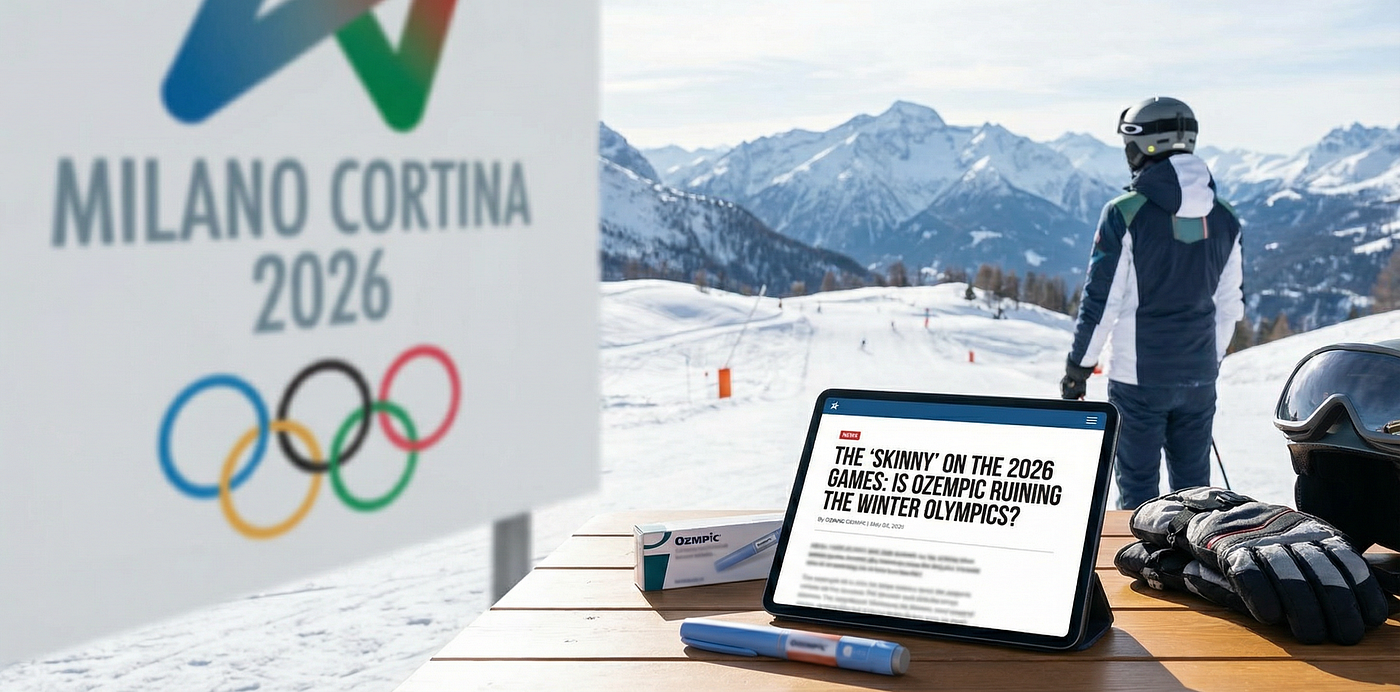
Photo by Charles Izuma
I’m sitting here watching the 2026 Winter Olympics in Milano-Cortina, and I can’t help but notice something different about the athletes this year. Usually, we expect these humans to look like Greek gods carved out of granite, but the conversation in the stands and on social media isn’t just about gold medals. It’s about GLP-1 medications like Ozempic and Wegovy. Have you noticed the chatter lately? It feels like every time a commentator mentions an athlete’s “leaner physique,” the internet immediately starts speculating about whether they’re on the “O-Train.”
This isn’t just gossip around the water cooler; it’s a full-blown controversy that’s shaking the very foundation of elite sports. Experts are calling it the “GLP-1 Olympics,” and frankly, the implications are a bit terrifying. We’re watching a real-time experiment on how these blockbuster weight-loss drugs affect human performance and muscle mass. If you think this is just about shedding a few pounds for a wedding, think again. In the world of high-stakes athletics, those few pounds represent the difference between a podium finish and a career-ending injury.
The MedPage Today Bombshell: Why Everyone is Talking
A massive article recently made waves across MedPage Today and Athletech News, sparking a viral debate that hasn’t slowed down since the opening ceremony on February 6th. The core of the issue? Athletes might be using these drugs to hit specific weight classes or to lean out for sports where “power-to-weight ratio” is king. But there is a massive catch that nobody seems to want to talk about at the press conferences.
While these drugs are incredible for metabolic health, they don’t just target fat. They often take precious muscle mass along with it. Can you imagine a speed skater losing 15% of their quad strength just to look “leaner” on the ice? It sounds like a recipe for disaster, doesn’t it? The sports world is currently divided into two camps: those who see it as a revolutionary tool for weight management and those who see it as a shortcut to physical ruin.
The Science of “Skinny Fat” Athletes
When you take a GLP-1 agonist, your appetite vanishes, which sounds like a dream for anyone who has ever struggled with a diet. However, for an Olympic athlete, calories are fuel. If you aren’t eating, your body starts looking for energy elsewhere, and often, it cannibalizes your muscle tissue. Researchers have found that a significant portion of the weight lost on these medications comes from lean muscle mass, which is basically the worst-case scenario for a professional athlete.
- Muscle loss leads to decreased power output.
- Reduced mass affects joint stability and injury resilience.
- Lower caloric intake can lead to “low energy availability” (LEA).
Is it a Performance Enhancer or a Career Killer?
The World Anti-Doping Agency (WADA) is currently scratching its head over this one. Usually, “doping” involves making you stronger, faster, or more enduring. GLP-1s are a bit of a paradox because they might actually make an athlete weaker and slower in the long run. So, why would anyone take them? IMO, it comes down to the desperate pressure to be thin in sports like figure skating or ski jumping. :)
If an athlete uses a drug to artificially reach a weight that their body couldn’t naturally maintain, is that “cheating”? Some argue that it’s no different than using a specialized diet, while others claim it provides an unfair metabolic advantage. WADA officials are debating whether to classify these drugs as performance-enhancing or simply “detrimental.” It’s a weird day when we’re debating whether a drug that makes you weaker should be banned for giving you an “edge.”
The Power-to-Weight Ratio Trap
In sports like ski jumping, every gram matters. If you’re lighter, you fly further — it’s basic physics. But if you lose the muscle in your legs, you can’t “pop” off the ramp with the same force. I’ve seen some jumpers this week who look incredibly lean, but their landings look shaky. Are they sacrificing their skeletal integrity for a few extra meters of flight? It’s a dangerous game to play when you’re hurtling through the air at 60 miles per hour.
The “Lean Mass” Crisis: A Closer Look at the Data
If you look at the clinical trials for semaglutide, the data on muscle loss is pretty startling. In some studies, up to 40% of the weight lost was lean mass. For a couch potato, that’s a bummer. For a bobsledder who needs explosive power to shove a 500-pound sled, that’s a death sentence for their stats. You can’t just “protein shake” your way out of that kind of systemic muscle wasting.
I’ve talked to a few trainers who are terrified that their athletes are secretly getting prescriptions from “med-spas” to drop weight quickly before the games. They call it “metabolic sabotage.” Ever wondered why some athletes seem to “fade” during the second half of a grueling cross-country ski race? It might not be a lack of heart; it might be a lack of functional muscle tissue caused by rapid, drug-induced weight loss.
Key Concerns for Elite Performance:
- Explosive Strength: Needed for sprinting and jumping.
- Thermoregulation: Muscle helps keep you warm in sub-zero Olympic temps.
- Recovery: Less muscle mass often means a slower recovery from intense bouts of exercise.
- Bone Density: Rapid weight loss is often linked to a drop in bone mineral density.
The Ethical Quagmire: Are We Encouraging Eating Disorders?
This is where things get a little dark. We already know that elite sports have a complicated relationship with body image and eating disorders. By allowing (or failing to regulate) GLP-1s, are we just providing a medicalized version of disordered eating? It’s a tough pill to swallow — pun intended. If an athlete feels they “must” take a drug to stay competitive, we’ve failed them as fans and as a sporting community.
Honestly, I think we’re heading toward a future where “body composition testing” becomes as common as urine tests. If an athlete’s muscle-to-fat ratio drops too fast, it should trigger a red flag. We need to protect these people from themselves. FYI, the long-term effects of these drugs on non-obese, elite athletes are completely unknown. We are basically using the 2026 Winter Games as a giant laboratory. :/
Comparing the “Old Way” vs. The “GLP-1 Way”
Before these drugs went viral, athletes had to cut weight the hard way: sauna suits, extreme calorie counting, and grueling cardio. It was miserable, sure, but it was transparent. You could see the struggle. Now, an athlete can drop 10 pounds in a month without breaking a sweat, but they’re losing the very engine that makes them elite.
- Natural Weight Cut: Hard to maintain, involves high discipline, preserves more muscle if done right.
- GLP-1 Weight Cut: “Easy” to achieve, suppresses appetite, but carries a high risk of muscle atrophy.
- Performance Result: The natural athlete usually has more “gas in the tank” for the final push.
Does the “easy” route ever really pay off in the end? I’ve seen enough sports movies to know that shortcuts usually lead to a dramatic montage of failure in the third act. We’re seeing that play out now on the slopes of Italy.
The Muscle Mass “Penalty” in Winter Sports
Let’s talk about hockey for a second. These players are basically human wrecking balls. If a defenseman is using a GLP-1 to “lean out,” he’s going to get absolutely leveled by a power forward who kept his mass. Weight is a weapon in contact sports. In the 2026 games, the difference in physical presence between players who prioritize mass and those who prioritize “aesthetics” is becoming glaringly obvious.
I read a fascinating piece about the importance of lean body mass and how it’s nearly impossible to gain it back once it’s gone during a rapid weight loss phase. For these Olympians, they might be trading a lifetime of hard-earned muscle for a one-time shot at a lighter weight class. Is a gold medal worth a permanent decrease in your metabolic rate? I don’t think so.
What Should WADA Do?
The pressure is on the World Anti-Doping Agency to make a call. If they ban GLP-1s, they have to figure out how to distinguish between an athlete who has a genuine medical need (like Type 2 Diabetes) and one who is just looking to “hack” their weight. It’s a logistical nightmare. But if they do nothing, we might see a generation of athletes with compromised health.
- Option A: Ban them entirely for out-of-competition use.
- Option B: Set a “minimum muscle mass” threshold for participation.
- Option C: Allow them but require a “Therapeutic Use Exemption” (TUE) that is strictly monitored.
Personally, I’m leaning toward Option C. We can’t ignore the medical benefits for some, but we can’t let it become a “diet pill” for the Olympics.
Final Thoughts: The Future of the “GLP-1 Olympics”
As we wrap up the 2026 Winter Games, the “GLP-1 Olympics” moniker is likely to stick. We’ve entered a new era where biology and pharmacology are blurring the lines of what “natural” talent really means. I hope that by the time the 2028 Summer Games roll around, we have some clearer rules in place. We want to see the fastest, strongest humans — not the most “medically thinned” ones.
The conversation about muscle mass concerns isn’t going away. In fact, it’s just getting started. Whether you think these drugs are a miracle or a menace, one thing is certain: they have changed the face of professional sports forever.
So, next time you see a “miraculous” physical transformation in an athlete, don’t just admire the abs. Ask yourself: What did they have to give up to get there? Usually, the answer is a lot more than just body fat. It’s the very muscle that makes them legendary. Anyway, I’m going back to watching the curling — at least those guys still look like they enjoy a good sandwich. :)
메타데이터
- post_id
- 58aeeff9408a
- slug
- the-skinny-on-t-he-2026-games-is-ozempic-ru-ining-the-winter-olympics-58aeeff9408a
- url
- https://medium.com/@Charles_Izuma/the-skinny-on-t-he-2026-games-is-ozempic-ru-ining-the-winter-olympics-58aeeff9408a
- canonical_url
- https://medium.com/@Charles_Izuma/the-skinny-on-t-he-2026-games-is-ozempic-ru-ining-the-winter-olympics-58aeeff9408a
- author_url
- https://medium.com/@Charles_Izuma
- status
- ok
- fetched_at
- 2026-06-22 00:13:37