Understanding What Is Mapping Method and Fishbowl Conversation in Learning
Introduction
Understanding What Is Mapping Method and Fishbowl Conversation in Learning
Mapping Method & Fishbowl Conversation in Learning
Introduction
What is mapping method is a common question among students, teachers, and trainers who want to improve the learning process in a simple and organized way. It is a technique that helps people connect ideas visually so information becomes easier to understand and remember.
When discussing **What is mapping method**, it is important to understand that learning is not only about reading or memorizing. Modern education focuses more on participation, discussion, and creative thinking. Along with visual learning methods, activities like Fishbowl conversation are also becoming popular because they encourage active communication and teamwork.
Today, classrooms and workplaces both use interactive learning approaches to improve understanding. These methods help learners stay involved and make complicated topics easier to follow.
What Is Mapping Method?
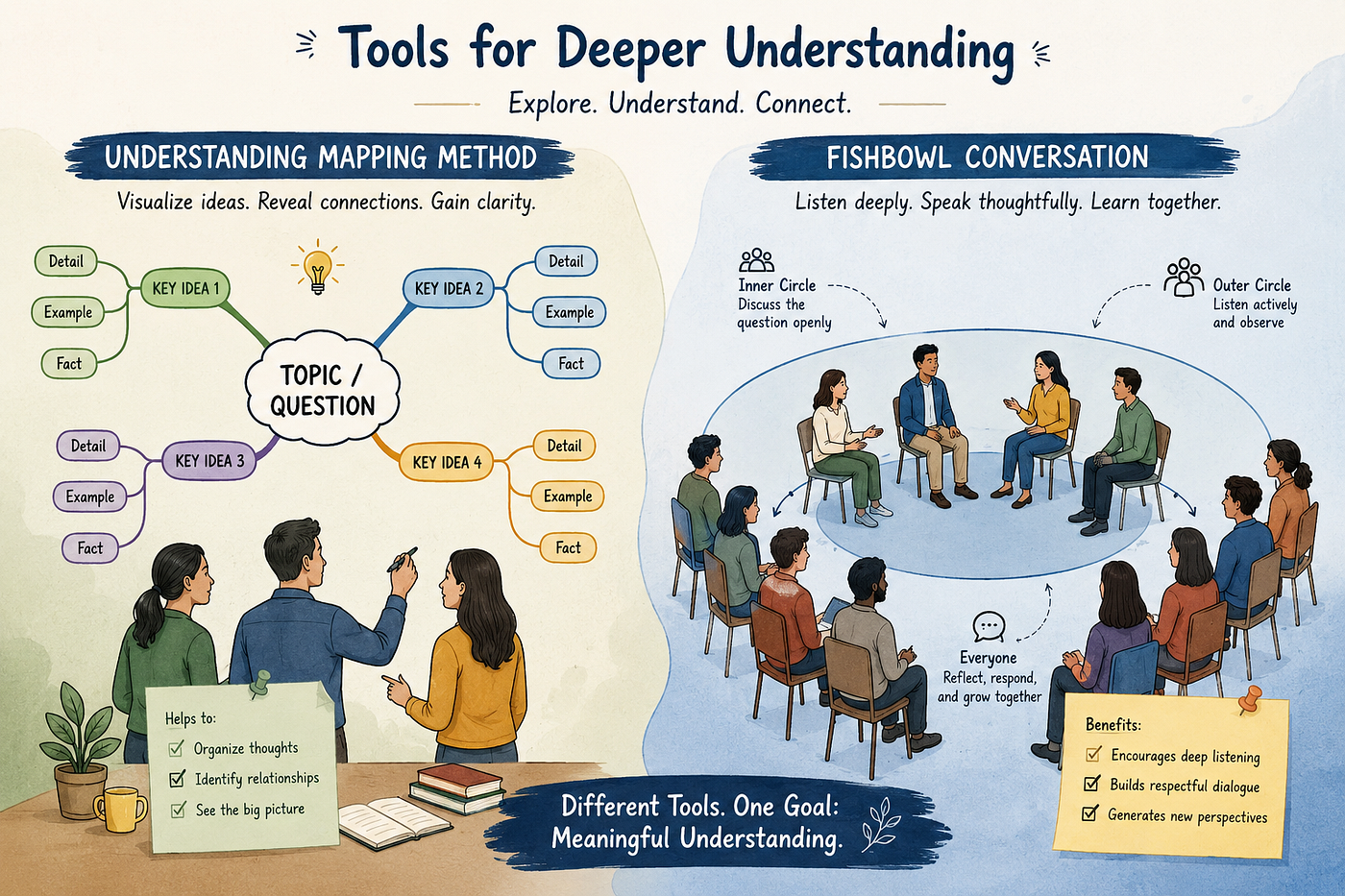
The mapping method is a learning technique used to organize ideas visually. It allows learners to connect concepts, keywords, or information through diagrams, branches, or charts. This method is often called concept mapping because it shows relationships between ideas clearly.
Instead of writing long notes in paragraphs, learners create visual structures that help the brain process information faster. This technique is especially useful for subjects that involve multiple ideas or connections.
For example, a student studying environmental science may place “Climate Change” in the center of a page and connect it with topics like pollution, renewable energy, deforestation, and global warming. This visual layout makes the topic easier to revise later.
Many educators use concept mapping because it improves memory and helps learners understand the “big picture” rather than isolated facts.
Importance of the Mapping Method
The mapping method is valuable because it supports active learning. Instead of passively reading information, learners interact with ideas and organize them in their own way.
Some important benefits include:
Better Understanding
Visual connections help learners understand relationships between topics. This improves clarity and reduces confusion.
Improved Memory
The brain often remembers images and structures more easily than plain text. Mapping makes revision faster and more effective.
Increased Creativity
Learners can explore different connections between ideas, which encourages creative thinking and problem-solving.
Easier Planning
The method is also useful outside classrooms. Professionals use mapping techniques to plan projects, presentations, and business strategies.
For example, a marketing team may use a concept map to connect campaign goals, audience types, social media platforms, and content ideas before starting a project.
How Does the Mapping Method Work?
The process is simple and flexible. Most learners follow these basic steps:
1. Choose the Main Topic
Write the central idea in the middle of the page.
2. Add Related Ideas
Create branches connected to the main topic. These branches represent subtopics or related concepts.
3. Use Keywords
Short keywords work better than long sentences because they keep the map clean and easy to read.
4. Connect Ideas
Lines, arrows, or symbols can show relationships between different concepts.
5. Review and Expand
As understanding improves, learners can add more details and connections.
Digital tools are also commonly used for concept mapping today, especially in online education and team collaboration.
Understanding Fishbowl Conversation
**Fishbowl conversation** is a group discussion activity where a small group discusses a topic while others observe quietly. After some time, observers may join the discussion while others move out.
This method creates a structured discussion environment where everyone gets a chance to speak and listen carefully.
Fishbowl conversation is often used in schools, workshops, leadership training, and team-building sessions because it encourages respectful communication and active listening.
Why Fishbowl Conversation Is Important
Fishbowl conversations help people develop communication and critical thinking skills in a balanced way.
Encourages Active Listening
Participants learn to focus on what others are saying instead of simply waiting for their turn to speak.
Builds Confidence
Shy students or employees often feel more comfortable joining discussions gradually.
Supports Respectful Discussions
The structure reduces interruptions and helps maintain a calm environment during debates or group discussions.
Improves Teamwork
Participants learn how to share opinions, respond thoughtfully, and collaborate effectively.
For example, in a classroom discussion about social media impact, one group may discuss the benefits while observers listen carefully and later contribute additional viewpoints. This creates deeper understanding from multiple perspectives.
How Fishbowl Conversation Works
The activity usually follows a simple structure:
Inner Circle
A small group sits in the center and discusses the topic.
Outer Circle
The remaining participants observe silently and take notes.
Rotation
Participants switch roles after some time so everyone can participate.
Reflection
At the end, the group reflects on key points, communication styles, and lessons learned.
Teachers often use this activity for literature discussions, social topics, or problem-solving exercises because it keeps students engaged without creating chaos.
Combining Mapping Method and Fishbowl Conversation
Both methods work very well together in modern learning environments.
For example, students may first create concept maps about a topic individually. After that, they can participate in a Fishbowl conversation to discuss their ideas and compare different perspectives.
This combination improves both visual understanding and verbal communication. Learners not only organize information clearly but also learn how to explain and defend their ideas confidently.
Conclusion
Understanding what is mapping method can help learners improve the way they organize and remember information. It turns complex topics into clear visual structures that are easier to understand.
Similarly, Fishbowl conversation encourages thoughtful discussions, active listening, and teamwork. Both methods support modern learning by making education more interactive and engaging.
Whether used in classrooms, training sessions, or workplaces, these techniques help people communicate better, think critically, and learn more effectively in everyday situations.
메타데이터
- post_id
- 58debe176bb2
- slug
- understanding-what-is-mapping-method-and-fishbowl-conversation-in-learning-58debe176bb2
- url
- https://medium.com/@anikets0228/understanding-what-is-mapping-method-and-fishbowl-conversation-in-learning-58debe176bb2
- canonical_url
- https://medium.com/@anikets0228/understanding-what-is-mapping-method-and-fishbowl-conversation-in-learning-58debe176bb2
- author_url
- https://medium.com/@anikets0228
- status
- ok
- fetched_at
- 2026-08-06 15:03:11