How a City United Both Sides of the Cold War
The year is 1963, the world is in constant fear of World War III, where the USA and USSR are constantly butting heads across the globe…
How a City United Both Sides of the Cold War
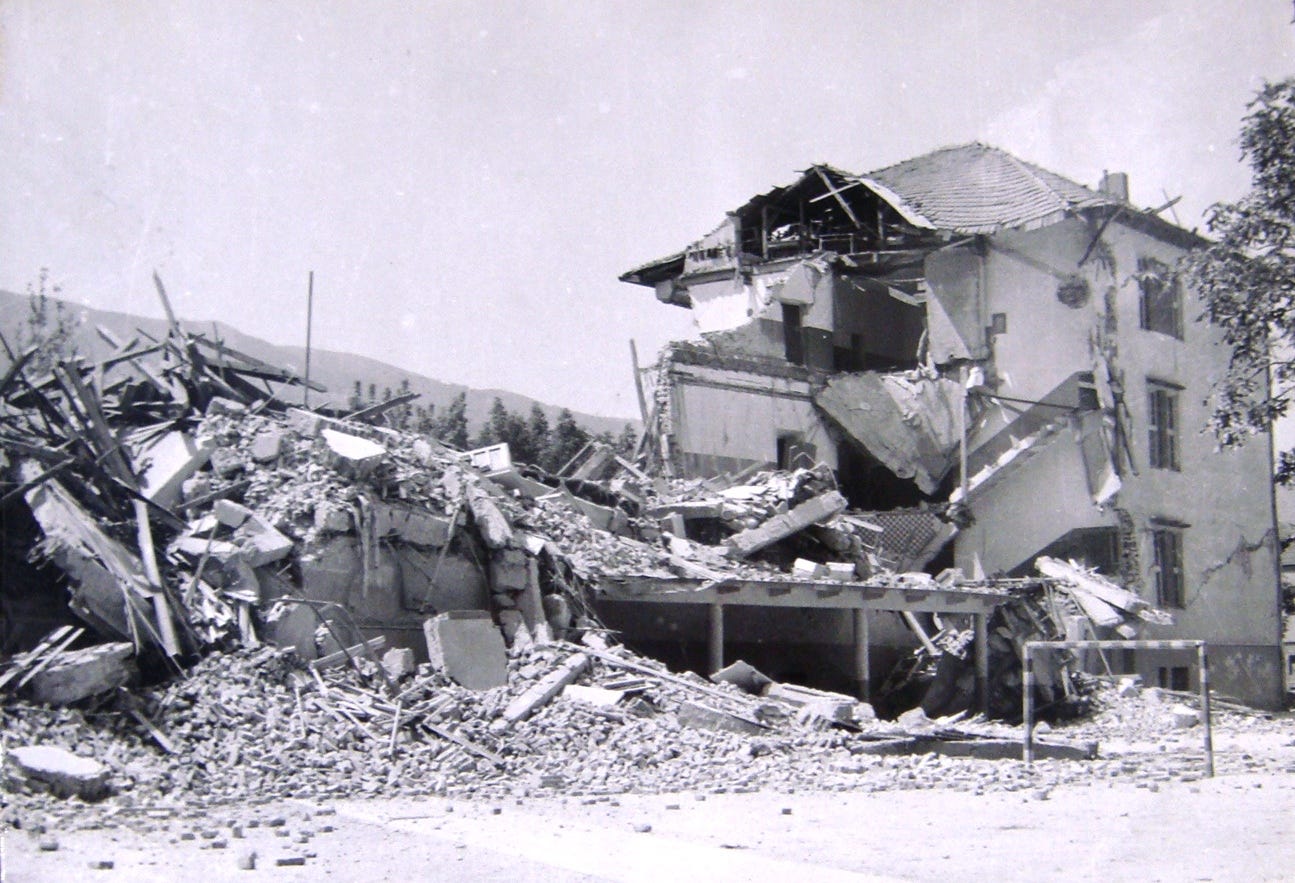
Unknown author — The State Archives of the Republic of Macedonia (DARM), Skopje Department
The year is 1963, the world is in constant fear of World War III, where the USA and USSR are constantly butting heads across the globe. Every day feels like it could be the last. The fear of a nuclear war between the two pacts has been present for a while, the Berlin Crisis of 1961 and the Cuban Missile Crisis of 1962, still haunt the average Joe. Waking up on July 26th of 1963, you hear about a catastrophic earthquake that leveled a city to its foundation. That city is Skopje, part of the Yugoslav Federation, often referred to as the Third party in the Cold War. With a magnitude of 6,1, the earthquake destroyed 80% of the city, taking the lives of around 1,000 people, while leaving more than 200,000 people homeless.
Although it was a tragic moment, it sparked something beautiful. For the first time since World War II, the allied forces decided to put their differences aside and help Yugoslavia rebuild the city. The whole world stood in awe as they watched leaders from The USA, USSR, UK, France, Mexico, China, Vietnam, etc., all chip in by offering aid to Yugoslavia. An act that gave Skopje its new and beautiful nickname, The City of Solidarity.
Aid Provided by the World
Throughout the following months, Yugoslavia, and with that Skopje, received enormous donations from what it feels like, every single country in the world. Most of the notable ones are: Roughly 3,5 million USD from the USSR (or 2,606,744,317 Yugoslav dinars), which is around 40 million if we adjust it for today’s inflation. The USA donated tents and field hospitals for those affected by the earthquake. The UK donated building materials and a loan of 500,000 GBP. Czechoslovakia donated medical equipment and teams to help in the reconstruction. Romania donated a medical centre that was named after its capital, Bucharest(which is still one of the biggest polyclinics in today’s North Macedonia). Japan’s architect Kenzō Tange constructed a redevelopment plan for Skopje. We could be here for a while if we list all the 87 states that took part in providing aid.
A Brighter Future
As the City of Solidarity was reconstructed, it proved to the world that no matter what the ongoing issue is, be it political, economical, differing ideologies, nothing can break the bond between humans. A bond that makes us want to help each other in time of need. The devastating earthquake was a moment of comfort for the global scene, showing that both sides of the Iron Curtain can work together putting their differences aside just to help out those in need.
메타데이터
- post_id
- 58df2ede043c
- slug
- how-a-city-united-both-sides-of-the-cold-war-58df2ede043c
- url
- https://medium.com/@oleggj98/how-a-city-united-both-sides-of-the-cold-war-58df2ede043c
- canonical_url
- https://medium.com/@oleggj98/how-a-city-united-both-sides-of-the-cold-war-58df2ede043c
- author_url
- https://medium.com/@oleggj98
- status
- ok
- fetched_at
- 2026-07-16 03:02:34