Will our children still shout “Up NEPA” in 2040?
There is a particular silence that we Nigerians know too well. The silence just before the fan slows, hesitates, and stops.
Will our children still shout “Up NEPA” in 2040?
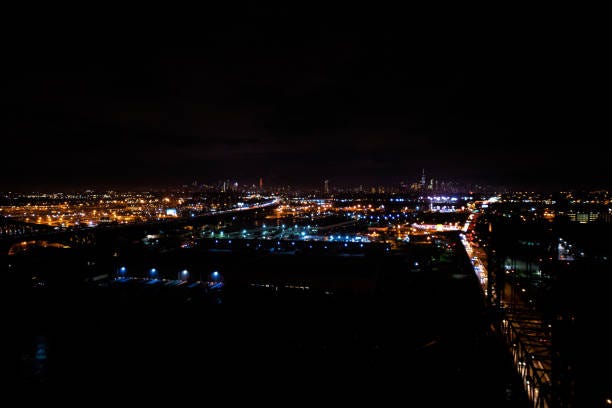
There is a particular silence that we Nigerians know too well. The silence just before the fan slows, hesitates, and stops.
This Is Not an Emergency. This Is Tuesday.
It is usually followed by one of two sounds: the collective groan from a house already sweating in the dark, or the violent cough of a generator dragged back to life. Somewhere in the distance, another engine answers. Then another. Within minutes, the night is thick with fumes and vibration. This is not an emergency. This is just a regular Tuesday evening in the “African Giant”.
For decades, we have lived with intermittent power. We have budgeted for it. We have normalised it. We have built our homes with inverter rooms and our businesses with generator lines. We celebrate electricity the way other countries celebrate rainfall after drought. “Up NEPA!” as if light itself were a visitor that might leave at any moment.
So when we say “Energy is the first product,” we are not speaking in metaphor. We are describing the invisible handicap that has shaped our economy, our pricing, our productivity, and even our psychology.
From ‘Up NEPA’ to ‘On Generator’
Let’s pull the lens way back.
In the early 20th century, electricity in what was then colonial Nigeria was limited, localized, and almost exclusively for colonial administrative centres and railways. Public grid access was essentially non-existent for ordinary Nigerians.
By the 1950s and 1960s, as Nigeria approached and achieved independence, the grid was only just beginning to form in cities like Lagos, Ibadan, and Port Harcourt, though limited in capacity and reach.
In 1972, the Federal Government created the National Electric Power Authority (NEPA), a centralised agency charged with building, operating, and expanding electricity supply across the country. There was optimism that electrification would be a foundation for development.
But over time, NEPA became known for another reason: instability.
Rolling blackouts became so frequent that the phrase “up NEPA” became part of everyday slang. It was sometimes hopeful, sometimes ironic, but always tied to uncertainty, because you never knew when the light would stay or go.
By the early 2000s, Nigeria’s population had surpassed 120 million, yet the electric grid remained strained and unreliable. Then came reform.
In 2005, the Electric Power Sector Reform Act was passed. The idea was bold: unbundle NEPA, introduce private capital, and build a market that could attract investment and expertise.
By 2013, this reform was operationalised. NEPA was dissolved. Generation was privatised to multiple power companies. Distribution companies (DisCos) were sold to private investors. The Transmission Company of Nigeria (TCN) remained government-owned as the entity responsible for moving electricity from plants to consumers.
13,000MW on Paper. 23 Watts in Your Room.
Nigeria’s installed capacity (the total capacity of all grid-connected power plants) is often cited as more than 13,000 megawatts. That sounds big if you are not paying close attention.
But installed capacity is not what people actually use.
The figure that matters (the actual available generation) is what the grid can supply on an ordinary day after accounting for gas supply issues, infrastructure weakness, maintenance gaps, and technical losses.
In 2026, that figure typically sits between 4,000 and 5,500 megawatts on most days. On a rare good day, it might surpass 6,000 megawatts, but that is still a fraction of what is needed.
For a country with more than 220 million people, that is very low.
Let’s break it down in a way that relates to your daily experience.
If Nigeria delivers 5,000 megawatts of electricity on a given day, and you divide that by 220 million people, you get roughly 23 watts per person.
23 watts.
That is enough for a couple of bulbs and maybe a fan. Not enough for factories. Not enough for modern healthcare. Not enough for a digital infrastructure that requires stability rather than intermittent bursts.
And this reality is playing out right now in 2026.
To understand what this means, compare it.
South Africa, despite its own well-documented load shedding, operates with installed generation capacity exceeding 50,000 MW for a population of roughly 60 million. Egypt has built capacity beyond 55,000 MW for about half of Nigeria’s population.
Nigeria’s annual per capita electricity consumption is roughly 150 kilowatt-hours. South Africa’s exceeds 3,500 kWh. Egypt’s is above 2,000 kWh. There is no modern industrial economy in history that emerged while consuming energy at Nigeria’s current per capita levels.
Generator Republic
But statistics alone do not tell this story.
This story is set in Aba, where a tailor spends 30 to 40% of her monthly operating cost on petrol for a small generator. It is in Kano where cold-chain operators must factor diesel volatility into food pricing. It is in Lagos hospitals that run surgeries on backup power. It is in students’ reading for exams under rechargeable lamps because “light no dey.”
Nigeria is estimated to operate tens of millions of small gasoline and diesel generators. The International Energy Agency has consistently noted that self-generation forms a substantial shadow power system in the country. In effect, Nigerians have built a parallel electricity market, one that is noisy, expensive, and carbon-intensive, because the formal one cannot meet demand.
And yet, we are not energy-poor in resources. Nigeria holds some of the largest proven natural gas reserves in Africa. Solar irradiance levels in the northern regions rank among the highest globally. The constraint is not geology. It is conversion, distribution, and governance.
The sector was privatised in 2013, unbundling generation companies (GenCos), distribution companies (DisCos), and leaving transmission under federal control. The expectation was that private capital and efficiency would stabilise supply. Instead, structural weaknesses, high Aggregate Technical, Commercial and Collection losses, tariff shortfalls, non-cost-reflective pricing, and market illiquidity, compounded legacy infrastructure deficits.
By 2025, accumulated debts to generation companies had surpassed 4 trillion naira, prompting a $2.6 billion refinancing approval reported by Reuters. Without resolving liquidity, generators cannot maintain turbines, gas suppliers demand payment guarantees, and investors hesitate to fund expansion.
Meanwhile, access remains uneven. The World Bank estimates that roughly 85 million Nigerians lack access to electricity, the largest access deficit in the world. Rural electrification lags significantly behind urban access, reinforcing economic inequality and migration pressures.
Backups as a Way of Life
Let’s talk about what this means for people like you and me.
Households budget for power now in ways we never did before.
Some families invest in:
• Inverters and batteries • Solar home systems • Multiple small generators • Rechargeable lamps
Why? Because we have learned that grid electricity is unpredictable. So we hedge against uncertainty with backups.
And those backups cost money, money that is not productive, money we would rather spend on education, health, business expansion, or comfort.
Small businesses like barbershops, salons, welders, cold-chain traders, food processors, all operate with this calculation built into their cost of doing business. If the grid fails, they switch to a generator. That generator uses fuel that costs more than average earnings and erodes profit margins.
In an economy where every percentage point of productivity matters, expensive self-generation is a tax on ambition.
Even digital businesses like our favourite tech startups, call centres, and data centres suffer because power outages cause servers to reboot, internet connections to reset, and critical services to lapse.
And still, despite this constraint, Nigeria built Africa’s largest fintech ecosystem. Despite this constraint, Nollywood became a global cultural export. Despite this constraint, small businesses survive, not because power is reliable, but because Nigerians are.
If Light Stayed
Now imagine the multiplier effect if energy were no longer a handicap.
Over the past five years, decentralised solutions have begun to change the architecture of supply. Hundreds of mini-grids now operate in rural and peri-urban communities. More than a million stand-alone solar home systems have been deployed.
The Electricity Act of 2023 opened the door for states to regulate and generate electricity independently, creating the possibility of subnational power markets tailored to industrial clusters. Distributed solar paired with battery storage is becoming cost-competitive with diesel in certain contexts, particularly where logistics inflate fuel costs.
Technically, decentralisation reduces stress on a fragile national transmission backbone. Economically, it lowers line losses and brings supply closer to demand. Socially, it restores agency to communities long excluded from stable power.
But mini-grids alone will not industrialise a nation of 220 million people. Steel plants, petrochemical refineries, data centres, electric mobility infrastructure, and manufacturing corridors require stable baseload power in the tens of gigawatts. Nigeria does not need 6,000 MW on a good day. It needs 20,000 MW delivered reliably. Then 40,000 MW. Then, 80,000 MW over the coming decades, if it is to align energy availability with demographic expansion.
Energy is not just another sector. It is the conversion engine of every other sector. It determines whether productivity is continuous or interrupted. Whether hospitals are resilient or vulnerable. Whether inflation is structurally embedded through diesel pass-through costs. Whether manufacturing scales or stalls.
So when we say energy is the first product, we mean this:
If the nation cannot reliably produce and deliver usable energy, we cannot fully produce anything else at scale.
Not factories. Not tech hubs. Not agriculture processing. Not digital currencies. Not international competitiveness.
Every product we imagine in Nigeria starts with energy.
For decades, we have complained about “light.” We have joked about it. We have protested about it. We have endured it.
But the real question is no longer whether we are tired of intermittent supply.
The real question is this:
Will our children still shout “Up NEPA” in 2040?
Or will stable power become so normal that shouting “Up NEPA” sounds like a story from a distant, darker past?
메타데이터
- post_id
- 591bd79bcd6f
- slug
- will-our-children-still-shout-up-nepa-in-2040-591bd79bcd6f
- url
- https://medium.com/@omogoye_deborah/will-our-children-still-shout-up-nepa-in-2040-591bd79bcd6f
- canonical_url
- https://medium.com/@omogoye_deborah/will-our-children-still-shout-up-nepa-in-2040-591bd79bcd6f
- author_url
- https://medium.com/@omogoye_deborah
- status
- ok
- fetched_at
- 2026-07-12 02:25:03