Nigeria’s Civil War: Why One Million Deaths Still Go Unacknowledged
The International Committee of the Red Cross documented between four and five million displaced civilians during Nigeria’s civil war.¹ Yet…
Nigeria’s Civil War: Why One Million Deaths Still Go Unacknowledged
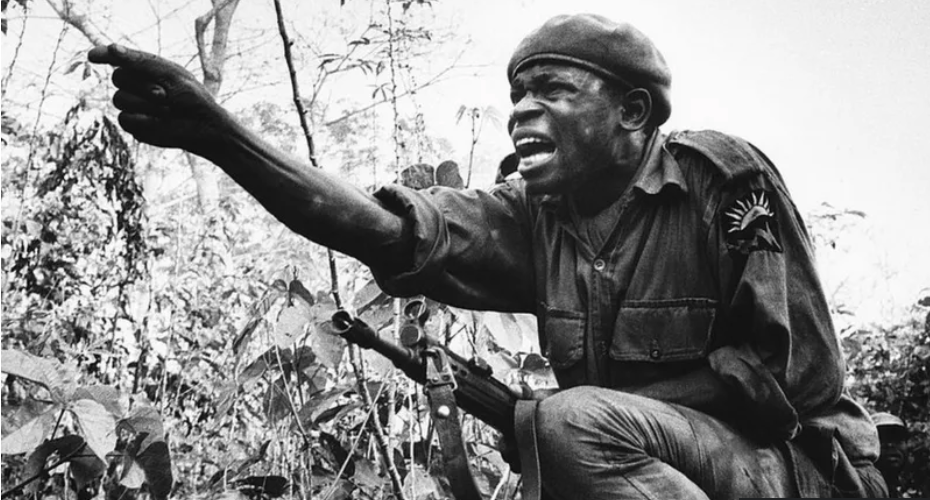
The International Committee of the Red Cross documented between four and five million displaced civilians during Nigeria’s civil war.¹ Yet today, more than five decades after Biafra’s surrender in January 1970, Nigeria has built no national memorial for the war’s victims, convened no truth and reconciliation commission, and established no formal process to acknowledge the scale of suffering. This silence is not accidental. It is structural.
Mortality estimates for the Nigerian Civil War range between one million and three million deaths, with historian Toyin Falola placing the figure at approximately one million.² Subsequent demographic studies by scholars including Godwin Onuoha suggest the toll was higher when famine-related deaths from the federal naval blockade are included. But numbers alone do not explain why this catastrophe remains politically unacknowledged. The answer lies in the architecture of Nigerian federalism and the post-war settlement that prioritized nominal unity over genuine reconciliation.
The Politics of Forgetting
When Biafra surrendered on 9 January 1970, the Nigerian federal government under General Yakubu Gowon declared a policy of “no victor, no vanquished.” On the surface, this sounded conciliatory. In practice, it meant that no party to the conflict would face accountability, no grievances would be formally documented, and no structured process for acknowledgment would be established. Major General Phillip Effiong, who represented Biafra at Dodan Barracks in Lagos that January morning, cited humanitarian reasons for ending the secession.³ The terms of reintegration emphasized integration and rebuilding, not reckoning.
The Nigerian government’s post-war policy crystallized the terms of this political amnesia. All former Biafran account holders received a flat sum of twenty pounds, regardless of pre-war savings.⁴ This policy effectively wiped out Igbo personal wealth overnight. Infrastructure across the southeastern region lay in ruins. Yet the federal approach was to move forward without looking back, to declare peace without addressing what had been lost. The Igbo community found itself structurally reintegrated into Nigeria but symbolically erased from the national narrative of the war.
This erasure was not merely symbolic. During what scholars have termed the “dormancy period” from 1970 to the late 1990s, overt Igbo separatist activity declined sharply. The Igbo focused on economic survival, political participation, and migration across Nigeria.⁵ The appointment of Alex Ekwueme as Vice President during the Second Republic (1979–1983) signaled Igbo re-engagement with the federal system.⁶ Igbo traders expanded businesses into regions that had been hostile during the war.⁷ But this integration was pragmatic, not consensual. It occurred under military regimes that centralized power and suppressed dissent, making open separatist organizing impossible.⁸
Why Acknowledgment Matters
The absence of formal acknowledgment has consequences that extend beyond historical memory. It feeds the cyclical resurgence of separatist sentiment. When the Movement for the Actualization of the Sovereign State of Biafra (MASSOB) emerged in 1999 under Ralph Uwazuruike, it drew explicitly on unresolved grievances from the war.⁹ When the Indigenous People of Biafra (IPOB) rose under Nnamdi Kanu in the 2010s, amplified by Radio Biafra and social media, it weaponized the narrative of a war that Nigeria refused to acknowledge.¹⁰
This pattern is not unique to Nigeria. South Sudan’s protracted civil war ended in a negotiated independence that included international recognition and formal memorialization.¹¹ Northern Ireland’s Troubles produced the Good Friday Agreement and structured processes for acknowledging victims.¹² Where conflicts are left unacknowledged, as in the Kurdish struggle across Turkey, Iraq, Syria, and Iran, grievances persist across generations and fuel ongoing cycles of violence.¹³
The Nigerian case is distinct in one critical respect: the war ended in military defeat, not negotiated settlement. There was no external mediator to impose acknowledgment as a condition of peace. The victorious federal government faced no international pressure to memorialize Biafran suffering. The result is a silence that has calcified over five decades, embedded in the very structure of how Nigeria narrates its own history.
What Comes Next
Acknowledgment does not require agreement on every detail of the war. It requires admitting that over one million people died, that millions more were displaced, and that these deaths merit formal recognition in Nigeria’s national memory. A memorial does not re-litigate who was right. It states that suffering on this scale deserves to be remembered.
The longer Nigeria delays this acknowledgment, the more potent the unacknowledged past becomes as a political weapon. Over the next thirty years, Nigeria will face intensifying pressures from climate-driven migration, resource competition, and generational demographic shifts. If the foundational grievances of the civil war remain unaddressed, they will continue to shape how new conflicts are interpreted and mobilized. The ghosts of Biafra do not disappear through silence. They wait.
Read the full report here: https://open.substack.com/pub/thesaheldispatch/p/the-architecture-of-silence-why-nigeria?r=89ngfl&utm_campaign=post&utm_medium=web
Notes
-
Oge Samuel Okonkwo, “A History of the Igbo Separatist Movement in Nigeria, 1970–2015” (PhD diss., University of Ghana, 2024), 152.
-
Ibid., 120; Toyin Falola cited in Okonkwo, 120.
-
Ibid., 244.
-
Ibid., 120.
-
Ibid., 123; Paul Obi-Ani and Daniel Iweze cited in Okonkwo, 126.
-
Ibid., 124.
-
Ibid., 124–125; Gregory Evaristus and Olanrewaju Adebukola et al. cited in Okonkwo, 124.
-
Ibid., 125; Eghosa Osaghae and Ernest Uwazie cited in Okonkwo, 125.
-
Ibid., 135–136.
-
Ibid., 140–145; Celestina Obianuju Okafor et al. cited in Okonkwo, 126.
-
Ibid., 128; Kevin Dunn and Randolph Kent cited in Okonkwo, 128.
-
Ibid., 129; Henry Patterson and Francis McGlynn cited in Okonkwo, 129.
-
Ibid., 128; Michiel Leezenberg cited in Okonkwo, 128.
메타데이터
- post_id
- 59283cfe71ec
- slug
- nigerias-civil-war-why-one-million-deaths-still-go-unacknowledged-59283cfe71ec
- url
- https://medium.com/@OS_Okonkwo/nigerias-civil-war-why-one-million-deaths-still-go-unacknowledged-59283cfe71ec
- canonical_url
- https://medium.com/@OS_Okonkwo/nigerias-civil-war-why-one-million-deaths-still-go-unacknowledged-59283cfe71ec
- author_url
- https://medium.com/@OS_Okonkwo
- status
- ok
- fetched_at
- 2026-07-17 21:26:36