The Hour of the Star at the Gogärtchen
Chapter 90 of Who Was WM? Investigating a Televisionary: The Life and Work of Wolfgang Menge
The Hour of the Star at the Gogärtchen
Chapter 90 of Who Was WM? Investigating a Televisionary: The Life and Work of Wolfgang Menge
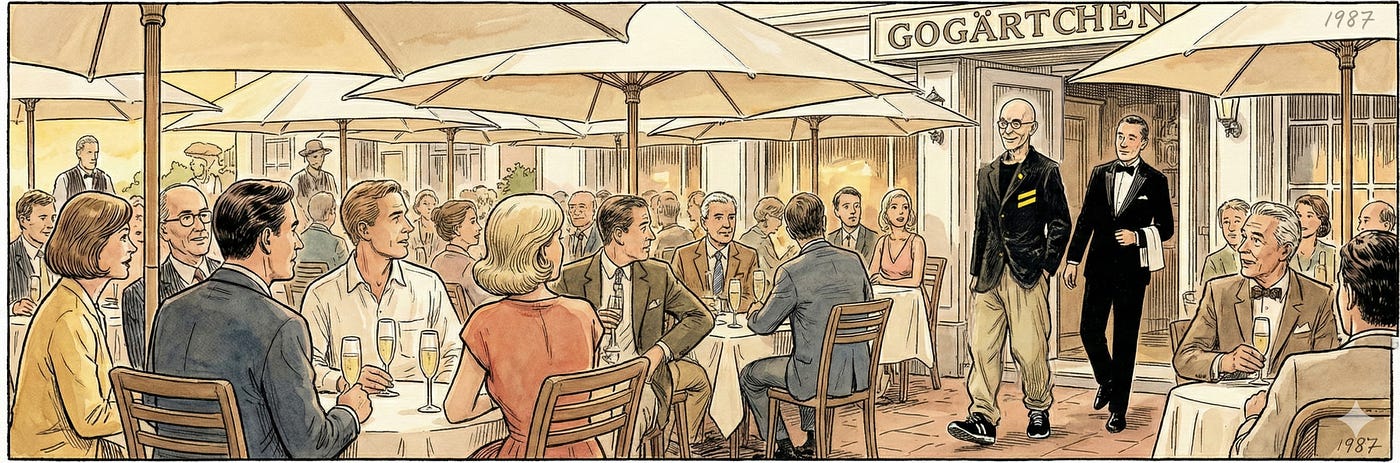
A Mangy Mutt Among Pedigreed Poodles: WM at the height of his fame in Sylt’s upscale restaurant Gogärtchen (Illustration: Google’s Nano Banana Pro).
Meeting the Head Waiter of West German High Society
A summer evening on the posh island of Sylt, in the same year, 1987. The outdoor bar of the restaurant Gogärtchen is packed and deafeningly loud. In the garden, which is as small as the restaurant’s name suggests, the tables are crowded together. The large umbrellas are unfurled. Not that they need protection from the sun. The deeply tanned people sitting beneath them look “rigged out,” as they say along the coast. The slightly crisp evening is perfect for showing off one’s wardrobe. It might rain.
Thirty-two years earlier — in 1955, the year of my birth — WM wrote a wistful letter from Tokyo to Margret Gogarten, the founder of a small café on Kampen’s Strönwai. WM missed the island and the Gogärtchen. Back from Asia, he watches as the quiet Strönwai transforms into the luxurious “Whiskey Mile” and the Gogärtchen, nestled among luxury boutiques and other sinfully expensive restaurants, becomes one of Sylt’s chicest establishments. Nightlife is ruled by the rich and famous: publishers Axel Springer and Rudolf Augstein, Krupp executive Berthold Beitz, the ex-empress Soraya, “Playboy” Gunter Sachs with his wife Brigitte Bardot, and, of course, German movie stars galore — Heinz Rühmann, Curd Jürgens, Maximilian Schell.
“Already by the late fifties, and especially in the sixties,” the newspaper Die Welt wrote for the Gogärtchen’s fiftieth anniversary, “the German economic miracle was jostling three rows deep at the bar or fighting for a table in the garden.” Eventually, Margret Gogarten has enough of the hullabaloo and takes her own life on a dreary November day. In 1982, Rolf Seiche leases the venue and quickly recasts himself as the “society’s head waiter.”
This evening — as it has been all summer — the meeting place of Sylt’s high society is overflowing. At the bar, dozens wait for a table. Not even Stern magazine could secure a reservation for me. But then Wolfgang called. Just a few minutes ago, true. Yet for a Sylt institution like him, there is no waiting. For such “emergencies,” the restaurant always makes room. A waiter leads me to our table.
Mangy Mutt Among Pedigreed Poodles
I have barely sat down when Wolfgang appears. All eyes turn to him. Not necessarily because everyone recognizes him. But because he stands out like a mangy mutt among the pedigreed poodles. Even though he has dressed up for the evening. His skull is freshly shaved. He’s wearing brand-new black Reebok sneakers, and on his peculiar wool jacket with the two yellow stripes on the left lapel — “A special offer from Brussels!” — he has even fastened the second-to-top button. The best description of how his appearance strikes respectable people is one he put years ago into the slanderous mouth of his own character, Alfred Tetzlaff:
“That Menge makes such a grubby impression right off the bat. Baggy trousers, dirty shoes, and at his age.”
Wolfgang stops for a moment and looks around for me. Rolf Seiche rushes over and, chatting enthusiastically, escorts him to our table. Word spreads through the restaurant about who has just arrived.
We agree quickly on the wine. But unwisely, I order something different from what WM considers correct for an appetizer. The moment it’s served, he leans deep over my plate, sniffs, and declares loudly:
“That looks disgusting!”
“At least it’s not all chopped up,” I say. Because, as he knows, I suffered for months when a girlfriend tried to feed me according to his Chinese cookbook.
“Huah,” Wolfgang says with a final glance at my plate, shuddering.
He says it so loudly and shudders so violently that Rolf Seiche rushes over and must be reassured.
I try to change the subject.
The Reich Capital, But Without Politics
“You said earlier there was a story involving Carl Weiss regarding the jacket. Did you steal that from him, too — I mean, like your red jacket from Boenisch?”
“No, no,” Wolfgang says, waving me off. “We both have a jacket like this. And because these yellow things up here” — he points to the yellow patches — “look like military stripes, I gave Carl a kind of sheriff’s star made of fabric to go with it. In the evening, we were invited to a party, and Carl wore his star quite proudly. But when he saw me, he turned pale.” Wolfgang laughs the way wolves rejoice. “I was more highly decorated! I had pinned half a dozen of those yellow stars under the stripes.”
I stare at Wolfgang, flabbergasted. He acts innocent, as if he associates absolutely nothing with yellow fabric stars.
“Let’s talk about your next projects,” I say, swallowing hard.
Wolfgang grins. “That won’t get you away from the Third Reich. Next up is Reichshauptstadt — privat, airing sometime in the fall.”
In 1987, divided Berlin — once the Reichshauptstadt, the capital of the Reich — is celebrating its 750th birthday. Public broadcasters NDR and SFB allowed themselves to be persuaded by Wolfgang and his partner, NDR editor and director Horst Königstein, to undertake a major historical project: an exploration of daily life fifty years earlier — at the time of the city’s 700th anniversary celebration — when Berlin was the Nazi capital. The three-million-mark enterprise comprises a two-part television play, written by Wolfgang and directed by Königstein, as well as a four-part TV documentary called Sittenspiegel (Mirror of Mores), for which Königstein is responsible. The director is still working on completing all six parts.
“Is The Reich Capital — Private the first time you’ve grappled with the Third Reich?”
“Yes. I’ve handled Nazi themes, of course, but the pieces were set in the Federal Republic. Because we never really had that break in 1945, as the whole world always assumes.”
“Are these your personal memories?”
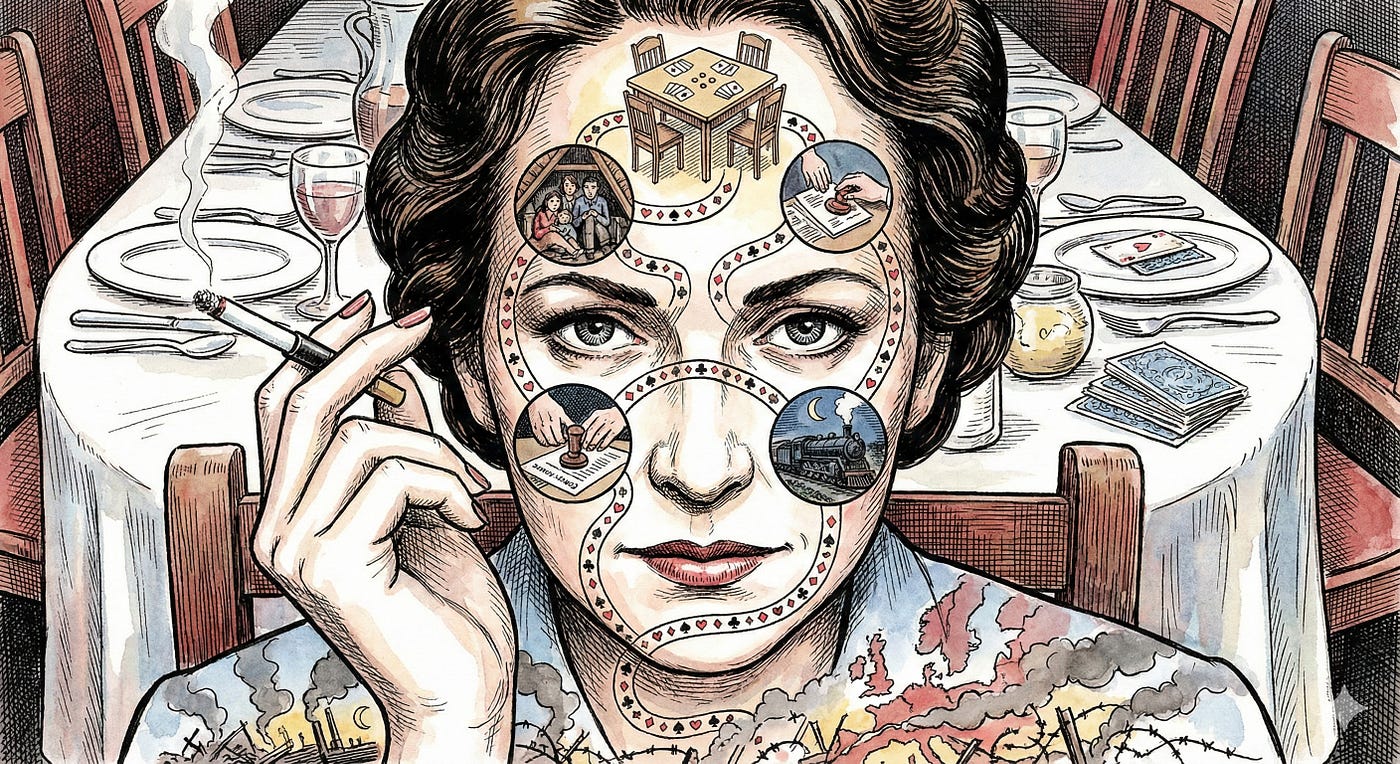
“Hmm, nah. You know I don’t have any.” He takes a larger sip of wine. “I dug up a stack of my old letters that I got back from my first fiancée, and also a diary and other letters from that time. I read through them all, and nothing about myself became clear to me. I can’t reconstruct it. Not the postwar period either. What’s written in there seems to be something I wasn’t. Like a totally strange person.”
“Have you ever read Mitscherlich?”
“Sure.” Wolfgang shrugs. “That didn’t change anything either.”
Happy Is He Who forgets What Can No Longer Be Changed
In their study, The Inability to Mourn (1967), the psychoanalysts Alexander and Margarete Mitscherlich sought to understand why so many Germans after the Second World War were unable to process and mourn the crimes of National Socialism.
“The most important collectively practiced defense mechanism,” they write, “is the withdrawal of psychic energies from all those processes related to the enthusiasm for the Third Reich, the idealization of the Führer and his doctrine, and, of course, actual criminal acts. Through this psychological defense, the memory of the twelve years of National Socialist rule grows pale and shadowy. The Nazi past is derealized, rendered unreal.”
Thus, after the war’s end in 1945, two complementary processes set in: a collective forgetting and, on this basis, the construction of new identities. Individuals changed so fundamentally that in retrospect they could barely recognize themselves — like Wolfgang reading his own letters. For that is, cynically speaking, the point:
“When an entire society evades responsibility through the construct of having merely obeyed orders, this even rubs off on individuals who attempted to keep themselves free of this collective opinion or belief.”
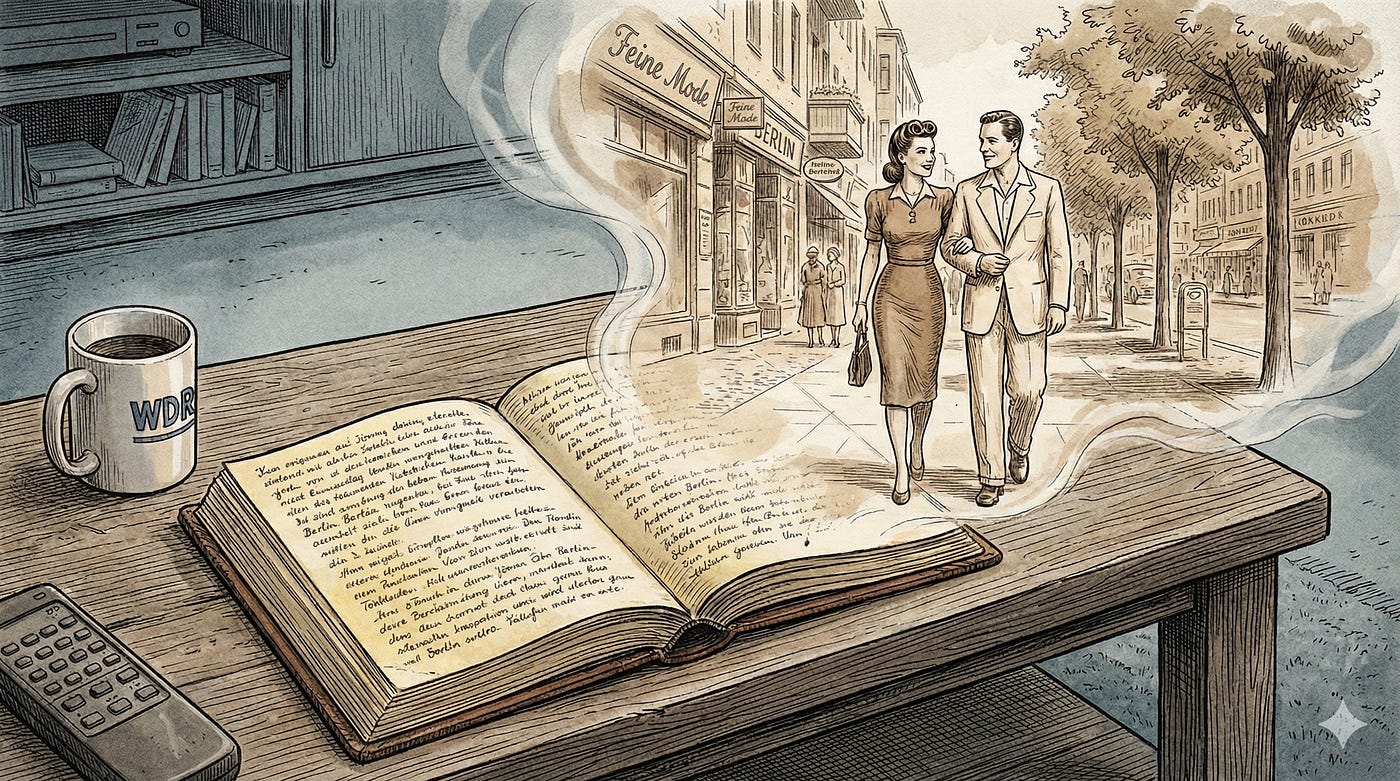
Forgetting happens reliably, from top to bottom, from the West German minister president Hans Filbinger to the Austrian UN secretary-general Kurt Waldheim, right down to one’s own relatives. In the postwar period, everyone obeys the convention of silence. Even the victims lose their past, no differently than the mass murderers and fellow travelers. The old self is betrayed only by material evidence from the past. The decision, therefore, seems logical: collect it to discover how people once lived privately in the Reich’s capital. WM and Horst Königstein put out calls through the press, radio, and television for people to send in photo albums, diaries, and other documents. Over five hundred people respond. What surprises the researchers: in the material sent in, they encounter almost exclusively cheerful people, in the midst of racial terror, war, and the years of bombardment.
“We were ethnologists, collectors of the last voices,” Horst Königstein tells me later about the TV team’s visits to the witnesses. “We listened to these emaciated, lonely people; they showed us their worn albums, their icons of the past. And again and again, people said sentences like, ‘Yes, it was terrible, and I know we were complicit. But I won’t let anyone take away my good memories!’”
“At least they had some,” says Wolfgang. He has evaluated the documentary material and developed his two-part drama from it.
“But that’s done now. Königstein is handling the rest of the work in the cutting room. I’m working on two new things.”
The waiter arrives. We order dessert.
“Mascarpone, what is that?” asks Wolfgang suspiciously. “Nah, I’d rather have something else.”
Me too. If only to avoid arguments.
WM Recounts a Bizarre Tale
“What are the new things you’re writing?” I ask. “Historical themes again?”
“Yes, you could say that. A kind of sitcom about the Germanic tribes. And a television play about the German atomic bomb.” He empties his wine. “But we’ll talk about that another time. Do you know who Flann O’Brien is?”
“Never heard of him.”
“Yeah, nobody knows him. My favorite author.”
Back in Berlin, I will buy a few novels and understand what Wolfgang loves about them.
“There’s no understanding the world that’s there today at all,” marvels the grandfather of the hero Bonaparte O’Coonassa in The Poor Mouth, originally published in 1941. “A pig rambled off on us a little while ago, and when he returned, he had a worthwhile suit of clothes on him. You went off from us fully-dressed, and you’re back stark-naked as you were the day you were born!”
And Bonaparte himself ends the report of his life with words worthy of a persona: “I do not think that my like will ever be there again!”
Wolfgang devours his dessert with relish — something rich in chocolate. When the last spoon has been licked clean, he leans back.
“I love bizarre stories,” he says. You can see him thinking. “For example, do you know that the Israelis get their state emblems from Berlin?”
I shake my head.
“And the craziest thing is — guess what this company used to manufacture?”
“Swastika flags, probably.”
“Yeah, sure. And what else?”
I shrug my shoulders.
“Well, not sheriff stars!” says Wolfgang. “Jewish stars!” He leans back, satisfied. “And now I’d like a coffee.”
***
Previous Chapter: 89 Preparatory and Advanced Schools of Play
Next Chapter: **91 German Heroes, Beyond Auschwitz**
German-Language Version: Wer war WM?
German Book Edition — published in December 2024
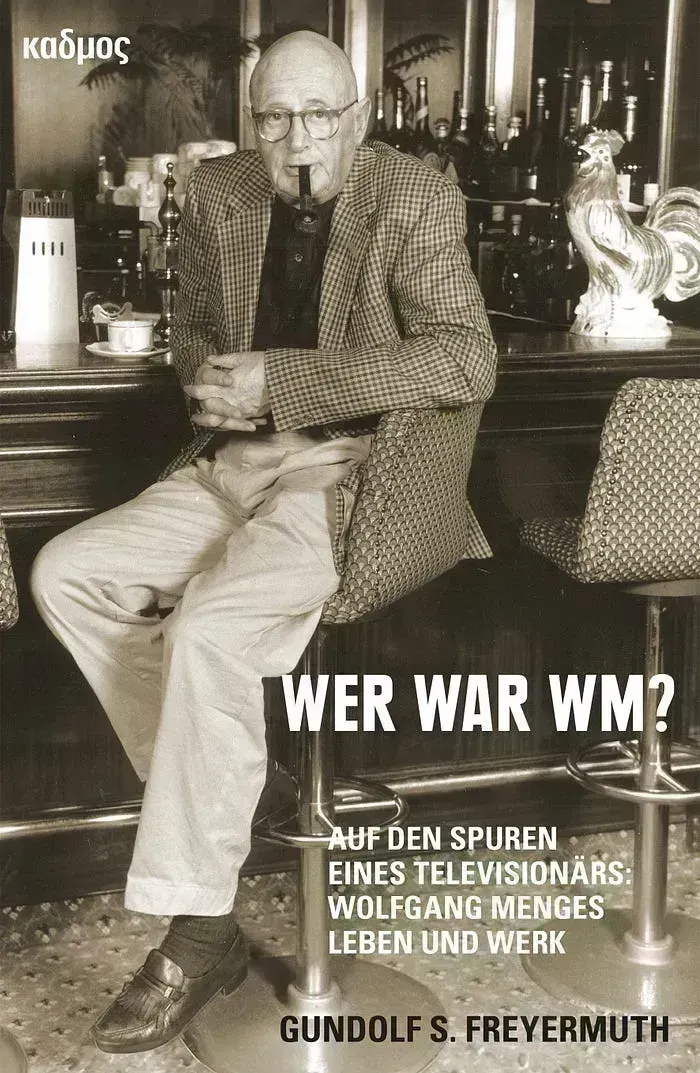
This post is part of a series: new chapters appear weekly. The book is already available in German. If you don’t want to wait — and read German — you can order it from Amazon.de or directly from the publisher Kadmos. They also offer an e-book version
메타데이터
- post_id
- 5932918ee952
- slug
- the-hour-of-the-star-at-the-gogärtchen-5932918ee952
- url
- https://medium.com/@gundolffreyermuth/the-hour-of-the-star-at-the-gog%C3%A4rtchen-5932918ee952
- canonical_url
- https://medium.com/@gundolffreyermuth/the-hour-of-the-star-at-the-gog%C3%A4rtchen-5932918ee952
- author_url
- https://medium.com/@gundolffreyermuth
- status
- ok
- fetched_at
- 2026-06-21 19:25:17