OpenAI Codex Skills Workflow: How Developers Package Repeatable AI Coding Tasks
Most AI coding workflows fail in a very ordinary way: the first run looks helpful, the second run is slightly different, and by the fifth…
OpenAI Codex Skills Workflow: How Developers Package Repeatable AI Coding Tasks
OpenAI Codex Skills Workflow
Most AI coding workflows fail in a very ordinary way: the first run looks helpful, the second run is slightly different, and by the fifth run nobody remembers which instructions made the agent useful.
🚨 WANTED: TECH TALENT
💰 High Pay | 🌍 Remote | ⚡ Fast Hiring
Frontend • Backend • Full Stack • AI/ML • DevOps

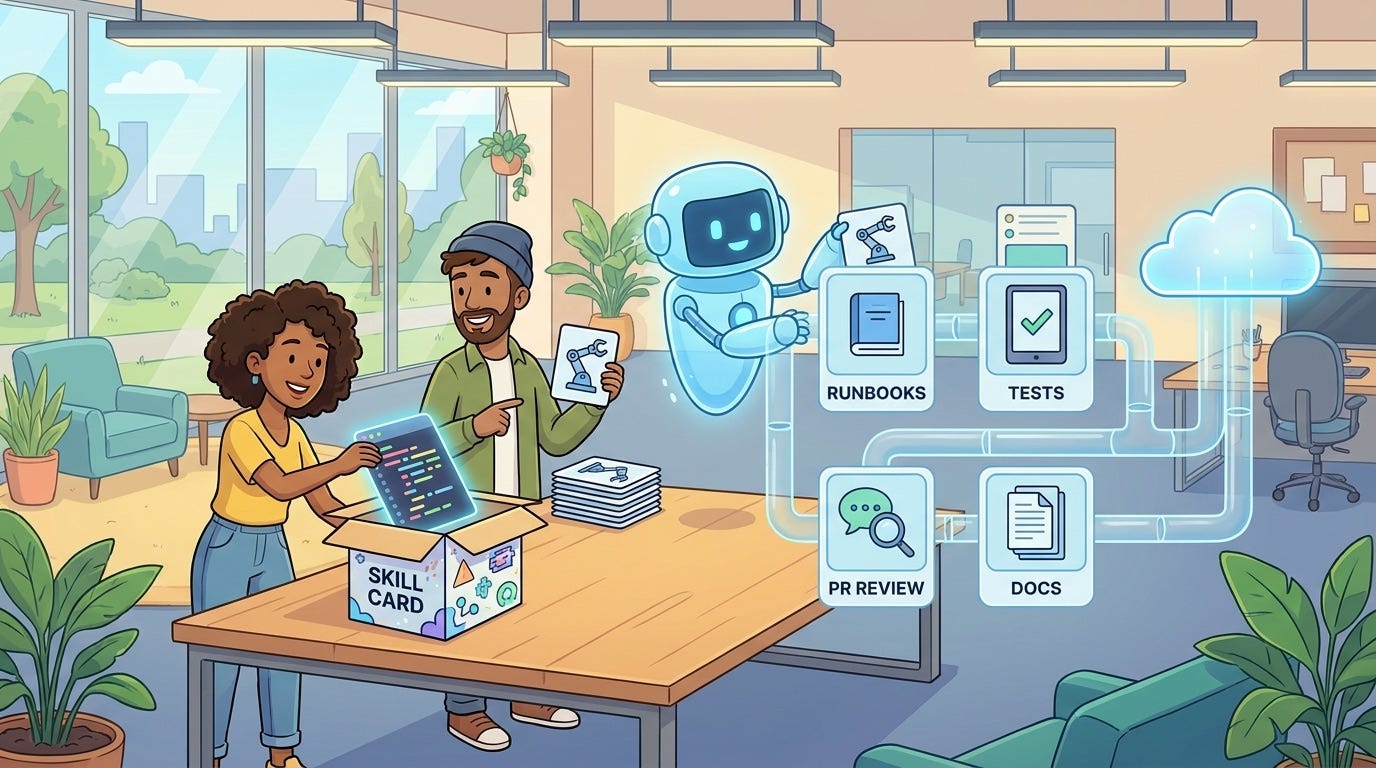
That is the real value of OpenAI Codex Skills. They are not magic prompts. They are a way to package repeatable engineering behavior so a coding agent can follow the same workflow again, with the right instructions, scripts, references, and output contract.
If you use Codex for code review, test generation, release checks, documentation audits, or recurring repository maintenance, skills can turn fragile one-off prompts into reusable workflows. The important part is not creating more automation. It is creating automation that is small enough to trust and clear enough to review.
What OpenAI Codex Skills Are
A Codex Skill is a small directory that teaches Codex how to do a specific kind of task. At minimum, it contains a SKILL.md file with a name, a description, and instructions. It can also include scripts, reference files, templates, assets, and other supporting material.
The practical idea is simple: instead of writing the same long prompt every time, you create a reusable workflow package. Codex can see the skill metadata first and load the full instructions only when the task matches. This helps keep normal context lighter while still allowing richer instructions when the workflow needs them.
That progressive-disclosure model matters for real repositories. A team may have many possible workflows, but only one or two are relevant to a given task. A skill lets Codex choose focused guidance instead of stuffing every repository rule, test command, release note format, and review checklist into the main prompt.
Why Skills Matter for AI Coding Workflows
AI coding agents are good at adapting, but that flexibility creates a problem. The same task can be interpreted differently depending on the wording, the current files in context, the previous conversation, and the model’s assumptions.
For casual experiments, that is fine. For repeatable engineering work, it is risky.
Common pain points include:
- Different developers prompt the agent in different ways.
- Verification steps are skipped when the task seems small.
- Release and changelog rules live in someone’s memory.
- AI-generated pull requests lack consistent summaries.
- The agent edits code before understanding compatibility boundaries.
- Tests are generated without knowing which test style the repository expects.
- Documentation gets patched in the wrong source file.
Skills reduce this drift by moving repeated instructions into versioned workflow files. That makes the behavior easier to inspect, improve, and share.
The Best Use Cases for Codex Skills
A good Codex Skill should not try to describe your entire engineering culture. It should own one repeatable job. The narrower the job, the easier it is for Codex to select the skill correctly and for humans to judge whether the result is good.
Strong candidates include:
- Code change verification: Run the expected lint, type-check, formatting, build, and test steps for the repo.
- Implementation strategy: Decide the compatibility boundary before changing an API, SDK, or runtime behavior.
- Test coverage improvement: Inspect coverage, identify high-impact missing tests, and propose targeted cases.
- Documentation sync: Compare docs against code and report outdated or missing explanations.
- Pull request drafting: Produce a consistent branch name, PR title, summary, risk notes, and validation section.
- Release readiness: Check version bumps, changelogs, package metadata, examples, and migration notes.
- Integration test runner: Execute a known workflow with logs, fixtures, and rerun guidance.
Weak candidates are vague skills like “make the code better” or “act like a senior engineer.” Those may sound helpful, but they do not give Codex a reliable workflow to follow.
A Practical Skill-as-Runbook Pattern
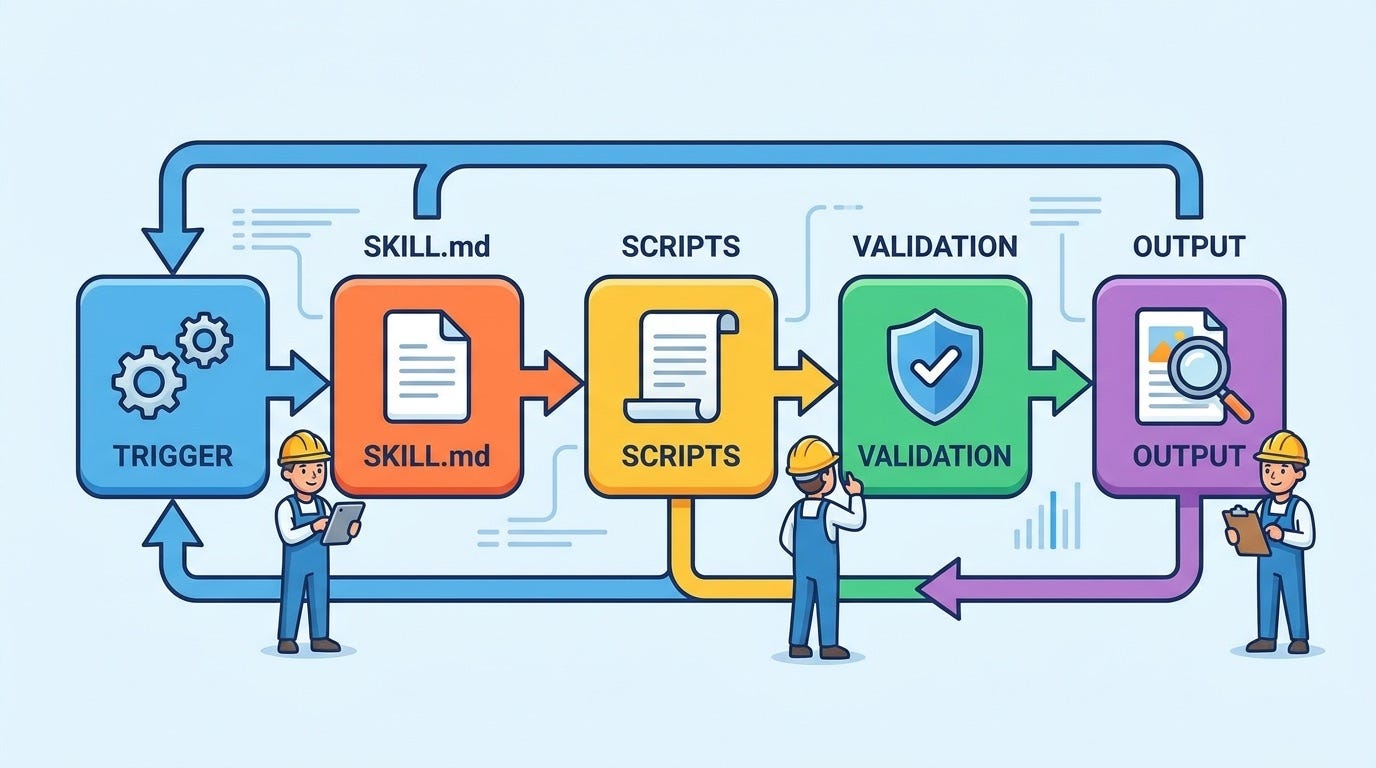
The easiest way to design a Codex Skill is to treat it like a runbook for one recurring engineering task. A good runbook says when to use it, what inputs it needs, what steps to follow, what not to do, and what output the human should expect.
Use this structure:
- Trigger: The exact task or file changes that should activate the skill.
- Scope: What the skill is allowed to inspect, change, or recommend.
- Workflow: Ordered steps Codex should follow.
- Tools and scripts: Commands or scripts that provide reliable evidence.
- Decision rules: How to handle ambiguity, failures, or risk.
- Output contract: The final format the developer should receive.
Here is a simplified example for a code verification skill:
---
name: code-change-verification
description: Use when code, tests, build behavior, or package files change. Verifies formatting, linting, type checks, and relevant tests before handoff.
---
Before running checks, inspect the diff and identify which parts of the repository changed.Run the smallest meaningful verification gate first. Prefer targeted tests when the changed area is narrow. Run the full suite only when the change affects shared runtime behavior, public APIs, build configuration, or multiple packages.If a command fails, summarize the failure, identify the likely cause, and fix only if the fix is clearly related to the current task.Final output must include:
- Changed area
- Commands run
- Results
- Remaining risk
- Recommended next verification step, if anyThis is not a flashy prompt. That is the point. It gives Codex a repeatable task contract.
Where Skills Fit Beside AGENTS.md, Hooks, and Scripts
Codex workflows can use several layers of guidance. The cleanest pattern is to keep each layer responsible for a different job.
AGENTS.md should hold short repository-wide rules. These are the instructions that should apply almost every time: coding style priorities, safety rules, review expectations, and mandatory skill triggers.
Skills should hold task-specific workflows. A release skill can be detailed without forcing release instructions into every normal bug fix. A docs-sync skill can describe documentation source-of-truth rules without distracting Codex during backend refactors.
Hooks should handle deterministic lifecycle checks. They are useful when you need scripts to run at specific moments, such as scanning prompts for secrets, logging session metadata, or running a validation check at the end of a turn.
Plain scripts should do work that needs precision. If the agent must parse coverage output, validate package metadata, or run a repeatable integration scenario, a script is often safer than asking the model to infer everything from prose.
A practical division looks like this:
- AGENTS.md: “If SDK code changes, use the verification skill before handoff.”
- Skill: “Here is how to verify SDK changes in this repo.”
- Script: “Here is the exact command that collects coverage gaps.”
- Hook: “Before finishing, check whether required validation evidence is present.”
How to Design Your First Codex Skill
Start with a workflow your team already repeats. Do not begin with the most complex automation idea. Pick a task that happens often, has clear success criteria, and annoys developers when done inconsistently.
Step 1: Choose a Painful Repeated Task
Good first skills include PR summaries, targeted test selection, docs checks, release checklists, or dependency update validation. Avoid tasks that require broad judgment across the whole codebase until you have confidence in smaller skills.
Step 2: Write a Precise Description
The description is important because Codex uses it to decide whether the skill applies. Put the trigger words near the front. Include what should and should not activate the skill.
Weak description:
Helps with repository quality.Better description:
Use when a pull request is ready for handoff. Creates a PR title, summary, testing notes, risk notes, and reviewer checklist from the current diff. Do not use for early planning.Step 3: Give the Skill a Narrow Output Contract
AI agents are easier to review when they return predictable output. A skill should say what the final answer must include. For example, a docs-sync skill might return “missing docs,” “outdated docs,” “source files checked,” and “recommended edits.”
Step 4: Add Scripts Only When They Improve Reliability
Do not add scripts for decoration. Add them when they reduce ambiguity. A script that extracts changed packages, runs targeted tests, or compares public API snapshots can make the skill much more useful.
Step 5: Version the Skill With the Repo
If a skill describes a repository workflow, keep it close to the code. When the test stack changes, update the skill in the same pull request. When the release process changes, update the release skill. Treat skills like living engineering documentation, not a private prompt collection.

Example Workflow: PR Review Summary Skill
A PR summary skill is a strong starting point because it has a clear output and low risk. It can inspect the diff, identify intent, list validation evidence, and highlight reviewer concerns.
A practical PR summary skill might instruct Codex to:
- Inspect the diff and changed files.
- Group changes by feature, bug fix, docs, tests, or maintenance.
- Identify any public API or migration risk.
- Check whether test evidence exists.
- Draft a concise title and summary.
- Flag uncertain claims instead of inventing confidence.
The final output could include:
PR title:Summary:What changed:Validation:Risk and rollout notes:Reviewer checklist:This kind of skill helps teams because the developer is not asking Codex to “summarize everything” from scratch. The agent has a known review frame.
Example Workflow: Test Coverage Skill
Test generation is a common use case for coding agents, but it can easily become noisy. The agent may add shallow tests because they are easy, not because they reduce meaningful risk.
A better skill starts by asking for evidence. It can run coverage, inspect changed files, compare current tests, and propose the few highest-impact test cases before editing.
The skill should include rules such as:
- Prefer tests that cover changed behavior or known edge cases.
- Do not add snapshot tests unless they improve review clarity.
- Do not mock the behavior being tested unless the dependency boundary requires it.
- Report uncovered branches before adding tests.
- Ask for approval before creating broad test scaffolding.
This turns “write tests” into a more useful workflow: identify the gap, explain the value, add targeted tests, and verify them.
Example Workflow: Documentation Sync Skill
Documentation drift is perfect for a skill because the problem is recurring and easy to mishandle. The agent needs to know which files are source of truth, which generated files should not be edited, and what kind of claims require code evidence.
A documentation skill can instruct Codex to:
- Inspect changed APIs, examples, and comments.
- Find docs that mention the changed behavior.
- Distinguish generated reference docs from editable docs.
- Flag missing examples.
- Recommend edits before changing public docs.
The key is discipline. A docs skill should not rewrite your docs in a generic voice. It should protect accuracy.
Common Mistakes When Creating Codex Skills
The biggest mistake is making a skill too broad. A skill called “engineering assistant” will not give reliable results. It will become another vague prompt with a filename.
Other common mistakes include:
- No clear trigger: Codex cannot know when the skill matters.
- No output format: The result changes every time and becomes harder to review.
- Too many rules: The skill becomes a dumping ground for every team preference.
- No verification step: The skill gives advice but does not produce evidence.
- Unbounded editing: The agent changes files when it should first report findings.
- Stale instructions: The repo changes, but the skill still describes the old workflow.
Skills work best when they stay boring, narrow, and testable.
Security and Governance Considerations
A skill can make an agent more consistent, but it should not become a hidden permission bypass. If the workflow touches secrets, dependencies, production data, release automation, cloud resources, or external systems, treat the skill as part of your governance layer.
Useful safeguards include:
- Keep destructive actions behind human approval.
- Separate “inspect and report” skills from “edit and execute” skills.
- Limit scripts to repository-safe commands unless explicitly approved.
- Never rely on the skill text alone to protect secrets.
- Prefer local fixtures or sandbox services for integration checks.
- Log commands run and evidence collected.
For teams, the governance question is simple: if a new developer followed this runbook manually, would you trust the workflow? If not, do not ask an AI agent to follow it automatically.
How Skills Reduce Cost and Context Waste
Long prompts are not free. They use context, slow down review, and increase the chance that important instructions get buried. Skills help by keeping only the skill metadata visible until the workflow is needed.
This can reduce context waste in three ways:
- The agent loads detailed workflow instructions only for relevant tasks.
- Scripts collect compact evidence instead of forcing the model to infer everything.
- Reusable references prevent developers from pasting large instructions repeatedly.
Cost control is not just about tokens. It is also about review time. A predictable skill output helps humans scan results faster, catch mistakes earlier, and decide whether the agent’s work is safe to merge.
Measuring Whether a Skill Is Working
A skill should improve a workflow you can observe. If you cannot tell whether it helps, it will slowly become prompt clutter.
Track practical signals:
- How often the skill is used for the right tasks.
- How often developers need to correct the output.
- Whether verification steps are skipped less often.
- Whether PR summaries become clearer and more consistent.
- Whether release mistakes, doc drift, or test gaps decrease.
- Whether the skill causes unnecessary work or noisy edits.
The best skills become invisible infrastructure. Developers stop thinking about the prompt because the workflow is already captured.
A Simple Rollout Plan for Teams
If you are introducing Codex Skills to a team, start small.
- Pick one recurring workflow with clear review value.
- Create a narrow skill with a strong description and output contract.
- Use it manually for a few tasks before making it mandatory.
- Collect examples where it helped and where it failed.
- Update the skill based on real failures.
- Add a short AGENTS.md rule only after the skill proves useful.
- Repeat for the next workflow.
This approach avoids the trap of building a huge skill library nobody trusts. A few high-quality skills are more valuable than dozens of clever prompts.
Where Codex Skills Fit in the AI Coding Tool Landscape
Every major AI coding environment is moving toward more structured workflows: repository instructions, subagents, hooks, review gates, cloud agents, tool permissions, and automation logs. Codex Skills are one part of that larger shift.
The core idea is bigger than one feature: coding agents need reusable operating procedures. As agents gain more ability to inspect code, run tools, create pull requests, and deploy prototypes, teams need a way to standardize what “good work” means.
Skills are useful because they sit between a prompt and a full automation system. They are lighter than building a custom internal platform, but more durable than asking every developer to remember the perfect prompt.
Final Takeaway
OpenAI Codex Skills are most useful when you stop thinking of them as prompt shortcuts and start treating them as small engineering runbooks.
A strong skill has a clear trigger, narrow scope, useful evidence, and a predictable output. It helps Codex repeat the workflow your team already wants, without relying on memory, luck, or one developer’s favorite prompt.
The goal is not to make AI coding agents autonomous everywhere. The goal is to make repeatable work safer, clearer, and easier to review.
FAQ
What are OpenAI Codex Skills?
OpenAI Codex Skills are reusable workflow packages for Codex. A skill usually contains a SKILL.md file with task-specific instructions, plus optional scripts, references, templates, or assets.
When should developers use Codex Skills?
Use skills for repeated engineering workflows such as test verification, PR summaries, docs sync, release checks, implementation planning, and integration testing. They are less useful for one-off creative tasks with no clear review criteria.
How are Codex Skills different from AGENTS.md?
AGENTS.md is best for short repository-wide rules that apply broadly. Skills are better for detailed task-specific workflows that Codex should load only when needed.
Can Codex Skills improve AI coding reliability?
Yes, when they are narrow and evidence-based. Skills can reduce instruction drift, standardize verification steps, and make outputs easier to review. They do not remove the need for human review.
Should every team create many Codex Skills?
No. Start with one or two high-value workflows. A small set of reliable skills is better than a large library of vague instructions.
Can Codex Skills include scripts?
Yes. Scripts are useful when a workflow needs deterministic checks, coverage reports, metadata validation, or repeatable test commands. Keep scripts scoped and safe.
Do Codex Skills reduce token cost?
They can help reduce context waste because detailed instructions are loaded only when the skill is relevant. The bigger benefit is often reduced human review time and fewer repeated workflow mistakes.
Thank you for being a part of the community
Before you go:

👉 Be sure to clap and follow the writer ️👏️️
👉 Follow us: **Linkedin| [Medium](https://medium.com/codetodeploy)**
👉 CodeToDeploy Tech Community is live on Discord — **Join now!**
Disclosure: This post includes affiliate and partnership links.
메타데이터
- post_id
- 595d96e65f86
- slug
- openai-codex-skills-workflow-how-developers-package-repeatable-ai-coding-tasks-595d96e65f86
- url
- https://medium.com/codetodeploy/openai-codex-skills-workflow-how-developers-package-repeatable-ai-coding-tasks-595d96e65f86
- canonical_url
- https://medium.com/codetodeploy/openai-codex-skills-workflow-how-developers-package-repeatable-ai-coding-tasks-595d96e65f86
- author_url
- https://medium.com/@towardnextai
- status
- ok
- fetched_at
- 2026-06-11 05:11:55