What AI Cannot Do: A 10-day stay in Taitung, Taiwan, Searching for Questions Without Answers
A year had passed since I last set foot in Taitung, on Taiwan’s eastern coast, a city of 200,000 people, where roughly 35% of residents are…
What AI Cannot Do: A 10-day stay in Taitung, Taiwan, Searching for Questions Without Answers
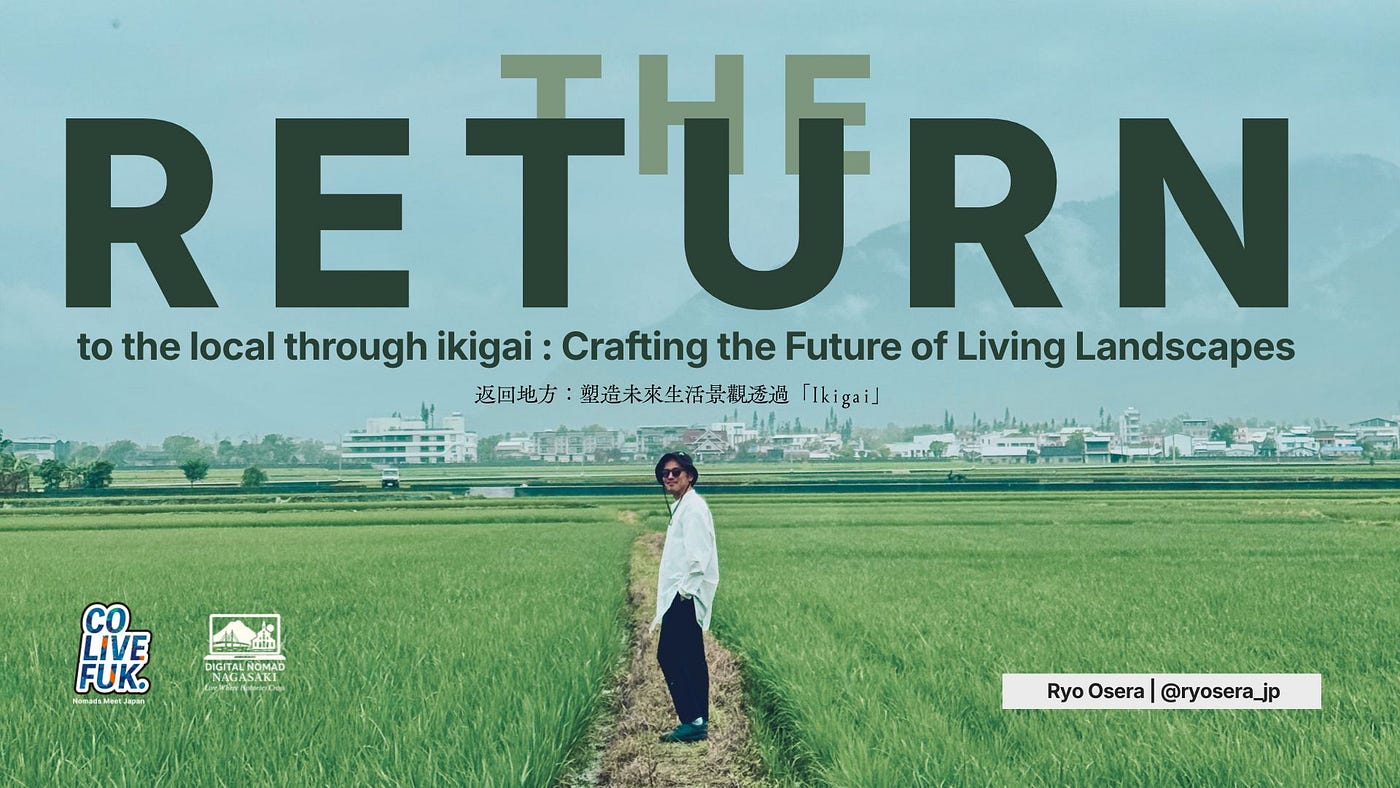
Chishang, Taitung
A year had passed since I last set foot in Taitung, on Taiwan’s eastern coast, a city of 200,000 people, where roughly 35% of residents are Indigenous, making it one of Taiwan’s most culturally diverse places. The air here is famously the cleanest on the island; you can take a deep breath and feel it reach the bottom of your lungs. But the distance from any major hub is real. No matter how you plan it, “convenient” is not a word that applies to the trip. Trade with mainland China is constrained by political tensions. Behind the natural beauty and cultural richness, the city carries a heavy, unanswered question: how can such a place balance diversity with economic sustainability and shape its own future?
I came to join **TAIWAN DIGITAL FEST 2026,** a month-long coliving program for remote workers from around the world, with a different theme each week. The week I joined was built around “regional revitalization.” Tea growers from Luye producing red oolong, or Indigenous entrepreneurs offering cultural experiences — through conversations with each of them, one question stayed at my feet the entire stay: what do those of us arriving from across the world actually learn from this land, what do we leave behind, and what do we carry home?
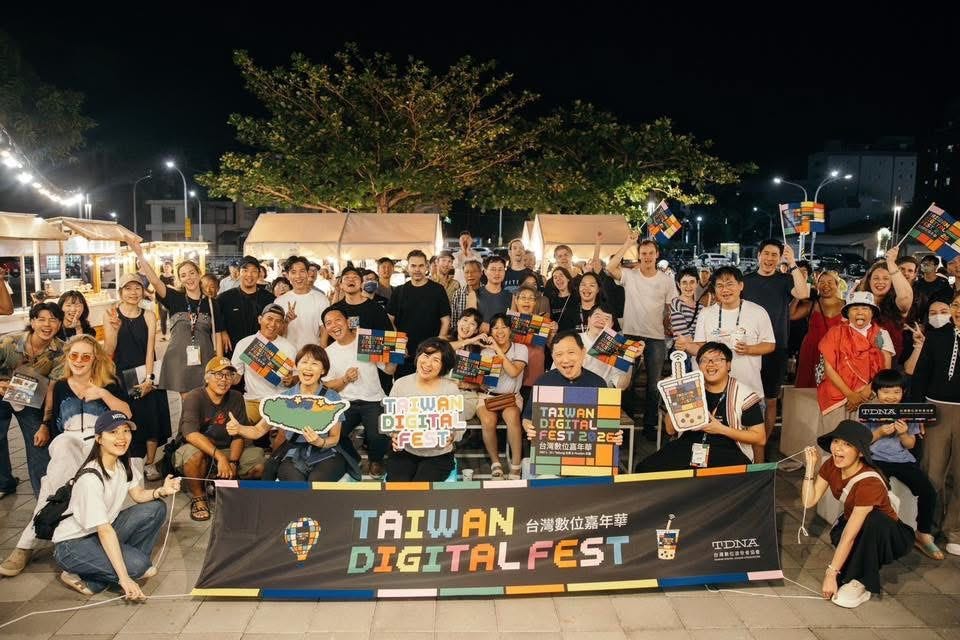
Opening Ceremony in Taitung
Sustainability: What Will We Leave Behind in 100 Years?
We live in a moment where AI is rewriting the rules of nearly everything. Most of us spend our days inside a short-term fear: if I don’t keep up, I’ll be left behind. And yet, alongside that fear, there’s a quieter wish in the back of the mind — the wish to figure out what must not change in the next hundred years of human life. What needs to be preserved? In Taitung, I watched residents face this question head-on, using the Mandarin word 永續 (yǒngxù) — sustainability, but more literally, “lasting forever.” For a week, I listened.
Osan Karo(武撒恩)#南方草草節
The reason I entered the world of digital nomadism in the first place was simple: I had been astonished, again and again on my travels, by the love I encountered for Japan. I had done nothing personally to earn it. Yet the moment I said I was Japanese, faces lit up. Strangers thanked me. Told me they loved my country. The realization came slowly — this affection wasn’t directed at me. It was the echo of love that earlier generations of Japanese had delivered, patiently, over decades, to the countries they visited and worked in.
So the question I now carry is this: how do we pass that inheritance on? Not so that the next generation of Japanese will be loved — that frames it too narrowly — but so that the relationship between Japan and the world remains generous in both directions a century from now. My work, in the end, lives in that back-and-forth: keeping pace with the present, while searching for what deserves to last.
How “Weak Ties” Can Untangle the Problem of Distance
Bar Cynic, Best Bars Taiwan 2025
Taitung’s daily life surfaced a real challenge. In a city where transportation is fragmented, designing connection between visitors from around the world turns out to be harder than it sounds. The venue was over forty minutes one way. Local transit options were limited. Most of my energy went into connecting with the place itself; the connections among participants kept slipping out of reach.
I see the same pattern in Japan, where more rural regions are now hosting workation programs for international remote workers. And here is something AI cannot easily solve: physical movement. When the body has to travel, no algorithm closes the gap. What can be designed in advance is the social fabric — what sociologist Mark Granovetter called the strength of weak ties. Sharing a taxi with someone you barely know. Catching a ride with whoever has a car. The quiet groundwork of “I can ask this person without it being a big deal.” That groundwork has to be laid before anyone arrives.
How well a soft community can absorb the friction of hard infrastructure — that is what I kept returning to. The word “infrastructure” only does its job when it covers both hardware and software. And the more I thought about how outsiders and residents design their relationship, the more it felt like exactly the kind of thing worth preserving for the next hundred years.
Travel, for Me, Is a Canvas
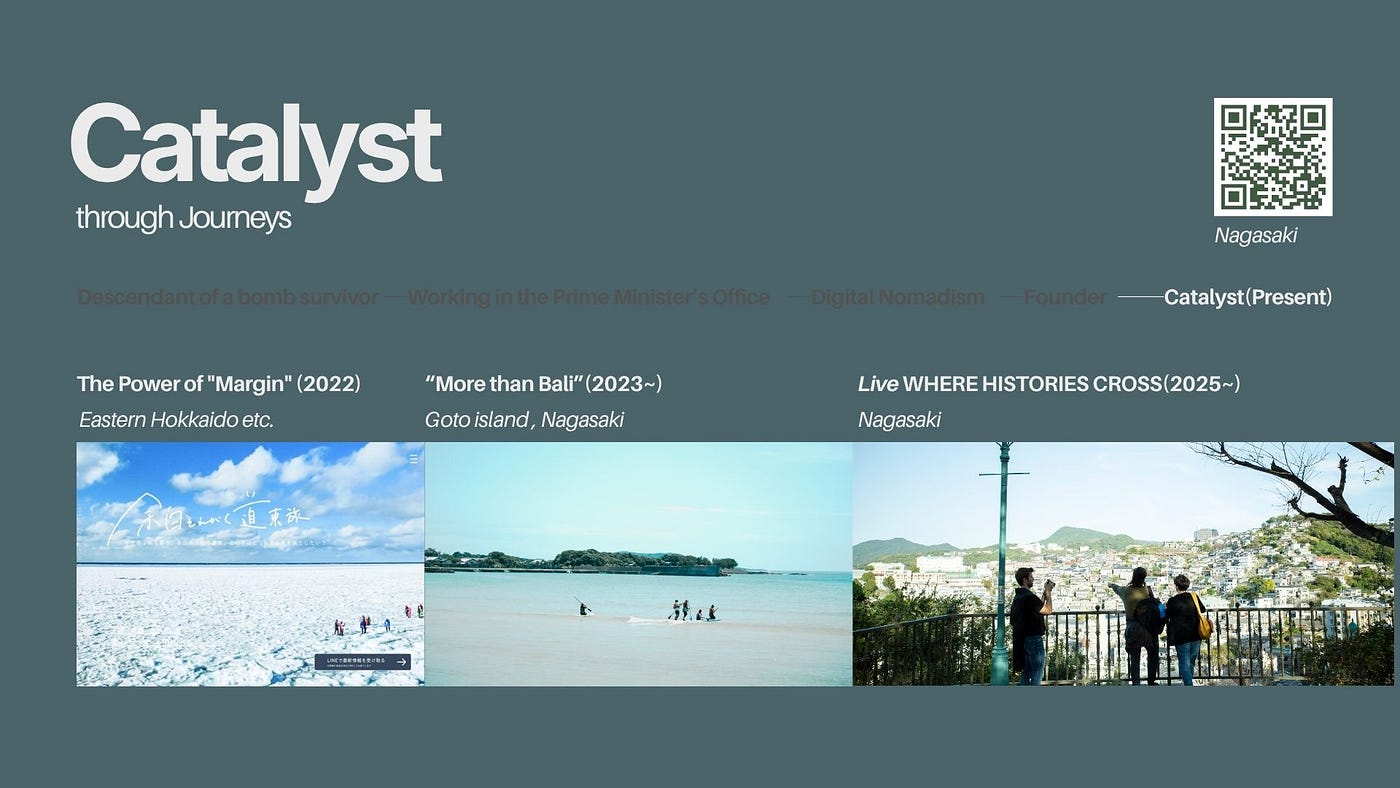
Unlike a tour packaged by a travel agency, the trips I design carry a message I want to deliver right now. Travel is a canvas. It is also a medium, in the literal sense — and I approach it with the care of a craftsman. The journeys I have built in Hokkaido and in Nagasaki each carried their own theme. **Colive Fukuoka** belongs to the same body of work, and this year I am preparing another ten days of relational design, with another message at its core.
Recently, I found myself rethinking what makes a person valuable in this era. The bar is shifting — quietly but unmistakably — from “a person who produces answers” to “a person who frames questions.” Around the same time, I kept returning to the philosophy of Kiyoshi Oka, the Japanese mathematician who once wrote, “A violet is a violet” — meaning that some things have intrinsic worth that does not need to be measured or compared. In an age when answers arrive instantly, the courage not to seek an answer takes on new weight.
We’re Looking for Question-Makers, Not Answer-Givers
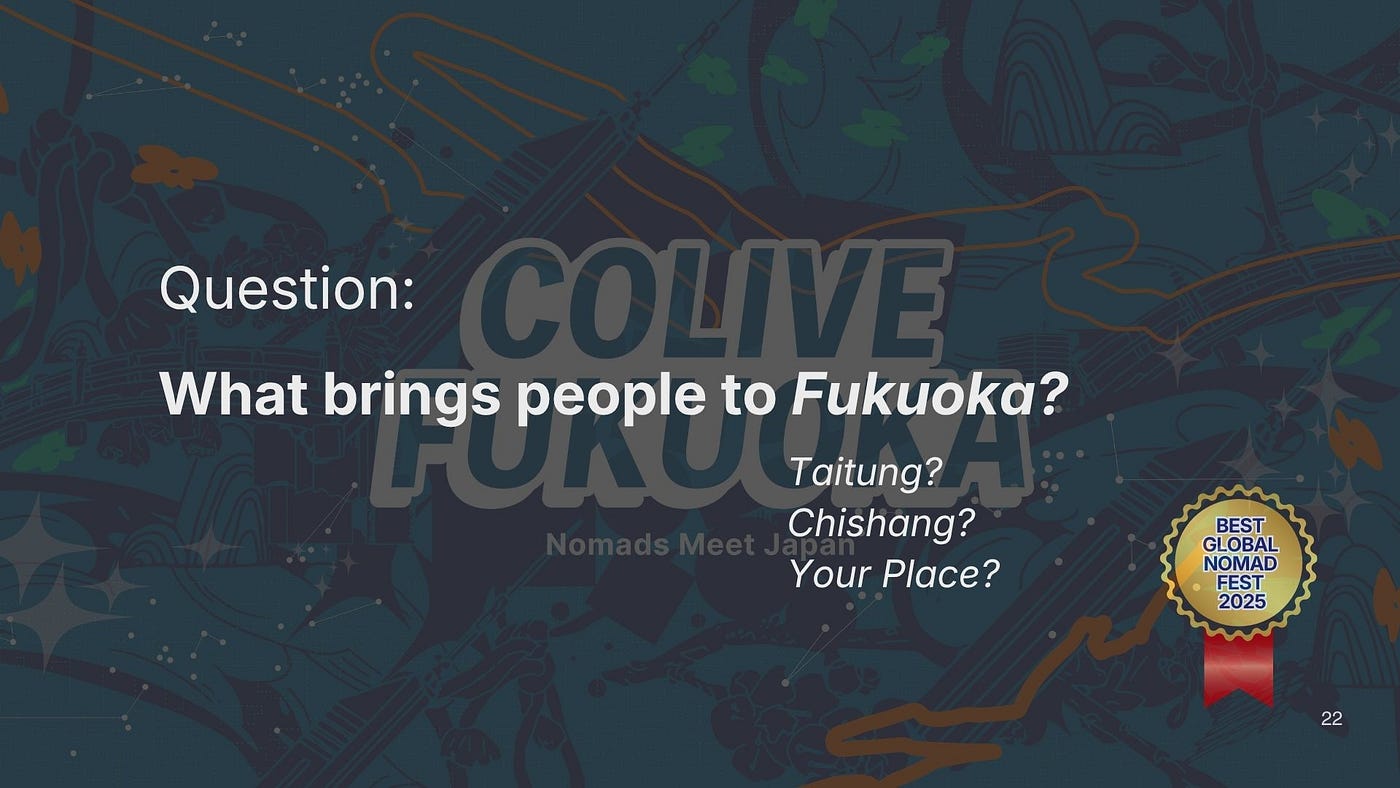
If answers are now cheap, what remains uniquely human is the capacity to ask the right question — and to create value beyond the answer itself. With that in mind, I want to redesign this year’s Colive Fukuoka as a ten-day period where we don’t rush to conclusions. Ten days where each participant carries their own question through the streets of Fukuoka, connects with the community, and leaves something behind for the next hundred years.
This is also what makes regions, not cities, the real treasure ground right now. Convenience has its limits. The balance between continuity and economy in any local place raises questions that AI cannot answer. Returning to a region, participating in its life — that is, increasingly, where a meaningful life gets designed.
I’m bringing what I learned in Taiwan home to Fukuoka. This October, **Colive Fukuoka** will be a space where we hold the questions rather than chase the answers. I’d be honored to have you join us.
메타데이터
- post_id
- 5987f89a165f
- slug
- what-ai-cannot-do-a-10-day-stay-in-taitung-taiwan-searching-for-questions-without-answers-5987f89a165f
- url
- https://medium.com/@oseraryo/what-ai-cannot-do-a-10-day-stay-in-taitung-taiwan-searching-for-questions-without-answers-5987f89a165f
- canonical_url
- https://medium.com/@oseraryo/what-ai-cannot-do-a-10-day-stay-in-taitung-taiwan-searching-for-questions-without-answers-5987f89a165f
- author_url
- https://medium.com/@oseraryo
- status
- ok
- fetched_at
- 2026-07-14 18:48:27