Xie Lian Reads, to Me, Like a Metaphor for Women
I was reading Heaven Official’s Blessing during the years I was cursing the world.
Xie Lian Reads, to Me, Like a Metaphor for Women
I was reading Heaven Official’s Blessing during the years I was cursing the world.
This piece contains spoilers for Heaven Official’s Blessing. The story works partly as a mystery, so please read this only if you have finished it.
At work, at home, I say “this is what I think” — and then I act on it.
And then a partner, a father, a colleague loses his temper and reaches into my body, into my daily life, trying to take control. As if to say: I am the one who is right. A woman does not get to have an opinion.
Living in Japan, this happens fairly often.
That was when I fell into Heaven Official’s Blessing: Tian Guan Ci Fu — a story about eight hundred years of loneliness and devotion.
Xie Lian is a crown prince, gifted in both martial skill and virtue. He is perfect. And this story dismantles that perfection without mercy. He falls, he is laughed at, he is dropped to the bottom of the world again and again. And still he does not stop helping people.
Xie Lian gave everything. For his country. For his people.
As a crown prince he had all of it — the skill, the mind, the devotion of others — and he ascended as a god while he was still young. People were drawn to him.
But what happens when someone like that treats goodwill as the default way of being with other people?
People come. He will take care of it.
And when it does not work out, they turn on him. This is all your fault.
The person who gets fixed in place as the one who saves
This is my reading. I am not claiming it is the correct way to read the story.
Here is what happens to Xie Lian.
- He is good to the bone — someone who wants to save people, who keeps acting to help, because he means it
- And because that is rare, he becomes something to cling to, to own, to control
- He will take care of it — he is expected to do the saving
- He is fixed in place as someone who saves, as a matter of course
- When it does not work out: this is all your fault — their problems become his to carry
- And it is done to him to the very limit
To me, this reads like a metaphor for women.
- You are expected, by default, to be a good daughter, a good girlfriend, a good wife, a good mother
- Your usefulness, your looks, your care become the reason you are clung to, owned, controlled
- You are expected to save his dependency with care
- You are fixed in place as the one who absorbs it — because of course you will save him
- His problems become yours to solve too, for free and without being asked. And when it does not work out: the mother’s fault. She did not support her husband.
- And it is demanded of you to the very limit
In a society where women’s dignity is treated lightly, the virtues of being a woman become the excuse for control.
A structure that fixes care work and emotional labor onto women — that is, a structure that keeps her on the saving side.
A structure that offloads men’s problems, their violence, their inability to manage their own feelings or run their own lives, onto wives, mothers, daughters.
The kinder you are, the more able you are to save people, the more firmly you are fixed in place as the one who saves.
That is what I think about when I look at Xie Lian.
That urge to root for him — I think it comes from somewhere unconscious, from how closely what he is carrying resembles what we are carrying.
Does someone who has been drained to the last drop become the one who takes?
Imagine everything taken from you by the enemy in front of you — the people you love, your home, everything you built.
You were hurt, so you hurt back. You take before you can be taken from.
How many people could stand there and not become the one who takes?
After being hurt that badly, can you really decide to end the chain of retaliation in your own generation? This story puts that question in front of you, over and over.
To me this is not simply a story about what conscience is. It is a story about a person drained of care to the last drop, who still does not become the one who harms.
To break the chain of retaliation in your own generation. How inhuman a strength that demands.
The one who needs Xie Lian, and never makes Xie Lian save him
And then there is Hua Cheng.
When you love someone, it would be lovely if both of you faced the same direction with the same weight of feeling. But the one holding the enormous feeling hides it, or plays it down, so it does not become a burden. The fear of that weight being found out is something else entirely. He is not going to accept this.
Hua Cheng’s love is intense. Honestly, it is a little frightening. Once he has chosen the one person he reveres, that devotion does not waver for eight hundred years. Not for a second. Not once.
What is extraordinary about San Lang is that he never tries to make himself the main character in the life of the person he loves.
He sets himself aside and holds the other person as precious — and he has spent all of that time building himself into someone who actually can.
There is no self-sacrifice in it. Existing for Xie Lian is simply what he is for.
Watching San Lang, it turns, strangely, into I want him to win. The way we are pulled toward another person is usually complicated, isn’t it.
This story saved me
Xie Lian is hurt, thoroughly. Again. And again. And again. I think this kind of cruelty in the writing is particular to Chinese stories. It is cruel enough that you think: they are really going this far.
An ordinary person would have died on the spot. But Xie Lian is half a god, so he cannot die.
Every method, from every angle, thoroughly.
Partway through, he has his moment — I will destroy this world, I will curse them all dead. But at the very last edge, he stops. He finds hope inside a person.
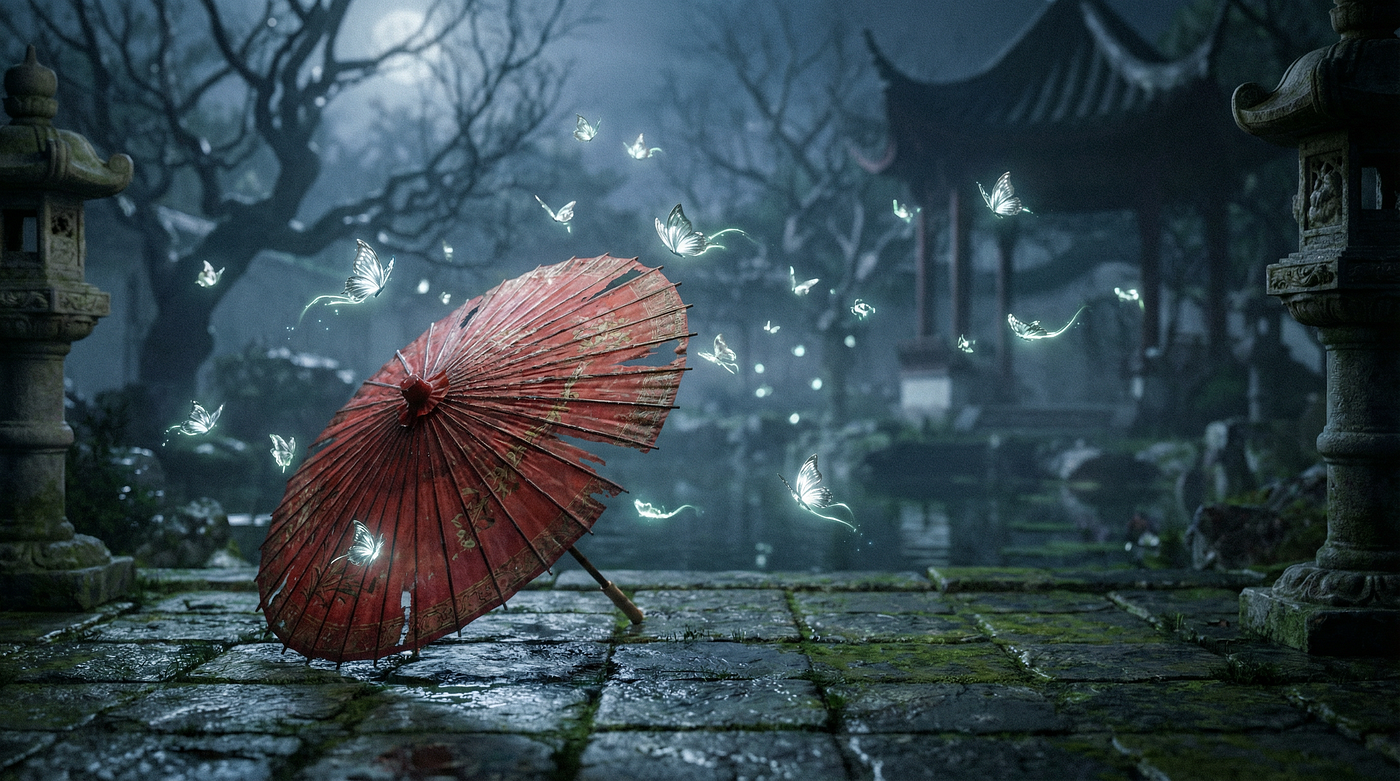
It is such a small thing. Someone held an umbrella over him. Someone spoke to him. That was all it took for him to step out of the chain of hatred.
Something in me shakes at that.
Living in modern Japan means living inside an overwhelmingly disadvantaged position, for the whole of it. And taking an enormous number of them.
I was genuinely worn down. I had lost even the will to keep going. That was when this story — the way Xie Lian lives, the way he is — saved me.
I think the way Xie Lian lives stands for every woman’s effort, every woman’s anger, every woman’s refusal to be moved.
I want every woman to read it.
메타데이터
- post_id
- 59fed9881098
- slug
- xie-lian-reads-to-me-like-a-metaphor-for-women-59fed9881098
- url
- https://medium.com/bl-sun/xie-lian-reads-to-me-like-a-metaphor-for-women-59fed9881098
- canonical_url
- https://medium.com/bl-sun/xie-lian-reads-to-me-like-a-metaphor-for-women-59fed9881098
- author_url
- https://medium.com/@japaneseowl
- status
- ok
- fetched_at
- 2026-08-19 04:46:43