Angola, road and camping trip week 2
Part 2 of 2 1/2 Mountain villages and beaches
Angola, road and camping trip, week 2
Part 2 of 2 1/2
Mountain villages and beaches
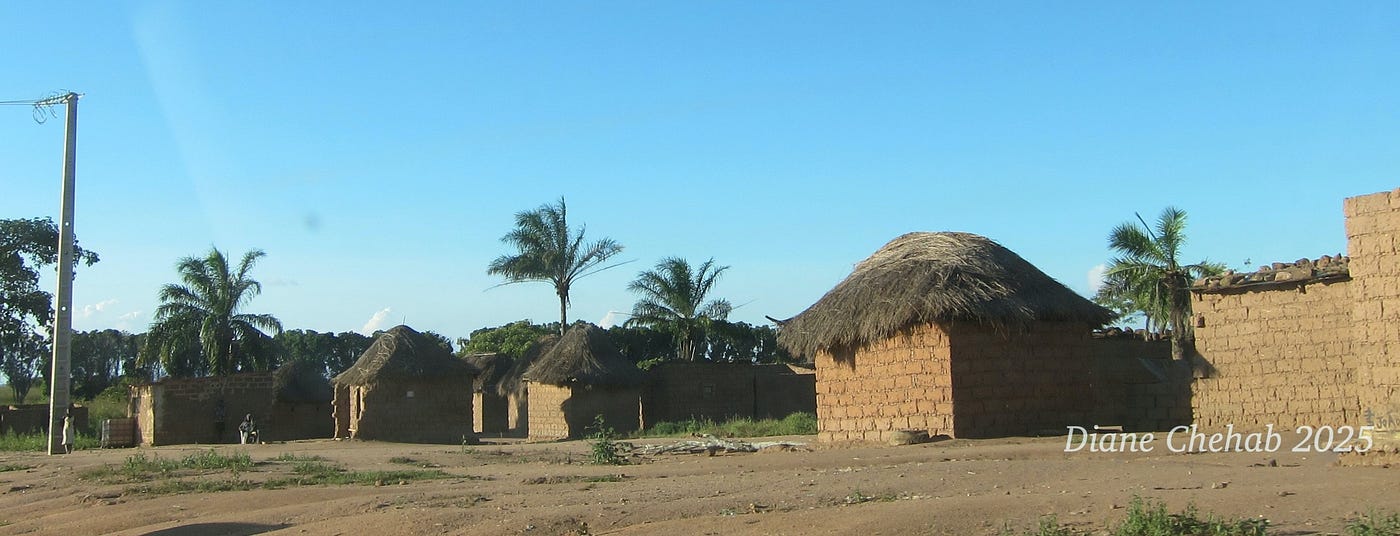
Semi-traditional housing… sharply cut mud bricks with thatch roofs
Part 1 described the first part of the trip, going north and northwest towards Luanda, where we turned back southwards.
After luxuriating at the Rio Curinge Lodge for 2 days, it was time to get going again. We went south more or less along the Atlantic coast to Cuanza Sul Province.
We were optimistic about road conditions for the next phase… we even paid a toll (500 K)! The smooth road only lasted a short time, and then we were back to potholes.
We drove through Porto Amboim, an oceanside town featuring salt pans, passed traditional homes, market stalls selling dried fish, watermelons, potatoes, avocados…


Porto Amboim
On the way south, we passed by many groupings of traditional and semi-traditional homes, some with thatch roofs, others covered in corrugated iron.

Homes along the Angolan coastal road
After crossing Rio Keve, we climbed back into the mountains to Bonga Falls, where we were greeted by a resident ostrich strutting around the parking area. It was exciting to see an ostrich up closed, but a group mate warned me not to get too close, as an annoyed ostrich’s kick can kill you!
Our lunch stop was at a picnic table overlooking Bonga Falls.


Resident ostrich; Bonga Falls; the road to Kimbora Forest
We had hoped to reach the top of the mountain by sunset, but (as usual) it didn’t pan out. We went past more mud brick settlements perched on the hillside. We were going through a village, Gunga, just as students were leaving school for the day when Speedy stopped, went to talk to someone, and to our great surprise, we turned into the schoolyard!
Night 9 — sleeping in a schoolyard with a large audience
Our arrival was very much noticed, and we had a large audience this time. First the girls left (probably needed to help their mothers at home), then others drifted off. Many remained, and were commenting quite loudly, not that we could understand. Who could blame them? They may have never seen “white” people before, and this group of SUVs, vans, and trucks, with tents, was a true spectacle.


Hillside settlement; the beginning of the audience in Gunga, sunset over the fields
The next morning was a bit calmer as the kids had to go to school. The whole situation made me question our trip. Was it a good idea to come to these remote places? We didn’t come to gawk at anyone, but, but there was self-questioning. I can’t say that I have the answer. The people were poor, that is not questioned; they had crops and small cattle, and apparent security; however no electricity, or running water. There are schools, and medical clinics. Which is more than some people can say.
We left, waving to whomever was still outside. We drove through the mountain: up and then down, so steeply that 2 vehicles had to stop to tend to their brakes. We reached the coastal road again and headed for the Lobito peninsula, after passing through Sembe beach and crossing the Kikombo river, admiring the majestic cliffs. And of course, more baobab trees!


The beach at Sembe, traditional home with columns on the beach, crossing the Kikombo
Night 10: sleeping on the beach, next to the Atlantic Ocean
Lobito is a bustling coastal city, which we drove through on the way to the peninsula, which could be coined the Cancun of Angola. We passed one Art Deco, modern, and otherwise well-designed (or sometimes decrepit) home after another. We reached our overnight destination at Alfa Beach Bar, where we were allowed to camp for free as long as we ordered dinner. The good news: real shower stalls and toilets!


Seaside market; camping on the beach; Lobito
After a short morning dip in the ocean (it was very turbulent with a riptide), we set off again, hoping for another opportunity to swim in the ocean.
We stopped at the exit from Lobito to visit an outdoor museum of antique train engines.


Antique rail museum at the edge of Lobito
We went on to Benguela, to a shopping mall, where we bought food at a large supermarket, our “care team” replenishing their freezers and coolers for the next few days.
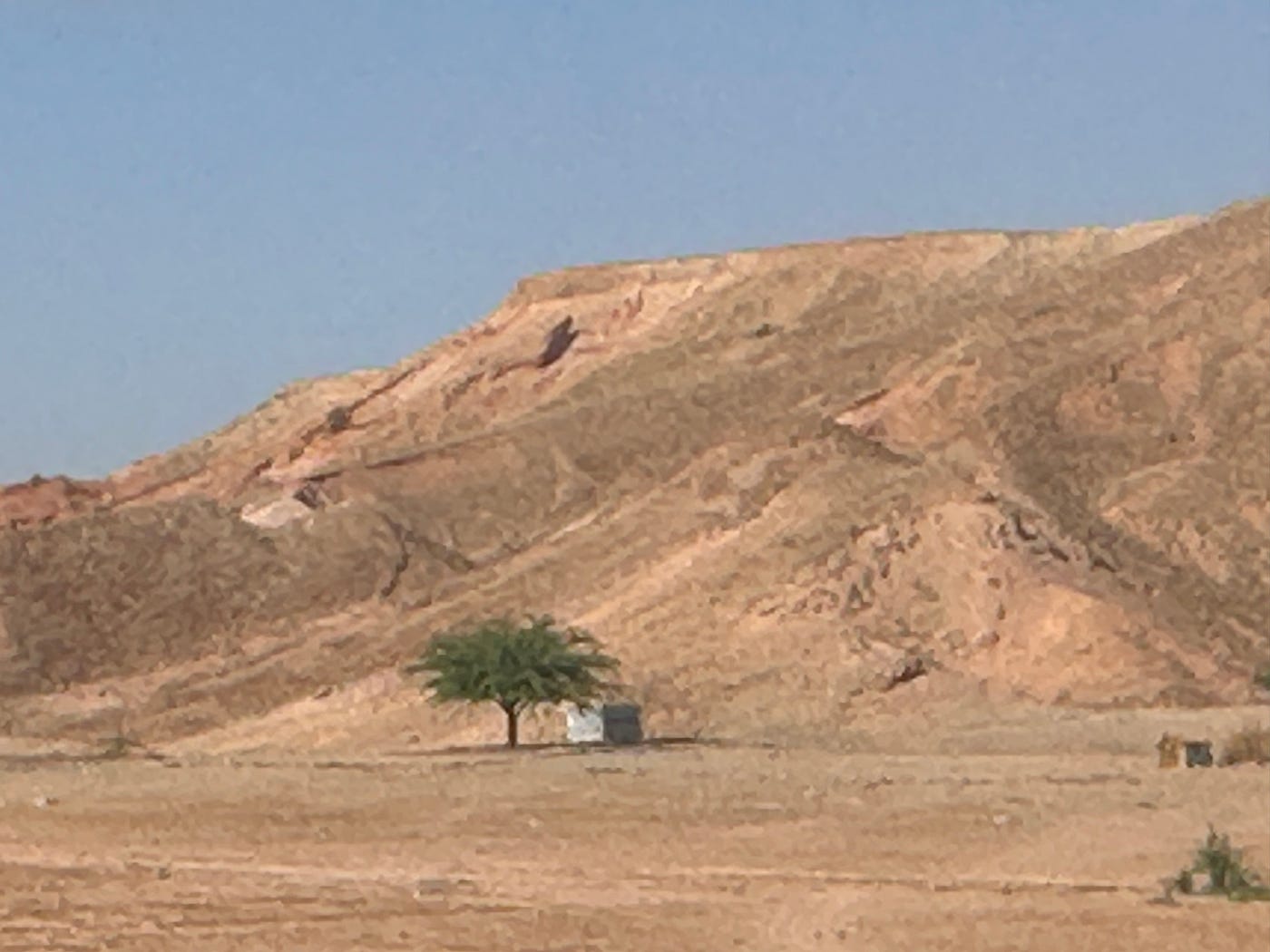
We drove on to some very dry and desolate regions, through dusty roads, at the edge of the Namibe desert, where we were quite alone. No wildflowers here. At one point the rear car (belonging to our guides) broke down and it took a while for the front car to realize that we had stopped (for everyone’s safety, one guide car was in front and another in the back). Then another car had a flat tire. We were once again slowed down, and had our on-the-go lunch under an unused bridge (there several of these bridges, possibly some glitch in engineering; they were higher than the road).
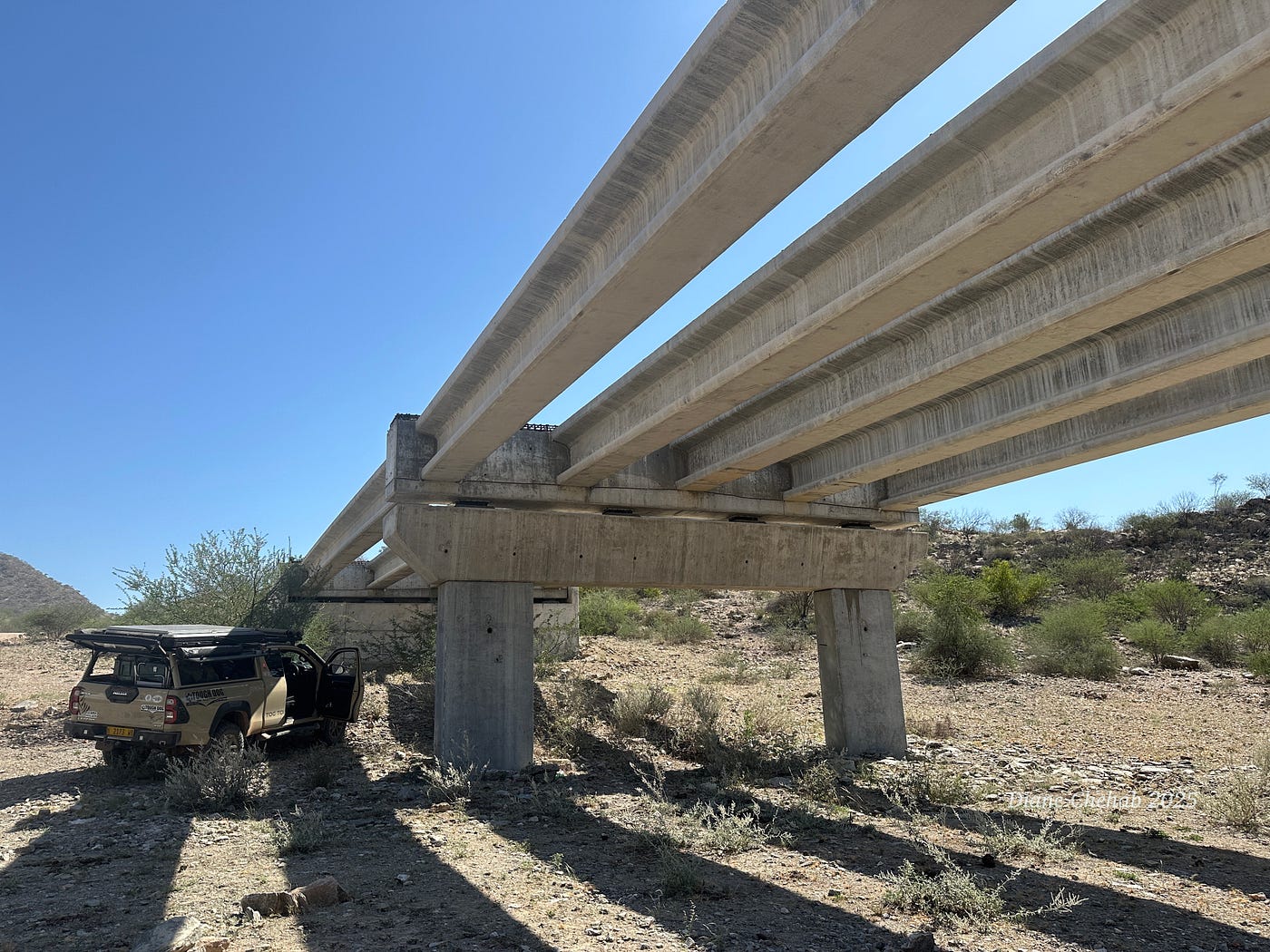


Lunch under a highway bridge; the dusty hills and the flat road.
Night 11: a wide open space surrounded by cliffs
We didn't reach any beach that day, and we slept in a wide open space surrounded by cliffs. There were a few villagers (the men wore a fabric draped around their waist, like a skirt), and some hungry dogs.


Men in “skirts” — our campsite at sunset
In the morning, we headed towards Klofie, the beach we were looking forward to. It would have been impossible to sleep there. So much plastic refuse had washed up on the beach from the ocean.
The next post will recount the last couple of days of this memorable trip.

Powdered milk choices at the supermarket
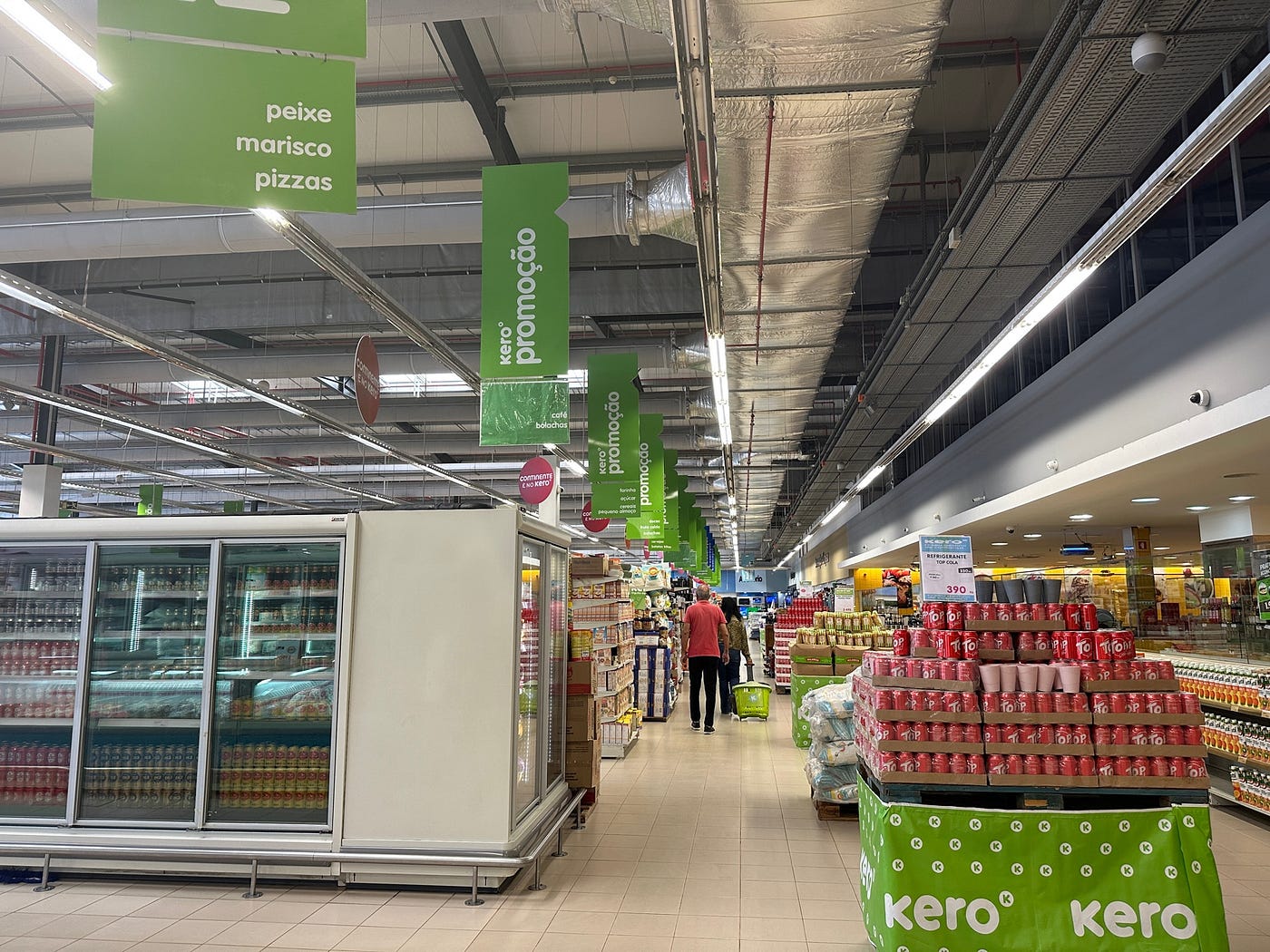

A view of the supermarket; baking powder packages
메타데이터
- post_id
- 5a2da59b6f0b
- slug
- angola-road-and-camping-trip-5a2da59b6f0b
- url
- https://medium.com/@d_chehab/angola-road-and-camping-trip-5a2da59b6f0b
- canonical_url
- https://medium.com/@d_chehab/angola-road-and-camping-trip-5a2da59b6f0b
- author_url
- https://medium.com/@d_chehab
- status
- ok
- fetched_at
- 2026-06-18 00:10:23