Can we think in 4D?
While driving to work yesterday, I had an observation that sparked an idea in my mind: could driving a vehicle be considered a form of “4D…
Can we think in 4D?
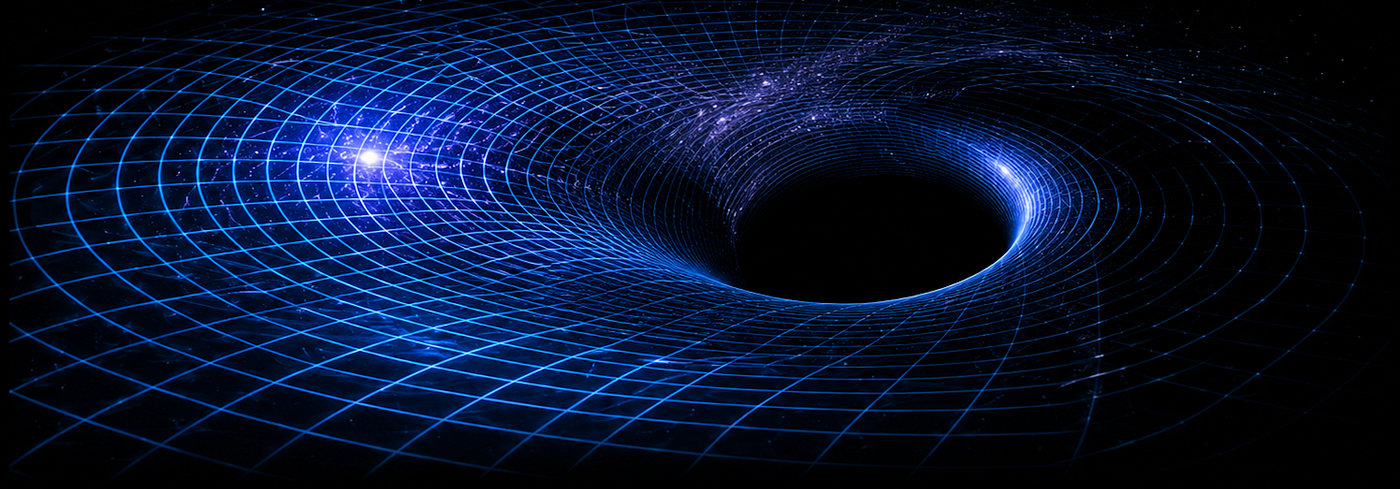
While driving to work yesterday, I had an observation that sparked an idea in my mind: could driving a vehicle be considered a form of “4D thinking”?
Okay, Let me explain first. So the intuition is when we drive, we continuously coordinate motion in space with the passage of time. We anticipate where other cars will be, adjust speed to meet traffic lights, and plan trajectories seconds into the future. This feels like operating in four dimensions. Yet a closer examination shows that while driving involves time-sensitive spatial reasoning, it is not synonymous with genuine four-dimensional thinking as understood in physics or philosophy. The difference lies not in competence or complexity, but in how time itself is conceptualized.
Human cognition is deeply shaped by how we experience the world. We perceive space as three-dimensional and navigable, while time is experienced as a flowing sequence with a privileged present. Our awareness is anchored in “now,” with memory providing access to the past and anticipation gesturing toward the future. When we drive, we reason within this framework. We do not experience the future position of a car as something already existing; rather, we predict it.
Time, in this mode of thought, is not a dimension like left or right but a parameter that advances and carries us along with it.
Because of this, humans are unlikely to ever think in four dimensions in a direct, perceptual sense. We cannot mentally rotate objects in time the way we rotate them in space, nor can we perceive an entire temporal extent of an object all at once. A human mind does not naturally grasp a car as a single entity stretched from yesterday through tomorrow. Instead, we encounter it moment by moment. This limitation is not a flaw but a consequence of biological evolution, which optimized cognition for survival in a dynamic environment rather than for abstract geometric completeness.
Nevertheless, humans can think about four-dimensional systems in powerful and meaningful ways. We do this indirectly, through abstraction and representation. Mathematics allows us to reason about higher dimensions without visualizing them. Diagrams let us project four-dimensional relationships into lower-dimensional “shadows” that we can understand. Narratives help us reconceptualize time, for example by imagining an object as persisting through time rather than repeatedly appearing at successive moments. Tools such as equations, simulations, and spacetime diagrams effectively extend human cognition beyond its native limits. In this sense, humans cannot intuit four dimensions, but they can reason correctly about them.
This distinction becomes clearer when contrasted with how physicists think in four dimensions. Physicists do not literally see four-dimensional spacetime in their minds any more than anyone else does. What differs is their conceptual commitment. In modern physics, especially in relativity, spacetime itself is treated as the fundamental object of study. Motion is no longer something that happens to objects over time; instead, objects are understood as extended structures in spacetime. A particle is represented not as a thing that moves, but as a worldline — a continuous curve made up of all the events that constitute its existence.
In this framework, time is not privileged. There is no fundamental “now” built into the equations. Past, present, and future are all parts of the same four-dimensional structure. Physicists often reason globally, considering entire stretches of spacetime at once rather than step-by-step evolution. Causes and constraints can be applied across time symmetrically, and the mathematics remains valid even when it conflicts with everyday intuition. Where common sense insists that time flows, physics treats time as something that simply is.
This difference reveals why activities like driving, though sophisticated, are not examples of true four-dimensional thinking. Driving relies on a present-centered perspective and on prediction within time, not on treating time as a dimension equivalent to space. It involves dynamic three-dimensional reasoning with temporal coordination, not the geometric unification of space and time. Physicists, by contrast, adopt a worldview in which spacetime replaces motion as the primary explanatory framework. Their thinking is four-dimensional not because they have special intuition, but because they allow mathematics and geometry to override intuitive experience.
Ultimately, the gap between everyday cognition and four-dimensional reasoning is not bridged by practice alone but by abstraction. Humans may never naturally experience the world as a four-dimensional whole, but through physics, mathematics, and conceptual discipline, they can think as if spacetime were the primary reality. Driving a car may hint at this mode of thought, but it remains firmly grounded in the human experience of time as something that passes, rather than something that stands alongside space as an equal dimension.

메타데이터
- post_id
- 5a4396d9ad2f
- slug
- can-we-think-in-4d-5a4396d9ad2f
- url
- https://medium.com/@hrshtvrm12/can-we-think-in-4d-5a4396d9ad2f
- canonical_url
- https://medium.com/@hrshtvrm12/can-we-think-in-4d-5a4396d9ad2f
- author_url
- https://medium.com/@hrshtvrm12
- status
- ok
- fetched_at
- 2026-06-09 18:22:14