Neurodivergent and Tired as Hell
Burnout has no respect
Neurodivergent and Tired as Hell
Burnout has no respect
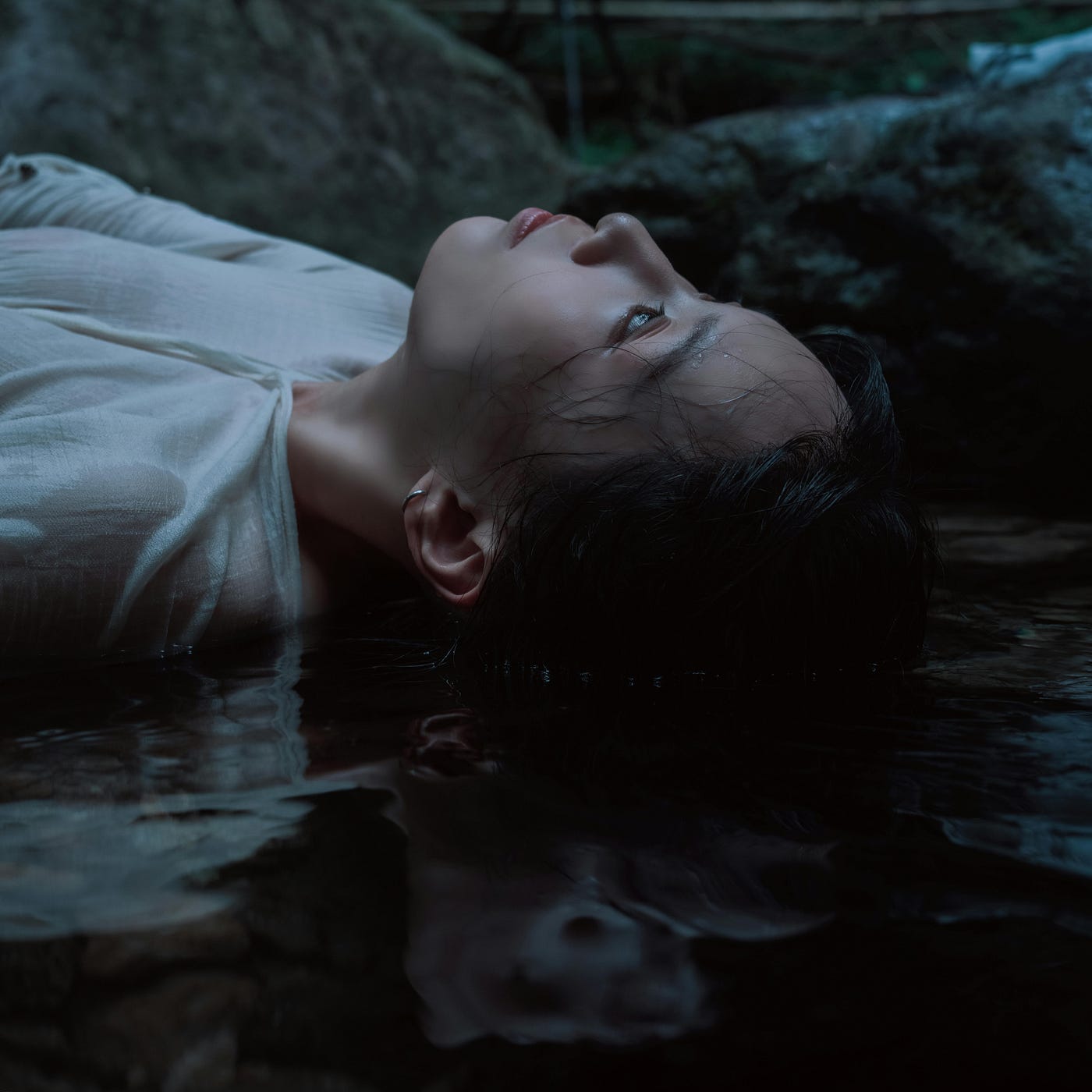
Photo by Ryan Snaadt on Unsplash
Every neurodivergent person I know has their own special sauce for getting totally depleted. And a lot of those I know, including myself, see the signs and choose to believe it won’t hit the same way this time, because reasons.
There’s the aching and the paining, of course. I am an expert at hiding this — which you shouldn’t do, btw. You’ll give yourself an autoimmune condition! I didn’t know that years ago, but hindsight is as hindsight does.
The brain fog: shit, where does one start? I have been stuck in the mental doldrums, frequently without any wind to push me toward finishing a task I started three days (okay, weeks) ago. My Doc files are full of half-finished or awaiting-revision stories that are all bursting with creativity (okay, just sitting there — ”bursting” is a bit much.)
The brain juice I do have is chuffed to go down some rabbit hole about medieval witch trials or talk movies with my sister; doing actual stuff, on the other hand, is beyond exhausting. If I’m really foggy, just show me a piece of paperwork I need to fill out and watch me melt directly into the floor.
WYKYK
I was lucky enough to be enrolled in the Pain Center’s chronic pain program at the Rehab Institute of Chicago (now the Shirley Ryan AbilityLab) in 2005 or thereabouts. I’d been diagnosed with Fibromyalgia, but not Hypermobility Spectrum Disorder yet. Ditto for Mixed Connective Tissue Disease.
I went to the part-time program, which I called Pain School. They had a full-time one too — a majority of the folks in the waiting room were military, so I assumed that was the program for vets returning from Afghanistan who needed all the healthcare. They had Pain Camp.
Every Wednesday, I’d spend five hours talking to all kinds of specialists. There was a psychologist, a GP, a nutritionist, someone who worked the little machine that showed you what your biofeedback could do (at one point, the guy had a sensor on my hand, and asked me to concentrate on it becoming warmer. “Did you see that? You just made it go up a whole degree!”)
There was also the nitty-gritty team, the how-you-get-through-the-day team: the Nurses. They had a whole hour and a half to talk about medications, breathing, and social time. They’d sit us down and tell us how we people, sitting there with our various conditions, were going to just…cope.
There was the first talk about medication. It opened my eyes to the universal experience of not wanting to take your pills.
“It just makes me so damn sleepy,” one middle-aged man said. One of them smiled in a way that was both practiced and genuine.
“No one wants to. Seriously. There are a few who do, but the vast majority are really adverse to it.”
The other one asked us individually how we felt about taking our meds. One by one, we all said some words amounting to I hate it, it’s yucky. Then she got to an older woman, toward the end.
“I’m so grateful! I kiss my pills every night before I take ’em and go to bed. They help.”
The nurse who asked said, “See? Everyone hates taking medication.” She stopped and looked at the older woman, kindly. “You’re our exception.”
That was a good teaching moment.
There was the nutritionist, doing that same kind of gentle nudging, allowing — almost insisting — that we were not going to be perfect. We just weren’t. Also very normal.
There was the afternoon when we made lists of stuff that made us happy, which was 23 karat gold. In the same session, we made lists of stuff that makes us laugh — laughing brings in so much oxygen and regulates your CNS, they told us. There’s debate about the oxygen thing, but laughter definitely gives your lungs a workout and increases those happy neurotransmitters, like serotonin and dopamine.
The movies of Mel Brooks were high on the funny list (obvi.)
These are fucking great tools, the foundation upon which to rest your whole life, with its woes and conundrums.
But that was 2007
Like everything, the wisdom of those sessions — the wholesome, important emphasis that stuff gets shitty but there are hacks, however insufficient you feel they are in the moment — faded.
I went through some exceptional trauma in the years since. I know those reading this did, too. And we all had the worst time not being together because of Covid.
And then it got even worse, because of the fascists gathering their collective small-dick energy to make the world suckier.
When you’re going through really shitty circumstances, you retreat into your own mental Fortress of Solitude. It’s got spikes of ice, and you’re far away from, you know, people. Because when you’re protecting yourself from even a little bit more terribleness, even if it’s just theoretical terribleness, people can give you The Ick.
The problem with that is that people are your medicine. When you feel shitty, the best thing you can do is take it.
Don’t make me, I don’t like them
You don’t want to. Being around people, laughing and listening, and all that gross interaction, is hard. Why?
Because of our neurodiverse brains, my friends.
If you’re around others, you fear that they’ll see:
*****you need medication daily — or at all.
****you cry for what society would call no reason.*
****you built your whole identity around being the helper but you can’t help; in fact you need *help, and it feels so wrong to ask for it that you just don’t.
*****you won’t shut up.
*****you won’t talk.
*****you want to watch Blazing Saddles with them, for the seventeenth time now, and you won’t get that you have to do laundry and sleep in your own bed and maybe interact with their own children.
****You, in fact, resent the hell *out of their children — no matter how hard you try to suffocate that while they’re around, you always make a sound of frustration when they mention pick-up times and piano recitals.
*****You need explanations for things that folks don’t think need explaining. Then you’ll need another explanation, because you forgot the first one.
*****You’re scared to be around people.
My gods, it’s exhausting to come up with reasons why being around a person is disastrous, to the point that you’d rather live behind ice spikes.
When I was a teen, rechargeable batteries were just coming out. My father was the kind of nerd who wanted to not throw so much stuff away, so he bought them as soon as they were available at the local K Mart (Basically the primordial Walmart of the 80’s.) These things were fantastic for maybe three charges: you were chuffed that you’d never lose power in the middle of your mix tape again, huzzah!
…Aaand of course, after those three successful top-ups, the batteries would lose their juice earlier and earlier. You’d leave them plugged into the wall socket in their clunky charging apparatus overnight, and the best they could get was half-charged.
That’s exactly where I am now.
I’m not sure, because you can never be sure when you’re in the soup, but the exhaustion and brain fog I’m walking around with is worse right now. Putting aside the constant shit-covered clown car that keeps spitting out shit-covered clowns who somehow then run the country, there’s what I want and what I can’t have.
How does it feel to want?
I’m smack in the middle of writing my first novel, and lordy, it’s a mess. It’s rambling and weird and barely held together by chapter summaries I wrote a year and a half ago that are more and more irrelevant. I’m not saying it’s valueless, not at all; I’m just giving my honest take on where I am with it.
There are other projects, like posting stuff on Medium (hi!) My MFA classes start again in September, and there’s another series of stories, and reading essays — plus binging Hulu shows, for what I’ll call “research.”
I’m slightly nauseous whenever I think about how much I don’t submit any of it.
And for me, the worst thing about the fatigue and mushy brain isn’t the smeary cabinet doors and warrens of dustbunnies under everything — it’s the work I want to do, the projects that I value.
Value is where things get sticky, in my experience.
We value ourselves and our lives by what we accomplish. No reason that’s not true for us neurodivergent folks; in fact, it might be stronger in us, just because we’re more intense about anything and everything.
So the not-doing is akin to being, as I was, the worst softball player on the team: you’re sent deep into left field to catch what will be the least amount of strays, and you almost never bat.
Which made sense: I sucked at hitting, also catching. Running wasn’t a strength, either. The best I remember doing was being the league’s most fashionable outfielder by wearing Scholl’s wood-bottomed slides during games.
I think the coach let me wear them as a consolation prize for being the worst player out there.
I mostly didn’t care. Re-reading The Stand and Flowers in the Attic while sprawled on some soft furniture was much more my thing. But being there, in left field or on the bench while everyone hit the ball, made me feel teeny. You cannot help but compare yourself to the cool Future Lesbians of Northwestern New Jersey (aside: not a real club, but it should be) and despair.
It reminds you how much you suck.
The conditions for the dreaded comparing and despairing were real.
This isn’t eighth grade anymore (and thank the gods for that)
All of this slow-motion churn, not to mention just being alive, compels me to take nice, hard looks at how I think of the world. You know, the way we do that creates and sustains the “oh my fucking hell, I am bad/stupid/feckless/blind because I didn’t figure out____ when I was thirteen” ethos that was woven into my self-image.
There’s an upside, though. It takes time and space; still, there are real advantages to being aware of the line of thinking that decided I’m terminally dumb for not realizing I shouldn’t ever wear buttercup yellow in high school. That self-flagellation follows your journey, like toilet paper stuck to your shoe — I began putting that kind of label on everything I tried and failed at.
There’s even a sting in those things I tried that succeeded, but not in the way I needed.
If you can breathe a little space into your psyche — just enough to unstick yourself from your own insecurities for ten minutes — you can look at your future in a way that embraces the pain and the burnout and the resentment for that burnout.
I’ve been unable to get to the keyboard to write; when I thought about it, I acknowledged that I always feel that way. So maybe…it’s not entirely true?
I could see that what I did write, amidst those not-enough times over this recent patch of “oh god what now,” was okay. Not perfect, certainly; not heinous, either. There are good bits to possibly excise and throw into another Doc folder labeled Good Bits.
If I continue breathing, I can even get to the place where it all comes from: I love writing. I love performing, something I do less and less of, but still do. I looove hearing someone react to my art in a way that’s positive, or insightful, or gently critical — and even, ideally, all of those at once.
If I could, I’d keep that devotion in a baggie, ready to be slapped on a mirrored tray and chopped into snortable lines for when I’m not feeling very creative.
The trick is to remember the tools, those Nurse hacks.
Do it in tiny steps: make sure you get a bit of time with others, in whatever form works for you (hanging out at the library counts;) eat stuff that makes your stomach happy long-term (not only ice-cream, is what I’m saying;) compile your personal list of the funniest movies and invite the person you like best to watch with you.
All of those little things add up. Put sticky notes on those smeary cabinet doors that reaffirm this. The nurses knew that, and were generous enough to share — bless them a thousand million times for that. They — the nurses — always know what they’re about.
There’s a way to be the maker who accomplishes stuff despite the world making you so tired you can’t get out of bed for three days, until your closest tells you that you’re stinky and it’s time to get in the shower, ffs.
You could do it perfectly and still won’t get back what you wanted
This is a brand-new mantra of mine. When I can pull even further back, so that I can compare my reality with the lived reality of every other human ever, I see (barely, but it’s there) a final, defining truth. My defining truth.
I could be full of energy and still not hit any balls. I could be the clearest thinker ever and still get all kinds of shit wrong, including my own worldview. Happens all the time, to NDs and neurotypicals.
Given that, and its finality, the question, to me, becomes: why not try? Why not write my heart out, even if all I get out of a fifteen-minute session (best I can do sometimes) is one scant paragraph?
I can create crappy — or worse, mediocre — writing; so what?
Isn’t the whole point the creating in the first place? Aren’t we here to sink into the kind of dreaming brain that comes up with all kinds of stories about lizard-jellyfish who run undersea universities? Or whatever story tendril you want to puff into coherence?
We can access that even in the midst of burnout. Maybe it’ll take some time to rest, time meaning weeks or months. Eventually, though, you’ll open your eyes and realize you have the energy to try a haiku. It could be terrible, sure, but that’s true even on the best days. More importantly, it could be decent, even good.
And it will scratch that part of your brain that’s insisting you make a thing — it’ll feel so, so satisfying.
All that tedious revising, all the failed attempts to launch, all the ways you hear how you got a passage disturbingly wrong when a friend reads it aloud in your writer’s group: Isn’t that what we’re here for?
Burnout is one thing, and it’s a humungous one. It will carry you around the house with your tail in its mouth, as if it’s the barn cat and you’re the hapless house mouse the cat doesn’t quite want to kill yet. It’s so hard. It’s punishing.
There are truths that are weightier than burnout, though, and they’re in the Nurse’s wisdom. Laugh, eat broccoli, set your alarm for eight hours of sleep — those are great tips.
Try to remember: you’re doing what you do, be it as a hobby or a dalliance or your full-chested Real Love, for the delicious challenge.
Try to remember, in the middle of all that pain and all those stupid brain-based parlor tricks, that creating something will be delicious.
XO
메타데이터
- post_id
- 5a55d68d279d
- slug
- neurodivergent-and-tired-as-hell-5a55d68d279d
- url
- https://medium.com/the-unexpected-autistic-life/neurodivergent-and-tired-as-hell-5a55d68d279d
- canonical_url
- https://medium.com/the-unexpected-autistic-life/neurodivergent-and-tired-as-hell-5a55d68d279d
- author_url
- https://medium.com/@jenniferbiddle3
- status
- ok
- fetched_at
- 2026-07-10 07:28:19