From China 2020 to USA 2026: The Evolution of India’s Self-Reliance Narrative
In 2020, the word on every Indian’s lips was Aatmanirbharta (self-reliance). Triggered by deadly military clashes in the Galwan Valley and…
From China 2020 to USA 2026: The Evolution of India’s Self-Reliance Narrative
In 2020, the word on every Indian’s lips was Aatmanirbharta (self-reliance). Triggered by deadly military clashes in the Galwan Valley and a dangerous economic over-dependence on Beijing, New Delhi launched a massive campaign to decouple from China. Chinese apps were banned overnight, supply chains were re-routed, and a fierce economic nationalism swept the country. The enemy of India’s economic sovereignty was clear, singular, and geographic.
Flash forward to June 2026, and the landscape of global trade has shifted dramatically. Today, a new, unexpected friction is redefining the Aatmanirbharta narrative.
As India navigates a highly aggressive, multi-billion-dollar trade negotiation with the United States, the Indian public is realizing a harsh truth: the threat to India’s economic autonomy doesn’t just come from its hostile neighbors — it also comes from its unpredictable allies.
The ongoing standoff with the Trump administration is forcing a massive evolution in the public mindset, transforming Aatmanirbharta from a defensive shield against China into a proud declaration of strategic immunity against Washington.
The “Carrot and Stick” Standoff
To understand why public sentiment is shifting, one has to look at the chaotic nature of the current India–US trade talks.
On one hand, the U.S. is offering a massive “carrot”: the framework for a bilateral trade agreement. It promises to slash reciprocal tariffs on key Indian exports like generic pharmaceuticals and textiles in exchange for India lowering its barriers to American goods, according to the official White House Briefing, and committing to a staggering $500 billion purchase window over five years.
On the other hand, Washington is aggressively swinging a heavy “stick.” The U.S. Trade Representative (USTR) recently launched an intrusive Section 301 investigation, proposing a sudden 12.5% tariff on Indian goods over allegations regarding forced labour and industrial overcapacity. Simultaneously, President Trump has publicly claimed that the deal requires India to completely halt its imports of discounted Russian crude oil — a demand that New Delhi has conspicuously met with silence.
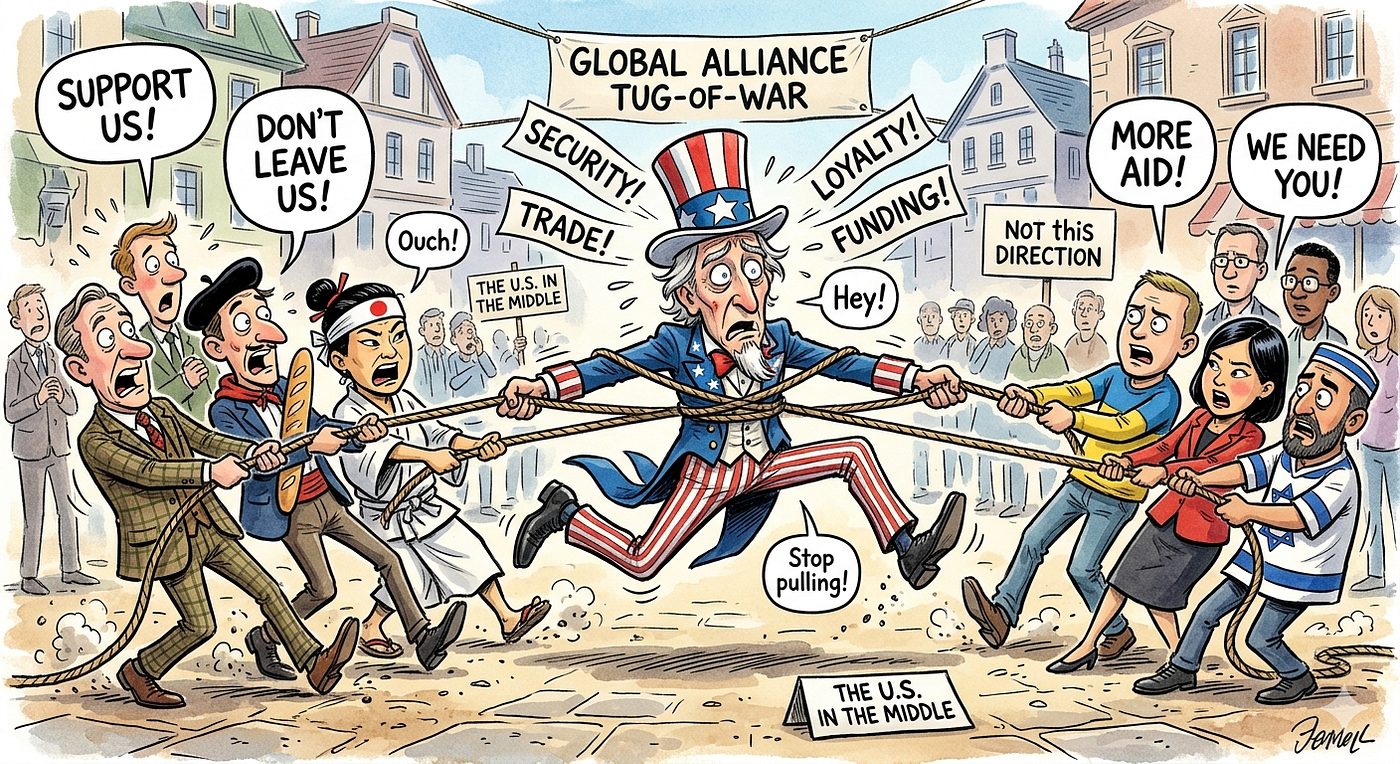
This aggressive transactional diplomacy has fundamentally altered how the Indian domestic audience views the West. As noted in the ongoing analysis by The Print, the relationship is no longer being seen as a partnership of “shared democratic values,” but as an asymmetrical power struggle where Washington expects complete capitulation.

Fig 1. Evolution of India’s self reliance
The Three Fronts of the New Aatmanirbharta
As the critical July 6 rebuttal deadline and July 7 public hearings approach, the Indian public is actively backing a defensive stance against U.S. coercion across three main pillars:
1. Energy Sovereignty
Discounted Russian crude oil has been the quiet engine keeping the Indian economy insulated from global fuel inflation over the last few years. When the Trump administration issues an ultimatum demanding India cut off Moscow, regular citizens do not see a geopolitical chess move; they see a direct threat to their household budgets and fuel prices. The refusal to bow to this pressure is being celebrated domestically not as “pro-Russia,” but as a fierce act of energy independence.
2. Defending the Rural Economy
American negotiators are aggressively pushing for zero-tariff access to India’s massive agricultural market, specifically targeting sectors like soybean oil, dairy, and fruits. But the memory of the historic 2020–21 farm law protests is still fresh in the Indian psyche. Any attempt by the government to allow American corporate farming giants to dump cheap products into the country will trigger massive domestic political backlash. The call to protect the indigenous food supply chain is rapidly merging into the anti-tariff narrative.
3. Rejecting Western “Supervision”
The USTR’s decision to group India with authoritarian regimes under a forced labour probe has been taken as a deep national insult. Prominent independent journalists and trade think tanks, such as the Global Trade Research Initiative (GTRI), have pointed out the hypocrisy of using human rights tags as transactional leverage to extract market concessions. The domestic public consensus is clear: India will improve its industrial and labour standards on its own terms, not under the threat of a 12.5% American penalty. As reported by The Hindu, the Ministry of Commerce is actively engaging with these probes on a parallel track, completely rejecting Western “supervision” as an insult to national dignity.
The Superpower Interdependence
There is a common misconception that because the United States is a global superpower, it holds all the cards and simply “won’t care” if negotiations stall. In reality, Washington stands to lose just as much as New Delhi.
If India decides that U.S. pressure is too invasive and walks away — or intentionally stretches the negotiations past July — the Trump administration loses immediate zero-tariff access to the fastest-growing consumer market in the world. Furthermore, it cripples America’s broader “friend-shoring” strategy. The U.S. desperately needs India to succeed as an alternative global manufacturing hub to help it decouple from China.
By pushing India too hard, Washington risks breaking the very economic alliance it needs to counter Beijing.
The Third-Party Beneficiaries: Who Wins When the US and India Clash?
While Washington and New Delhi engage in a high-stakes standoff, the rest of the world isn’t just watching — they are positioning themselves to profit. If the U.S. continues to push its “America First” agenda aggressively, it risks inadvertently handing massive economic and geopolitical victories to China, Russia, and the European Union.
1. Russia: Lock-In of the Eurasian Energy Axis
For Moscow, Western pressure on New Delhi is the ultimate gift. The more the U.S. attempts to force India off discounted Russian crude, the more it pushes India to assert its strategic autonomy. Russian President Vladimir Putin capitalized on this exact tension, publicly praising Prime Minister Modi’s independent course and stating that India will resist such external efforts. If the U.S. pushes a hard line, Russia successfully locks India into a long-term, non-dollar energy partnership, pushing bilateral trade targets toward a historic $100 billion.
2. The European Union: Stealing the “Friend-Shoring” Crown
While the U.S. threatens India with Section 301 tariffs, Europe is quietly swooping in to fill the vacancy as India’s premier Western economic ally. Having recently concluded negotiations on the landmark India–European Union Free Trade Agreement, Brussels has positioned itself beautifully. By slashing or eliminating duties on over 96% of EU goods, European firms stand to save over €4 billion annually. If American high-pressure tactics alienate New Delhi, European companies will willingly absorb the tech, aerospace, and luxury market opportunities that the U.S. leaves behind.
3. China: Weaponizing India’s Strategic Doubt
Beijing wins heavily on a narrative level. China has long argued that Washington is an unreliable, transactional partner that uses smaller nations as pawns to fight its battles. When the U.S. turns its tariff levers against a key ally like India, it validates Beijing’s rhetoric. Chinese officials have already used international forums to lambast American tariff wars and power politics, positioning China as a defender of multilateral global trade. Furthermore, any trade disruption that weakens India’s domestic factories risks dissolving New Delhi’s newly won cost advantages, driving global manufacturing hubs straight back into China’s sophisticated ecosystems.
A New National Consensus
In 2020, Aatmanirbharta was born out of anger against a hostile neighbor. In 2026, it is maturing into a calculated strategy to maintain autonomy from an overbearing ally.
The Indian electorate and business community are sending a clear message to the government: do not rush into a “historic” deal if the fine print compromises national sovereignty. True self-reliance means India must build an economy resilient enough to say “No” to Washington just as firmly as it says “No” to Beijing.
What are your thoughts?
How do you think the Indian government should handle the upcoming July deadlines? Should New Delhi compromise for long-term market access, or stretch the talks to protect its domestic sectors? Let’s discuss in the comments below.
If you found this analysis insightful, please click the Clap button and Follow for more deep-dives into global trade and geopolitics.
메타데이터
- post_id
- 5aa4e421d162
- slug
- from-china-2020-to-usa-2026-the-evolution-of-indias-self-reliance-narrative-5aa4e421d162
- url
- https://medium.com/@shjain6670/from-china-2020-to-usa-2026-the-evolution-of-indias-self-reliance-narrative-5aa4e421d162
- canonical_url
- https://medium.com/@shjain6670/from-china-2020-to-usa-2026-the-evolution-of-indias-self-reliance-narrative-5aa4e421d162
- author_url
- https://medium.com/@shjain6670
- status
- ok
- fetched_at
- 2026-06-20 20:29:01