Promoting early development in healthy buildings research
As part of their activities in 2025, the Healthy Buildings Network have chosen to fund four diverse and novel research projects through…
Promoting early development in healthy buildings research
As part of their activities in 2025, the Healthy Buildings Network have chosen to fund four diverse and novel research projects through their pump-priming scheme. The projects, exploring a range of areas from health in older people during extreme heat events, to indoor air quality in passive houses, are designed to help stimulate research ideas from the earliest stage.
This will be the first round of pump priming funds, with more rounds expected to encourage idea development projects and collaboration initiatives.
The list of principal investigators (PIs) and projects for this round is:
- Dr Silvia Caggiari (Faculty of Biological Sciences): THERMOAGE — The effects of extreme indoor temperature on risk of falling in older people
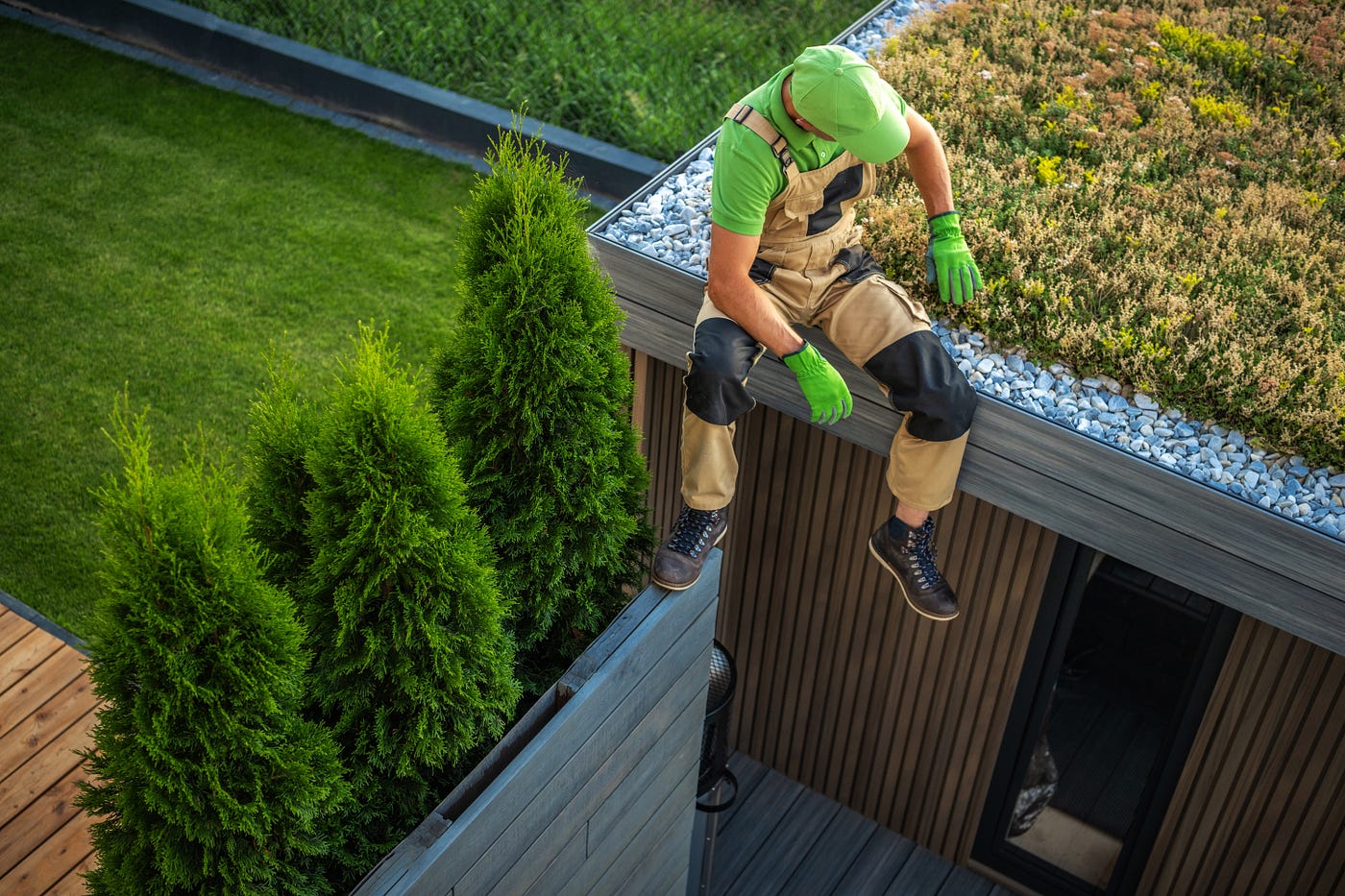
- Prof Gleb Yakubov (School of Food Science and Nutrition): Living in clover with a clover living roof
- Prof Alison Tomlin (School of Chemical and Process Engineering): Exploring relationships between indoor air quality and outdoor air quality and occupancy practices within passive houses.
- Dr Alexa Ruppertsberg (Research and Innovation Service): “We shape our buildings, thereafter they shape us”: Towards Evidence-Based, Human-Centred Housing Design
Healthy Buildings Network co-lead Dr Martin Lopez Garcia said “Reviewing the pump-priming applications was inspiring. The range of disciplines — from biomechanics to green roofing — shows just how vibrant healthy-buildings research has become at Leeds.
“I’m thrilled to congratulate Dr Caggiari, Prof Yakubov, Prof Tomlin and Dr Ruppertsberg on being selected; their ideas exemplify the innovation, collaboration and real-world impact at the heart of the Healthy Buildings Network.”
Speaking on his project, Dr Glen Yakubov said “The HBN Pump-Priming Programme will support the Clover Living Roof Initiative — a collaboration between the Faculties of Environment and Biological Sciences and Heugh Farm, an environmental farm in Northumberland.
“This support will enable our team to conduct a comprehensive analysis of the technical feasibility of clover-based turf for living roofs, an area we are truly passionate about in the context of 21st-century urban design and Healthy Buildings.”
Dr Silvia Caggiari, Senior Research Fellow in Biomechanics, outlines the THERMOAGE project: “The team will investigate the effects of reduced and elevated indoor temperature on posture, balance control, and muscle function in older adults, with the view of connecting research with public health, environment and engineering to address a socio-economic issue around healthy aging and homes
“THERMOAGE has established a new interdisciplinary collaboration between the Motor Control Research Group, in the School of Biomedical Sciences and led by Prof Sarah Astill, the Dynamic Thermal Comfort Research, in the School of Engineering and led by Dr Sally Shahzad, and a new collaboration across institutions, between University of Leeds and Leeds Beckett University’s Dr David Lunn.”
Dr Alison Tomlin also summarised their project: “The project will allow us to begin to explore the links between outdoor air quality and occupancy practices on indoor air pollution within passive houses. It will have a particular focus on pollutants with strong links to health outcomes, such as ultra-fine particles and nitrogen dioxide.
“We would like to explore whether ventilation strategies such Mechanical Ventilation with Heat Recovery can project occupants from ingress of external pollutant sources. The project will also research protocols leading to the development bids for a larger project investigating such links within a wider range of passive and retro-fitted houses.”
Dr Alexa Ruppertsberg said: “This project sets out to explore how the design of our homes shapes not just how we live, but how we feel, function, and flourish. Drawing inspiration from Churchill’s insight that ‘we shape our buildings and thereafter they shape us,’ we aim to move beyond compliance-led design and toward a housing model that is informed by the real, lived experiences of residents — where wellbeing, health, and dignity are placed at the heart of every blueprint. With this project, I bring together my background in perception and neuroscience and my skills in engagement to work on a topic I care about deeply.
“We hope to create a new conversation between developers, architects, policymakers, and residents — one that values post-occupancy insights and places human needs at the core of housing design. By developing a shared, evidence-informed approach, we want to demonstrate how intentional design and feedback can lead to homes that are not only sustainable and efficient, but truly nurturing and inclusive spaces for the communities they serve. This project offers a unique opportunity to merge science, engagement, and lived experience to shape more humane environments.”
Sparking innovation
The ideas selected for this pump-prime fund were deemed to align with the Healthy Buildings Network values of collaboration, innovation, sustainability, impact and equity, diversity, inclusion and accessibility.
Healthy Buildings Network co-lead Dr Marco-Felipe King said: “These initiatives speak directly to our idea of encouraging more people from all disciplines and perspectives to explore the concept of healthy indoor spaces. By supporting early-stage ideas, we hope to spark innovative solutions that benefit both physical and mental.
Healthy Buildings Network co-lead Dr Irene Mussio said: “The HBNLeeds pump-priming initiative is a fantastic opportunity to spark bold, interdisciplinary research that tackles real-world challenges.
“By supporting these innovative projects — from climate-resilient aging to sustainable urban design — we’re not just advancing knowledge but shaping healthier, more equitable spaces for future generations. It is exciting to see such creativity and collaboration at the heart of the Healthy Buildings Network, the University of Leeds and the broader community.”
The Healthy Buildings Network is an interdisciplinary research network that brings together academics, policymakers, and industry professionals to improve built environments for both human and planetary health. It focuses on transforming indoor spaces to optimize the physical, mental, and social well-being of occupants. The network fosters collaboration across disciplines and sectors, driving innovation and practical solutions for healthier buildings.
You can learn more about the Healthy Buildings Network on our website and linkedin. You can also sign up here to receive updates.
The Healthy Buildings Network is one of three challenge theme networks supported by Horizons Institute at the University of Leeds. Find out more about our research networks on our website.
메타데이터
- post_id
- 5ab47da17f03
- slug
- promoting-early-development-in-healthy-buildings-research-5ab47da17f03
- url
- https://medium.com/horizons-institute/promoting-early-development-in-healthy-buildings-research-5ab47da17f03
- canonical_url
- https://medium.com/horizons-institute/promoting-early-development-in-healthy-buildings-research-5ab47da17f03
- author_url
- https://medium.com/@HorizonsLeeds
- status
- ok
- fetched_at
- 2026-07-13 08:15:53