Why Do We Believe Things Exist on Their Own?
From matter to the illusion of possession, from object-logic to relational seeing
Why Do We Believe Things Exist on Their Own?
From matter to the illusion of possession, from object-logic to relational seeing
The everyday mind sees objects. I pick up my phone, put on my clothes, wash the mug from which I have just drunk my coffee. Things surround us: we use them, possess them, lose them, throw them away, or keep them.
This seems natural. This is how our mind has learned to handle the world: we see separate things that have names, places, functions, and boundaries. This is why we tend to think that matter, once arranged into form, counts as an independent, separate object. This is human object-logic.
But just because our objects appear to be stable entities, do they truly exist on their own?

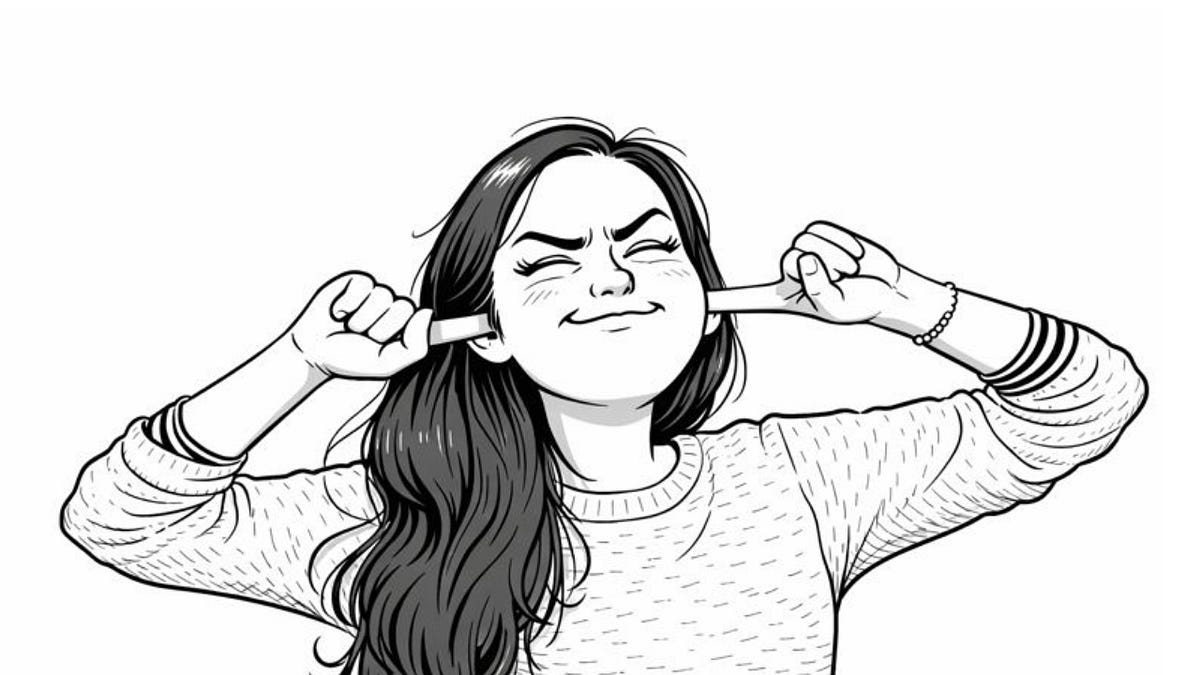
Illustration generated with AI
The boundary of matter
What we perceive in the external world as a separate thing, as an object, is always experienced through our body and biological senses. More abstractly: we try to understand form through form. We examine matter within the possibilities of matter, and often try to derive the very structure of reality from it.
And yet it may be that our bodily capacity for perception — and the instruments built upon it — are primarily suited to detecting the properties of matter’s formal appearance: chemical changes, color, weight, resistance, movement, and other measurable or perceptible characteristics.
Every object has a boundary. But what if this boundary is not proof of independence, but the opposite: a sign that it can be affected, that it cannot resist the forces acting upon it? If my mug and my hand had no boundaries, I could not bring the mug and my hand into relation with each other. I could neither drink my coffee nor wash the mug afterward.
In this sense, it is difficult to speak of matter that stands on its own, because what we perceive as matter always appears in some form, structure, and ultimately within boundaries. Under similar conditions, a given kind of matter always behaves in the same way, according to the laws of nature, for example. Water does not decide that today it will refuse to freeze just below 0°C, but perhaps tomorrow it will. Every scientific experiment is based on such regularities.
Both my mug and my hand are material systems appearing in a certain structure, in a certain form. On this level, both are bound by structural regularities: both have boundaries, organization, and connections that break down over time.
It seems that form — as boundary — is what makes it possible to perceive material systems as something that can be understood through relational states. Matter is the stabilization of certain relational states, appearing as form. In other words, matter is a pattern, a configuration arising from different relational states, and in every case it becomes perceptible through form.
We believe that things are self-standing entities because we interpret form as independence. Yet perhaps form is not an inner, self-contained property of things, but the temporary determination of a relational system: a boundary drawn for us by different relational states.
It is important to note that form is a broader concept than matter. A thought has form. So does a relationship, a melody, a memory, or a social role. Form is therefore not merely shape, but arrangement, pattern: the way something becomes recognizable and relatable.
The boundary of a mug is drawn by its surface. The boundary of a memory is how far it affects me. The boundary of a thought is the kind of relations it can create within me. Mental forms have no tangible edges, yet they still have extension: a sphere of influence.
The Boundless “I Am”
It seems, then, that everything that has form and boundary is only apparently a self-standing entity.
But there is another factor in this mug story that behaves differently from matter. Something that is not an object-like form, and yet is able to change forms: it participates in shaping the relation, carries an orientation, and enters into contact with the mug through the body. This is my presence, the “I Am.”
The mug decides nothing. My hand does not decide independently either; it is a refined biological form that carries out my intention. The role of the brain and nervous system is, of course, more complex: our decisions naturally arise in mutual dependence with brain and nervous-system states. But this does not mean that the “I Am” can be fully derived from the material structure of the brain. The brain is rather an interface: the biological medium through which the orientation of presence becomes bodily function and action.
Some may find this a radical claim, but the strongest argument remains that material organization, in itself, does not confront its own state and cannot change it by relating it back to itself. The mug does not know what is happening around it; it merely undergoes change. Therefore, whatever shapes, carries, and rearranges forms cannot be fully described from the passive structure of form alone.
The “I Am” first perceives form not as a conceptual object, but as a relational situation. Meanings, names, stories, and identifications are later operations of the mind.
This is why the “I Am” is not merely a witness or an outside observer. If reality is relational in nature, then presence itself manifests through connection. It does not observe forms from the outside, but participates in relation with them: it perceives, shapes, and responds.
The “I Am” cannot be identified with any form. My body is not me either, even if it belongs to me.
What Is the Problem with Believing Things Stand on Their Own?
It is very simple: we give power to forms.
I become attached to my mug because it carries a memory, because it belongs to a habit of mine, because it is beautiful. I have given it power. But if the mug is only a stable relational state within a collective relational system, then I can only give it power by taking something away from my own inner freedom. I begin to adapt myself to it, and by doing so I draw a boundary around myself: I become the one who is defined by the mug.
The same thing happens with mental forms. The more we think of ourselves through our thoughts, memories, roles, and stories, the more we narrow the freedom of the “I Am.” Presence then becomes attached to a particular form: a story, a wound, a desire, a social role, or an image we have formed of ourselves.
At that point, form no longer merely makes something recognizable; it becomes a point of identification. As if we were saying: this is who I am. This is my thought, my memory, my past, my object, my role. And the more strongly we attach ourselves to these forms, the less we sense the deeper presence that could relate to them freely.
The apparent independence of things prepares the ground for the illusion of possession.
Form is our tool, not our possession.
If I regard form as a self-standing entity, I can easily begin to believe that I can possess it.
In a legal sense, of course, we can possess things. We can have a house, a car, a phone, clothes. These relations of possession are real on the level of social life. But in the deeper structure of reality, we do not possess the object, the memory, or the role itself. We maintain a relation to it. And if we do not recognize this relation as a relation, form slowly begins to exercise power over us.
Then form no longer simply connects to us; it draws a boundary around us.
It is no coincidence that the letting go of the desire to possess has held a central place in many religious and spiritual traditions. The Buddha spoke of the cessation of attachment, while Jesus showed the same truth through giving and through an inner freedom from possession. Modern spiritual literature, too, often expresses this experience in the language of letting go.
On the surface, these teachings may seem like moral or practical guidance for life, but at a deeper level they also have a serious ontological meaning. If the ground of reality is relational, then form is not a self-standing essence, but the visible pattern of a relational state. In this sense, possession is an illusion at a deeper level: when I cling to a form, I am actually hardening my relation to it. And this obscures the self-reflexive orientation of the “I Am” — my ability to perceive and shape my relations freely.
In Summary
Interpreting objects as self-standing entities is not merely a psychological issue. At a deeper level, it means confusing form with the ground of being. We tend to imagine the ultimate nature of reality as some kind of substance, as if at the deepest level of reality there were a self-standing “something” from which the material world originates.
But if things are actually forms drawn out of relational states, then perhaps the ground of reality is the relational possibility of coming-into-being itself. In this system, the “I Am” is the active relational orientation: it is able to perceive and shape relations, and from them arrange an inner and outer world.
This essay has not argued for the rejection of form or matter. Form can be loved; perhaps it should be loved — just as I love my mug. But love is not the same as attachment or possession. To love a form means being able to relate to it freely, without having to define myself through it.
메타데이터
- post_id
- 5ab4ce0e495c
- slug
- why-do-we-believe-things-exist-on-their-own-5ab4ce0e495c
- url
- https://medium.com/signal-self-the-inner-loop/why-do-we-believe-things-exist-on-their-own-5ab4ce0e495c
- canonical_url
- https://medium.com/signal-self-the-inner-loop/why-do-we-believe-things-exist-on-their-own-5ab4ce0e495c
- author_url
- https://medium.com/@kiss.melinda
- status
- ok
- fetched_at
- 2026-06-09 14:34:10