A New Pet Peeve
We have seen this particular headline phrase far too often lately: …rewrites history… Maybe those types of headlines are written to get…
A New Pet Peeve
We have seen this particular headline phrase far too often lately: …rewrites history… Maybe those types of headlines are written to get clicks and attention but in the end, they just show the ignorance of the writers who write those types of articles.
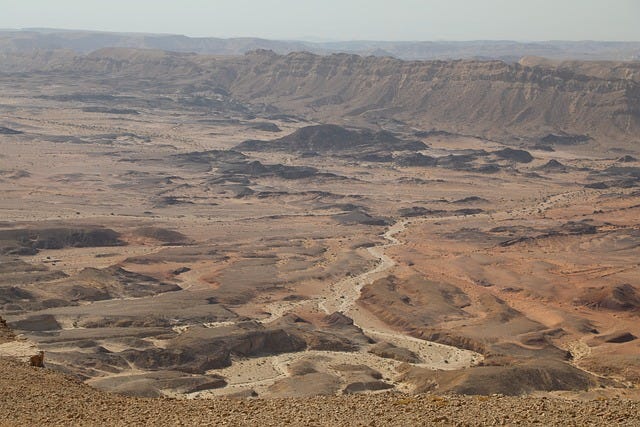
One such article is- Morocco’s hidden history: Archaeology, DNA and carbon dating rewrite the story of the ancient world — Much to the chagrin of those authors, their information does not rewrite the history of the ancient world.
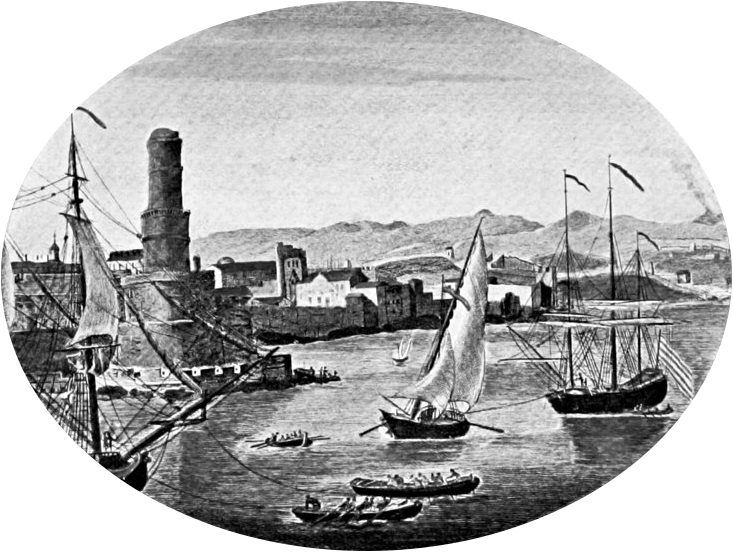
For decades, stories about the ancient Mediterranean have centered on the grand cultures of Greece, Rome, Phoenicia and Egypt. Northwest Africa seldom enters the picture before the arrival of Phoenician traders on the Moroccan coast about 3,000 years ago.
But archaeology is now revealing a different story.
Long before the first Phoenician ships (from today’s Middle East) sailed the western Mediterranean (between today’s North Africa and southern Europe), communities in what is now Morocco were farming and herding animals. They were also crossing the Strait of Gibraltar and participating in long-distance exchanges.
One reason we say they are not rewriting history is that these archaeologists do not know if they are correct in their interpretations of the excavated remains. Their ideas are based on accepted assumptions, and without a time machine to go back in time, there is no real verification information available.
One of those assumptions is that the lower in the ground the discovery, the earlier the remains. But that is not 100% foolproof. There are many reasons why something is found deeper than another artifact, and it has nothing to do with chronological dating.
We cannot say that each of the reasons we are thinking of applies to each discovery, as some items are earlier than others when found deeper in the dirt. However, dating is subjective and often leads to a misunderstanding of when something was made, used, and discarded.
Another reason we do not like the phrase, ‘rewrites history’ or similar phrases, is the fact that modern archaeologists draw their conclusions about the past on fragmentary evidence.
For example, some artifacts only appear once in any excavation, and there are thousands of excavations taking place all over the world. In all that work, only one artifact was recovered- the Antikythera Mechanism, the Phaistos Disk, the silver and Dead Sea Scrolls, and so on.
It is hard to construct a history of the ancient world when one does not have access to all the records and manufactured artifacts as well as all the personal writings of different inhabitants.
Even ancient writers do not have their complete works recovered by modern artifacts. One example is Manethos whos work survives by being quoted by other ancient writers.
Thus, one cannot say they are rewriting history when new discoveries appear in an archaeological dig. They may be adding to the history that is known or filling in gaps, but rewriting is not an option.
Rewriting would occur, for example, if an ancient document were uncovered that says Julius Caesar was not killed by his Senators but lived a full life. And its content was verified to be a true account of Caesar’s life.
Just finding different discoveries that date earlier than an accepted time frame does not rewrite history. Those discoveries have to be verified as true, and the interpretations must also be proven accurate and true.
Over the past decade, I’ve worked on archaeology projects across Morocco. We’ve been investigating the origins of farming, long-distance exchange and the emergence of complex societies there. In my most recent study, I brought together archaeological evidence, radiocarbon dates and genetic data spanning nearly three millennia.
And as we have said in other articles, one’s view of history and the discoveries influence what one describes as rewriting history. In this case, these archaeologists have a linear view of history, an uninterrupted chronology that has never been altered by any catastrophes or other events.
This linear view of history leads archaeologists to assume something that may not be true. Which is why we often state that ‘verification’ is needed or can’t be done. All we have is the opinion of that archaeologist, which is not objective nor handling history very well.
The study reveals that between roughly 3800 and 500 BCE-a period that saw the construction of Stonehenge, the flourishing of New Kingdom Egypt and the rise of Phoenician maritime trade-Northwest Africa was not a marginal frontier. It was a crossroads linking the Mediterranean, Atlantic and Saharan worlds.
This is one of those assumptions archaeologists use to ‘date’ or influence their conclusions about their discoveries.. Stonehenge was built long before 3800 BC, but the other two examples are within that timeline.
It may be possible that Northwest Africa was as described but maybe they are looking at remains that were a part of the interrupted civilization by the global biblical flood.
The archaeologists cannot make that distinction because they do not believe that catastrophe took place. Thus, archaeologists are drawing faulty conclusions because they are not using all the available data that applies to historical research.
They will exclude the flood data based on the fact that they use their unbelief to declare it never took place, and not on real evidence. If they accepted the interruption and factored it into their work, then they would have something solid and real to work with.
They may even be able to discern the timeline better and get a better view of what took place when. With their linear view, all they have to work with are assumptions. The archaeologists cannot make proper timeline decisions because they are not working with the truth.
This has important implications for how we understand Africa’s past. For too long, interpretations of the continent’s history have underestimated the complexity and dynamism of its societies. By bringing Northwest Africa back into the picture, archaeology is helping to correct that imbalance and reveal a richer, more interconnected reality.
Sadly, that is not totally true. While they may bring that region back into the archaeological picture, the claims they make about Northwest Africa may not be credited to the right civilization or society.
Again, they cannot verify their conclusions, which are not drawn from the evidence discovered but use the evidence as a springboard to create a fantasy past.
Farming was present in Northwest Africa from at least 5400 BC, during the Neolithic period, when agriculture was spreading across much of the western Mediterranean.
This assumption is a linear historical view that does not do the past justice, nor does it correctly inform the public. Agriculture wasn’t ‘spreading across…’ Agriculture was well known among all the people from the Babel Diaspora.
They brought their Babel agriculture and other knowledge with them as they traveled to their new homelands. When the time was right, they started to plant crops and move on to new achievements.
We are not going to go through the whole article as our point has been made. Archaeologists are only rewriting their own and other archaeologists’ ideas of the past. They are not rewriting actual history, as often they do not know actual history.
They only know the accepted evolutionary history, which does not teach the truth. or they accept other archaeologists’ idea of the past instead of going out on a limb and presenting the truth.
Originally published at http://theoarch.wordpress.com on June 28, 2026.
메타데이터
- post_id
- 5aed13ea3d1f
- slug
- a-new-pet-peeve-5aed13ea3d1f
- url
- https://medium.com/@archie55/a-new-pet-peeve-5aed13ea3d1f
- canonical_url
- https://medium.com/@archie55/a-new-pet-peeve-5aed13ea3d1f
- author_url
- https://medium.com/@archie55
- status
- ok
- fetched_at
- 2026-07-09 15:12:33