Awakening: On The Trail of Universal Becoming
Curiosity, imagination and the hidden architecture of consciousness
Awakening: On The Trail of Universal Becoming
Curiosity, imagination and the hidden architecture of consciousness

At the heart of consciousness resides a state of awakened presence.
And to inhabit this state is to discover that the mind arrives already equipped with three native capacities:
-
The capacity to perceive: to become aware that something exists, and that we exist in relation to it;
-
The capacity to relate: to recognise what is perceived and feel into its significance;
-
The capacity to attribute meaning: to interpret experience and, in doing so, shape the narrative through which life is lived and made recognisable.
Together, these form the living architecture of consciousness.
If these three functions of the mind are what define the core of awakened presence, a question naturally lingers, “What inspires consciousness to awaken in the first place?” From whence does it all begin?
In an essay piece, “Old Man’s Advice to Youth: Never Lose a Holy Curiosity”, published in LIFE magazine in 1955, Albert Einstein proffered that “The important thing is not to stop questioning. Curiosity has its own reason for existence. One cannot help but be in awe when he contemplates the mysteries of eternity, of life, of the marvellous structure of reality. It is enough if one tries merely to comprehend a little of this mystery each day.”
A particular aspect of Einstein’s extraordinary genius was the lucidity he maintained for understanding the internal structures and processes of the mind that allowed for insight to arise and intelligence to be acquired. Not only did he acquire a formidable body of intelligence that made him the so-called Sage of the Atomic Age, but he was capable of maintaining a present moment awareness of the cognitive steps his mind naturally passed through as understanding emerged for him.
For someone who attracted such enormous acclaim, Einstein maintained a particular humility that tends to naturally unfold when we recognise we are fundamentally part of something far greater than ourselves. This is reflected in one of the most famous quotes attributed to him, “I possess no special talents. I am only passionately curious.”
And there we have it. Curiosity. “Curiosity has its own reason for existence.”
Could it be that the cognitive capacity for curiosity lies at the very heart of existence itself?
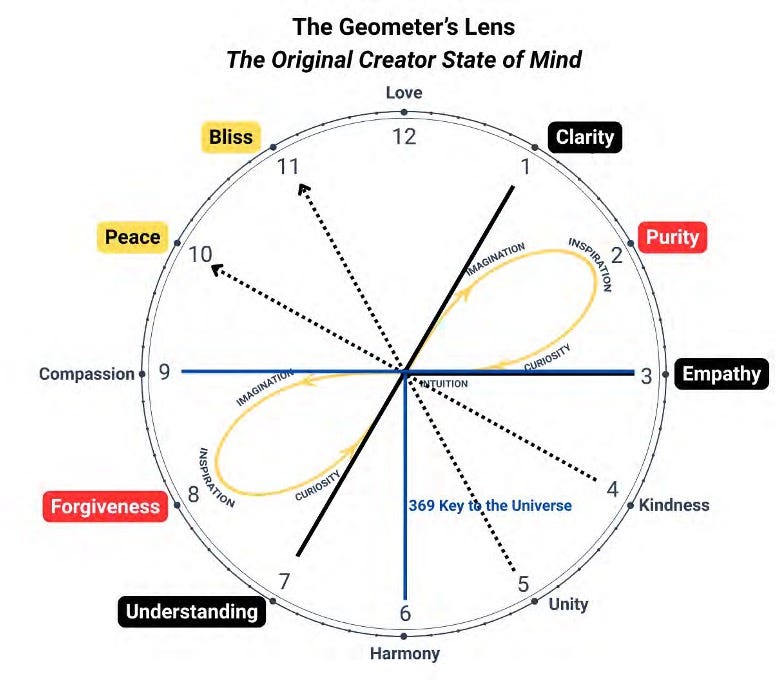
Curiosity grants us the capacity to inquire, to reach out, to venture forth. In this sense, curiosity is necessarily present in order for one to step boldly into the arena of life, functioning as the subtle stirring within awareness itself as it explores what may be possible, what may evolve. Curiosity, then, becomes the propulsive force through which the mind, and life itself, enacts experience.
Once we possess the ability to inquire and explore possibility, this naturally grants us the capacity to dare to dream; to imagine a future and consider possibilities for ourselves, to hold a vision for what could be. This is imagination in action and the cognitive means by which we ideate form, creating the internal blueprint within the recesses of our mind’s eye from which created form may emerge upon the physical plane we call ‘reality’. Again, Einstein’s wisdom sounds a reverberant echo here: “Reality is an illusion, albeit a very persistent one.”
And once we possess the capacity to dare to dream, it naturally propagates the will to enact as we become desirous of being something or having something. In this, we discover the seedbed of inspiration and the latent vitality of life force itself. To inspire. To draw breath. To awaken to life via that initial gasp of air…the original ‘Aha’ moment. In essence, we heed the call, “To be or not to be.”
Following the emergence of one’s willingness to rise from the metaphorical couch where we find the Creator in Repose, all that remains is to fuel that willingness with belief that what we desire can be so. As the adage goes, whether you believe you can or believe you can’t, either way you’re right. And thus, all creative becoming is born of a state of love and trust, enacted through a trinity of capacities of the mind: of curiosity — to inquire and explore — and of imagination — through which we may dare to dream — and through our capacity to choose what we believe is possible for ourselves. In itself, belief is a form of imagination, where “Faith is the substance of things hoped for, the evidence of things unseen[1].”
So, belief is not separate from imagination, but its stabilisation. The moment possibility is allowed to take root. The moment the unseen is granted permission to become.
In effect, we heed the call “to be or not to be”, having discovered a compelling “why” born of imaginary vision and curious exploration…the cognitive workspace through which inspiration emerges.
And nothing answers an answer quite like the capacity to proffer a question.
And perhaps this is where curiosity reveals one of its most quietly transformative qualities.
For many of us, life gradually becomes less an act of exploration and more an act of confirmation. We begin to move through the world not in search of what may be true, but in defence of what we have already concluded to be true. Across time, belief settles into certainty, and certainty into identity.
And yet, curiosity possesses the rare ability to gently loosen the grip of the familiar. To ask:
Is this belief actually true?
Is there another way of seeing this?
What if life is larger than the story I have inherited about myself?
In this sense, curiosity is not merely the pursuit of knowledge, but the willingness to remain in relationship with possibility. And imagination, too, begins to reveal itself as something far more practical than fantasy. For imagination grants us the capacity to internally rehearse futures beyond the limitations of memory. It allows us to envision ways of being not wholly dictated by the past, but informed by possibility.
Without imagination, we remain bound to what has been.
Without curiosity, we rarely question whether it must remain so.
Perhaps this is why both capacities sit so centrally within the process of becoming. For the life we experience is shaped not only by what we believe, but by whether we possess the courage to inquire into those beliefs in the first place.
And so, what begins as a simple question…
Becomes a vision;
Becomes a movement;
Becomes a life.
Curiosity, then, does indeed appear to have its own reason for existence. Not merely as a cognitive function — but as the very spark through which consciousness awakens, explores, and ultimately becomes.
[1] Hebrews 11:1
메타데이터
- post_id
- 5aeea4217acd
- slug
- awakening-on-the-trail-of-universal-becoming-5aeea4217acd
- url
- https://medium.com/genius-leaves-clues/awakening-on-the-trail-of-universal-becoming-5aeea4217acd
- canonical_url
- https://medium.com/genius-leaves-clues/awakening-on-the-trail-of-universal-becoming-5aeea4217acd
- author_url
- https://medium.com/@justin.edgar
- status
- ok
- fetched_at
- 2026-06-14 11:28:49