‘Molon Labe’ in Context: Spartan Courage and Modern Misalignment
I saw a gun rights advocacy shirt printed with the phrase “Molon Labe”, or “come take them.” The words are famously attributed to King…
‘Molon Labe’ in Context: Spartan Courage and Modern Misalignment
I saw a gun rights advocacy shirt printed with the phrase “Molon Labe”, or “come take them.” The words are famously attributed to King Leonidas I of Sparta in 480 BCE, when he reportedly responded to the Persian demand that the Greeks lay down their weapons at Thermopylae. Today, the phrase has become a popular slogan among some gun owners, symbolizing defiance against perceived government overreach. Yet the historical moment from which it comes was shaped by a radically different culture, military structure, and understanding of courage. By examining these three factors that shaped Spartan society, it becomes clear that while “Molon Labe” has been adopted as a modern symbol of armed resistance, its original meaning emerged from a collectivist, close combat warrior ethos that would likely have viewed the distance and individualization of firearms as fundamentally misaligned and opposed with Spartan ideals.

To understand why “Molon Labe” may be fundamentally misaligned with modern usage, one must first recognize how radically different Spartan culture was from contemporary individualist societies. Modern political discourse often centers on personal autonomy, individual rights, and the protection of private property from state interference. Sparta, by contrast, was structured around the supremacy of the polis over the individual. Personal identity was inseparable from civic obligation, and freedom was understood not as self direction but as participation in and obedience to the laws of the state. Spartan citizens did not conceive of themselves as rights bearing individuals negotiating limits with their government; they were components of a disciplined social organism whose survival depended on uniformity, hierarchy, and sacrifice. Even family life, education, and economic activity were subordinated to military readiness. In such a culture, weapons were not emblems of private liberty but tools of public duty, tightly woven into a system that prized cohesion over independence. Without grasping this foundational difference, it is easy to project modern assumptions onto an ancient phrase whose meaning was forged in a society that would have found those assumptions foreign.
Sparta was not organized around personal autonomy or individual rights. It was a rigid, collectivist warrior state in which the individual existed primarily to serve the polis. From childhood, Spartan males were enrolled in the agoge, a state run system designed to subordinate personal identity to communal survival. Property, family life, and even reputation were understood in civic terms. A Spartan’s shield, for instance, was not merely a personal possession; it was a tool of formation warfare. To lose it meant not only personal shame but endangering the entire phalanx. When Spartan mothers allegedly told their sons to return “with your shield or on it,” the emphasis was not on individual bravery for its own sake but on loyalty to the collective.
Within that framework, Leonidas’ reported response at Thermopylae was not a declaration of private ownership or personal liberty. It was an expression of communal defiance on behalf of Sparta and its allied Greek states against a foreign imperial power. The weapons in question were instruments of civic obligation. They were borne not because Spartans asserted a private right to them, but because Spartan law required military readiness as a condition of citizenship. In fact, the Spartan state regulated virtually every aspect of military life; arms and armor were part of a state structured system of discipline and obligation.

Modern invocations of “Molon Labe” often emphasize resistance to centralized authority in defense of personal rights. By contrast, Spartan society was defined by obedience to centralized authority and by the suppression of individual preference in favor of collective survival. The phrase originally emerged from a culture where freedom meant independence of the state as a whole from foreign domination, not independence of the individual from the state.
Recognizing this cultural gap does not diminish the sincerity of those who use the phrase today. Rather, it highlights how deeply symbols depend on the values of the societies that produce them. When removed from its original collectivist context and placed into a modern individual rights framework, “Molon Labe” carries a meaning that would have been foreign, and perhaps incomprehensible to the Spartans themselves.
Spartan military structure further complicates the modern use of “Molon Labe” because the phrase emerged from a system of warfare that emphasized collective cohesion, regulated service, and mutual vulnerability rather than individual armament. Sparta maintained what was arguably the most professionalized standing infantry force in the Greek world, built upon compulsory service and lifelong training. From the age of seven, male citizens were immersed in the agoge, where discipline, endurance, and obedience were cultivated not for personal distinction but for seamless integration into the phalanx. Equipment was standardized around the heavy shield (aspis), spear (dory), and short sword (xiphos), all designed for coordinated, close quarters fighting. The effectiveness of the formation depended less on individual skill than on synchronized movement, steady ranks, and trust in the man beside you. A single soldier acting independently could create a fatal gap in the line. In this system, martial honor was inseparable from restraint and conformity; the ideal warrior did not stand apart, but held his place. Even leadership operated within this framework; kings fought in the front ranks alongside their men, reinforcing the expectation of shared exposure to danger. The phrase attributed to Leonidas thus arose from a military culture in which arms bearing was not an expression of personal choice, but a manifestation of disciplined unity under state command. That structural reality makes the slogan’s modern association with individualized weapon ownership conceptually distant from the formation based ethos that originally defined it.
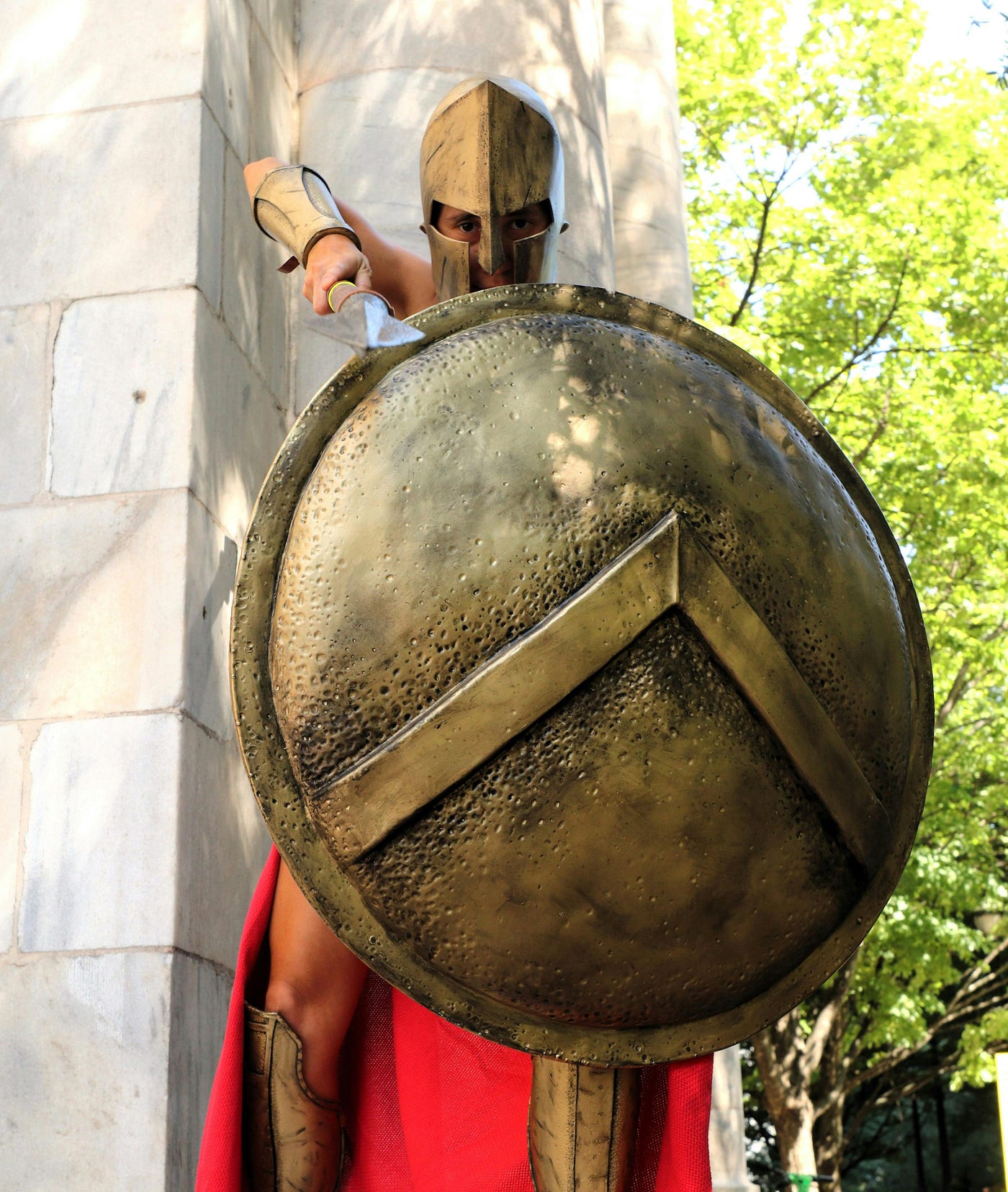
When Leonidas I reportedly answered Xerxes’ demand at the Battle of Thermopylae with “Come and take them,” he stood not as a private citizen defending personal weapons, but as a king commanding a state army. Spartan military power rested on the hoplite phalanx; a dense formation in which each soldier’s shield protected the man to his left. Survival depended on discipline, uniformity, and proximity. No warrior fought independently; breaking formation was considered disgraceful because it endangered others.
This structure reflects a fundamentally different conception of arms bearing. In Sparta, weapons were not symbols of personal autonomy but instruments of state service. A Spartan male was expected to fight because citizenship required it. Military training was mandatory, lifelong, and tightly supervised by the state. The right to bear arms, as modern political discourse frames it, would have been unintelligible in a society where bearing arms was not a personal liberty but a civic obligation enforced by law.
Additionally, Spartan warfare minimized individual distinction in combat. Heroism was expressed through steadfastness within formation; such as holding the line, maintaining position, and enduring pressure shoulder to shoulder. The system discouraged improvisational or individualized combat styles. By contrast, modern firearm ownership is typically framed around individual agency: personal defense, personal preparedness, personal deterrence. The emphasis is on the individual’s capacity to act independently.
Thus, the military structure that gave “Molon Labe” its original force was collective, hierarchical, and state centered. The phrase was not an assertion of personal weapons rights but a declaration of organized military resistance by a disciplined body of soldiers. When applied to modern debates centered on individual rights and personal armament, the slogan becomes detached from the structural realities that originally defined it. The misalignment lies not in the sentiment of defiance itself, but in the vastly different systems of authority, obligation, and combat that shaped its meaning.
A third point of divergence lies in the Spartan understanding of courage itself. For Spartans, courage was not merely bravery in a general sense; it was specifically tied to endurance, proximity, and shared physical risk. The highest form of valor was to stand firm in the phalanx, shoulder to shoulder with one’s comrades, absorbing the shock of impact without breaking formation. Courage meant remaining in place when retreat would have been safer. It meant looking directly into the face of the enemy and holding the line.
Within the broader Greek martial culture in which Sparta operated, ranged combat often carried a lower status than heavy infantry fighting. Archers and slingers certainly existed and were tactically useful, but they were frequently regarded as auxiliary forces rather than the ideal expression of warrior virtue. The Persian army at Thermopylae relied heavily on archers, and Greek sources sometimes contrasted this style of warfare with the hoplite’s face to face engagement. The implication in many classical accounts is not that ranged weapons were illegitimate, but that they allowed a measure of distance from immediate physical danger. To a society that equated courage with direct exposure to risk, distance could appear suspect.
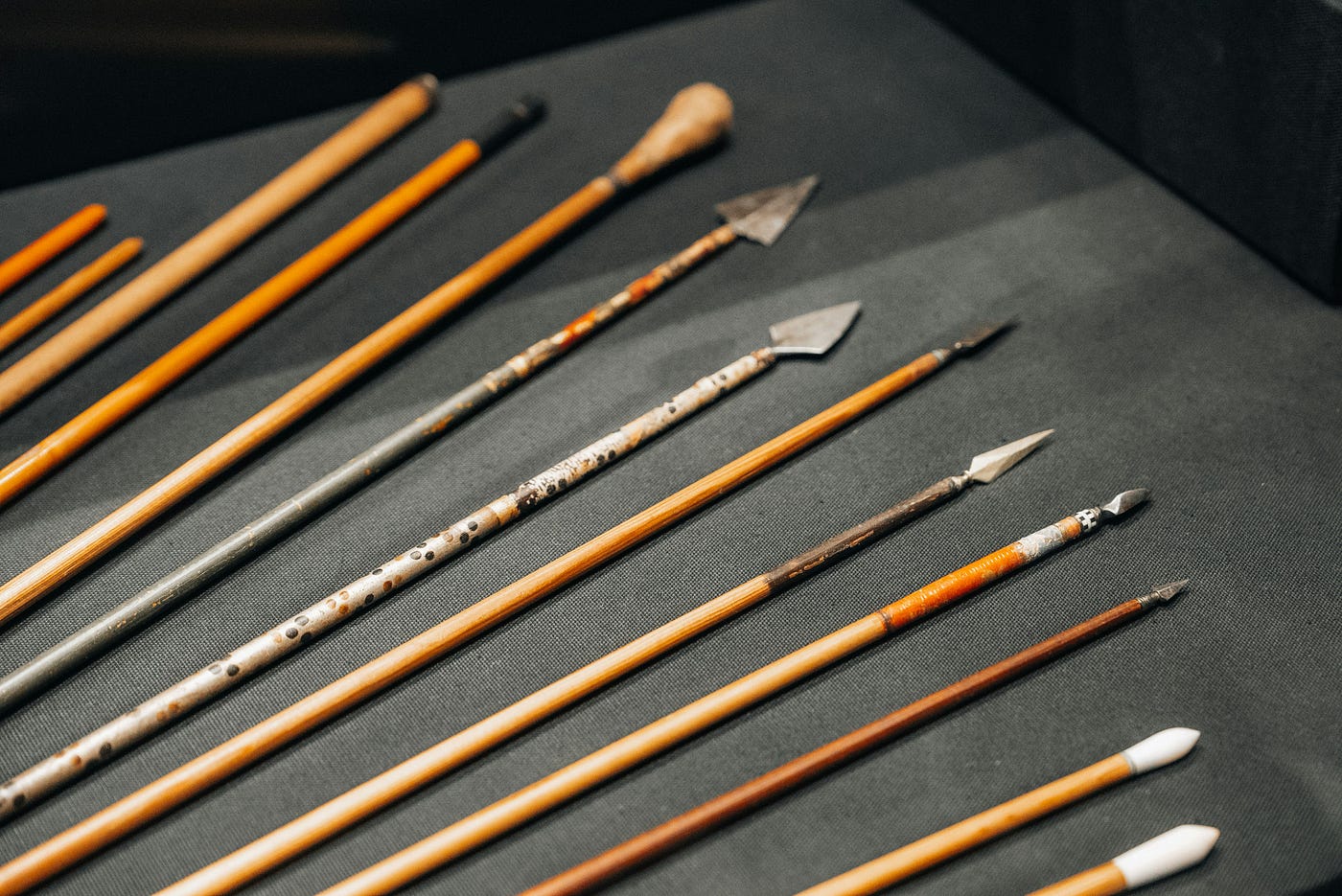
Spartan culture amplified this hierarchy of honor. Their training system emphasized pain tolerance, close quarters combat, and unwavering formation discipline. A warrior who could strike an enemy from afar while remaining relatively insulated from retaliation would not have embodied the Spartan ideal of shared vulnerability. Courage, for them, was proven in the crush of shields and spears, where survival depended on one’s willingness to endure and one’s trust in the men beside him.
Modern firearms, by design, maximize lethal distance. They allow force to be projected far beyond arm’s reach and often without reciprocal exposure to equal danger. This technological reality does not make firearms inherently immoral, nor does it diminish the seriousness with which many modern gun owners approach responsibility and self defense. However, it does illustrate a conceptual shift. If Spartan courage was defined by physical proximity and mutual risk, then a weapon system built around distance and individual engagement would have occupied a very different moral and cultural category in their worldview. Thus, when the phrase “Molon Labe” is invoked today in defense of modern firearms, it carries an assumption that defiance alone captures Spartan valor. Yet Spartan courage was not merely about refusing surrender; it was about how one fought; in formation and exposed alongside one’s peers. The modern usage preserves the tone of defiance but diverges from the specific martial virtues that originally gave the phrase its weight.
Symbols endure because they are powerful, but they also endure because they are flexible. “Molon Labe” has become a modern shorthand for resolve, resistance, and refusal to submit, and many who wear it do so out of a sincere commitment to what they see as liberty and self defense. Yet history invites a more careful reflection. The Spartans who first gave those words meaning lived within a collectivist state, fought within a rigid military structure, and defined courage through shared risk. Their defiance was civic rather than individual, disciplined rather than autonomous, and inseparable from the expectations of a warrior society that prized proximity over distance. To recognize this is not to condemn contemporary beliefs, but to clarify the historical distance between ancient Sparta and modern political culture. If “Molon Labe” is to be invoked with integrity, it deserves to be understood on its own terms; rooted in a world where courage meant standing in the line, not simply standing one’s ground.
메타데이터
- post_id
- 5aeed24ef67f
- slug
- molon-labe-in-context-spartan-courage-and-modern-misalignment-5aeed24ef67f
- url
- https://medium.com/@cristovao0190/molon-labe-in-context-spartan-courage-and-modern-misalignment-5aeed24ef67f
- canonical_url
- https://medium.com/@cristovao0190/molon-labe-in-context-spartan-courage-and-modern-misalignment-5aeed24ef67f
- author_url
- https://medium.com/@cristovao0190
- status
- ok
- fetched_at
- 2026-07-11 21:15:18