How to Get Your First Tech Job in 2026 (Even Without Experience)
Getting into tech can feel overwhelming, especially if you’re a graduate, career changer, or self-taught learner.
How to Get Your First Tech Job in 2026 (Even Without Experience)
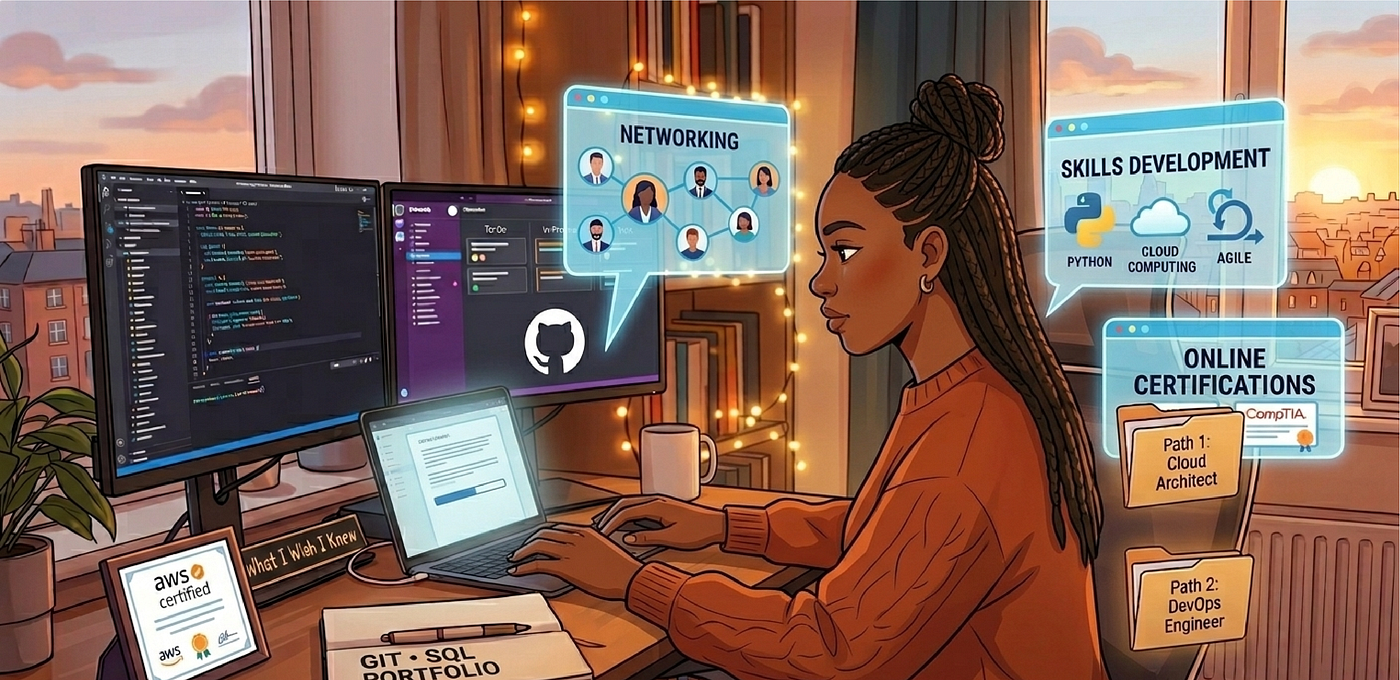
From mapping out professional networks to targeting cloud certifications, intentional skill-building turns the overwhelming tech landscape into an actionable roadmap. Illustration by Nikki Adjei
Getting into tech can feel overwhelming, especially if you’re a graduate, career changer, or self-taught learner.
The industry moves incredibly fast, and looking at modern job descriptions can make you feel like you need a four-year degree just to get an interview. But the good news is: you don’t need to know everything to get started, you just need structure.
In this guide, we will break down exactly why traditional job-hunting methods fail for beginners, and look at the step-by-step framework successful candidates are using to break into tech this year.
Not a Medium Member? Click here to read the full article😀
Why Tech Feels Overwhelming For Beginners
One of the biggest reasons people struggle to start a tech career is the overwhelming amount of information online.
Everywhere you look, people are talking about:
- AI
- Cloud Computing
- DevOps
- Cybersecurity
- Software Engineering
- Data Analytics
- Kubernetes
- AWS Certifications
For beginners, this can create the feeling that you need to understand everything before you can even apply for jobs.
The reality is very different.
Most successful people in tech did not start as experts. They started by learning one skill at a time, building confidence gradually, and developing momentum through consistency.
Why Most People Struggle to Break Into Tech
Most people fall into the trap of trying to consume and try to learn everything at once:
- tutorials
- courses
- random projects
- job applications too early
This creates confusion instead of real progress. When you try to learn every framework, language, and tool simultaneously, you end up mastering none of them.
The Biggest Mistake Beginners Make
A common mistake is trying to learn every tool, programming language, and framework simultaneously.
This often leads to:
- burnout
- confusion
- tutorial overload
- lack of confidence
- inconsistent progress
Many people spend months consuming endless content without building anything practical.
Learning becomes much more effective when you focus on a clear direction and apply knowledge through small projects and consistent practice.
What Actually Works Instead
To stand out in today’s competitive job market, you need to stop acting like a student and start positioning yourself as a junior professional.
Successful candidates follow a simple system:
1.Learn the basics (Cloud / DevOps / Software fundamentals) 2. Build small but real projects (The phrase “No Experience Necessary” doesn’t mean “No Proof Required.”) 3. Create a simple CV + LinkedIn 4. Apply consistently with feedback loops
Why Projects Matter More Than Certificates Alone
Certifications can help build knowledge and show commitment, but projects are often what help employers trust your skills.
Even beginner-level projects can demonstrate:
- problem-solving
- consistency
- willingness to learn
- practical understanding
- initiative
For example:
- deploying a simple website on AWS
- creating a GitHub portfolio
- building a CI/CD pipeline
- documenting your learning journey
Small projects help transform theory into practical confidence.
The Importance of LinkedIn and Personal Branding
Many beginners underestimate how important visibility and networking are within tech.
A strong LinkedIn profile can help you:
- showcase projects
- connect with recruiters
- build credibility
- discover opportunities
- demonstrate consistency
You do not need thousands of followers.
Even sharing small updates about:
- certifications
- projects
- lessons learned
- career progress
can help position you as someone serious about entering the industry.
Why Consistency Beats Motivation
One of the biggest misconceptions about career growth is believing you need constant motivation.
In reality, consistency matters far more.
Studying for one focused hour every day will usually create better long-term results than occasional intense learning sessions followed by burnout.
Technology careers reward people who continue showing up, learning, adapting, and improving over time.
Transferable Skills Matter More Than You Think
Many people entering tech believe their previous experience has no value.
That’s rarely true.
Skills from retail, hospitality, customer service, teaching, administration, design, and other industries often transfer strongly into tech careers.
Communication, teamwork, resilience, organisation, and problem-solving are all highly valuable skills in modern technology environments.
What Employers Actually Look For
Many beginners assume employers only care about certifications or degrees.
In reality, hiring managers often look for:
- communication skills
- willingness to learn
- problem-solving ability
- curiosity
- consistency
- practical effort
Even beginner projects can demonstrate initiative and help you stand out from other applicants.
A Realistic Beginner Roadmap
If you’re unsure where to start, focus on building a simple structure:
- Learn foundational skills
- Choose a direction (Cloud, DevOps, Software, Cybersecurity)
- Build beginner-friendly projects
- Improve LinkedIn and CV
- Apply consistently
- Keep learning while applying
Progress in tech is rarely linear. Most people improve gradually through repetition, practice, and persistence.
Common Mistakes To Avoid
Some of the most common beginner mistakes include:
- waiting to feel “ready”
- collecting endless courses
- avoiding projects
- applying without improving CVs
- comparing yourself constantly to others online
Remember: you do not need perfection to get started.
You need momentum.
Your Next Steps
Breaking into a new industry takes time, but consistency always trumps intensity. Instead of pulling a 10-hour weekend study binge that leaves you burnt out, commit to 1 hour of focused, structured learning every single day.
Pick your path, build your proof, and start putting yourself out there. Your first tech role is entirely within reach.
Frequently Asked Questions
Can I get a tech job without experience?
Yes. Many entry-level roles focus more on transferable skills, projects, willingness to learn, and consistency.
Do I need a computer science degree?
No. Many people enter tech through self-learning, certifications, projects, and practical experience.
What should beginners learn first?
Foundational skills such as Linux, Git, networking, cloud basics, and problem-solving are great starting points.
How long does it take to break into tech?
It varies, but consistent effort over several months often builds strong momentum and confidence.
Should I learn coding before Tech?
Not necessarily.
You can begin learning Tech and Cloud fundamentals before becoming highly confident in coding.
However, basic scripting and automation skills become increasingly useful as you progress into Cloud and DevOps roles.
*Starting with:
- Linux
- Git
- basic Python or Bash
- networking fundamentals*
can make the learning journey smoother.
Can I learn tech while working full-time?
Absolutely. Many people transition into tech while balancing full-time jobs, family responsibilities, or university studies.
Consistency matters more than intensity.
Even 1–2 focused hours per day can create strong long-term progress when learning is structured and practical.
🚀 Want More Structured Support?
To make this easier, I built a structured system that helps beginners go from confusion → clarity → job-ready.
I created the ☁️ Tech Career Launch System to help aspiring tech professionals build more clarity, structure, and confidence while learning Cloud and DevOps.
Inside you’ll find:
- beginner career roadmaps
- AI career tools
- portfolio guidance
- project ideas
- application tracking
- interview support
Final Thoughts
You don’t need to feel “ready” to start.
You just need structure, consistency, and a clear direction.
Starting a career in tech is not about knowing everything from day one.
It is about building momentum, staying consistent, and learning as you go.
Everyone starts somewhere the key is to start and keep going.
메타데이터
- post_id
- 5b005d4fdccd
- slug
- how-to-get-your-first-tech-job-in-2026-even-without-experience-5b005d4fdccd
- url
- https://medium.com/@nikkiadjei03/how-to-get-your-first-tech-job-in-2026-even-without-experience-5b005d4fdccd
- canonical_url
- https://medium.com/@nikkiadjei03/how-to-get-your-first-tech-job-in-2026-even-without-experience-5b005d4fdccd
- author_url
- https://medium.com/@nikkiadjei03
- status
- ok
- fetched_at
- 2026-06-09 15:37:30