Did Iran Just Pull A Profound Checkmate?
It’s the Memorandum of Misery if true (for Trump and Bibi)
Did Iran Just Pull A Profound Checkmate?
It’s the Memorandum of Misery if true (for Trump and Bibi)
With potentially big news hitting the airwaves and me having two consecutive days off midweek, I glued myself to the keyboard to get this piece to you…
Set phasers to stun — we have a peace deal! Again. The Strait will open Friday! At least, that’s what some in the Trump administration are claiming. The US and Iran have supposedly landed on an agreement both are willing to sign. And they’re planning to officially do it on Friday (June 19), though I’ve seen reports that it will be electronically signed today (Wednesday).
In any case, let’s examine what they’re calling a ‘memorandum of understanding’ between Iran and the US. We don’t know if the reported text is accurate, but we can at least assess whether the proclaimed provisions are even plausible.
If you find this newsletter informative and care to offer a little something in support, feel free to buy me a coffee or subscribe. For those of you who prefer storytelling and art over this fictionalized reality we are living through, check out my other site, Inverted Umbrella.
Now, to the business at hand…

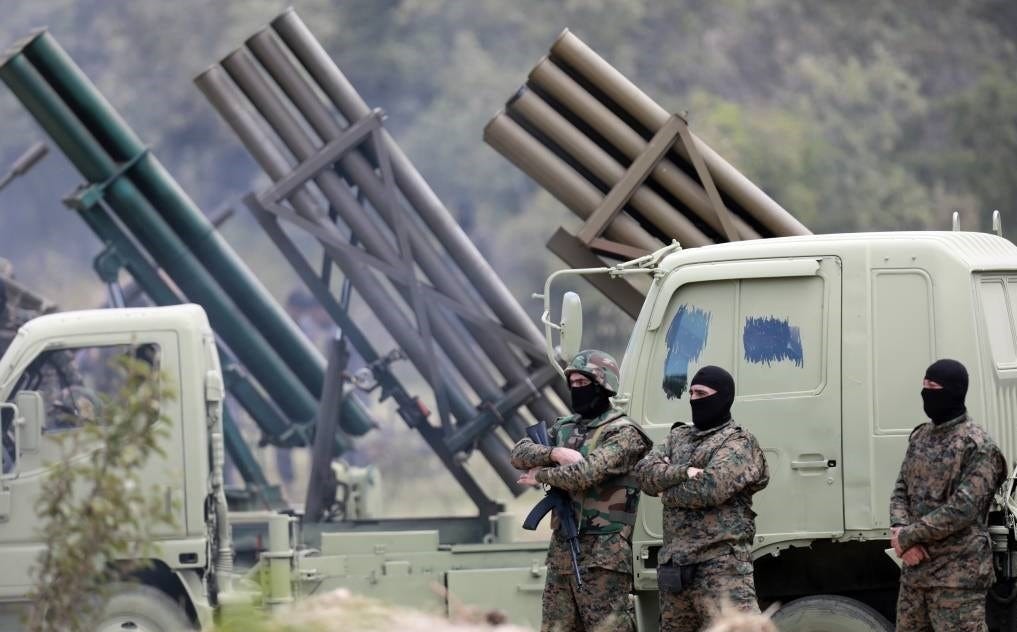
Photo by Scott Graham on Unsplash
US President Donald Trump, Vice President JD Vance, and other members of the administration have gone on the airwaves and social media to laud the imminent signing of a ‘deal’ with Iran to end the war, or at least to lengthily pause it while certain issues are hammered out. There’s one problem with their promotional campaign: they have not offered any sort of evidence of what is in this purported agreement.
Iran, on the other hand, has provided the alleged text to the media. And it does not fully comport with what American officials are saying. So, what the heck is actually going on?
It is possible the Trump administration is just saying things to keep the public confused before Vance signs what amounts to an extraordinary agreement. Because, if what the Iranians have released is the actual text, this will indeed be an extraordinary agreement. It’s also possible this is all nonsense and the parties are nowhere near reconciliation. Based on what the Iranians and Pakistanis (the mediators) have said recently, however, it appears the former is probably true.
Here’s what I wrote three weeks ago when the Trump administration made the same pronouncement about an imminent ‘deal’:
It seems as if this document is primarily intended to get something on paper that says the parties will all agree not to shoot at each other for another month or two, including in Lebanon, and maybe open the strait in some fashion or another to avoid completely tanking the global economy. Whatever the agreement ends up looking like, it smacks of a Trump surrender — the ‘regime’ hasn’t changed, it still has its weapons and uranium, and Iran does not appear ready to abandon its allies.
My suspicion is that this agreement is Trump’s much-needed offramp. I think he wants to accept whatever Iran’s conditions are and then lie about them to the American people (infamous neocon Robert Kagan made precisely this argument). Subservient corporate media will simply print his statements as if they’re newsworthy (and true), thereby reinforcing what he will try to frame as a ‘victory’. Before the public can pontificate on the matter, Trump will ignite a fresh news cycle, perhaps by attacking Cuba.
After reviewing the text below, ask yourself, was I wrong?
What this essay intends to accomplish
Two versions of the text of the agreement the US and Iran are allegedly about to sign are floating around online, though they are pretty similar. (For brevity, I will hereafter refer to the proposed agreement as the MOU most of the time). One of the versions was released by Mehr News, which is owned by the Islamic Development Organization, also known as the Islamic Ideology Dissemination Organization or IIDO. Iran’s Supreme Leader controls it.
The other was posted on X by Josh Block, executive director of the Israel Project, which arguably favors Israeli expansion. Neither are what one might call neutral. [Read Mehr’s press release here and Block’s X post here].
Because both of these entities have an agenda, I am not looking at the text as if it is a true representation of what is in the MOU the US and Iran are supposedly prepared to sign. Instead, I want to assess whether the various provisions could be true. In other words, are the provisions even possible to implement and, if so, is executing them plausible under the present (or any) conditions.
So, let me put on my lawyer’s hat and go through the claims, line by line, with comparisons of any differences, to assess their feasibility. At the end of this essay, I take a broader view of what this agreement will represent if this is indeed what the parties will be agreeing to.
(I would note that it would be a curious thing for a pro-Israel person to falsely claim what follows is the substance of the actual agreement. None of it is good for Israel. Could posting misinformation be intended to enrage the Israeli public? Maybe. If so, the goal could be to drive the Israelis to sabotage it before it is signed. But I find that an implausible strategy — the Israelis are gonna do that anyway, no matter what the agreement says. Instead, I suspect Block truly believes this is the real text of the tentative agreement.)
Analyzing the MOU
For each point, the italicized text is the purported language of the MOU. What follows is my analysis of the language and my assessment of whether the provision(s) can possibly be done.
- The Islamic Republic of Iran and the United States, together with their allies in the current war, declare upon the signing of this Memorandum of Understanding an immediate and permanent end to the war on all fronts, including Lebanon, and undertake that from now on they will not launch any hostile action against each other, and will refrain from the threat or use of force against each other. The final agreement will confirm the provisions of this Article and the remaining Articles.
There are a few interesting words in the first sentence: immediate, permanent, activities, and fronts. ‘Immediate’ means ‘now’, but that in itself is unclear. For instance, does the word suggest Israel needs to cease military activities in Lebanon (or wherever) by the moment of signing? Within a few hours, days, or weeks after signing?
‘Permanent’ is pretty clear. It indicates any military action that occurs after the MOU’s signing would violate said agreement, but that then puts the next term into the spotlight: ‘activities.’ What constitutes military activities? My suspicion is Iran will interpret this broadly. It could even include the mere presence of military assets in a given place. If that’s true, some US military bases would be violations of the MOU by virtue of their very existence and would have to be abandoned. Much may depend on the interpretation of the word ‘fronts.’
The US Department of Defense defines a front as “the line of contact of two opposing forces.” In this war, one could locate a ‘front’ in all the GCC countries, Iran, Israel, and Lebanon. Missiles, drones, and jets flew in and out of all those places. Thus, the MOU would arguably prohibit military activities in any of them. Presumably, this would exclude domestic bases for the countries’ own militaries.
Assessment: If the sides are at or near an agreement, this language is undoubtedly in it in some form or another. Unfortunately, it is largely ornamental. Whatever words are used will nonetheless lack the specificity necessary to avoid abuse of this provision. Moreover, even if all sides (to include Israel) make a good-faith effort at maintaining a permanent cessation of military assaults, they may not be so generous about the definition of all the activities covered by this provision. For example, does anyone really expect the Israelis to completely evacuate their military assets and troops from Lebanon? Does anyone believe the US will permanently close all its bases in the GCC countries?
Notably, Israel claims this agreement is not binding on them. If the US signs it, however, that may leave Israel on its own should it continue to bombard Lebanon (and by all accounts it appears they intend to). The Americans might keep selling the Israelis materiel, but Iran could view such sales as a violation of the MOU. Absent completely shutting out Israel from any and all US aid, the very first provision of this MOU seems unlikely to succeed.
- The Islamic Republic of Iran and the United States undertake to respect each other’s sovereignty and territorial integrity, and to refrain from interfering in each other’s internal affairs.
There is an amusing subtext in this provision. It’s not really a reciprocal requirement. In effect, the Iranians are chiding the Americans for interfering in Iran’s domestic affairs. They are telling the Americans to stop trying to stir discontent, stop selling or giving weapons to aspiring rebels, and leave their nuclear program alone.
Assessment: This is more garnish than meat. It asks for a commitment not to interfere in Iran’s domestic affairs from an administration that started a war specifically to interfere in Iran’s domestic affairs (how else can one characterize ‘regime change’)?
If the Iranians seriously expect the US — and Trump in particular — to abide by this provision, perhaps they are not as crafty as they have seemed so far. Conversely, if they themselves hope the MOU fails, then this is a smart provision to include because there is a good chance Trump will violate it. (More on why the Iranians would want this to fail below).
I call this provision one-sided because in what way can the Iranians be construed as having interfered with American internal affairs or sovereignty?
*— Block’s post has a different 3rd provision than what was reported by Mehr, so I will keep to the numbering he follows because his text is more current and provides greater detail. Most of the substance is the same, just situated in a different place.*
- The Islamic Republic of Iran and the United States undertake to negotiate and reach a final agreement within a maximum period of 60 days, extendable by mutual consent.
There isn’t much to say about this provision other than that this MOU is an agreement to keep negotiating. In many ways, it is a conditional ceasefire that also puts future expectations on the table.
- Immediately upon the signing of this Memorandum of Understanding, the United States lift the naval blockade and prevent any interference or obstruction against the Islamic Republic of Iran, and restore traffic within a maximum of 30 days to its full capacity; the traffic of ships shall be proportional to the pre-war volume of traffic on the part of the Islamic Republic of Iran. The United States also undertakes to withdraw its forces from the surrounding areas within 30 days after the final agreement.
I’ve broken my analysis of this provision into two parts: lifting the blockade and withdrawing forces.
Trump himself said a lifting of the blockade would happen upon the signing of the MOU, so that condition is undoubtedly in there.
Assessment: Lifting the blockade might be the most straightforward — and easiest — provision to execute. Perhaps the US will intercept Iranian ships elsewhere, but such an act would probably violate the first and second provisions of the MOU (as well as this one). If the strait opens, the US will probably leave Iranian ships alone for the most part.
That last line is somewhat murky as to its scope, but the timeline is clear — the US has 30 days to get lost. What is left open for interpretation is from where are American forces required to leave? What exactly are ‘surrounding areas’? Does that phrase include all the GCC countries? Is the scope broader than that, including ‘areas’ such as Afghanistan, Syria, or any country bordering Iran? Does this section of the provision only refer to naval forces? The bulk of the provision is, after all, about the blockade.
Assessment: Trump will lift the blockade and move naval assets away from the Gulf of Oman. He has to — the blockage of the Strait of Hormuz is an economic catastrophe that is growing by the day. No issue in the US riles the electorate more than high prices at the pump or in grocery stores. Trump could stand on the ashes of Tehran waving an American flag and Republicans would still get destroyed in the midterms if the price of gas nationally is over $7.
While Trump can lift the blockade without much political blowback, it will be quite the concession if the last sentence means all forces around Iran. If he orders a massive withdrawal from the Middle East to comply with this agreement, the Americans will be seen as tucking their tails and running. Trump would probably try to characterize it as some kind of reorganization or some brilliant strategy for saving money. He might just lie that the exfiltration isn’t happening while credible media shows video footage of it. But even many of his political allies will smear him for this (more on Trump’s ‘ally’ problem below). And Israel will be outraged.
It is hard to believe the US would agree to a large-scale withdrawal at all, let alone in good faith. Still, Vance could sign with this language in there, then unilaterally declare that it refers only to the naval blockade. If the Iranians insist it means all forces and the Americans concede, it will be a profound loss of face. I just don’t see that happening and I’m not even sure that is Iran’s intent. The wording is atrociously vague and confusing.
- Upon signing this Memorandum of Understanding, the Islamic Republic of Iran will immediately take steps to ensure that the movement of merchant ships from the Persian Gulf to the Sea of Oman and vice versa is resumed within 30 days to the pre-war volume, taking into account the need for the removal of technical obstacles and the neutralization of mines by Iran.
The most notable element is the use of the word ‘merchant’, which suggests Iran may not allow military ships through the strait. (Iran probably views military ships in the strait as an infringement on its sovereignty).
Assessment: The rest of this provision is pretty vague. It does not say anything about what ‘steps’ Iran will take (other than neutralizing mines) nor does it address the ‘toll’ system (whether Iran will collect fees from ships passing through). Whatever the case, the economic harm is not over regardless if this MOU is signed on Friday and the strait opens.
A 30-day reopening puts the resumption of normal traffic at around July 15. Many experts believe gasoline prices will continue to rise as reserves draw down (despite recent down-ticks on prices upon release of this news). It’s simple: not enough oil is being produced and shipped to market. To illustrate, the US released more than 7.9 million barrels of oil from its strategic petroleum reserve (SPR) in the first week of June.
At that rate, the SPR will be just above 300 million on July 15. Any delay in the strait’s opening will put the SPR perilously closer to the statutory minimum of ~252 million.
It will take considerable time for Middle Eastern oil to hit the market after the strait’s opening. Tankers move at a crawl; some destinations take a month or more to reach. Some ships may require maintenance from having sat idle for so long before they can take to the sea. Oil production facilities need substantial and lengthy repairs before they can resume normal production. In short, even if the MOU succeeds at opening the strait from the outset — a highly tenuous proposition — the crisis will not be fully averted. See more about this here:
- The United States undertakes, together with its regional partners, to create a comprehensive plan agreed upon by both parties for the rehabilitation and economic development of the Islamic Republic of Iran, while ensuring financing of at least $300 billion. The implementation mechanism of this plan, as part of the final agreement, will be formulated within 60 days.
Any such fund that included American money would probably need to be established by the US Congress — a problem that suffers from many of the same pressures as described under the provision about sanctions (#7, below).
It is also not clear if the GCC countries will agree to this. It’s kind of weird that an agreement between two parties imposes responsibilities on non-signatories. Regardless, some Gulf countries might volunteer to partake in establishing this fund in an effort to cozy up to the nation that is quickly looking to become the dominant power in the region. What happens, though, if countries like Kuwait or Bahrain refuse? Does that torpedo the whole agreement?
Assessment: This provision is plausible, but problematic. Domestic politics would make this a nightmare for Trump, who is already facing historic levels of disapproval. A reconstruction plan coupled with the lifting of sanctions or releasing frozen funds might very well destroy the support of his dwindling base. More on this in the next point.
- The United States commits to ending, on a schedule to be agreed upon as part of the final agreement, all types of sanctions currently facing the Islamic Republic of Iran, including resolutions of the United Nations Security Council and the Board of Governors of the International Atomic Energy Agency (IAEA), and all unilateral U.S. sanctions, both primary and secondary.
The president can unilaterally suspend sanctions on Iran, but for how long and how extensively are complicated questions. A law passed in 2015 — the Iran Nuclear Agreement Review Act (INARA) — gives Congress considerable power over sanctions on Iran. Specifically, the president must provide Congress with whatever agreement he reaches with Iran, and Congress must vote whether to commit the United States to its provisions. During the thirty days the statute grants Congress to review the agreement before it votes the president cannot suspend sanctions on Iran.
Trump’s team can make two arguments explaining why he has authority to proceed without involving Congress. First, the INARA uses the word “agreement.” Trump could argue this MOU is not an agreement under the statutory definition. President Biden considered precisely this strategy during his effort to reach a new nuclear deal with Iran.
Second, the INARA is framed within the nuclear question. The MOU, however, largely kicks the nuclear issue down the road (see provision 8). Trump can therefore claim the lifting of sanctions in this instance is not covered by the statute at all. Of the two, this is perhaps the stronger argument.
Assessment: Trump can, and probably will, lift sanctions on Iran if that is among the provisions of the MOU, but it will trigger extraordinary pressure from the pro-Israel factions in the US and abroad.
Republicans can sue on the grounds that Trump is illegally circumventing Congress and a judge could block the lifting of any sanctions until the case makes its way through the courts. It’s not clear the Iranians will patiently await that process to conclude.
Politically, Trump will get smeared Massie-style. He will be branded a traitor to Israel (weird that this is a thing). Worst of all (in Trump’s mind, anyway), they will characterize him as weak. And you can bet your bottom dollar, if the Israelis do have some kind of Epstein bribe material, it will go public.
So, yes, Trump can try to temporarily lift sanctions, but at grave political risk. Whether he can accomplish the permanent removal of all sanctions is doubtful. To do that, he needs the backing of Congress, but also the backing of the UN Security Council. Russia and China would be no problem, but getting the UK and France onboard is far less certain.
- The Islamic Republic of Iran reiterates that it will never produce nuclear weapons. The Islamic Republic of Iran and the United States have agreed that the fate of enriched material and the fate of all other mutually agreed nuclear-related issues, including Iran’s nuclear needs, will be adequately addressed in a final agreement; the final agreement will confirm the provisions of this Article.
This provision doesn’t require any immediate action, so let’s go straight to the assessment.
Assessment: This provision sounds like an Iranian hoodwink. ‘Never’ is a strong word and a virtually impossible promise. I suspect this language was included to allow Trump to claim he alone ensured the Iranians would ‘never’ get a nuclear weapon. The Iranians seem to be giving Trump the main thing he supposedly wanted without really giving him anything at all.
- The Islamic Republic of Iran and the United States agree that, pending a final agreement, they will maintain the status quo: Iran will maintain the status quo on its nuclear program, and the United States will not impose new sanctions on Iran or strengthen its forces in the region.
This provision doesn’t require any assessment.
- The United States undertakes that immediately after the signing of this Memorandum of Understanding, and until the date of the lifting of sanctions, the United States Treasury Department will issue waivers for exports of Iranian crude oil, petrochemical products and their derivatives, and all related services, including banking, insurance, transportation, and the like.
I don’t need to go into detail here because the assessment of point 7 covers this issue. In short, it is not clear for how long Trump can issue waivers or whether a court would stop him. It is also unclear what Iran will do if Trump’s waivers fail for reasons not his doing (such as an injunction by a court).
- The United States undertakes that, in light of the progress of negotiations towards a final agreement, frozen or restricted funds and assets of the Islamic Republic of Iran will be released and made fully available. These funds, whether held in the master account or transferred, will be used for any final beneficiary payment determined by the Central Bank of the Islamic Republic of Iran.
I am not certain how much authority the US President has to unfreeze frozen assets. It seems restrictions on at least a portion of the purported $100 billion in frozen Iranian assets are codified in executive orders. Trump can claw those orders back. Additionally, he can give permission to other countries holding assets to release them to Iran. Japan and South Korea, for instance, are thought to hold large amounts. As for other assets, the situation is unclear.
Assessment: Trump can and probably will do this under the political cover of other countries actually executing the release. Countries who wish to import oil from Iran may readily agree in hopes of obtaining it at a discount. It’s simply not clear what the amount of released assets might tally up to.
Like the lifting of sanctions, this will severely rub the pro-Israel elements the wrong way. Remember all of Trump’s caterwauling about Obama’s supposed ‘planes full of cash’? Those remarks will be weaponized against him. It won’t matter if the money is moved by foreign banks because the Israelis and their supporters are terrified of an Iran suddenly awash in cash. They will go on a full-throttled political attack if they believe Trump plans to do this.
The big picture
As I said in the opening — we don’t know if the above constitutes the language of the prospective agreement between Iran and the US. Perhaps only some of the above provisions are accurate.
We do know Iran has the advantage in the waiting game. As Iranian professor Mohammad Marandi has noted, the Iranians have survived nearly half a century of crippling sanctions. The rest of the world, conversely, has not lived with the loss of nearly 20% of the global energy supply for very long. Only one side of that equation is likely to blink.
Trump desperately needs the strait open. The Iranians control it. America’s military cannot change that.
Because the Americans are in a critical bind, the Iranians are positioned to set the conditions of the MOU. For that reason, it appears possible — maybe probable — that the provisions above are accurate renditions of what’s in the real MOU. And if that’s true, the US and Israel have suffered an extraordinary defeat. Iran has to give away practically nothing in this agreement.
But… (there’s always a but)…
There are a number of variables that could torch this agreement before the ink dries. As mentioned, this is an agreement between two parties that imposes obligations on non-signatories: Israel, Hezbollah, the GCC states, and — to some extent — the Houthis.
Netanyahu and the Israelis are clearly unhappy with the prospect of any peace deal — however tenuous — and are almost certain to do everything in their power to sabotage it. Trump could put a stop to that by announcing the complete withdrawal of aid to Israel in any form, but forces at work in the US are making sure that doesn’t happen.
The Iranians are not likely to stop Hezbollah from retaliating if Israel strikes them again (though they can probably convince them not to initiate attacks). The same goes for the Houthis. So, if Israel continues its occupation of Lebanon or attacks on Hezbollah, the Iranians will fire up the shredder (and their missile launchers).
Trump and Netanyahu are in a corner. If Netanyahu destroys the agreement by attacking again, the strait will close (or remain closed, depending upon the timing of the attack), the global economy will fracture, and the world (most of it, anyway) will blame Israel. In this case, Trump will look weak because he cannot control Netanyahu.
If Trump does manage to control Netanyahu (again, the only way I see this happening is by freezing all aid), he will look weak because he signed a deal the Israelis (and their American proxies) despise. He will be excoriated politically by both domestic and foreign forces. The largely pro-Israel American Congress might even impeach him, led by his own party.
Hasan Piker thinks it is a show of weakness for Iran to sign this agreement if Israel still has forces in Lebanon. He views this as a ploy by Trump to get the strait open while simultaneously tacitly supporting Israel’s military efforts. The reason Iran is going forward with the MOU, he adds, is because he believes Trump ‘bribed’ Iran by quietly unfreezing an enormous amount of Iranian assets.
I am not so sure of this assessment. The Iranians have repeatedly stated they do not trust the Americans. There’s nothing indicating that has changed. What seems more probable is they expect to open the strait for all of ten minutes (being somewhat facetious here), then immediately close it when Israel inevitably engages in its next assault. This will prove that of all the parties, the Israelis are the ones who are sacrificing the global economy for more war. Moreover, it will prove the US is either too weak or simply unwilling to stop Israel. It seems this would be a major political win for Iran.
If the parties manage to get this MOU in place and the parties comply with it, that’s great. And also superfluous. The hard issues are slated for later phases. They involve matters on which the parties are universes apart (i.e. nuclear enrichment). Israeli influence over the US legislative and executive branches will all but ensure no serious approach to the hard issues will happen.
Tragically, what seems most likely to happen is that ceasefires will be repeatedly declared and repeatedly violated. The strait will continue to see a trickle of ships get through. Come fall, the supply shock will rear its ugly head and pitch the world into a painful recession. When it becomes severe enough, only then might we see serious negotiations. What is occurring now does not appear to be serious.
I’ve been saying from my first article on this morass that there is no good offramp for Trump. The moment he launched the first salvo on Iran, the war was over — the only thing we did not yet know was the extent of the damage. Now, Trump’s political career might also be over. Whether he turns on Israel or the economy crashes, he faces the potential for impeachment at the end of the year, or at least will be up against a rather hostile Congress. The times ahead may be devastating for us, but they’ll be extremely interesting to future historians.
메타데이터
- post_id
- 5b0bf8f9944a
- slug
- did-iran-just-pull-a-profound-checkmate-5b0bf8f9944a
- url
- https://medium.com/policy-panorama/did-iran-just-pull-a-profound-checkmate-5b0bf8f9944a
- canonical_url
- https://medium.com/policy-panorama/did-iran-just-pull-a-profound-checkmate-5b0bf8f9944a
- author_url
- https://medium.com/@rlvanwey
- status
- ok
- fetched_at
- 2026-06-20 20:29:01