Mapping, Geochemistry and Trenching Support the Next Exploration Phase
Detailed mapping and rock-chip sampling are being used to assess priority target areas. These activities allow geologists to examine…
Mapping, Geochemistry and Trenching Support the Next Exploration Phase
Detailed mapping and rock-chip sampling are being used to assess priority target areas. These activities allow geologists to examine surface geology directly, record structural relationships and collect samples from prospective pegmatite exposures. Field observations will help determine whether the spectral targets match geological conditions on the ground.
Regional stream sediment geochemical sampling is also expected to support exploration across the Corridor of Interest. Sediment sampling can help identify chemical anomalies associated with mineralised systems, providing another layer of information for target prioritisation.
Soil geochemical programmes may be particularly useful in areas where prospective pegmatites are concealed beneath surface cover. By analysing variations in elemental concentrations, exploration teams can identify anomalies that may warrant more detailed investigation. These datasets can then be integrated with mapping and remote sensing results.
Trenching is planned across EPL 8535 and EPL 7345 as targets advance. Trenching can expose pegmatite structures at surface and provide important information about width, orientation and mineralisation. The results will help **Askari Metals** determine which targets should progress towards future drilling.
Uis Project Positioned in Namibia’s Pegmatite Belt
The Uis Project is situated within the Cape Cross-Uis Pegmatite Belt in west-central Namibia. The region has a long history of pegmatite exploration and mining activity, making it a significant geological setting for companies investigating tin, tantalum and lithium-related mineral systems.
More than 100 pegmatites have been mapped across Askari Metals’ Uis tenements, with some areas historically associated with tin and semi-precious stone mining. The latest seven targets expand the company’s prospective inventory and demonstrate how modern exploration technology can add new geological opportunities within a historically recognised mining region.
The project also benefits from regional infrastructure. Road connections provide access towards Walvis Bay and its deepwater port, an important logistics consideration for mineral projects in Namibia. Infrastructure does not guarantee future project development, but established transport networks can become increasingly relevant as exploration projects advance.
Uis remains an exploration-stage project, and future results will determine the significance of the newly identified targets. However, the continued refinement of the geological model and expansion of the target pipeline provide Askari Metals with multiple areas for ongoing technical evaluation.
Critical Minerals Demand Adds Strategic Context to Uis Exploration
Tin remains an essential material in electronics and semiconductor manufacturing, particularly because of its use in solder. Lithium and tantalum also have important applications across battery technologies, electronics and advanced industrial supply chains. This creates a broader strategic context for polymetallic exploration projects.
Global interest in critical mineral supply security has encouraged governments, manufacturers and investors to examine the geographical diversity of future mineral sources. Namibia’s established mining industry and prospective geological regions make the country relevant to the wider critical minerals discussion.
Askari Metals’ exploration strategy at Uis is focused on building a stronger geological understanding before targets advance through more intensive testing. The seven new pegmatite targets increase the number of prospective areas available for technical evaluation while upcoming RC drilling will test established targets at depth.
As field programmes progress, mapping results, geochemical information, trenching outcomes and drilling assays will provide the evidence needed to assess the project’s future potential. Exploration results remain uncertain, but a larger and increasingly refined target pipeline gives the company more geological opportunities to investigate.
What the Expanded Uis Target Pipeline Means for Exploration
The latest hyperspectral study demonstrates the role that technology can play in modern mineral exploration. Satellite datasets can cover large project areas efficiently, while advanced processing methods help identify geological features that may not be immediately obvious through traditional regional exploration methods.
For Askari Metals, seven new pegmatite targets mean additional areas for ground truthing and technical prioritisation. The company can progressively compare spectral signatures, field geology and geochemical data before deciding which targets warrant trenching or future drilling expenditure.
The commissioning of on-site analytical equipment may also support this process by shortening initial data turnaround times. As multiple work programmes move forward, faster access to elemental information could assist the exploration team in refining priorities and directing field resources.
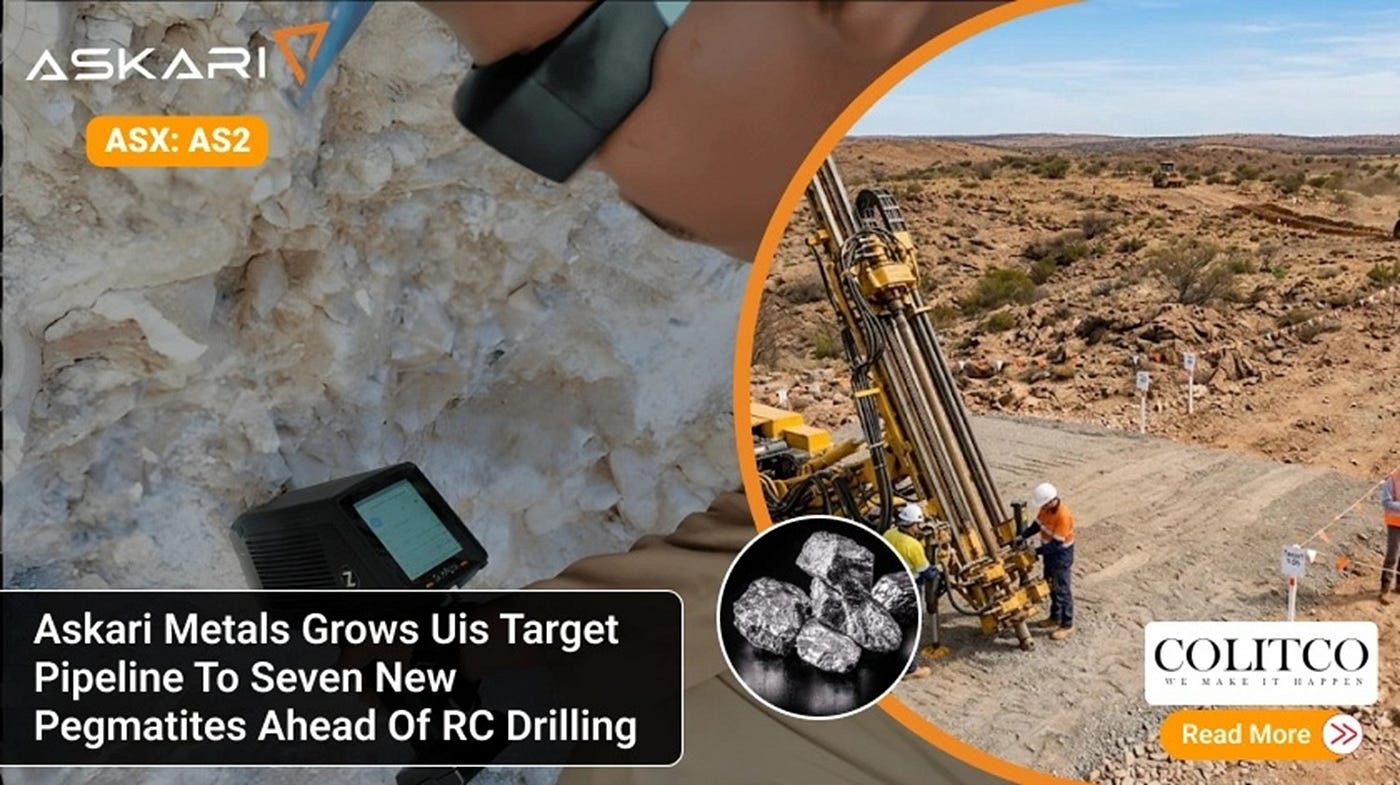
Overall, Askari Metals Grows Uis Target Pipeline to Seven New Pegmatites Ahead of RC Drilling signals an active phase for the Uis Project. With new targets identified, field programmes underway and RC drilling planned, the coming exploration results will be important in defining the scale and geological significance of the wider Uis pegmatite system.
메타데이터
- post_id
- 5b1e06c4a9fd
- slug
- mapping-geochemistry-and-trenching-support-the-next-exploration-phase-5b1e06c4a9fd
- url
- https://medium.com/@colitcomedia37/mapping-geochemistry-and-trenching-support-the-next-exploration-phase-5b1e06c4a9fd
- canonical_url
- https://medium.com/@colitcomedia37/mapping-geochemistry-and-trenching-support-the-next-exploration-phase-5b1e06c4a9fd
- author_url
- https://medium.com/@colitcomedia37
- status
- ok
- fetched_at
- 2026-08-01 22:43:44