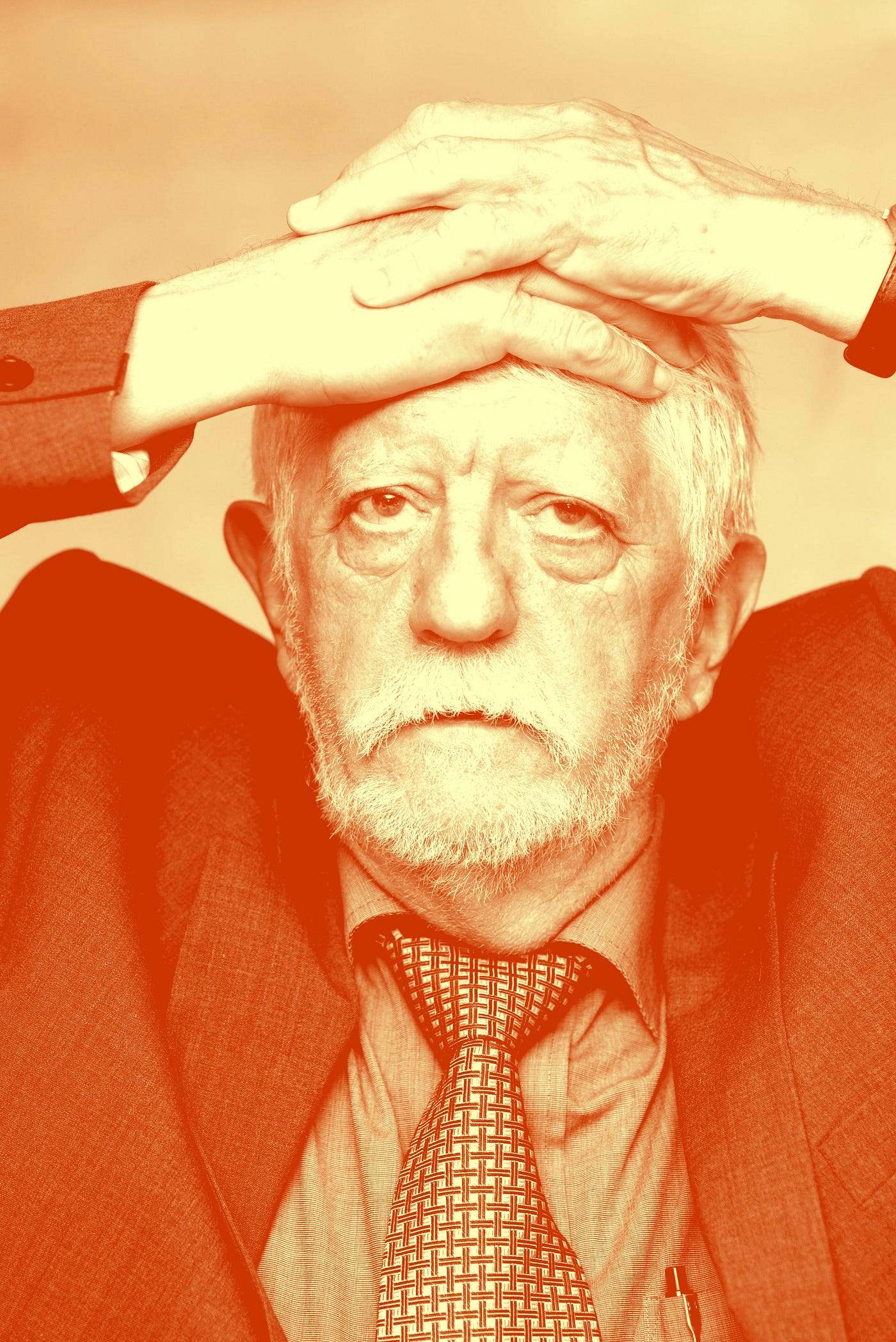
Should Christians Blow Up the Dome of the Rock?
Pastor Greg Locke thinks we should.
Should Christians Blow Up the Dome of the Rock?
Pastor Greg Locke thinks we should.

Photo by Thales Botelho de Sousa on Unsplash
For nearly two thousand years, the Temple Mount has stood at the center of humanity’s greatest religious longing. It was there that Solomon dedicated the First Temple. It was there that the Second Temple stood during the days of Jesus. It was there, in A.D. 70, that the Roman legions reduced that magnificent sanctuary to rubble, just as Jesus had foretold.
Today, standing on that same sacred ground, is one of Islam’s most recognizable shrines. It graces many of the pictures of Jerusalem. And it is instantly known by Jews and Christians alike. It is the golden Dome of the Rock.
For millions of Jews, it occupies the site where the Holy Temple once stood. For Muslims, it commemorates the place from which Muhammad is believed to have ascended into heaven. For Christians, it has become something else entirely. For some, it is viewed as an obstacle that must one day disappear before Jesus can return or the Messiah can appear.
That belief has become so intense in certain circles that well-known American pastor Greg Locke declared that Israel should “get a great big missile and blow that wicked Dome of the Rock plum off the spot where it’s standing right now, so we can get that Third Temple rebuilt and usher in the coming of Jesus.”
Those words are shocking. But they expose a much deeper question than the fate of a building in Jerusalem: Can human beings force God’s prophetic hand? Or perhaps the better question is this: Has God ever asked us to? Because that question reaches far beyond the Temple Mount. It reaches into every generation of believers who have grown impatient with God’s timetable.
Christians, Jews, and The Tower of Babel Syndrome
The first organized attempt to ‘bring heaven down’ wasn’t in Jerusalem. It was in Babel. Humanity gathered together and said, ‘Come, let us build…’ *(Genesis 11)*
They wanted to reach heaven on their own terms. They wanted to create God’s future through human effort. God’s response: He scattered them. Thousands of years later, we still suffer from the same temptation. We simply baptize it with religious language. We convince ourselves that if we can just elect the right leader, win the right war, rebuild the right building, or even destroy the right building, then God’s Kingdom will finally arrive. And the Messiah will take His place on a throne of peace.
Scripture says exactly the opposite. The Kingdom does not come because mankind climbs higher. The Kingdom comes because the King descends. Faith never tries to drag tomorrow into today. Faith trusts that tomorrow will arrive precisely when God intends.
Throughout Biblical history, every attempt to force God’s timetable reveals the same hidden assumption: that God needs our help more than He desires our obedience. The Kingdom of God has never advanced because men forced God’s hand. It has always advanced because God kept His promises.
Pure Motives, Wrong Direction.
The temptation to “help God” is as old as the Bible itself. Think about the biblical examples.
God promised Abraham that he would become the father of a great nation. But when the promise seemed delayed, Abraham and Sarah took matters into their own hands through Hagar. The result was not the fulfillment of God’s promise but generations of heartache and conflict. God’s promise arrived exactly as He had spoken. But only when God determined the time was right.
King Saul made the same mistake. As Samuel delayed, Saul assumed he needed to act. Rather than waiting for God’s appointed prophet, he offered sacrifices himself. From a human perspective, it seemed practical. From God’s perspective, it was rebellion disguised as urgency.
Then there was Uzzah. When the Ark of the Covenant appeared to be falling, he reached out to steady it. His action looked noble. Surely he was protecting God’s holy presence. Yet Scripture reveals something deeper. Uzzah assumed God’s purposes depended upon human intervention. And it cost him his life.
Even Peter fell into this trap. When soldiers came to arrest Jesus, Peter drew his sword to defend the Messiah. In his mind, he was fighting for God’s kingdom. Jesus immediately rebuked him. And fixed his mistake.
Each story asks the same question: Do we trust God’s timing enough to keep our hands off what belongs to Him?

Photo by Levi Meir Clancy on Unsplash
There are sincere Christians and Jews who believe rebuilding a Third Temple is part of biblical prophecy. Others disagree. But almost every orthodox Christian and Jew would agree on one point: If God intends for a Third Temple to exist, He is fully capable of accomplishing it without human violence, terrorism, or political coercion.
To my Christian friends, I remind you Jesus repeatedly taught His followers to watch, not manipulate history.
“It is not for you to know times or seasons that the Father has fixed by His own authority.” (Acts 1:7)
Even more striking is Jesus’ own statement:
“But concerning that day and hour no one knows, not even the angels of heaven, nor the Son, but the Father only.” (Mat 24:36)
If Jesus willingly submitted to God’s timetable during His earthly ministry, what arrogance is it for us to imagine we can accelerate it?
To my Jewish friends, I remind you that throughout Scripture, every major act of redemption begins with God moving first. He called Abraham. He sent Moses. He raised up the judges. He anointed David. And He sent the prophets. Moses did not set the bush on fire to inspire Him to show up; God did.
At no point did human beings successfully force God to act by creating the right political conditions. The prophets never instructed Israel to manufacture the Messianic age. They called people to repentance, faithfulness, justice, and obedience.
The Church has not been commissioned to build the Kingdom through violence. The irony is sobering. Some Christian pastors are so eager to welcome the Prince of Peace that they are willing to endorse an act that would almost certainly ignite a catastrophic global war. That should give every follower of Jesus pause.
Do we trust God’s timing enough to let Him accomplish His purposes His way? Waiting is not the absence of faith. It is often its purest expression.

Photo by Alessandro Venturi on Unsplash
That brings us back to Jerusalem. Whether one believes a Third Temple must be rebuilt before the Messiah returns is beside the point. If God intends such a Temple to exist, does anyone seriously believe He requires terrorism or political violence to accomplish His will?
The God who spoke the universe into existence is not dependent upon human schemes.
The prophets never instructed Israel to create the Messianic age. They called God’s people to repentance, justice, mercy, and covenant obedience. Faith waits.
Their message was always the same: prepare your hearts, not your weapons.
Prophecy is meant to produce faithfulness, not fanaticism. It should inspire hope, not violence. It should encourage holiness, not manipulation. The irony is difficult to ignore.
This is where discussions about the Dome of the Rock become spiritually dangerous.
When believers begin thinking that God’s kingdom depends upon our ability to manipulate world events, we have quietly exchanged trust for control. No president, prime minister, pastor, rabbi, or world leader has ever possessed the authority to accelerate God’s prophetic timetable.
History is filled with examples of sincere people trying to hurry God’s promises. It never ends well. God has never needed our impatience or “deal making ability” to accomplish His purposes. His promises are fulfilled by His faithfulness, not by our frustration.
Whether or not a future Temple plays a role in God’s plan, our hope is never found in a building. Our hope is found in the Messiah whom God will send at the appointed time.
Kings are never summoned by their subjects. They arrive at the appointed hour, according to their own authority. Until then, our assignment is not to prepare His throne by violence, but to prepare our hearts through faithful obedience.

Photo by Joel Danielson on Unsplash
No, Christians should not blow up the Dome of the Rock.
Not because God’s promises are in doubt, but because they never have been. The God who makes promises has never needed human impatience to keep them.
Impatience builds Babel. Faith waits for Jerusalem.
Thank you for reading this. You might also like:
[embed]My Introduction to Palestinians. The more things change, the more they stay the same.medium.com
May the God of all peace reign in your households. And may the banner of shalom fly high over all your ways. -Issachar
메타데이터
- post_id
- 5b2b71f9f6a6
- slug
- should-christians-blow-up-the-dome-of-the-rock-5b2b71f9f6a6
- url
- https://medium.com/@Koenbooks/should-christians-blow-up-the-dome-of-the-rock-5b2b71f9f6a6
- canonical_url
- https://medium.com/@Koenbooks/should-christians-blow-up-the-dome-of-the-rock-5b2b71f9f6a6
- author_url
- https://medium.com/@Koenbooks
- status
- ok
- fetched_at
- 2026-07-10 13:01:02