From Cleveland Ice to Olympic Fire: Laila Edwards, Team USA’s Barrier-Breaking Black Trailblazer
From crying on the bench after racist taunts to scoring Olympic goals, Laila Edwards didn’t just break through hockey’s color barrier —…
Black History Month 2026
From Cleveland Ice to Olympic Fire: Laila Edwards, Team USA’s Barrier-Breaking Black Trailblazer
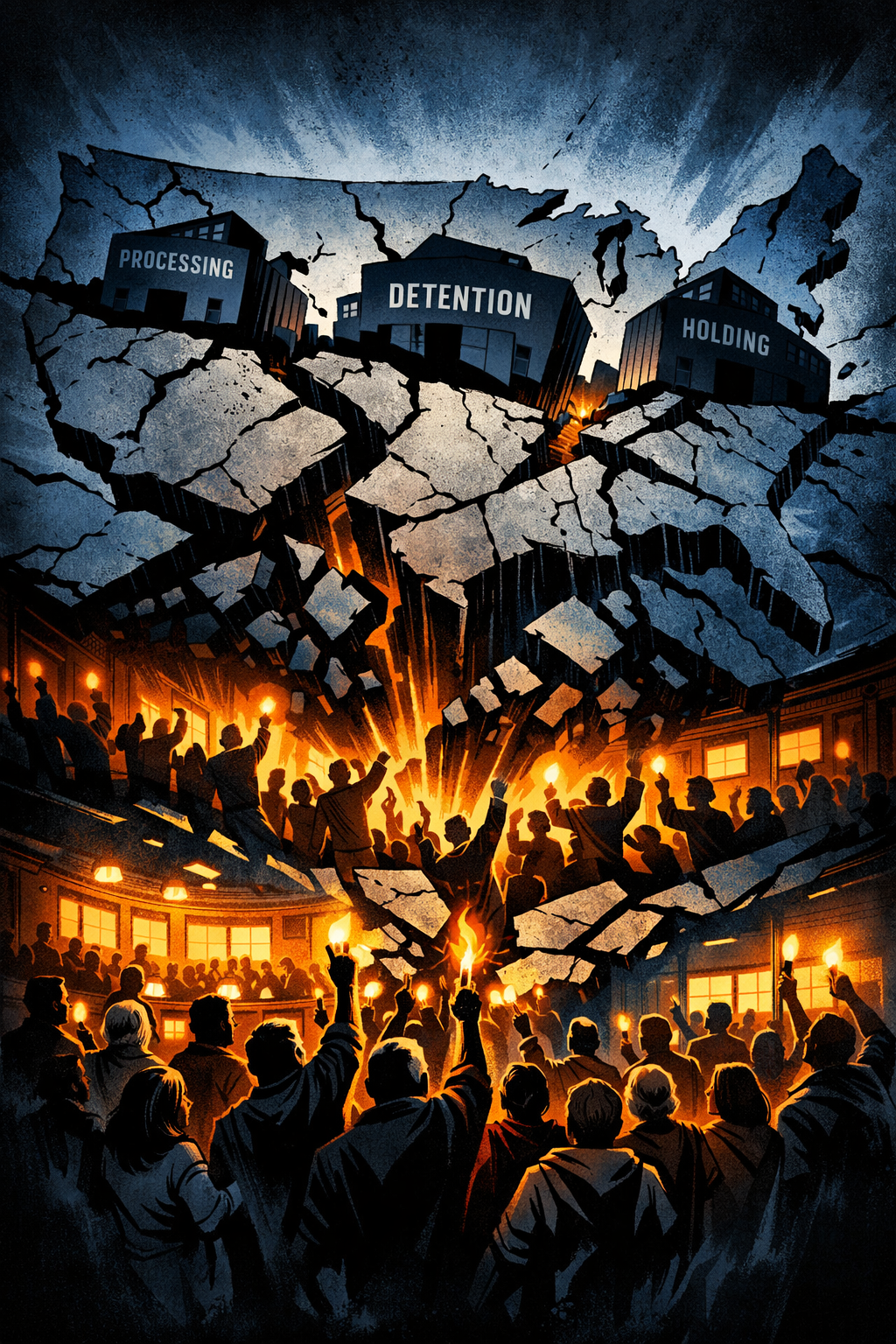
From crying on the bench after racist taunts to scoring Olympic goals, Laila Edwards didn’t just break through hockey’s color barrier — she’s holding the door open and refusing to let it close
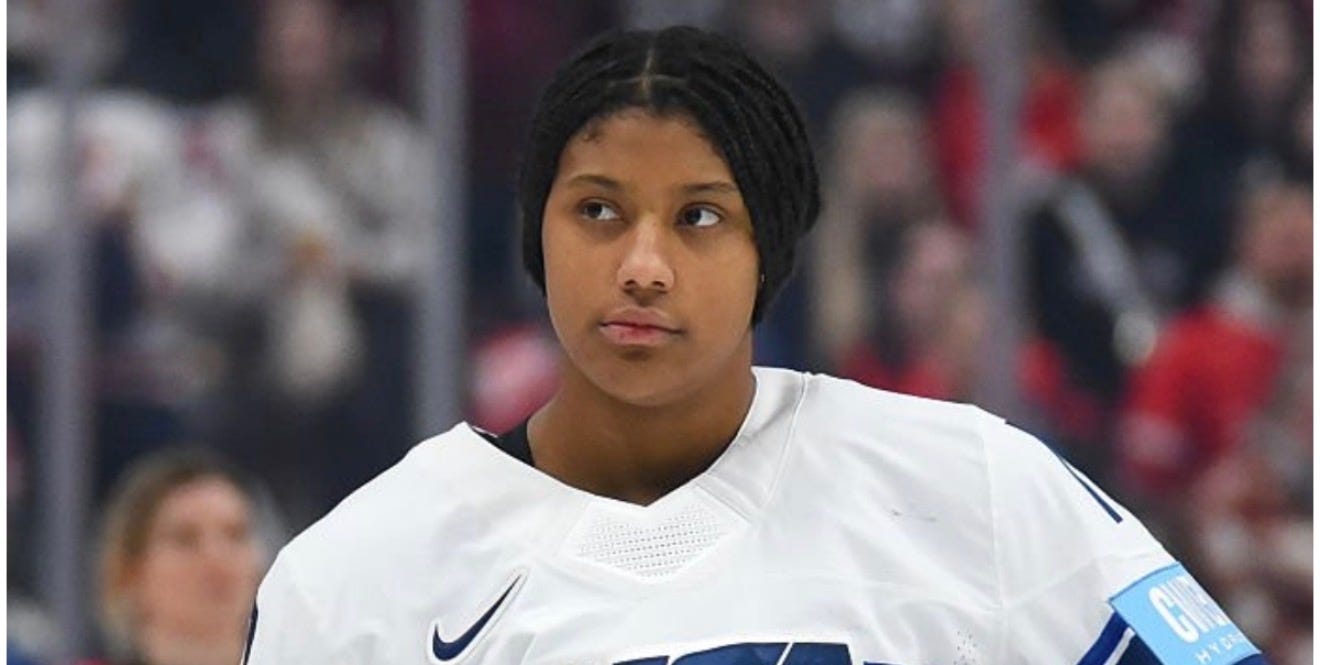
Photograph Laila Edwards generated by Perplexity AI (2026)
The puck marks on the living room wall told the story before words ever could. In a house in Cleveland Heights, Ohio, three Edwards children — Bobby, Chayla, and Laila — weren’t content to wait for ice time.
They brought the game home, firing pucks at makeshift nets, honing their skills between furniture, transforming a suburban living room into their personal training ground.
Robert Edwards, their father, had fallen in love with hockey growing up in Cleveland Heights during the 1970s and ’80s, watching the local high school team dominate with conference titles and a state championship.
He’d played recreationally, and when he became a father, he knew exactly where to take his kids: the Cleveland Heights Community Center, the same rink where his own hockey dreams had taken root.
At three years old, Laila started with figure skating — her father’s strategic move to build confidence on blades. She wore the leotards, the tutus, the whole outfit.
“I liked that it was keeping them busy and not stuck indoors,” her mother, Charone Gray-Edwards, recalled. But Laila was never a fan of the puffy costumes. When Robert enrolled them in the Cleveland Heights Youth Hockey Program around age five, Laila made her choice immediately. If she was going to be cold, she wanted to be “excited and cold.”
The community center became more than a rink — it became a bridge. The Edwards children would change from their skating outfits into hockey gear in different parts of the building, joining the boys on the ice.
Even at that young age, Laila’s talent was undeniable. “You would think she wasn’t really doing anything,” her mother said. “Then, all of a sudden, [the puck is] on her stick and something is happening. If you look away or you start talking, you’ll miss what she’s doing.”
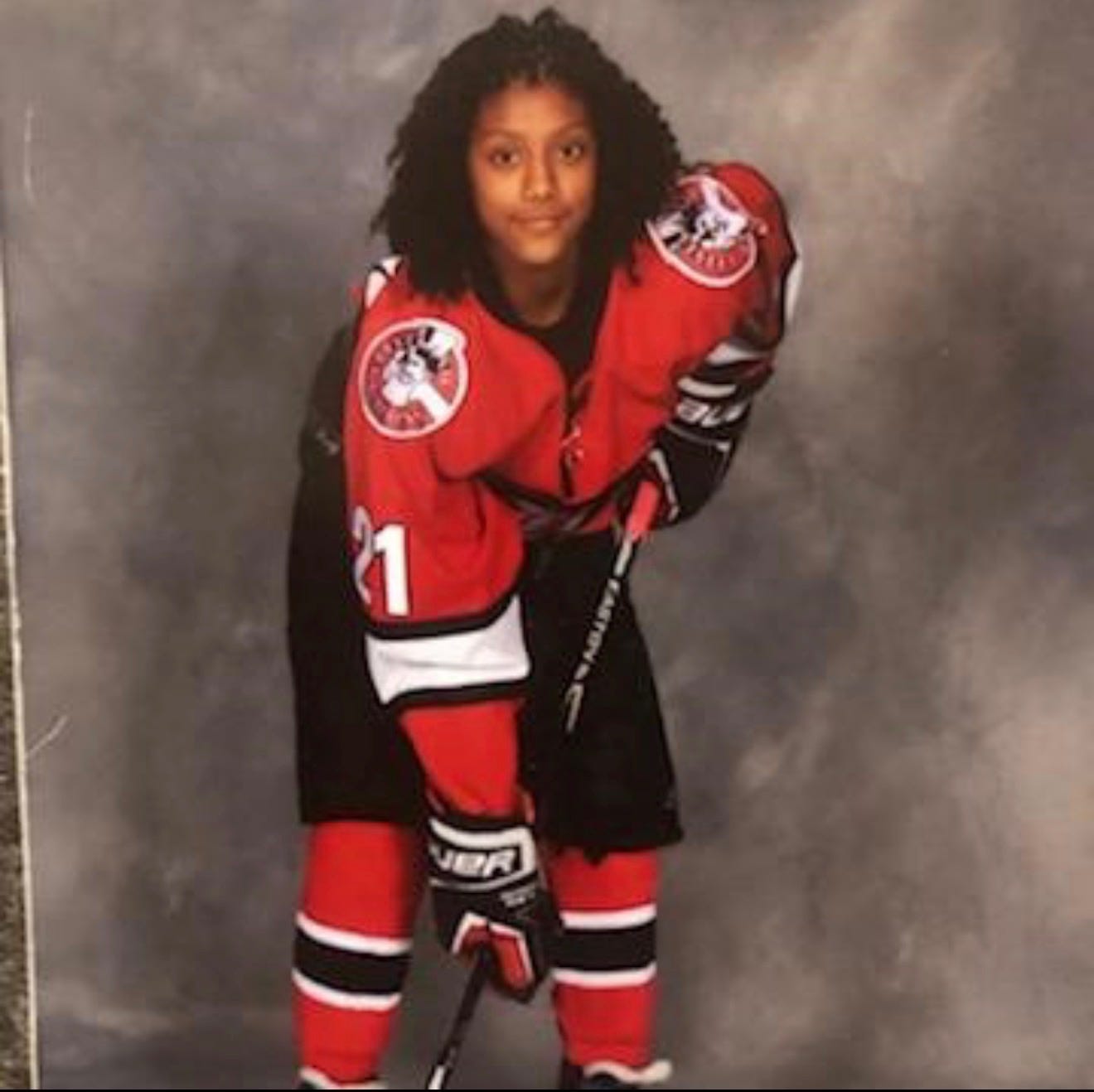
Photograph Laila Edwards generated by Perplexity AI (2026)
Navigating White Spaces
To be a Black hockey family meant entering territories unfamiliar and often unwelcoming. Laila learned early that excellence wouldn’t shield her from racism.
The first time a player called her the N-word during a boys’ hockey game, she came back to the bench crying. Her coach, Dean Conway, was there. He comforted her, and that moment stayed with her.
she remembered thinking. It wouldn’t be the last time. Playing boys’ hockey meant being doubly different — the only girl, the only Black player. “I definitely felt like I belonged, but there were times where there’s a bit of intimidation,” she said.
The statistics tell a stark story. According to a 2021 NHL.com report, there were only 13 Black female players across Division I and III women’s hockey teams — up from just four in 2019 and nine in 2015.
In a sport where representation was virtually nonexistent, Laila had to look outside hockey for role models. She drew inspiration from LeBron James, a fellow Ohio native who’d also navigated predominantly white sporting spaces.
Her older sister Chayla became her closest competitor and fiercest supporter. With just over two years between them, they pushed each other relentlessly.
“We were definitely really competitive growing up,” Laila said. “Each other’s biggest competitors and biggest supporters. I think we pushed each other really hard. Even though I just got to practice with her, I always wanted to be better than her.”
The Road Less Traveled
By age eight, Laila was traveling for AAA tournaments with the Cleveland Jr. Lumberjacks and Pittsburgh Penguins Elite Girls. The family sacrificed constantly — time, money, experiences — shuttling to rinks across the region, investing in a dream that seemed impossibly distant.
At 13, that dream demanded a painful price: leaving home. Laila followed her sister’s path to Bishop Kearney High School in Rochester, New York, one of the nation’s elite girls’ hockey prep programs.
The sisters’ paths had diverged — Chayla had moved to Pittsburgh for a prestigious academy — but both knew that staying in Cleveland Heights meant limiting their potential.
At Bishop Kearney from 2018 to 2022, Laila didn’t just play hockey; she dominated it. 147 goals and 266 assists in 287 games. Three national titles. During her senior year, she recorded 97 points, including 38 goals and 59 assists.
The achievement was so significant that she made a choice that stunned many: she skipped her high school graduation to compete at the 2022 IIHF World Women’s U18 Championship.
The sacrifice paid off. She led Team USA in scoring with four goals and four assists in five games, earning a silver medal. More remarkably, she was named the tournament’s most valuable player, best forward, and selected to the All-Tournament team — a preview of the barriers she would continue to shatter.
Wisconsin: Family Reunion and National Glory
When it came time for college, Ohio State made sense on paper — closer to home, a rising program. But the University of Wisconsin offered something else: superior facilities, a coaching staff with an unmatched track record, and most importantly, a chance to reunite with Chayla.
The sisters would finally play together on the same team, a dream deferred since childhood.
Under head coach Mark Johnson — one of the heroes from the iconic 1980 “Miracle on Ice” team — Laila’s game evolved. Freshman year: 27 points. Sophomore year: 56 points.
But it was her junior season (2024–25) that announced her as one of the most dominant forces in women’s college hockey.
She led the entire nation with 35 goals — the most by a Wisconsin player since Brianna Decker’s 37 goals in 2011–12. She added 36 assists for 71 total points in 41 games.
During the 2025 NCAA Division I women’s ice hockey tournament semifinals, she recorded a hat-trick to propel Wisconsin to the national championship game. She was named a top-three finalist for the Patty Kazmaier Award, given annually to the best player in women’s college hockey.
Wisconsin won two NCAA national championships during her time there — in 2023 and 2025 — cementing her legacy as one of the program’s all-time greats. She played alongside her sister in 2023, winning their first championship together, a full-circle moment for the girls who once competed in Cleveland Heights.
The Transformation: Forward to Defense
In the summer of 2024, Laila faced a critical decision. Team USA was loaded with offensive talent, and if she wanted to make the Olympic roster, she needed to give coaches a compelling reason to keep her.
The answer required sacrifice: she would switch from forward to defense.
At 6'1" tall, she possessed the physical tools for the blue line — size, vision, skating ability, and a powerful shot. The transition wasn’t easy, but it was strategic. She’d already proven she could score; now she would prove her versatility, her willingness to put team success above personal statistics.
The gamble paid off. In November 2023, Edwards became the first Black woman to play for the U.S. women’s senior national team, skating in the Rivalry Series against Canada.
At the 2024 IIHF Women’s World Championship, she became the first Black woman to play for the United States at the World Championship. On April 5, 2024, she scored her first goal in a preliminary round game against Czechia — the first Black woman to score for Team USA at the World Championship.
Her performance throughout the tournament was historic. She recorded a hat-trick in the semifinals against Finland, finishing with six goals and two assists in seven games. Team USA won silver, and Edwards was named Tournament MVP at age 20 — the youngest player to ever receive the honor at an IIHF World Women’s Championship.
One year later, at the 2025 World Championship, she helped Team USA reclaim gold. The once-forward had become an elite defender.
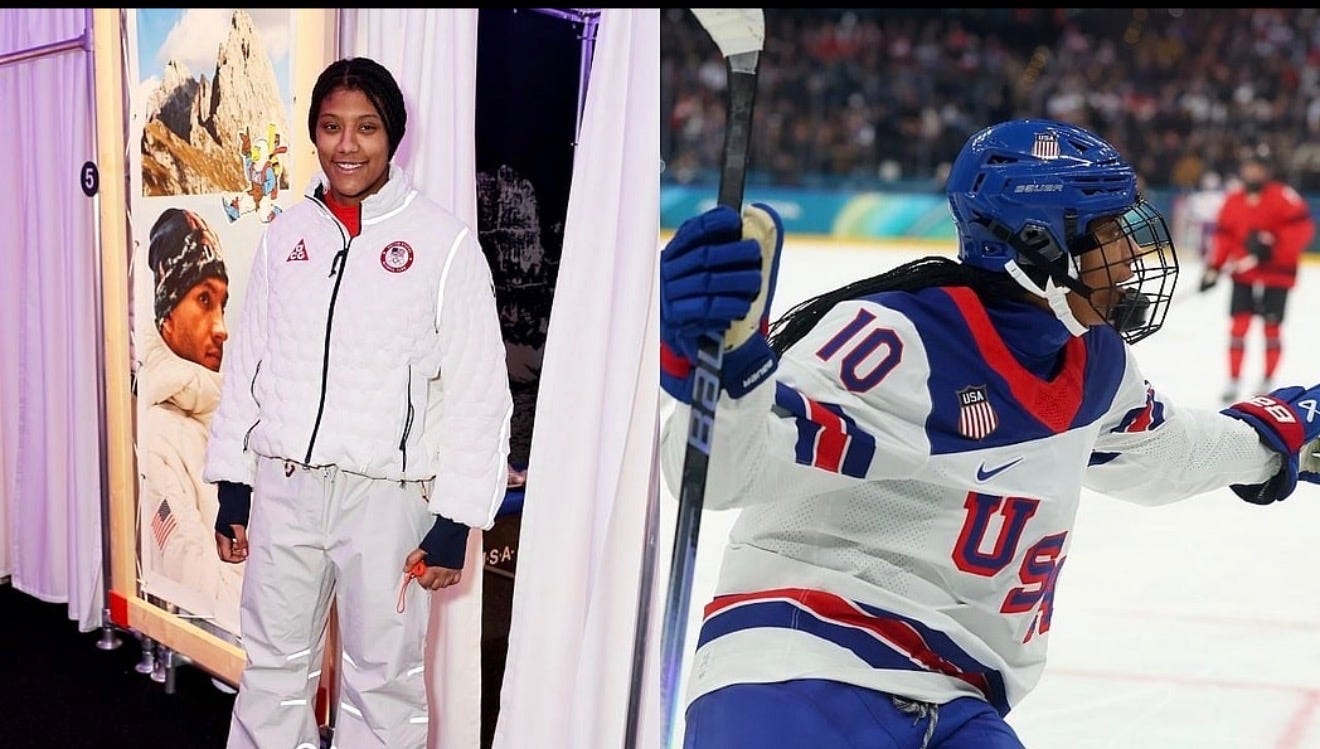
Photograph Laila Edwards generated by Perplexity AI (2026)
Cleveland Heights’ Pride
Back home, Edwards’ journey captivated her community. Even before the Olympics, her name resonated beyond hockey circles. The connection became personal when NFL stars Travis and Jason Kelce — fellow Cleveland Heights natives and Super Bowl champions — learned about her historic path to Team USA.
The Kelce brothers, who’d played hockey themselves before committing to football, followed Edwards’ career with keen interest. When she became the first Black woman named to the U.S. senior team in 2023, Travis shouted her out on their “New Heights” podcast:
When Edwards made the Olympic roster, the Kelce brothers didn’t just offer words — they donated to her family’s GoFundMe campaign, helping ensure a 14-person cheering section could travel to Italy for her Olympic debut.
“To have them here supporting me, it just gives me that extra level of motivation, comfort and confidence,” Edwards said.
Cleveland Heights embraced her fully.
Dozens gathered at the community center — the same rink where her journey began — to watch her Olympic games together. Local resident Ryan Brown brought his family to skate, telling reporters: “Laila Edwards is a role model for our kids.”
Edwards even surprised the Cleveland Lady Barons at one of their practices, where coach Pam Busta observed: “She’s like the Taylor Swift of Cleveland girls hockey because every single girl was blushing just looking at her. They just want to be her.”
Her parents understood the magnitude. “I feel that the community should share in her success,” Robert Edwards said. “Her foundation was at Cleveland Heights Rec Center. That’s where everything began.”
February 5, 2026: History Made
When Laila Edwards stepped onto the ice at Milano Santagiulia Ice Hockey Arena on February 5, 2026, she carried more than her country’s hopes.
She carried the weight of history, the dreams of young Black girls watching from Cleveland Heights and beyond, the legacy of pioneers like Blake Bolden — the first Black woman to play professional hockey — and her own sister Chayla, who’d been part of USA Hockey’s development program but never made the senior national team.
She joined Jordan Greenway — who’d played for Team USA men’s hockey at the 2018 PyeongChang Games — as only the second Black player to suit up for a U.S. Olympic hockey team, men’s or women’s. But she was the first Black woman.
“I feel good. It was a really good first game, a little nervous, but it was good,” Edwards told reporters after Team USA’s 5–1 victory over Czechia.
She’d recorded an assist, starting at right defense and playing on the team’s top power-play unit alongside alternate captain Megan Keller.
Keller, a three-time Olympian and 2022 gold medalist, marveled at her young teammate.
“She’s special. Fun to play with, fun to watch. I find myself watching her when I’m out there with her,” Keller said. “You’re confident with her out on the ice anywhere and that’s somebody you want on your team.”
Edwards reciprocated the praise: “Playing with Keller has been one of the coolest things I got to do as a hockey player. I cannot say enough good things about her, but she is an even better person and teammate.”
Her 91-year-old grandmother watched from the stands, witnessing history alongside the 14-person family contingency made possible by the Kelce brothers’ generosity.
February 10, 2026: The Goal That Shattered Ceilings
Five days later, on February 10, Team USA faced their archrival Canada in the preliminary round finale. Canada had never been shut out at the Olympics. Never.
The rivalry between these two nations defined women’s hockey — physical, intense, often decided by a single goal or overtime drama.
But this night would be different.
Canada was playing without their longtime leader Marie-Philip Poulin, sidelined with an apparent lower-body injury. Team USA, meanwhile, was clicking on all cylinders. Goals from Caroline Harvey, Abbey Murphy, and Kristen Simms built a commanding lead.
In net, Aerin Frankel stopped 20 shots for her third consecutive shutout.
Then, in the third period, with the game already decided, Laila Edwards made history again. She took advantage of a Canadian mistake, made a move, and fired the puck past the goaltender.
The fifth goal. An exclamation point on a 5–0 rout that marked Canada’s first-ever Olympic shutout loss and the largest margin of victory for Team USA over Canada in Olympic hockey history.
Edwards became the first Black woman to score a goal for Team USA at the Olympics.
The moment carried extra significance: three Black women were on the ice during that historic game — Edwards for the United States, and Sarah Nurse and Sophie Jaques for Canada, who were making their own Olympic debuts. This marked another Olympic first for representation in women’s hockey.
“That makes me really happy. I think it just shows the growth,” Edwards said after the game. “Representation matters, especially at the very highest level. To have three [Black women] out there, it just really makes me proud and gives me hope for the future.”
Asked about the intensity of facing Canada, Edwards was candid: “I mean, you can’t deny it, there’s extra, there’s more intensity. And I think we rise to the occasion.”
It “feels good to get that first “goal,” she added, especially against their biggest rival.
The Weight of Being First
These milestones arrived during Black History Month, a timing that Edwards didn’t take lightly. The responsibility of being “the first” comes with burdens most athletes never face.
Every interview becomes a teaching moment. Every achievement carries the weight of representation. Every stumble risks reinforcing stereotypes.
“I take a lot of pride in it, and I’m just going to embrace it, because representation matters,” Edwards said. “No matter how uncomfortable it can be, it’s for the next generation.”
She acknowledged the labor of being a trailblazer with remarkable clarity for someone so young.
“I could not do interviews or not talk about it, but then the story doesn’t get out there, and maybe a little girl doesn’t see me, [someone] who looks like her,” she explained. “I think that’s what’s been important.”
In an essay for Team USA, she wrote: “I never anticipated being a role model. I was always searching for one myself, someone who resembled me and had similar aspirations.” Now she is that person for countless young Black girls discovering hockey.
Her father Robert sees echoes of another barrier-breaking story. “If she can be the person that comes out there and allows other women to see that they can play… Black girls in particular,” he said, “if she can do that for hockey, like what Venus and Serena have done for tennis, I think she would be overwhelmed by that.”
Beyond the Ice: A Sport Still Grappling with Diversity
Edwards’ achievements illuminate how far women’s hockey has come — and how far it still must go. The sport remains overwhelmingly white, with systemic barriers limiting access for communities of color. Hockey’s costs — equipment, ice time, travel — create economic obstacles.
Geographic barriers concentrate opportunities in predominantly white suburbs and regions. Cultural perceptions persist that hockey “isn’t for” Black families.
Blake Bolden, who paved the way as the first Black woman to play professional hockey and the first Black player to compete for Team USA in any professional league, has worked tirelessly to change these dynamics.
Now a broadcaster for ESPN and the Los Angeles Kings, Bolden has used her platform to advocate for diversity and inspire the next generation.
Organizations like the Black Girl Hockey Club, co-founded by Saroya Tinker (who now serves as the PWHL’s Manager of Diversity, Equity & Inclusion), have created spaces for Black women and girls to find community in a sport that often isolates them.
When Tinker was at Yale University, she contemplated quitting hockey. “I wasn’t having a good time with my teammates,” she recalled. Everything changed when Kiersten Goode joined the team her senior year. “I realized the importance of representation and the importance of just having one other person with you.”
Edwards’ sister Chayla experienced similar challenges at Wisconsin. Despite her talent, she hesitated about attending a school with such a low Black student population.
But seeing Sarah Nurse — who won a silver medal with Canada at the 2018 Olympics and amassed 137 points over 150 games at Wisconsin — gave her confidence. “That kind of made me hesitant, but then I saw, OK, Sarah Nurse is there, she’s playing, she’s amazing, playing really well,” Chayla said.
“I can go to that campus, be OK, still play hockey and do what I came to do.”
The numbers are growing, but slowly. From four Black female players in Division I and III women’s hockey in 2019 to 13 by 2021, progress is measurable yet modest.
Kelsey Koelzer — the first Black woman selected first overall in the NWHL draft and now head coach at Arcadia University — has noticed the shift:
“As I’m recruiting, I feel I’m constantly shocked that it’s getting less and less out of the ordinary to see girls that are getting recruited to NCAA [Division I] who are [Black].”
Still, when Edwards looks around Olympic arenas, the landscape remains starkly homogeneous. At the 2026 Olympics, only three Black women competed in the entire women’s hockey tournament — Edwards for the United States, and Sarah Nurse and Sophie Jaques for Canada.
The Ice as Sacred Space
For all the history, the barriers, the weight of representation, Edwards returns to a fundamental truth: she loves this game. “It’s cliché, but it’s my safe space where I just feel like I can be myself and do what I love,” she told CBS Mornings.
“Along a lot of really good athletes and against good athletes.”
When asked what advice she’d give to girls on the fence about trying hockey, her response was simple and powerful: “There’s no rule book that says hockey is for boys. There’s no reason you shouldn’t do it if you love it. I think that’s with everything in life.”
That philosophy — play if you love it — carried her from those community center sessions where she changed out of figure skating outfits and into hockey gear, through racist taunts and isolation, across the country to Rochester at age 13, through elite prep school and NCAA championships, all the way to the Olympic podium.
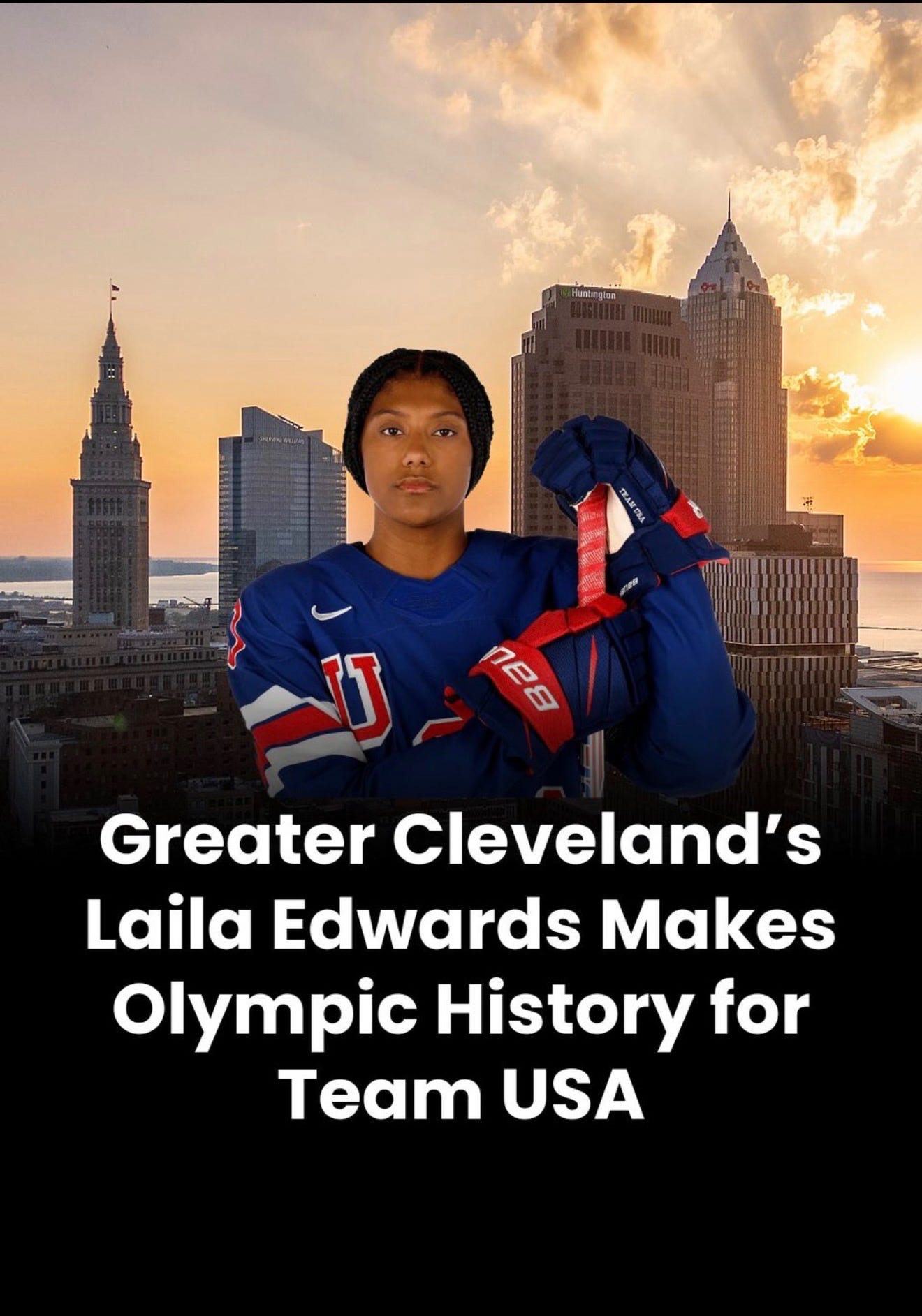
Image generated using Perplexity AI (2026)
What’s Next: A Legacy Still Being Written
As Team USA advanced through the Olympic tournament with a perfect 4–0 record in group play, scoring 20 goals while allowing just one, Edwards prepared for the quarterfinals and beyond.
The team’s chemistry was evident, their execution ruthless. Veteran captain Hilary Knight added her 32nd career Olympic point, tying Jenny Potter for most by a U.S. women’s hockey player — a record that speaks to the program’s sustained excellence.
Edwards’ immediate future is packed: completing her senior season at Wisconsin, where another NCAA championship run awaits, graduating in May, and likely being drafted high in the Professional Women’s Hockey League later this year.
She’s already a Forbes 2025 North America 30 Athletes under 30 selection.
But the stakes extend beyond personal accolades. Edwards represents something bigger: proof that Black girls belong on hockey rinks, that barriers are meant to be broken, that representation creates possibilities.
Her mother Charone summed it up perfectly: “I thank Cleveland Heights.” From that community center rink to the Olympic stage, from figure skating tutus to Team USA jerseys, from the living room with puck-marked walls to history books that will forever record her name as a pioneer.
Laila Edwards didn’t just make it to the Olympics. She kicked down doors and held them open. She scored goals and shattered ceilings. She carried the weight of being first and transformed it into fuel for those who will follow.
As she told reporters, channeling both pride and purpose: “I get to be the first of something and a role model for others.”
The puck marks on the living room wall in Cleveland Heights were never just damage. They were prophecy.
Laila Edwards survived racist slurs as a kid, left home at 13, and made Olympic history twice in five days. But her story isn’t just about triumph — it exposes hockey’s systemic exclusions and shows why representation literally changes what’s possible. Clap so young Black girls googling “can I play hockey?” find her name first.
References
BET. (2026, February 11). Laila Edwards Makes History Again in Record-Breaking Olympic Win Over Canada.
Black America Web. (2025, February 19). Breaking Barriers: Black Women Are Thriving in NCAA Hockey Like Never Before.
Black Girl Hockey Club. (n.d.). Black Women in Hockey | Empower and Inspire.
Black Ottawa Scene. (2024, June 1). Diversity in the Professional Women’s Hockey League.
CBS News. (2026, February 9). Laila Edwards talks about “incredible honor” to be the first Black woman on U.S. women’s Olympic hockey team.
Central Oregon Daily. (2026, February 10). US women’s hockey dominating competition, hands Canada its 1st-ever Olympic shutout loss.
Cleveland Magazine. (n.d.). How Laila Edwards of Cleveland Heights Became Team USA’s First Black Female Olympic Hockey Player.
ESPN. (2026, February 3). Laila Edwards’ historic journey to Team USA, 2026 Olympics.
Just Women’s Sports. (2026, February 10). Laila Edwards makes Olympic hockey history in Team USA win over Canada.
NBC Olympics. (2026, February 5). Laila Edwards, with love from the Kelce brothers, making history in Milan.
NCAA.org. (2026, February 11). Wisconsin’s Laila Edwards keeps making history for Team USA at Milan Cortina Olympics in women’s hockey.
Olympics.com. (2026, February 7). Ice hockey women USA Laila Edwards Black pioneer.
Spectrum News 1 Cleveland. (2026, February 5). Cleveland Heights native Laila Edwards making history with Olympic debut.
Spectrum News 1 Columbus. (2026, February 7). Cleveland Heights celebrates Laila Edwards’ northeast Ohio roots.
Team USA. (n.d.). Laila Edwards — Team USA.
University of Wisconsin Badgers. (2024, January 30). Forging firsts: Laila Edwards.
Wi Sports Heroics. (2026, February 12). Wisconsin Badgers Hockey Star Laila Edwards Grabs Attention With Historic Goal At 2026 Milan Cortina Winter Olympics.
WKYC. (2026, February 10). 2026 Winter Olympics: Cleveland Heights’ Laila Edwards scores as Team USA routs Canada 5–0 to close out group stage.
메타데이터
- post_id
- 5b59f0db69ec
- slug
- from-cleveland-ice-to-olympic-fire-laila-edwards-team-usas-barrier-breaking-black-trailblazer-5b59f0db69ec
- url
- https://medium.com/the-quiet-awakening/from-cleveland-ice-to-olympic-fire-laila-edwards-team-usas-barrier-breaking-black-trailblazer-5b59f0db69ec
- canonical_url
- https://medium.com/the-quiet-awakening/from-cleveland-ice-to-olympic-fire-laila-edwards-team-usas-barrier-breaking-black-trailblazer-5b59f0db69ec
- author_url
- https://medium.com/@jusbouey
- status
- ok
- fetched_at
- 2026-08-08 08:45:15