Cancel Culture Or Cruelty? The Real Reason Nigerians Attack First And Think Later
What we call “accountability” online is rarely about justice — it’s entertainment disguised as moral outrage.
Cancel Culture Or Cruelty? The Real Reason Nigerians Attack First And Think Later
What we call “accountability” online is rarely about justice — it’s entertainment disguised as moral outrage.
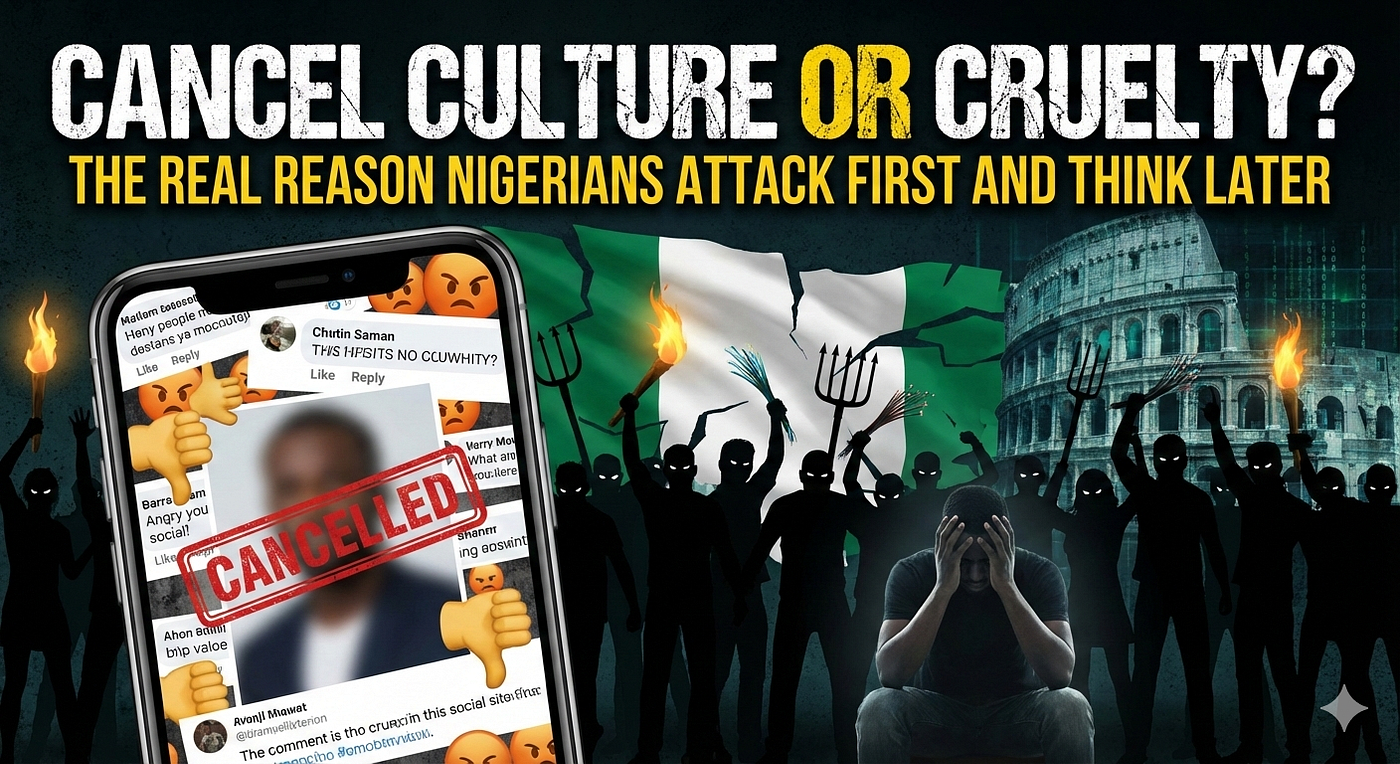
I have watched the rise of cancel culture in Nigeria long enough to understand one uncomfortable truth: what we call “accountability” is rarely about justice. Most times, it’s raw entertainment disguised as moral outrage.
What starts as a legitimate complaint quickly turns into a mob attack where insults fly, rumors spread, and people participate simply because they enjoy the chaos. The real tragedy? Very few people stop to think before joining the dragging.
The Daily Sport of Dragging
Dragging in Nigeria has become a daily sport. It’s no longer about correcting behavior or demanding improvement — it’s about finding the next target.
It could be a footballer who had a bad match, a celebrity who made a joke, an influencer who posted something misunderstood, or even someone who didn’t say anything at all. Once the crowd selects a target, logic disappears. Emotion takes over, and everyone rushes to belong to the mob.
Take the way Nigerians dragged Victor Osimhen. A normal disagreement between him and Usman turned into a public humiliation campaign. People insulted him, mocked him, twisted narratives, and celebrated his mistakes as if destroying him would fix anything.
Before the next match, the same crowd was already searching for faults. Not analysis. Not constructive criticism. Just insults.
It’s almost as if Nigerians feel uncomfortable when they don’t have someone to attack.
The Uncomfortable Truth About Drama
This behavior reveals something deeper: there’s a hunger for drama. There’s a need to tear others down. There’s a pleasure that some people get from watching someone fall.
It’s not about right or wrong. It’s about the thrill of shouting, insulting, and trending. Many Nigerians enjoy the dragging more than the actual issue they claim to care about. That’s the uncomfortable truth.
This problem becomes even clearer when you compare it to global cancel culture. In the United States, celebrities like Johnny Depp, Amber Heard, and Kanye West have faced massive backlash, but the culture around them still has layers of evidence and debate. It’s not perfect, but at least people attempt to argue with facts before destroying someone’s reputation.
In Nigeria, the moment a rumor drops, people rush into full attack mode without checking anything.
When The Internet Becomes Judge, Jury, and Executioner
Naira Marley’s situation after MohBad’s death is another example. Instead of waiting for proper investigation, the internet convicted him instantly.
DJs removed his songs, promoters cut ties, and the public filled comment sections with hatred. There was no patience, no logic, and no balance. The goal wasn’t truth. The goal was punishment. And once people felt like they got their revenge, they moved on to the next target.
The Man Who Refuses To Break
Then there’s VDM — VeryDarkMan — a different kind of case study. He’s one of the few who refuses to bow to the mob.
Nigerians have tried to cancel him multiple times, but he never breaks. He faces threats, insults, curses, false narratives, and still stands firm. What makes him resistant is simple: he doesn’t depend on public approval. He doesn’t fear backlash. He doesn’t bend when the internet screams. And he always backs his claims with facts.
Cancel culture only works when the target fears the mob. When someone doesn’t fear them, the mob becomes powerless.
That’s why attempts to silence VDM always fail. People get frustrated because they cannot bully the reaction they want out of him. They want him to cry, beg, or disappear. He refuses. And in that refusal, he exposes the weakness of Nigerian dragging culture: it’s only strong when the victim is vulnerable.
The Psychology Behind The Mob
The psychology behind Nigerian dragging isn’t complex. People want to belong. They want to appear morally superior. They want to impress strangers online. They want to feel powerful by attacking someone who cannot fight back.
And when they find someone popular to drag, it becomes a group activity. Facts don’t matter. Reasoning doesn’t matter. Balance doesn’t matter. The mission is to destroy someone first and think later.
What Does This Culture Really Achieve?
Nothing.
It doesn’t build better citizens. It doesn’t improve society. It doesn’t encourage growth. It doesn’t promote real accountability. All it does is create fear.
People become scared to speak, to express opinions, or to take risks because they know that one misunderstanding can turn into a full assault.
The Path Forward
If Nigerians want real progress, we need to change how we respond to controversy.
Social media should be a place for debate, not public execution. Criticism should not turn into abuse. Holding someone accountable should not become character destruction. People should wait for facts before joining a mob. We should build a culture where mistakes lead to correction, not humiliation.
Until then, what we call cancel culture will remain nothing more than cruelty disguised as righteousness. And as long as we keep attacking first and thinking later, we will continue to destroy people while pretending we are fixing society.
Share in my narrative in Substack at: ObisDev and X: @Obisdev
메타데이터
- post_id
- 5ba0f808e1e6
- slug
- cancel-culture-or-cruelty-the-real-reason-nigerians-attack-first-and-think-later-5ba0f808e1e6
- url
- https://medium.com/@ObisDev/cancel-culture-or-cruelty-the-real-reason-nigerians-attack-first-and-think-later-5ba0f808e1e6
- canonical_url
- https://medium.com/@ObisDev/cancel-culture-or-cruelty-the-real-reason-nigerians-attack-first-and-think-later-5ba0f808e1e6
- author_url
- https://medium.com/@ObisDev
- status
- ok
- fetched_at
- 2026-06-20 20:29:01