🧬 Data-Driven Testing: Maximizing Coverage with Dynamic Datasets
In modern QA, writing more tests doesn’t always mean better coverage. The real power comes from designing tests that can adapt — and…
dd🧬 Data-Driven Testing: Maximizing Coverage with Dynamic Datasets
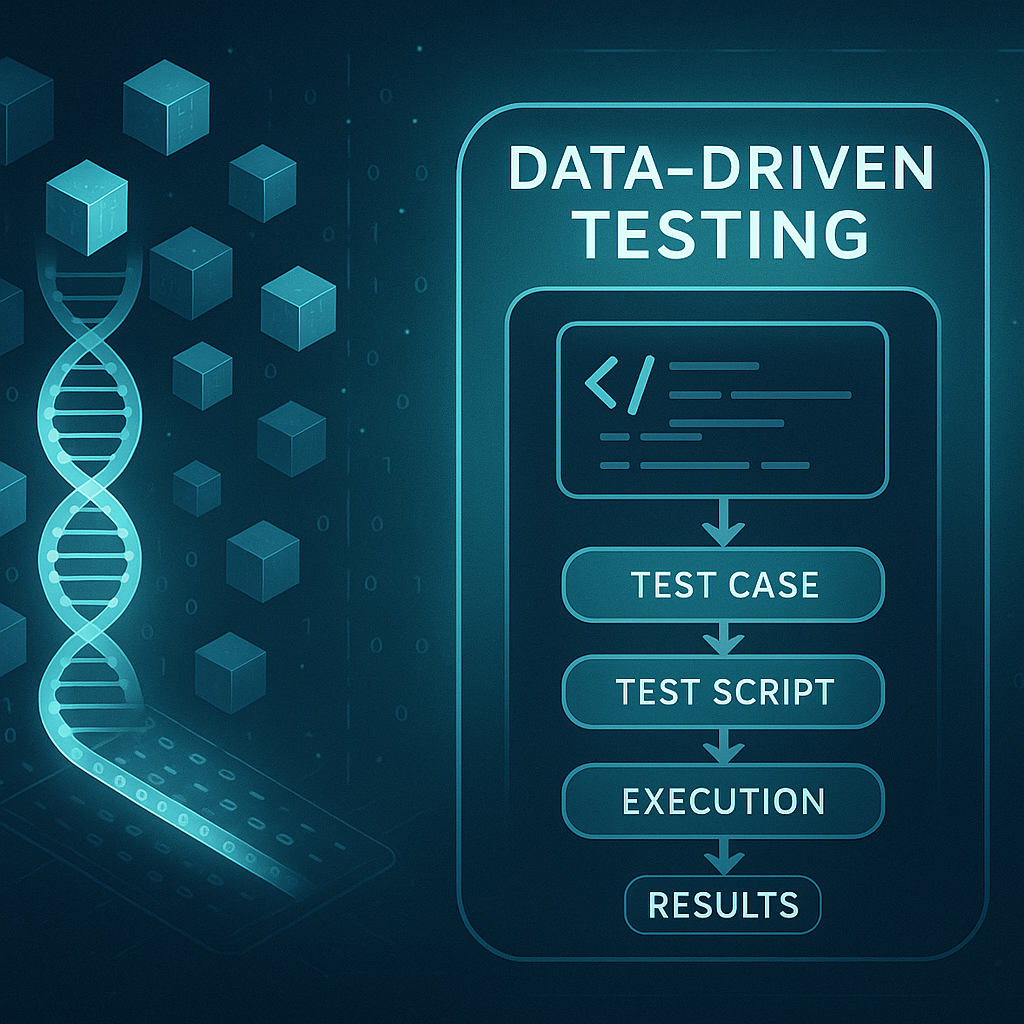
In modern QA, writing more tests doesn’t always mean better coverage. The real power comes from designing tests that can adapt — and that’s where Data-Driven Testing (DDT) shines.
By separating test logic from test data, DDT allows teams to test multiple scenarios quickly, reliably, and with minimal code duplication.
🔍 What Is Data-Driven Testing?
Data-Driven Testing is an approach where the same test logic runs multiple times using different data inputs.
Instead of writing 10 separate test cases for the same flow, you write one — and feed it a dataset containing all variations.
Example: A login test can reuse the same steps while testing:
- Valid credentials
- Invalid passwords
- Locked accounts
- Empty fields
💡 Why It Matters
- ✅ Higher coverage with fewer scripts
- ⚙️ Easier maintenance — update data, not code
- 🔁 Reusable logic across environments
- 📊 Faster scalability for regression testing
- 🚀 Improved automation efficiency
In short: more testing, less noise.
🧰 How It Works
1️⃣ Separate Test Logic and Data
Keep your test scripts independent from the data source. You can use:
- CSV or JSON files
- Databases
- Excel sheets
- APIs providing dynamic data
2️⃣ Parameterize Your Tests
Replace hard-coded values with variables. Example (pseudocode):
for user in users_dataset:
    login(user.username, user.password)
    assert user.expected_result
3️⃣ Use Data Providers
Frameworks like JUnit, TestNG, PyTest, and Cucumber all support data-driven test execution.
4️⃣ Manage Data Lifecycle
Refresh or reset datasets between runs to avoid contamination.
⚙️ Best Practices
1️⃣ Start small — apply DDT to repetitive tests first. 2️⃣ Keep datasets clean and meaningful — poor data equals poor results. 3️⃣ Use version control for test data, just like source code. 4️⃣ Avoid sensitive data — anonymize production inputs. 5️⃣ Combine with CI/CD — make data updates part of your pipeline.
🔗 Real-World Example
Imagine testing a payment form that accepts multiple currencies, card types, and limits. Instead of hardcoding each scenario, a single DDT test can read from a file like:
[
  {"currency": "USD", "cardType": "VISA", "limit": 500},
  {"currency": "EUR", "cardType": "MASTERCARD", "limit": 1000},
  {"currency": "JPY", "cardType": "AMEX", "limit": 300}
]
With three rows of data, one test covers all combinations dynamically.
✅ Final Thoughts
Data-Driven Testing is not about writing more — it’s about writing smarter.
By turning static test scripts into dynamic workflows, QA teams gain flexibility, scalability, and deeper coverage.
In a world where change is constant, your tests should adapt — not break.
That’s the power of being data-driven.
메타데이터
- post_id
- 5bb8a8048b4d
- slug
- data-driven-testing-maximizing-coverage-with-dynamic-datasets-5bb8a8048b4d
- url
- https://medium.com/@pr.moreirarocha/data-driven-testing-maximizing-coverage-with-dynamic-datasets-5bb8a8048b4d
- canonical_url
- https://medium.com/@pr.moreirarocha/data-driven-testing-maximizing-coverage-with-dynamic-datasets-5bb8a8048b4d
- author_url
- https://medium.com/@pr.moreirarocha
- status
- ok
- fetched_at
- 2026-08-27 00:41:23