How Architecture and Design Studios Actually Build a Brand (Not Just a Portfolio)
If you launched a studio in the last three years, or you are about to, you have probably noticed something. The market is not short on…
How Architecture and Design Studios Actually Build a Brand (Not Just a Portfolio)
If you launched a studio in the last three years, or you are about to, you have probably noticed something. The market is not short on talented architects and designers. It is short on studios that are easy to remember, easy to describe, and easy to recommend, but most importantly, easy to approach.
Most studios default to the same playbook. A minimal website, a grid of project photography, a one-line mission about “thoughtful design” or “human-centred spaces.” It looks professional. It also looks like every other studio’s website, because almost every studio is telling the market the same story in the same way.
A brand is not your portfolio. Your portfolio shows what you can build. Your brand explains why someone should choose you to build it, and why they would tell a friend about you afterward. Here is how the studios doing this well actually think about it.
1. Decide what kind of problem you solve, not what kind of buildings you make
Most studios describe themselves by typology. Residential. Hospitality. Commercial interiors. That is a category, not a brand. Categories tell people what you do. They do not tell people why you are different from the twenty other studios doing the same category.
The studios that stand out describe themselves by the problem they solve or the belief they hold. Studio Mumbai is known for slow, handcrafted construction that treats materials and local craft as central to the design, not just decoration. That is not a typology; that is a point of view about how buildings should be made.
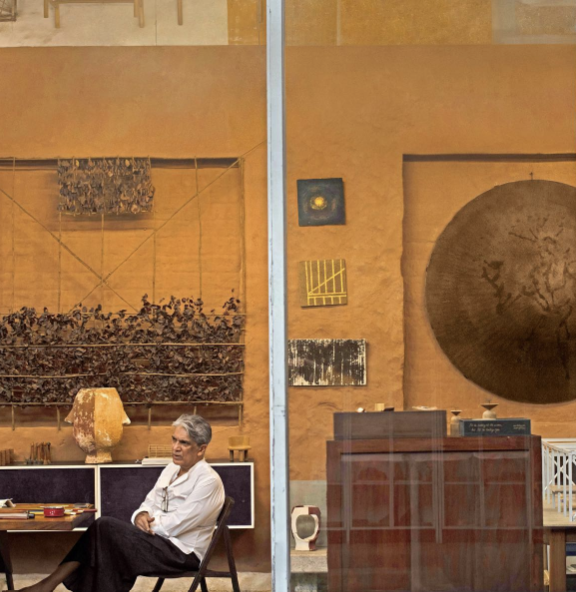
Image source- Instagram
Before you write another line of website copy, finish this sentence.
We exist because most studios in our space get __ wrong. That sentence is closer to your actual brand than any project description will ever be.
2. Let your process be part of your identity, not a hidden backstage
Clients rarely understand the technical complexity of architecture and design. What they do understand, and remember, is how it felt to work with you. Many studios treat process as an internal operations detail. The studios with strong brands treat it as a visible part of their identity.
Snøhetta is open about its collaborative, almost theatrical design process, with ideas debated and reworked in the open rather than presented as a finished genius reveal. That openness has become part of how the world describes the studio, almost as much as the buildings themselves.
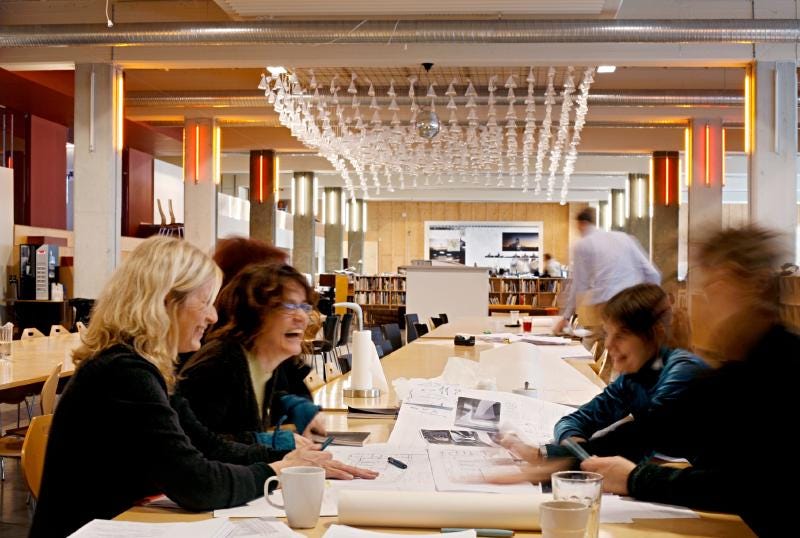
Image Srouce- www.divisare.com / Marc Goodwin
You do not need a famous process to do this. You need to decide which part of how you work is genuinely yours, and let people see it instead of hiding it behind a polished final render.
3. Build a visual language that survives without your logo
A strong studio brand should be recognisable even with the name covered up. This is harder for architecture and design firms than most industries, because the actual work, the buildings and interiors, often becomes the most visible expression of the brand.
Think about how recognisable a Kelly Wearstler interior is without ever seeing her name attached. Bold colour paired with restraint, unexpected material pairings, a confidence that reads instantly. That consistency across years of very different projects is what makes the work feel authored, not generic.
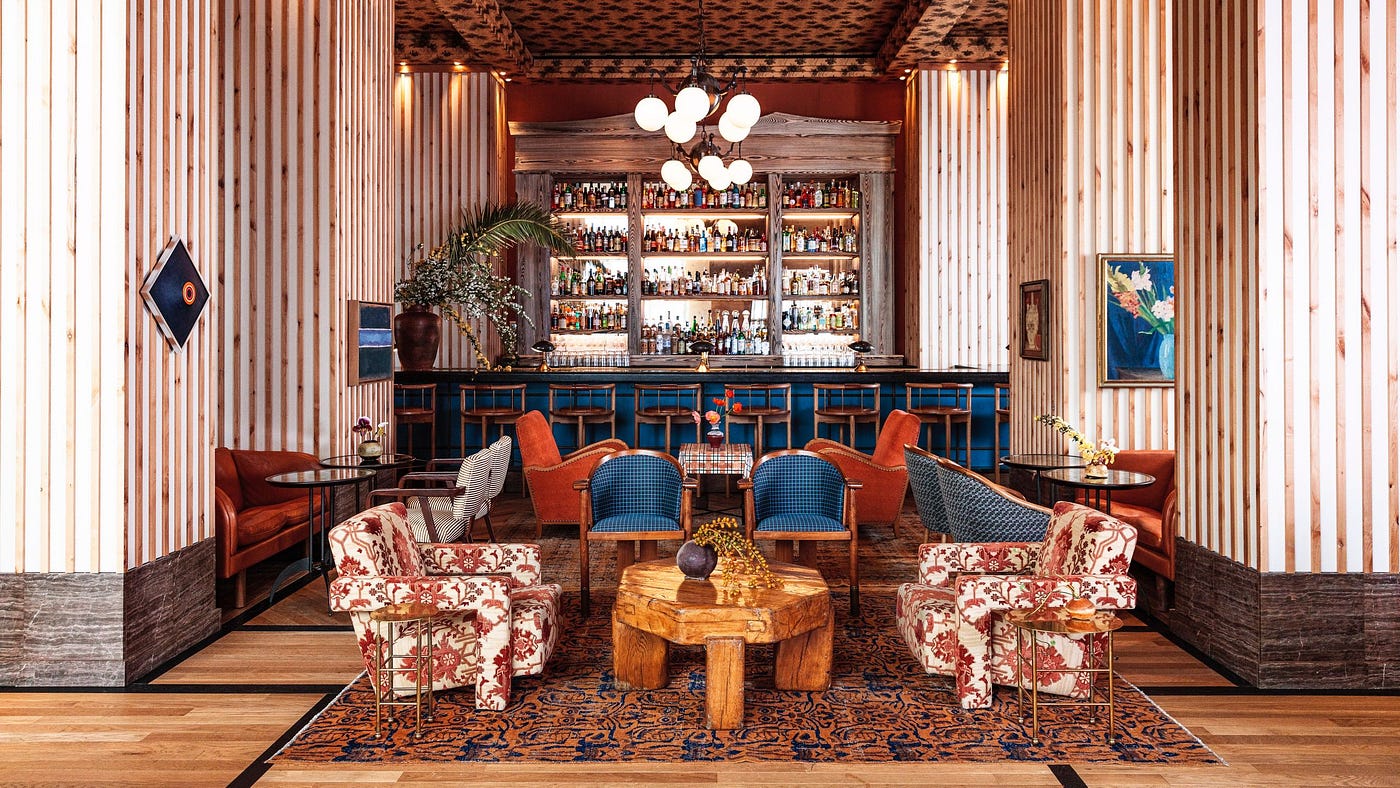
Image Source- www.cntraveler.com
Ask yourself honestly if someone could screenshot one of your projects, remove your name, and still guess it was yours. If the answer is no yet, that is not a failure; it is simply the work still ahead of you.
4. Speak like a person who has opinions, not a brochure
Architecture and Design writing has a tendency to drift into the same vocabulary. Thoughtful. Timeless. Sustainable. Human-centred. These words are not wrong; they are just so overused that they have stopped meaning anything to a reader.
The studios that get noticed write and talk like they actually believe something specific. Bjarke Ingels built an entire public persona around a clear, almost playful point of view that buildings should be fun and pragmatic at once, not solemn monuments. People can quote his thinking because it actually sounds like a person, not a press release.
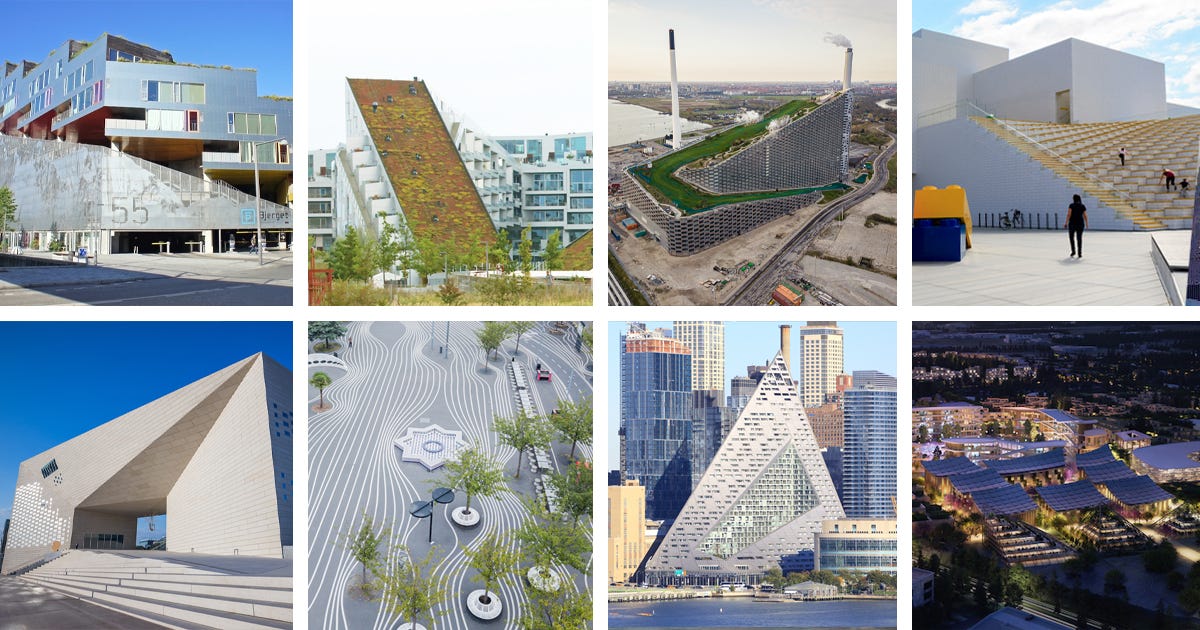
Left to right: The Mountain, 8 House, CopenHill, LEGO House, MÉCA, Superkilen, VIA 57 West, Toyota Woven City. Image source- www.mymodernmet.com
You do not need a public persona on that scale. You need one or two genuine opinions about design that you are willing to repeat often, in your own words, instead of borrowing the industry’s default vocabulary.
5. Choose your collaborators and project types like casting decisions
Every project you take on and every collaborator you work with, photographers, contractors, brands you partner with, tells the market something about your studio’s standards, even when you are not trying to say anything at all.
This matters even more for newer studios. Your first ten projects are not just income; they are the early evidence the market uses to decide who you are. A studio that says it specializes in considered, slow design but takes every fast turnaround commercial fit-out job available is sending a confusing signal, no matter what the website says.
Be deliberate, even when it is uncomfortable to turn work down early on. Each project either reinforces your story or quietly dilutes it.
Put your Studio on the table
Set aside fifteen minutes. Answer honestly, the way you would explain it to a friend over coffee, not the way you would write it for a client deck.
The belief test:
Finish this sentence. Most studios in our space get __ wrong, and we do it differently because __. If you cannot finish this clearly, that is the real starting point for your brand work, before any visual identity decisions.
The process test:
List one part of how you actually work, a method, a ritual, a way you involve clients, that you currently keep behind the scenes. What would it look like to show that publicly instead of hiding it?
The no name test:
Pick your three strongest past projects. Imagine someone seeing them with your studio name removed. Would they guess it was your work? If not, name the one decision you keep changing project to project that should probably stay consistent.
The vocabulary test:
Write down the words you currently use to describe your studio. Cross out any word that could be copy-pasted onto a competitor’s website without anyone noticing. Whatever is left is closer to your real voice.
The casting test:
Look at your last five projects or collaborators. Do they all reinforce the same story about your studio, or does one of them quietly contradict it? Name which one, and decide if it gets repeated or retired.
Your buildings will always do most of the talking. The brand work simply makes sure the market understands what they are saying.
Stuck on a branding question? Email samanata.a.k@gmail.com with a quick overview of your brand and what you’re wrestling with and I’ll send back my take.
메타데이터
- post_id
- 5bc72eb17eaa
- slug
- how-architecture-and-design-studios-actually-build-a-brand-not-just-a-portfolio-5bc72eb17eaa
- url
- https://medium.com/arch-lab/how-architecture-and-design-studios-actually-build-a-brand-not-just-a-portfolio-5bc72eb17eaa
- canonical_url
- https://medium.com/arch-lab/how-architecture-and-design-studios-actually-build-a-brand-not-just-a-portfolio-5bc72eb17eaa
- author_url
- https://medium.com/@samanata.a.k
- status
- ok
- fetched_at
- 2026-07-09 08:27:28