Energy Skate Park Simulation
In this mini-lesson, which is part of a larger PBL unit which will explain potential energy and kinetic energy of a rollercoaster, students…
Energy Skate Park Simulation
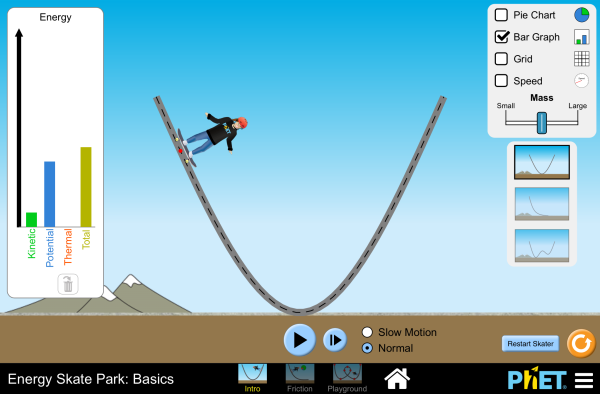
In this mini-lesson, which is part of a larger PBL unit which will explain potential energy and kinetic energy of a rollercoaster, students will explore energy using the PhET Energy Skate Park: Basics simulation to visualize how energy transforms. The lesson starts with a teacher led screencast showing the basics of the simulation, and then students will create their own track to show their knowledge.
[embed]
This lesson will start with a class discussion to review key vocabulary: potential energy, kinetic energy, transformation, conservation of energy. Students will watch the screencast to see visuals, such as bar graphs and pie charts, to learn how to use the simulation and reinforce concepts. Once the students have had a chance to open the simulation and practice in the intro section, they will then switch to the playground section of the simulation. Here, they will create their own track to show their knowledge of potential and kinetic energy, by making sure that the skater makes it completely through the track smoothly. Students will need to explain the transformation of potential and kinetic energy throughout the track, including where the maximum potential and kinetic energy occurs. Teachers can have students create a reflection or do an exit ticket to answer the following questions:
- Where was the most potential energy on your track?
- Where was the most kinetic energy on your track?
- How did potential/kinetic energy change as the skater moved?
- How does this help you think about your rollercoaster design?
This lesson will help build knowledge for the final PBL project of creating a working roller coaster. Understanding how the potential and kinetic energy changes in this skate park simulation will help students make decisions about the height, slope and track design for their roller coaster. The simulation will provide a trial and error opportunity for students to test prior to completing or attempting to assemble their final roller coaster.
메타데이터
- post_id
- 5c0f3d55e7f7
- slug
- energy-skate-park-simulation-5c0f3d55e7f7
- url
- https://medium.com/@sheenajordan/energy-skate-park-simulation-5c0f3d55e7f7
- canonical_url
- https://medium.com/@sheenajordan/energy-skate-park-simulation-5c0f3d55e7f7
- author_url
- https://medium.com/@sheenajordan
- status
- ok
- fetched_at
- 2026-08-16 08:32:06





