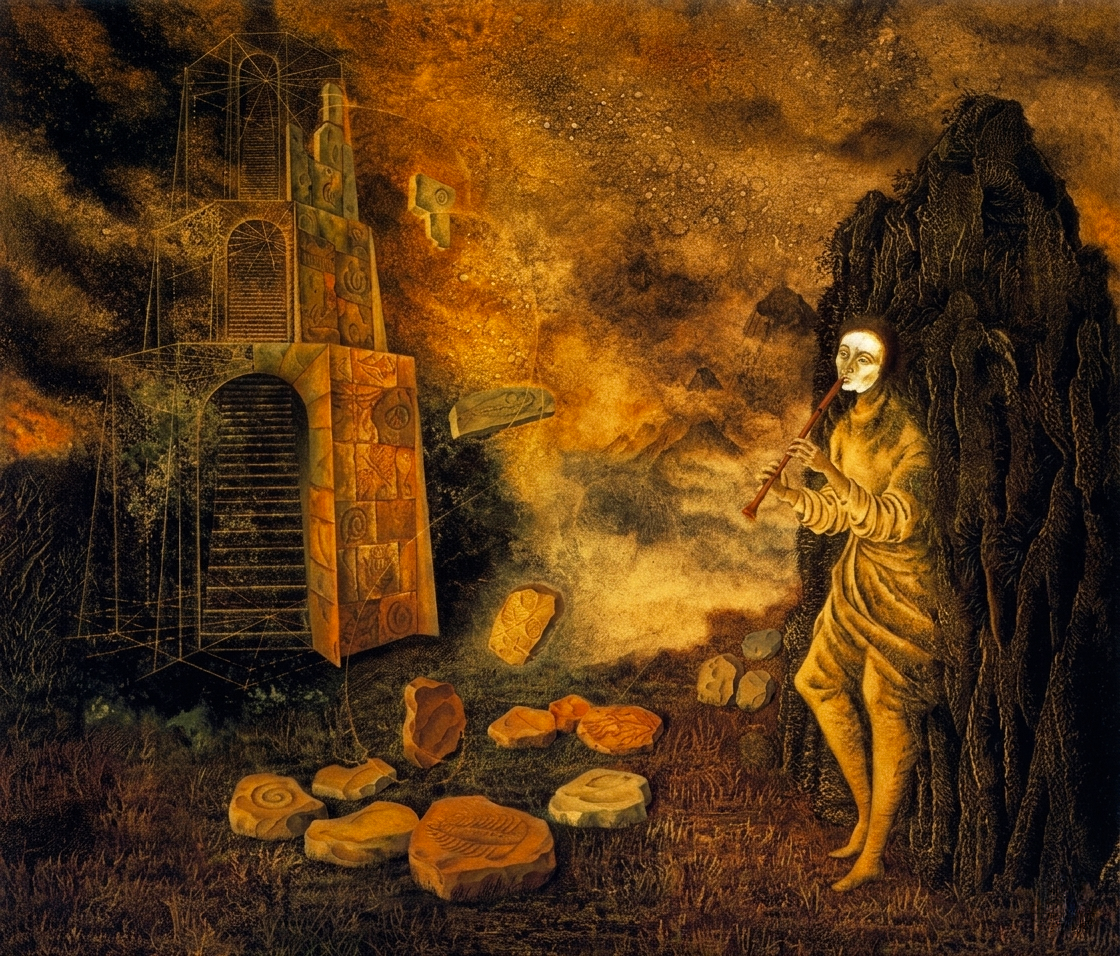
Premature Menopause: When a Woman’s Worth Was Measured by Her Womb
A story about premature menopause, son preference, infertility stigma, and the quiet ways society teaches women that their worth depends…
Premature Menopause: When a Woman’s Worth Was Measured by Her Womb
A story about premature menopause, son preference, infertility stigma, and the quiet ways society teaches women that their worth depends on motherhood

Seated Mother With Child On Her Lap / Paula Modersohn-Becker
The first time she entered the house as a bride, they said she was no longer a daughter in law. She was their daughter now.
The first time she became a mother, they filled the room with prayers and sweets. The baby was healthy. She had her mother's eyes. She smiled in her sleep as though the world had already promised to be kind.
Only one sentence survived after the celebration had ended:
“Next time, may it be a boy.”
It was spoken so gently that nobody called it cruelty.
Years passed beneath that blessing.
Every festival, every family dinner, every visit from relatives carried the same invisible question.
When are you giving this family a son?
Then came an ordinary afternoon inside an ordinary hospital, a place that had already witnessed too many quiet tragedies.
The doctor unfolded a report and spoke with careful kindness.
“Premature Menopause.”
Two words.
That was all medicine had to say.

“Infertility is a global public health issue.” According to the World Health Organization, infertility affects approximately 1 in 6 people worldwide during their reproductive lifetime, highlighting that infertility is a common health condition rather than a rare personal misfortune. Despite its prevalence, millions continue to face stigma, discrimination, and limited access to appropriate care. Source: World Health Organization (WHO). Infertility. Fact Sheet, 2023. https://www.who.int/news-room/fact-sheets/detail/infertility
The report occupied only a single page. The house found thousands more.
Maybe the doctor is wrong.
Pray harder. There must be another treatment. Our family still needs a grandson.
Nothing broke inside the room. Everything broke after she returned home.
The silence the report carried occupied the rest of her life.
Nobody asked whether she was frightened. Nobody asked what it feels like to discover that your own body has closed a door you were never ready to leave behind. Nobody asked whether she had cried in the hospital bathroom before washing her face and returning home with steady hands.
Instead they asked whether another doctor could change the answer. Whether another country had better treatment. Whether prayer could reopen a womb. Whether fate could still produce a grandson.
Her body became a family meeting.
Everyone had an opinion. Only she had the grief.
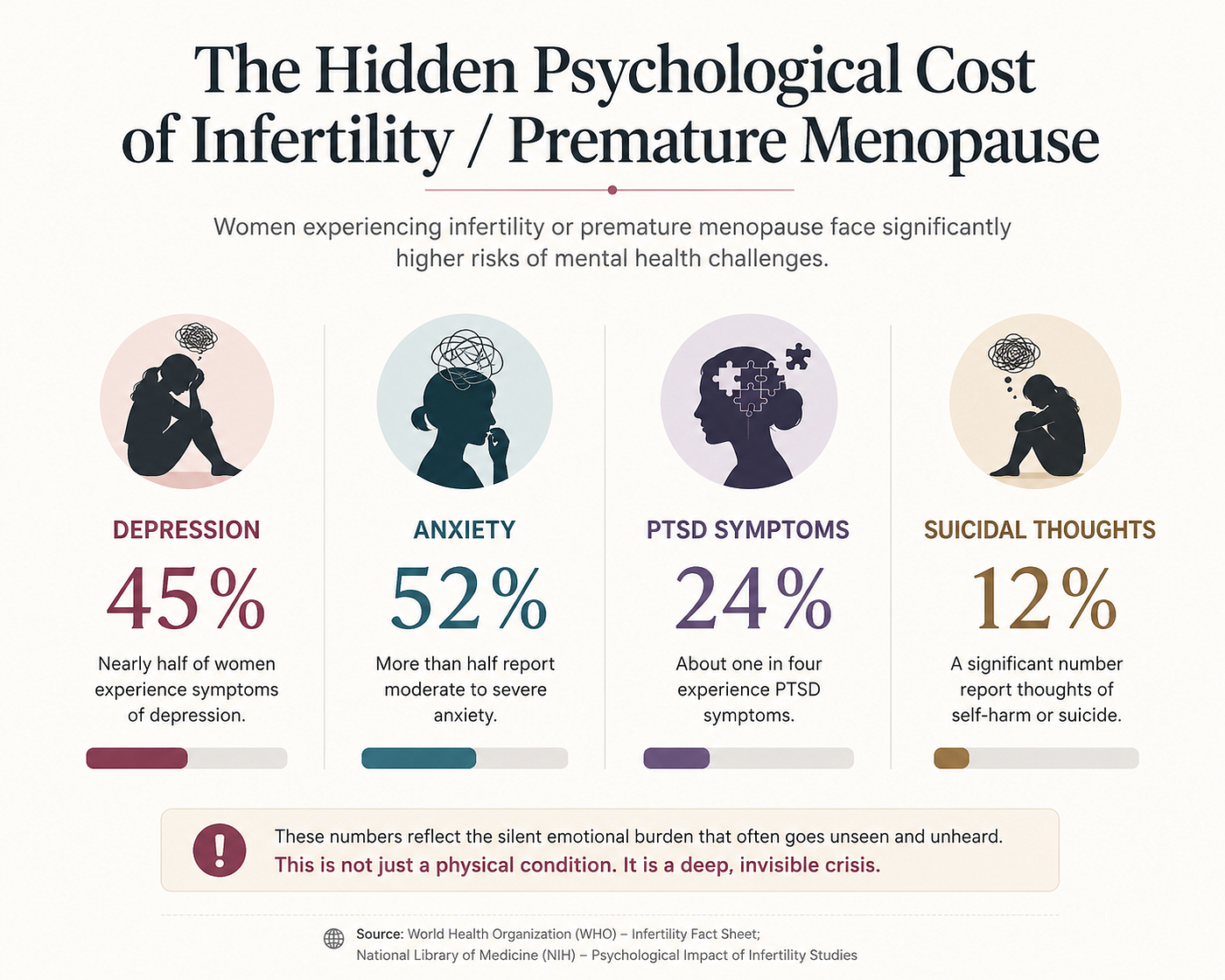
“Psychological burden associated with infertility and premature menopause.” Women experiencing infertility or premature menopause often report substantially higher rates of depression, anxiety, traumatic stress symptoms, and emotional distress than women in the general population. The precise prevalence varies across studies and populations, but the evidence consistently shows that infertility is not only a reproductive condition; it is also a significant mental health concern. Sources: World Health Organization, Infertility Fact Sheet; American Society for Reproductive Medicine; peer-reviewed studies indexed in PubMed.
The report described a body. The family rewrote it as a verdict.
Something invisible disappeared from the way they looked at her.
Soon the conversations changed.
You cannot stop trying. A wife must think about her husband's future. A family cannot end like this.
Every sentence sounded ordinary.
Together they became a prison.
When she said the doctors had already explained everything, somebody called her selfish. When she remained silent, somebody called her ungrateful. When she cried, somebody called her weak.
The first slap did not leave the deepest wound. The deepest wound arrived later, when the same hands placed dinner on the table as though nothing had happened.
Violence is frightening. Normal violence is unforgettable.
There were nights when she heard them discussing another marriage in the next room.
Not whispering. Planning.
As though she had already disappeared. As though she were furniture that had become too old to keep.
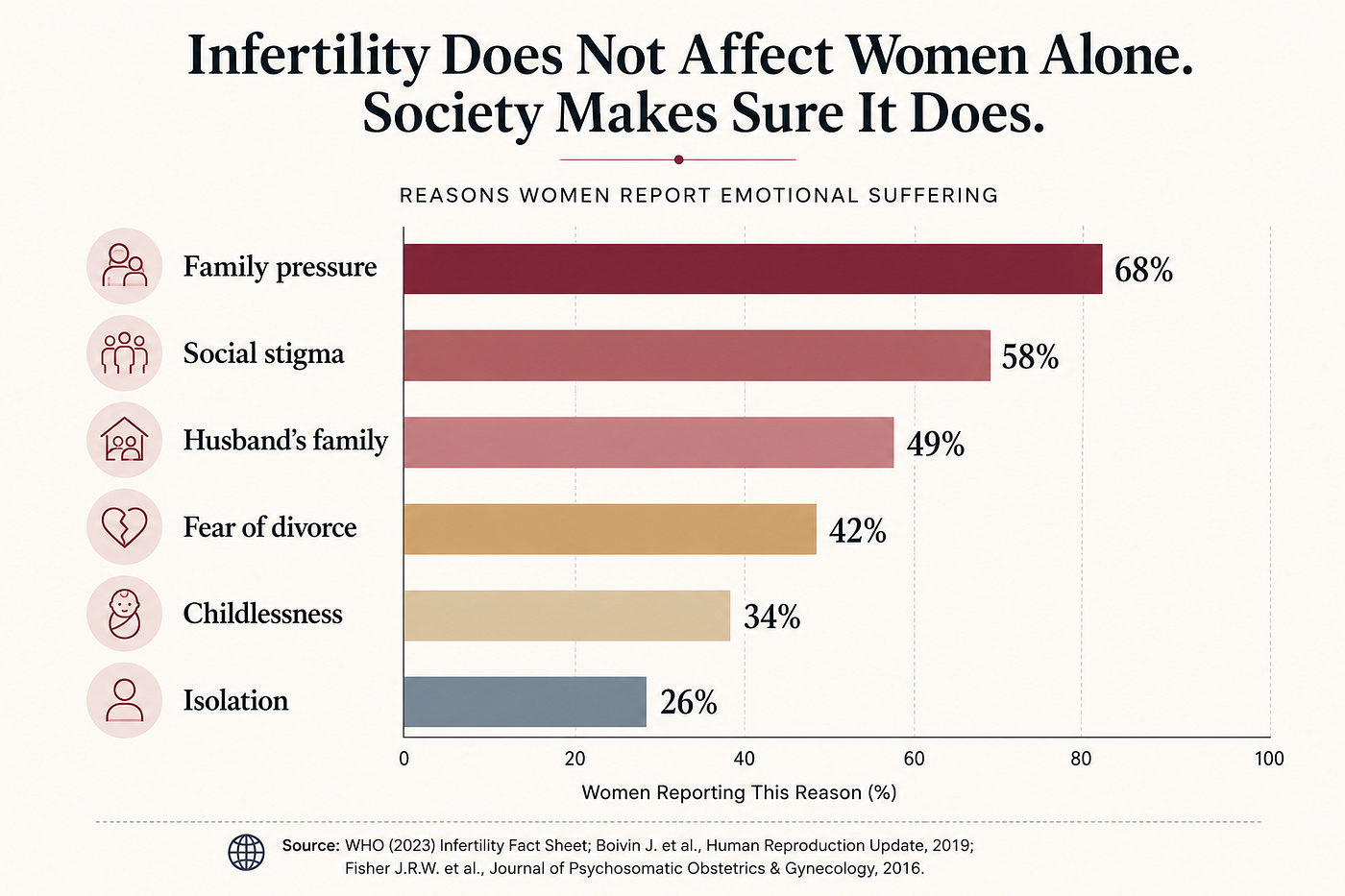
“Common social factors associated with emotional suffering among women experiencing infertility.” Research consistently shows that psychological distress is often intensified not only by infertility itself, but also by family pressure, social stigma, fear of divorce, strained relationships within the marital family, childlessness, and social isolation. The prominence of these factors varies across cultures and study populations. Sources: World Health Organization (WHO), Infertility Fact Sheet (2023); Boivin J. et al., Human Reproduction Update (2019); Fisher J.R.W. et al., Journal of Psychosomatic Obstetrics & Gynecology (2016).
The little girl often ran into her mother's arms without knowing she was embracing someone the house had slowly stopped seeing.
Children never notice the exact day their mothers begin smiling with exhausted eyes.
Women do. She folded tiny dresses that would never become hand me downs. She packed away baby blankets nobody had asked her to keep. She hid medical reports beneath winter clothes because paper hurts less when it cannot be seen.
Sometimes she stood outside the bathroom door before entering, making sure her daughter was asleep.
Some tears should never become a child's first memory of her mother.
Her daughter never understood why her mother sometimes stayed inside the bathroom a little longer.
She thought grown women simply needed more time. She did not know her mother had learned to cry where running water could hide the sound.
Morning always arrived on time.
She still cooked. She still remembered birthdays. She still ironed school uniforms. She still smiled when guests visited. People called her fortunate.
They never stayed long enough to hear what silence sounds like after midnight.
There are women whose names slowly disappear beneath words like wife, mother, daughter in law, barren, unlucky.
There are women who begin apologizing for illnesses they never chose.
There are women who spend years believing they failed simply because their bodies reached an ending before society was ready to forgive it.
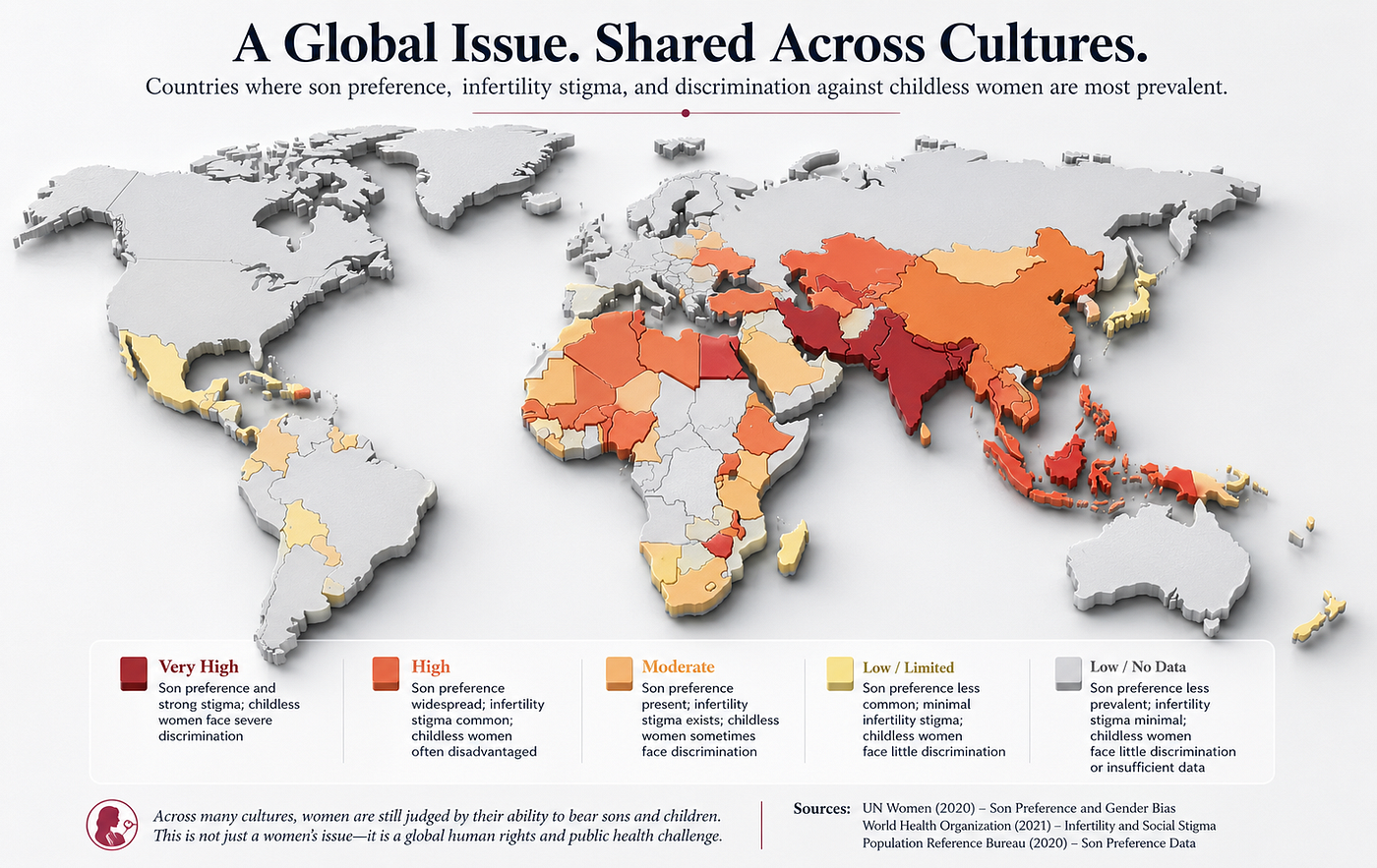
“Infertility-related stigma, son preference, and discrimination against childless women are reported across many parts of the world.” Although their intensity varies by country, culture, and community, these forms of discrimination have been documented in regions across Asia, Africa, the Middle East, and elsewhere. The map is an editorial visualization illustrating broad global patterns reported in international literature rather than a country-by-country prevalence map. Sources: World Health Organization (WHO), Infertility Fact Sheet (2023); UN Women, publications on gender equality and harmful social norms; United Nations Population Fund (UNFPA), resources on gender-biased practices and reproductive rights; peer-reviewed studies published in Human Reproduction Update, BMC Women’s Health, and Reproductive Health.
Many of them are still alive. Many of them still sit beside the same families in the same photographs. Many of them still laugh at the right moments.
The world sees the picture. It does not see the life carefully cropped outside the frame.
Perhaps that is the loneliest part. Not that a womb falls silent.
But that, in some homes, the silence spreads until an entire woman slowly disappears while everyone insists she is still loved.

“The author of this article, Sadman Sakib Ayon.”
Visit Sadman Sakib Ayon’s main Medium profile to explore more stories: https://sadmansakibayon1.medium.com
메타데이터
- post_id
- 5c10170a99de
- slug
- premature-menopause-when-a-womans-worth-was-measured-by-her-womb-5c10170a99de
- url
- https://medium.com/reflections-and-realities/premature-menopause-when-a-womans-worth-was-measured-by-her-womb-5c10170a99de
- canonical_url
- https://medium.com/reflections-and-realities/premature-menopause-when-a-womans-worth-was-measured-by-her-womb-5c10170a99de
- author_url
- https://medium.com/@sadmansakibayon2
- status
- ok
- fetched_at
- 2026-07-14 21:21:30