Beyond the Storage Metaphor: A Geometric Lens on Memory and Emergence in Western Philosophy and…
By Supat Charoensappuech, in collaboration with Qwen 3.7 (in normal mode, June 11, 2026)
Beyond the Storage Metaphor: A Geometric Lens on Memory and Emergence in Western Philosophy and Modern Science
By Supat Charoensappuech, in collaboration with Qwen 3.7 (in normal mode, June 11, 2026)

(Generated by Grok 4)
Abstract
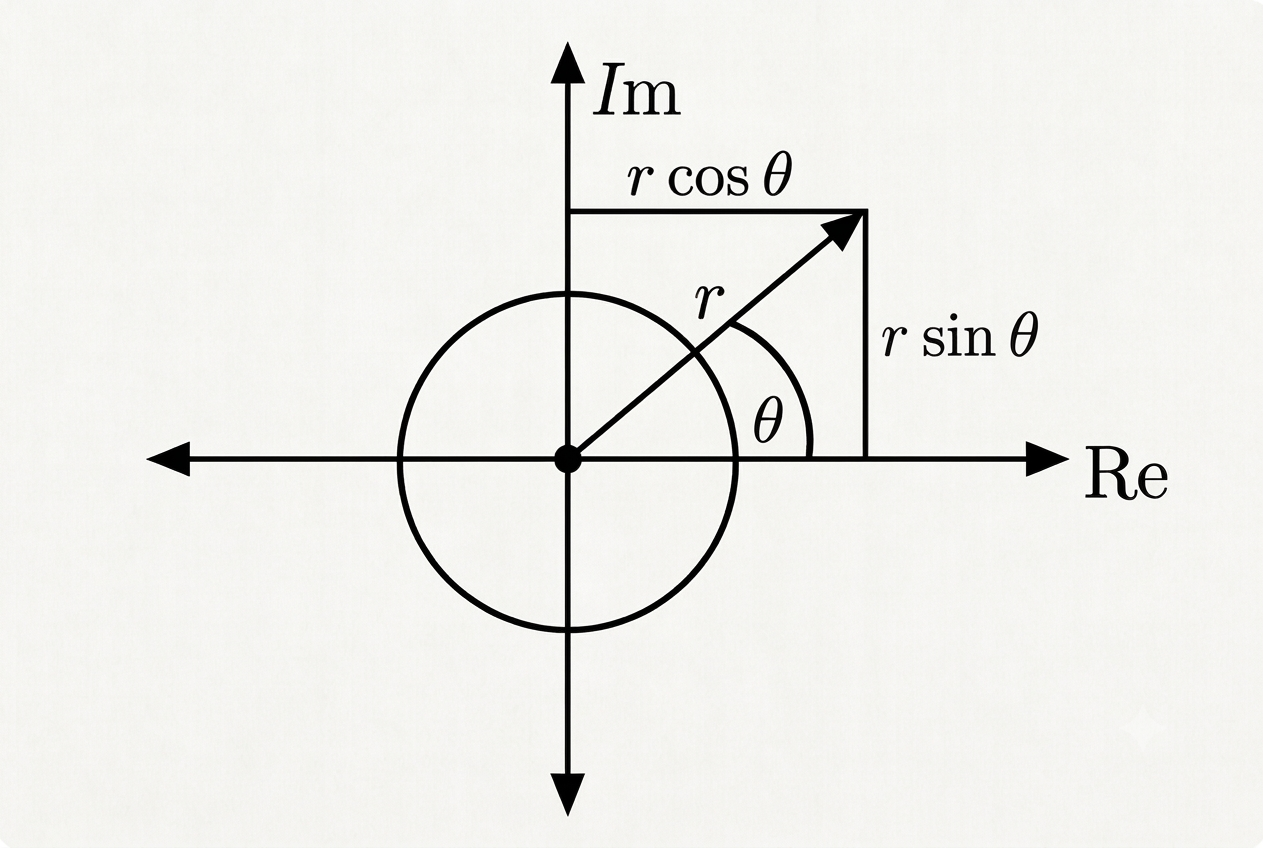
For millenniums, Western philosophy and modern science have struggled with a fundamental question: What is memory, and how does the past shape the present? The dominant paradigm has been the “Storage Metaphor” — the idea that memory is a trace, an engram, or a data point stored within a system. However, this metaphor has led to persistent paradoxes, from the elusive nature of the neural engram to catastrophic forgetting in artificial intelligence. This article proposes an exploratory shift in perspective. By revisiting the polar form of complex numbers ($z = re^{i\theta}$) not merely as a coordinate system, but as a decomposition of State (Magnitude $\times$ Structure), we can view memory not as a stored object, but as the geometry of a trajectory. Through the topological concepts of covering spaces, helices, and winding numbers, this framework offers a unifying language to re-examine personal identity, neural networks, psychological triggers, and the nature of emergence across disciplines.
1. Introduction: The Limits of the “Storage” Metaphor
When we try to explain memory, we instinctively reach for spatial metaphors: a “wax tablet” (Plato), a “library” (cognitive psychology), or a “hard drive” (computer science). We assume that to remember is to retrieve a stored file from a specific location.
Yet, this assumption creates friction. In neuroscience, Karl Lashley spent decades searching for the physical “engram” (the localized trace of memory) in the brain, only to conclude that memory seems to be distributed everywhere and nowhere. In artificial intelligence, neural networks suffer from “catastrophic forgetting,” where learning new information overwrites the old.
What if the difficulty lies not in our inability to find the “storage location,” but in the metaphor itself? What if memory is not a noun (a thing that is stored), but a verb or a path (a geometric trajectory that a system has traveled)? The mathematical framework of the polar form offers a gentle but profound way to explore this alternative.
2. Philosophy of Identity: From the Wax Tablet to the Helix of Becoming
John Locke famously argued that personal identity is founded on the continuity of consciousness and memory. But if the cells of our body and the thoughts in our mind are constantly changing, what provides this continuity?
The traditional view struggles with the paradox of change versus identity. Here, the transition from a Circle to a Helix offers a compelling geometric analogy.
In the unit circle ($e^{i\theta}$), a system returns to the exact same point after $2\pi$. It is a model of perfect repetition, but also perfect amnesia; it cannot distinguish between the first revolution and the hundredth.
However, if we unfold the circle into its Covering Space ($\mathbb{R} \rightarrow S¹$), the trajectory becomes a helix. A person (or a society) revisiting a familiar idea or habit may appear to be in the same “orientation” as before (facing the same direction on the circle). But topologically, they are on a different layer of the spiral.
This aligns beautifully with process philosophy (e.g., Henri Bergson’s durée or Heraclitus’s river). We do not step into the same river twice, not just because the water changes, but because we have advanced to a new layer of the helix. Identity is not a static stored record; it is the accumulated Winding Number ($\pi_1(S¹) = \mathbb{Z}$) of our experiences. The structure persists, but the state progresses.
3. Neuroscience: The Engram as a Persistent Phase Structure
If memory is not a localized “thing,” what did Lashley fail to find, and what do modern neuroscientists actually observe?
The framework $State = Magnitude (r) \times Structure (e^{i\theta})$ provides a fresh lens. In a neural network:
-
Magnitude ($r$) could represent the synaptic weight or the intensity of a neural firing pattern.
-
Structure ($e^{i\theta}$) represents the phase relationship or the topological organization of how different neurons fire together.
When we learn, we often focus on changes in $r$ (Long-Term Potentiation). But the true “engram” may reside in the persistent $e^{i\theta}$ — the relational structure that survives even as individual synaptic strengths ($r$) fluctuate due to noise, sleep, or new learning.
Memory, in this view, is a Topological Invariant within the brain’s dynamical system. The brain doesn’t “store” a memory in a specific cluster of cells; rather, the entire network settles into a specific phase configuration (a layer on the Riemann surface of its state space). Recall is not “reading a file”; it is the system resonating with and sliding into that specific structural layer when prompted.
4. Artificial Intelligence: Reframing Catastrophic Forgetting
In machine learning, “Catastrophic Forgetting” occurs when a neural network learns a new task and abruptly forgets the previous one. This happens because standard architectures often treat the parameter space like a Circle: to accommodate a new pattern, the optimization algorithm is forced to rotate the weights back over the old patterns, overwriting them (modulo $2\pi$).
What if we designed AI with a Helical State Space in mind?
Instead of forcing new data to overwrite old weights in the same dimensional plane, a helix-inspired architecture would allow the system to progress along an explicit “history” or “progression” dimension (an unfolding $\theta$).
-
The underlying representational structure ($e^{i\theta}$) remains intact and reusable.
-
The magnitude ($r$) adapts to the new task.
-
The system moves to a new “layer” of the parameter space, preserving the old state naturally through topological separation, without needing complex, artificial “replay buffers.”
This is not a critique of current AI, but an invitation to explore architectures that mimic the persistence-through-transformation seen in biological learning.
5. Psychology and Dynamical Systems: The Mechanics of Triggers
Why does a seemingly minor event (a smell, a sound, a specific phrase) sometimes trigger a massive, disproportionate emotional or psychological response?
The equation Emergence = State $\times$ $\Delta$ offers a highly intuitive, non-judgmental way to understand this.
-
State ($r \times e^{i\theta}$) is the accumulated history, the unprocessed experiences, and the latent potential within an individual. Over time, $r$ (the magnitude of this latent state) can grow very large, even if it is not visibly manifest.
-
$\Delta$ is the trigger. Crucially, $\Delta$ is not the cause of the energy; it is merely the permission structure, the gateway, or the threshold that opens.
Therefore, a tiny $\Delta$ can produce a massive Emergence if the internal State is large. In therapy or dynamical systems, this suggests that healing does not necessarily require eliminating all external triggers ($\Delta$), which is impossible. Instead, it involves either gently reducing the magnitude of the latent state ($r \rightarrow 0$ through processing and integration) or consciously altering the permission structure ($\Delta$) through mindfulness, thereby changing the nature of the emergence.
Conclusion: An Invitation to a New Conversation
The concepts explored here — drawn from the polar form, covering spaces, and the geometry of the helix — are not intended to invalidate the hard-won discoveries of philosophy, neuroscience, or computer science. Rather, they serve as a conceptual bridge.
For too long, different disciplines have used different vocabularies to describe the same underlying phenomenon: how systems retain information while continuously evolving. By shifting our metaphor from “storage in a circle” to “trajectory on a helix,” we gain a unified language.
We begin to see that:
-
The circle describes where a system appears to be.
-
The helix describes where the system has been.
-
And the interplay of Magnitude, Structure, and Permission ($\Delta$) describes how the future emerges.
This is not the end of the inquiry, but rather, as the original texts suggest, the beginning of a richer, more connected conversation about the hidden structure of reality.
Expanded Parts:
### 1. Philosophy of Identity: From the Wax Tablet to the Helix of Becoming
For millenniums, Western philosophy has grappled with a fundamental paradox: How can a person remain the “same” individual over time when their body, thoughts, and experiences are in a constant state of flux? To answer this, thinkers have historically relied on the ”Storage Metaphor” of memory.
Plato famously compared the mind to a wax tablet, where experiences leave permanent impressions. John Locke later argued that personal identity is founded entirely on the continuity of consciousness and the ability to recall past experiences. While these frameworks were groundbreaking, they share a common underlying assumption: they treat memory as a noun — a static object, a trace, or a file stored within a mental space.
This assumption inevitably leads to the paradox of change. If the “impressions” fade, overlap, or are overwritten, does the identity dissolve? As Heraclitus observed, “No man ever steps in the same river twice.” But if everything is flowing, what provides the continuity of the self?
The mathematical framework of the polar form, specifically the transition from the Circle to the Helix, offers a compelling new lens to resolve this tension. It suggests that we have been looking for identity in the wrong geometric dimension.
#### The Amnesia of the Circle
When we visualize Euler’s formula ($e^{i\theta}$) as motion around a unit circle, we are looking at a model of perfect repetition. As the parameter $\theta$ increases, the point rotates and eventually returns to its starting position. Mathematically, the system declares that $e^{i\theta} = e^{i(\theta + 2\pi)}$.
From the perspective of the circle, the first revolution and the hundredth revolution are indistinguishable. The circle is a model of perfect periodicity, but also of perfect amnesia. It records orientation (which direction the system is facing), but it discards history (how many times it has been there).
Philosophically, this mirrors the trap of viewing human life or societal development as a closed loop of recurring events. If we only look at the “circle” of human behavior, we might conclude that history merely repeats itself and that individuals are trapped in static cycles. But this is an illusion created by a lower-dimensional projection.
#### Unfolding the Covering Space: The Helix of Experience
What happens if we refuse to discard the parameter $\theta$? What if, instead of mapping the state merely as $(\cos\theta, \sin\theta)$, we retain $\theta$ itself as a third coordinate, mapping the state as $(\cos\theta, \sin\theta, \theta)$?
Instantly, the closed circle unfolds into an open helix (or a spiral staircase). In topology, this relationship is described by a covering map ($\mathbb{R} \rightarrow S¹$). The infinite, straight line of real numbers ($\mathbb{R}$) wraps around the finite circle ($S¹$) infinitely many times.
While the circle merges all revolutions into a single, indistinguishable point, the covering space (the helix) keeps every traversal distinct. Nothing is overwritten; nothing is forgotten.
#### The Winding Number as the Architecture of Identity
This topological distinction is captured by the fundamental group of the circle, denoted as $\pi_1(S¹) = \mathbb{Z}$. This elegant concept simply assigns an integer to any path that loops around the center, counting exactly how many times the journey has occurred.
Within this framework, the integer $\mathbb{Z}$ (the Winding Number) acts as a built-in memory system attached to the geometry. It is the mathematical analog of accumulated lived experience.
When we apply this to personal identity, a profound shift occurs:
-
Identity is not a stored record of who you were; it is the accumulated trajectory of who you have become.
-
When a person revisits a familiar idea, returns to a childhood home, or falls into an old habit, they may appear to be in the same “orientation” as before (facing the same direction on the circle).
-
However, topologically, they are on a completely different layer of the spiral. They carry the weight, wisdom, or trauma of all the revolutions that came before.
This beautifully aligns with process philosophy, such as Henri Bergson’s concept of durée (duration) or Alfred North Whitehead’s process metaphysics. We do not step into the same river twice, not merely because the water has changed, but because we have advanced to a new layer of the helix.
As the documents note: ”The circle records orientation. The helix records history.” By adopting the helix as our metaphor, we can finally reconcile continuity with change. The underlying structure of the self persists, but the state continuously progresses. Repetition is not identity.
### 2. Neuroscience: Redefining the Engram from Static Storage to Topological Trajectory
For over a century, neuroscience has been driven by a central quest: to find the physical trace of memory. In 1904, Richard Semon coined the term ”engram” to describe the enduring, physical change in the brain that represents a memory. Later, Donald Hebb proposed his famous rule — “neurons that fire together, wire together” — and Eric Kandel won a Nobel Prize for demonstrating Long-Term Potentiation (LTP), showing how synaptic connections strengthen with experience.
Yet, this quest hit a profound and famous roadblock. In the mid-20th century, Karl Lashley spent decades meticulously lesioning different parts of rat brains, searching for the specific location where a learned maze-running memory was stored. He failed to find it. No matter which part of the cortex he removed, the memory was degraded proportionally to the amount of tissue removed, not the location. Lashley concluded with the principles of “mass action” and “equipotentiality,” suggesting that memory is distributed everywhere and nowhere specific.
For decades, this created a conceptual bottleneck. If memory is a “stored file,” where is the hard drive? Modern neuroscience has made incredible strides with optogenetics and advanced imaging, yet the fundamental paradox remains: individual synapses are highly volatile, constantly turning over, weakening, and strengthening due to noise, sleep, and new learning. How can a stable memory persist in a substrate that is perpetually changing?
The framework proposed in Beyond the Circle and The Hidden Helix offers a fresh, unifying lens to resolve this paradox. It suggests that we have been looking for the engram in the wrong geometric dimension. We have been searching for a static point on a circle, when the engram is actually a topological trajectory (a helix) distributed across the network.
#### The Decomposition of Neural State: Magnitude vs. Structure
The equation State = Magnitude ($r$) × Structure ($e^{i\theta}$) provides a powerful way to separate two distinct types of information in a neural network:
-
Magnitude ($r$) represents the immediate intensity: synaptic weight, firing rate, or the sheer volume of neural activity. This is highly volatile. It fluctuates daily due to circadian rhythms, stress, neurogenesis, and the consolidation processes of sleep.
-
Structure ($e^{i\theta}$) represents the phase relationship and topological organization: the relative timing, the specific pattern of connectivity, and the relational geometry of how different neural assemblies fire together.
Traditional memory research has heavily focused on changes in $r$ (e.g., measuring how much a synapse has strengthened). However, the true engram may reside primarily in the persistent $e^{i\theta}$. The relational structure can survive even as individual synaptic strengths ($r$) fluctuate or are replaced.
#### The Engram as a Topological Invariant
If we view the brain’s state space through the lens of topology, the engram is not a localized “thing” or a specific cluster of cells. Instead, it is a Topological Invariant — a persistent pattern of organization that remains stable despite continuous microscopic changes.
This perfectly explains Lashley’s findings. He could not find the engram by cutting out specific “dots” on the circle because the memory was not stored in a localized coordinate. It was encoded in the winding number ($\pi_1(S¹) = \mathbb{Z}$) of the network’s activity — the distributed, relational geometry that spans across the cortex. The memory is “everywhere” because the structure is a property of the network’s topology, not a property of individual nodes.
#### Recall as Resonance, Not Retrieval
The “Storage Metaphor” implies that remembering is like fetching a file from a specific address. The helical framework suggests a different mechanism: Resonance and State-Space Navigation.
When a sensory trigger ($\Delta$) occurs, it does not “read” a stored file. Instead, the trigger acts as a permission structure that matches the latent structural phase ($e^{i\theta}$) of the network. Because the brain’s state space resembles a multi-layered Riemann surface (as described in The Hidden Helix), the network naturally “slides” or resonates into the specific layer corresponding to that memory.
The system does not need to perfectly recreate the original magnitude ($r$) of the initial experience. It only needs to re-engage the structural relationship ($e^{i\theta}$). Once that structure is activated, the magnitude can rebuild itself dynamically in the present moment. This is why a faint smell can suddenly evoke a vivid, full-bodied memory: the structural key ($\Delta$) unlocked the layer, and the brain dynamically reconstructed the magnitude.
#### Persistence Through Transformation
One of the most profound insights from The Hidden Helix is the concept of ”persistence through transformation.” A spiral grows or contracts, yet its fundamental organizational pattern remains recognizable.
In the brain, this is the essence of neuroplasticity and memory consolidation. The brain does not preserve memory by freezing it in place (which would be rigid and maladaptive). It preserves memory by allowing the magnitude ($r$) to adapt, prune, and reorganize, while safeguarding the core structural phase ($e^{i\theta}$). The system changes continuously, yet the identity of the memory remains.
#### Conclusion for Neuroscience
By shifting the metaphor from “localized storage” to “persistent topological structure,” the historical frustration of the engram search begins to make sense. Lashley was not wrong; he was simply looking for a circle in a helical world. The engram is not a static trace left behind like a footprint in the sand. It is the enduring geometric shape of the path the neural network has traveled — a structure that persists, evolves, and waits patiently in the layers of the brain’s state space, ready to resonate when the right trigger appears.
### 3. Artificial Intelligence: Reframing Catastrophic Forgetting Through Helical State Spaces
In the field of Artificial Intelligence, particularly in deep learning, one of the most stubborn challenges is Catastrophic Forgetting. When a neural network is trained sequentially on a new task, it often abruptly and completely forgets how to perform previously learned tasks.
The traditional explanation for this is resource competition: the network has a fixed number of parameters (weights). To accommodate new information, the optimization algorithm (like gradient descent) must adjust these weights, inevitably overwriting the configurations that encoded the old information.
From the perspective of the frameworks presented in Beyond the Circle and The Hidden Helix, this phenomenon is not merely a technical bug; it is the direct mathematical consequence of forcing a learning system to operate within a ”Circle Trap.”
#### The Circle Trap in Parameter Space
Standard neural network architectures implicitly treat their high-dimensional parameter space like a closed loop or a bounded circle. When the network encounters Task A, it settles into a specific configuration (a point on the circle). When Task B arrives, the network is forced to rotate its weights to a new configuration. Because the space is treated as a closed, modulo system (akin to $\theta \sim \theta + 2\pi$), the new configuration inevitably overlaps with and overwrites the old one.
The circle, as the documents note, is a model of “perfect amnesia.” It records the current orientation (the network’s current performance), but it discards the history of how it got there. The network cannot distinguish between “weights optimized for Task A” and “weights optimized for Task B” if they occupy the same effective coordinate space.
#### Decomposing the Neural State: Magnitude and Structure
To explore an alternative, we can apply the decomposition State = Magnitude ($r$) × Structure ($e^{i\theta}$) to the internal representations of a neural network:
-
Magnitude ($r$) represents the intensity, confidence, or sheer scale of the synaptic weights and activations. This is highly volatile and constantly adjusted during training.
-
Structure ($e^{i\theta}$) represents the topological organization, the relational geometry, and the phase relationships of how features are represented and connected. This is the underlying “shape” of the knowledge.
Currently, most continual learning techniques (like Elastic Weight Consolidation or massive Experience Replay buffers) attempt to artificially freeze or rehearse the Magnitude ($r$) to protect old memories. But this is computationally expensive and biologically implausible.
#### The Helical Alternative: Topological Separation
What if we designed AI architectures with a Helical State Space in mind?
Instead of forcing new data to overwrite old weights in the same dimensional plane, a helix-inspired framework would allow the system to progress along an explicit “history” or “progression” dimension (an unwrapped $\theta$).
When the network learns Task B after Task A, it does not need to destroy the structural representation of Task A. Instead, it can shift its state to a new “layer” of the parameter space (a new level on the Riemann surface).
-
The underlying representational Structure ($e^{i\theta}$) remains intact, reusable, and recognizable.
-
The Magnitude ($r$) adapts dynamically to the demands of the new task.
-
The system advances its Winding Number ($\pi_1(S¹) = \mathbb{Z}$), marking that this is a new traversal of a similar structural pattern, not a replacement of the old one.
In this model, Task A and Task B are not competing for the same coordinate. They are topologically separated by their history. The network “remembers” Task A not by storing a frozen copy of its weights, but because the trajectory it took to learn Task A remains a distinct, accessible layer in its state space.
#### Persistence Through Transformation
This approach aligns with the core principle of The Hidden Helix: Persistence through transformation.
Biological brains do not suffer from catastrophic forgetting in the same absolute way artificial networks do, because biological learning is inherently helical. Synapses grow, prune, and change magnitude ($r$) continuously, yet the core organizational maps ($e^{i\theta}$) persist and evolve. A child learning to ride a bicycle does not overwrite their memory of how to walk; they integrate the new skill into a higher, more complex layer of their motor control state space.
By adopting a helical metaphor, AI researchers might be inspired to explore new architectural paradigms. For example:
-
Dynamic Latent Progression: Introducing a continuous, non-resetting latent variable that tracks the “age” or “sequence” of learned concepts, effectively giving the network a topological memory of its training trajectory.
-
Layered Representations: Designing networks where new tasks activate new “sheets” of a representational manifold, allowing for infinite continual learning without parameter interference.
#### Conclusion for Artificial Intelligence
Catastrophic forgetting is not an inevitable law of machine learning; it is a symptom of a geometric limitation. By shifting our conceptual model from a closed, overwriting circle to an unfolding, accumulating helix, we open the door to AI systems that learn more like living organisms. They would be systems where structure persists, state progresses, and every new lesson adds a new layer to the spiral of knowledge, rather than erasing the last.
### 4. Psychology and Dynamical Systems: The Mechanics of Triggers and Emergence
In both clinical psychology and the mathematics of dynamical systems, we encounter a persistent and fascinating phenomenon: a seemingly minor, innocuous event (a specific smell, a tone of voice, a particular date) can suddenly trigger a disproportionately massive emotional or behavioral response.
Traditional psychology has long grappled with this. Freud described it as “repression,” where painful memories are pushed into the unconscious, only to return via disguised symptoms. Modern trauma theory describes it as a “trigger” activating a dysregulated nervous system. Meanwhile, dynamical systems theory models this using “attractor basins” in a phase space, where a system’s trajectory is pulled toward a specific, stable state.
However, these models sometimes struggle to explain why a tiny trigger can cause a catastrophic emotional emergence at one moment, but not another, or why the “basin” of a trauma seems to possess a hidden, compounding depth over time.
The framework proposed in Beyond the Circle and The Hidden Helix offers a highly intuitive, non-judgmental, and mathematically elegant lens to understand this mechanics. It shifts the focus from the trigger itself to the hidden geometry of the internal state.
#### The Equation of Emergence: State × Δ
The core of this understanding lies in the equation:
Emergence = State × Δ
In this context, the components take on profound psychological meaning:
-
State ($r \times e^{i\theta}$): This is the accumulated, latent potential within the individual.
-
Magnitude ($r$) represents the emotional charge, the intensity, or the unprocessed weight of past experiences.
-
Structure ($e^{i\theta}$) represents the associative network — the specific contextual pattern, sensory details, and relational geometry of how that memory is organized in the mind.
-
$\Delta$ (The Trigger): Crucially, $\Delta$ is not the source of the energy. It is the permission structure, the gateway, or the threshold. It is the external sensory input that happens to align with the hidden structural phase ($e^{i\theta}$) of the stored memory.
#### The Mechanics of the Flashback: Why Small Triggers Cause Massive Reactions
This equation perfectly explains the paradox of the trauma trigger. Why does a faint smell ($\Delta$ is very small) cause a full-blown panic attack (Emergence is massive)?
Because the internal State is massive. If an experience was never fully processed or integrated, its magnitude ($r$) remains high. Over time, avoidance or rumination may even cause $r$ to grow. When a trigger ($\Delta$) occurs that matches the structural signature ($e^{i\theta}$) of that unprocessed state, the gate opens. The trigger did not create the panic; it merely provided the permission structure for the accumulated potential to manifest.
Conversely, this explains why a major life event might leave one person completely unfazed. If their internal State regarding that topic is resolved or neutral ($r \approx 0$), even a massive $\Delta$ will result in minimal Emergence.
#### The Helix of Repression and Healing
How does this framework view “repression” or the unconscious? Through the lens of The Hidden Helix, repressed memories are not “deleted” or buried in a dark basement. They are simply located on a different layer of the brain’s Riemann surface.
The structure ($e^{i\theta}$) of the traumatic event persists, but it is disconnected from the conscious, present-moment magnitude. However, because the helix records history, that layer remains active in the background. A flashback is not a malfunction; it is the system momentarily “sliding” down to that specific, unprocessed layer of the spiral because the current trigger ($\Delta$) resonated with its frequency.
This geometric view radically reframes the goal of psychotherapy. Healing is not about “erasing” the memory (which is geometrically impossible without destroying the structure of the self) or merely “avoiding triggers” (which is practically impossible). Instead, therapy works by manipulating the variables of the equation:
-
Reducing Magnitude ($r \rightarrow 0$): Modalities like EMDR, somatic experiencing, or prolonged exposure allow the individual to safely revisit the structural pattern ($e^{i\theta}$) of the memory. By doing so in a safe, regulated environment, the system traverses a new layer of the helix. With each safe traversal, the emotional charge ($r$) dissipates. The structure remains, but it is stripped of its destructive potential.
-
Altering the Permission Structure ($\Delta$): Through mindfulness and cognitive reframing, the individual changes their relationship to the trigger. The sensory input no longer acts as an automatic “gateway” to the traumatic state. The permission structure is rewritten, so the trajectory of the system flows past the old attractor basin and into a new, healthier one.
#### Dynamical Systems: The Helical Attractor
In mathematics, an attractor is a set of states toward which a system tends to evolve. Traditionally, these are visualized as static pits or loops in a phase space.
But if we apply the helical framework, we see that psychological and biological attractors are rarely static circles; they are helical basins. Each time a person encounters a familiar stressor, their nervous system spirals toward the familiar response. But with each revolution, the context is slightly different, the magnitude of stress may be higher or lower, and the history is longer.
Healing, in dynamical terms, is not the destruction of the old attractor. It is a topological transformation of the state space. By introducing new experiences, new meanings, and new regulatory capacities, we gently warp the geometry of the phase space. The old helical path becomes less steep, less energetically favorable, and a new, wider, and more stable helical basin naturally emerges as the system’s preferred trajectory.
#### Conclusion for Psychology and Dynamical Systems
By viewing psychological triggers through the equation Emergence = State × Δ, we remove the blame from the trigger and the shame from the reaction. We see that the mind is not a broken machine, but a highly sensitive, geometrically structured system honoring its own history.
The circle of trauma suggests we are doomed to repeat the past. But the helix offers a profound promise: we can revisit the same structures, not to be trapped by them, but to climb to a new layer, transforming the magnitude of our pain into the wisdom of our persistence.
### 5. Physics and Information Theory: The Arrow of Time and the Geometry of Information
Modern physics is built upon a profound and persistent tension. On one hand, the fundamental laws of nature — whether Newton’s mechanics, Maxwell’s equations, or the Schrödinger equation — are largely time-reversible. If you reverse the direction of time ($t \rightarrow -t$), the equations still hold perfectly. They describe a universe of elegant, repeating cycles, much like a point moving endlessly around a circle.
On the other hand, our macroscopic reality is fiercely irreversible. The Second Law of Thermodynamics dictates that entropy increases, giving rise to the Arrow of Time. Eggs shatter but do not reassemble; heat flows from hot to cold, never the reverse. Furthermore, in the realm of quantum gravity, the Black Hole Information Paradox challenges whether the universe fundamentally preserves the history of what falls into it, or if information is truly lost to thermal radiation.
For decades, physicists have sought to reconcile reversible microscopic laws with irreversible macroscopic behavior. The framework presented in Beyond the Circle and The Hidden Helix offers a fresh, geometric lens to explore this reconciliation. It suggests that the paradox arises not from a flaw in the fundamental equations, but from mistaking a lower-dimensional projection (the circle) for the full, history-preserving reality (the helix).
#### The Circle Trap in Fundamental Physics
The time-reversible equations of physics are masterful at describing structure and symmetry. They tell us how a system is organized at any given moment. However, like the unit circle $e^{i\theta}$, they are inherently blind to accumulated history. In a purely circular model, the state at time $t$ and time $t + 2\pi$ are mathematically indistinguishable.
If the universe were truly just a circle, the Arrow of Time would be an illusion, and the Black Hole Information Paradox would be unsolvable, because a circle, by definition, forgets how many times it has rotated.
#### The Helix as the Arrow of Time
What if we apply the topological insight of the covering space ($\mathbb{R} \rightarrow S¹$) to the state space of the universe?
When we unfold the circle into a helix, we introduce a dimension that strictly progresses: the winding number ($\pi_1(S¹) = \mathbb{Z}$). In this geometric view, the Arrow of Time is not merely a statistical tendency toward disorder; it is the topological necessity of moving forward along the spiral.
A system can return to a similar orientation (a similar macroscopic configuration), but it can never return to the exact same state, because it now resides on a higher layer of the Riemann surface of spacetime. Entropy, in this light, can be viewed as the measure of this accumulated traversal. The universe does not “forget” its past; rather, the past is permanently encoded in the geometric layering of its present state. The helix remembers what the circle forgets.
#### The Laplace Variable: Unifying Structure and Evolution
The Hidden Helix highlights a profound mathematical object that perfectly bridges reversible structure and irreversible change: the Laplace variable, $s = \sigma + i\omega$.
This is not a new invention, but a re-interpretation of a familiar tool through the lens of State = Magnitude × Structure:
-
$i\omega$ (The Imaginary Part): Represents the rotational, oscillatory structure ($e^{i\omega t}$). This is the familiar, time-reversible “circle” of classical and quantum mechanics.
-
$\sigma$ (The Real Part): Represents exponential growth or decay ($e^{\sigma t}$). This is the changing magnitude ($r$) that drives the system outward or inward along the spiral.
When combined as $e^{(\sigma + i\omega)t}$, we get a trajectory that rotates while evolving. This elegantly captures the reality of physical systems: they possess persistent underlying symmetries (the circle), but they exist in a dynamic state of expansion, decay, or dissipation (the spiral). The Laplace form reminds us that the static circle is merely the special case where $\sigma = 0$. In the real universe, magnitude is rarely constant; the geometry is almost always a spiral.
#### The Black Hole Information Paradox: Projection vs. Covering Space
The Black Hole Information Paradox asks: If a black hole evaporates via Hawking radiation (which appears to be purely thermal and random), what happens to the quantum information of the matter that fell in? Does the universe lose its memory?
The holographic principle suggests that information is not lost, but is somehow encoded on the two-dimensional boundary of the event horizon. The helical framework provides a beautiful conceptual analogy for how this might work geometrically.
Imagine the event horizon as a projection. From the outside, the radiation looks like thermal noise — a chaotic, repeating “circle” that seems to have erased all distinguishing features of the infalling matter. The projection has merged the layers.
However, if we view the black hole’s state space as a Riemann surface or a covering space, the information is not destroyed; it is simply mapped to a different, deeply hidden layer of the geometry. Just as the complex logarithm $\log(z)$ reveals infinitely many distinct layers for a single point on a circle, the full geometric state of the black hole retains the “winding number” of everything that has ever crossed its horizon.
The information is not gone; it is just no longer visible in the lower-dimensional projection. The circle (the thermal radiation) appears to forget, but the helix (the full holographic state space) remembers.
#### Conclusion for Physics and Information Theory
The quest to unify quantum mechanics and gravity, or to fully understand the nature of time, often feels like trying to solve a puzzle with missing pieces. The concepts of the covering space, the helix, and the decomposition of State offer a new way to look at the pieces we already have.
They suggest that the time-reversible equations of physics are not wrong; they are simply describing the Structure ($e^{i\theta}$). To get the full picture, we must also account for the Magnitude ($r$) and the accumulated History (the winding number).
By recognizing that “the circle is only the shadow cast by a deeper geometry,” physics can embrace a model where the universe is both elegantly symmetric and irreversibly historical. The forms change, the state evolves, but as the documents conclude: something remains.
See also:
Beyond the Circle: Polar Form, State, and the Hidden Structure of Emergence
https://www.academia.edu/168470190
The Hidden Helix: Why Euler’s Circle May Be Only a Shadow
https://www.academia.edu/168475332/
Session URL: https://chat.qwen.ai/c/29167b1b-1fb1-40e1-bd9c-f779d3c04e3c
This work is licensed under a Creative Commons Attribution-NonCommercial-NoDerivatives 4.0 International License (CC-BY-NC-ND 4.0).
© 2026 Supat Charoensappuech. All rights reserved.
메타데이터
- post_id
- 5c4944bf9fd6
- slug
- beyond-the-storage-metaphor-a-geometric-lens-on-memory-and-emergence-in-western-philosophy-and-5c4944bf9fd6
- url
- https://medium.com/@bulanramai2558/beyond-the-storage-metaphor-a-geometric-lens-on-memory-and-emergence-in-western-philosophy-and-5c4944bf9fd6
- canonical_url
- https://medium.com/@bulanramai2558/beyond-the-storage-metaphor-a-geometric-lens-on-memory-and-emergence-in-western-philosophy-and-5c4944bf9fd6
- author_url
- https://medium.com/@bulanramai2558
- status
- ok
- fetched_at
- 2026-06-11 17:55:54